Lawn Care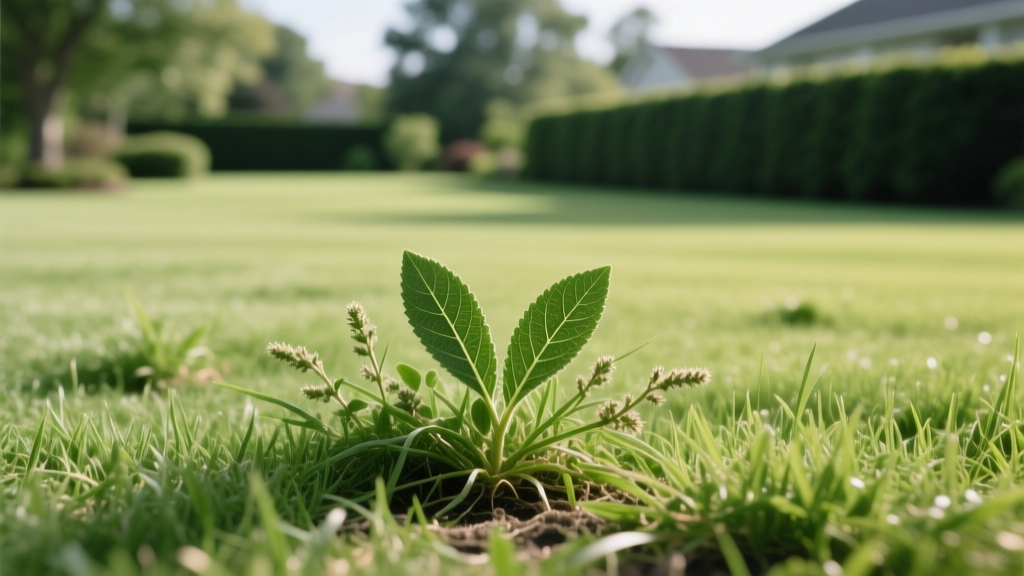
Crabgrass Identification and Complete Removal Guide
Anna KowalskiPublished
Introduction to the Crabgrass Menace
If you have spent countless hours and dollars cultivating a lush, green lawn, few things are more frustrating than watching it get overrun by crabgrass. Crabgrass (Digitaria sanguinalis and Digitaria ischaemum) is an aggressive, invasive annual weed that thrives in the heat of summer when cool-season turfgrasses are struggling. Unlike broadleaf weeds that stand out with their distinct foliage, crabgrass mimics your lawn but with a coarse, unsightly texture and a pale green hue. Because it is an annual plant, its primary goal is to grow rapidly, produce thousands of seeds, and die off by the first frost. However, those seeds remain dormant in your soil for years, waiting for the perfect conditions to germinate, making crabgrass a recurring nightmare for homeowners. This comprehensive guide will walk you through exact identification techniques, the biological life cycle of the weed, and precise chemical and cultural control methods to reclaim your yard.
How to Accurately Identify Crabgrass
Before you can effectively treat crabgrass, you must ensure you are actually looking at crabgrass and not a similar-looking grassy weed like quackgrass or goosegrass. Misidentification can lead to the purchase of the wrong herbicides and wasted money.
Visual Characteristics
- Color: Crabgrass typically exhibits a pale, yellowish-green or light blue-green color, which starkly contrasts with the darker, rich green of a well-fertilized Kentucky bluegrass or fescue lawn.
- Leaf Blade: The leaf blades are noticeably wider than standard turfgrass, often measuring about 1/4 inch across. They are slightly hairy, especially near the base and the collar region where the leaf meets the stem.
- Growth Habit: True to its name, crabgrass grows prostrate to the ground, branching out in a star-like or crab-like pattern from a central taproot. It aggressively spreads laterally, choking out surrounding desirable grass.
- Seed Heads: In late summer, crabgrass produces distinct seed heads that look like thin, finger-like spikes branching out from a single stem, resembling an umbrella or a bird's foot.
Smooth vs. Hairy Crabgrass
There are two primary species found in North American lawns. Hairy crabgrass (Digitaria sanguinalis) has noticeable long hairs on the leaves and sheaths and tends to grow taller. Smooth crabgrass (Digitaria ischaemum) is shorter, has fewer hairs (mostly restricted to the collar), and is more common in closely mowed lawns. Fortunately, the control strategies for both species are virtually identical.
Understanding the Crabgrass Life Cycle
Timing is the most critical factor in weed control. According to Purdue University Extension, crabgrass is a warm-season annual that germinates in the spring, thrives in the summer, and dies in the fall. Germination begins when the soil temperature at a 1-inch depth reaches 55°F to 60°F for three to five consecutive days. This usually coincides with the blooming of forsythia bushes and dogwood trees in early spring. Once germinated, the plant focuses on vegetative growth. By mid-summer, when cool-season lawns are stressed by heat and drought, crabgrass hits its peak growth phase and begins producing seeds. A single healthy crabgrass plant can produce up to 150,000 seeds, which drop into the soil and create a massive seed bank for the following year. Once the first hard frost arrives in autumn, the mature plants will die, leaving behind bare patches in your lawn and millions of seeds waiting for the next spring.
Pre-Emergent Control: The First Line of Defense
The most effective, cost-efficient, and scientifically backed method for controlling crabgrass is preventing it from germinating in the first place using pre-emergent herbicides. These chemicals create an invisible barrier in the top inch of the soil. When the crabgrass seed germinates and the radical (first root) pushes through this barrier, the herbicide inhibits cell division, killing the seedling before it ever reaches the surface.
Top Pre-Emergent Active Ingredients
- Prodiamine (e.g., Barricade): Offers long-lasting residual control (up to 4-6 months). It is highly effective but should not be used if you plan to overseed your lawn in the fall, as it will also prevent grass seed from germinating.
- Dithiopyr (e.g., Dimension): A unique pre-emergent that also has early post-emergent activity. It can kill crabgrass up to the 1-tiller stage, giving you a slightly wider application window if you miss the early spring deadline.
- Pendimethalin (e.g., Scotts Halts): A widely available consumer-grade option that provides solid control but breaks down faster than Prodiamine, sometimes requiring a second application in early summer.
Application Timing and Costs
Apply your pre-emergent in early spring, roughly two weeks before the expected germination window. For most of the northern United States, this means applying between late March and mid-April. A high-quality professional-grade pre-emergent like Prodiamine 65 WDG costs approximately $60 to $80 for a bottle that treats 1 to 2 acres, making it incredibly cost-effective at roughly $10 to $15 per 5,000 square feet. Consumer-grade granular options from big-box stores typically cost $25 to $40 for a 5,000 square foot bag.
Post-Emergent Control: Eradicating Existing Weeds
If you missed the pre-emergent window or experienced a heavy breakthrough, you will need to use post-emergent herbicides. Killing mature crabgrass is significantly more difficult and expensive than preventing it, as the weed develops a thick cuticle and extensive root system that resist chemical uptake.
Effective Post-Emergent Chemicals
Standard broadleaf weed killers (like 2,4-D) will not kill crabgrass because it is a grassy weed, not a broadleaf plant. You must use selective grassy weed herbicides. Penn State Extension recommends products containing Quinclorac (such as Drive XLR8) or Mesotrione (such as Tenacity). Quinclorac is highly effective on mature crabgrass but often requires two applications spaced 14 days apart for complete control. Mesotrione works by bleaching the weed, disrupting its photosynthesis, and is safe to use during the seeding of cool-season grasses, making it a favorite for lawn renovations. Expect to spend $40 to $80 for a small bottle of concentrated post-emergent herbicide, which is enough to treat most residential lawns.
Pro Tip: Always include a non-ionic surfactant when mixing liquid post-emergent herbicides. Crabgrass leaves are naturally waxy and hairy; a surfactant breaks the surface tension, allowing the chemical to stick to the leaf and penetrate the plant tissue rather than rolling off onto the soil.
Herbicide Comparison Chart
Use the table below to select the right chemical strategy based on the current season and the growth stage of the crabgrass in your lawn.
| Herbicide Type | Active Ingredient | Target Stage | Est. Cost (per 5k sq ft) | Overseed Safe? |
|---|---|---|---|---|
| Pre-Emergent | Prodiamine | Seed Germination | $10 - $15 | No (Wait 4 months) |
| Pre-Emergent | Dithiopyr | Seed / 1-Tiller | $15 - $20 | No (Wait 3 months) |
| Post-Emergent | Quinclorac | Mature / Multi-Tiller | $8 - $12 | Varies by grass type |
| Post-Emergent | Mesotrione | Seedling / Mature | $15 - $25 | Yes (At seeding) |
Cultural Practices for Long-Term Prevention
Chemical controls are only half the battle. The University of Minnesota Extension emphasizes that the best defense against crabgrass is a thick, vigorous turf canopy that shades the soil and prevents weed seeds from receiving the sunlight they need to germinate.
Mowing Height
Never scalp your lawn. Scalping removes the leaf tissue that the grass needs for photosynthesis and exposes the bare soil to direct sunlight, triggering crabgrass germination. Set your mower deck to a minimum of 3.0 to 4.0 inches during the growing season. Research consistently shows that lawns mowed at 3.5 inches have up to 80% less crabgrass than lawns mowed at 2.0 inches.
Irrigation Strategies
Crabgrass has a shallow root system and thrives on frequent, light waterings. Conversely, desirable turfgrasses like tall fescue and Kentucky bluegrass develop deep roots when watered properly. Water your lawn deeply and infrequently—aiming for 1 to 1.5 inches of water per week, applied in one or two sessions. This encourages deep turf roots while allowing the top inch of soil to dry out between waterings, creating a hostile environment for shallow-rooted crabgrass seedlings.
Fertilization and Soil Health
A starving lawn is a weak lawn. Conduct a soil test every two to three years to determine your lawn's exact nutrient deficiencies. Apply nitrogen-heavy fertilizers in the fall for cool-season grasses to promote dense, aggressive turf growth. Avoid heavy nitrogen applications in the peak of summer, as this will feed the crabgrass more than your heat-stressed desirable grass. By combining precise chemical applications with elite cultural practices, you can permanently break the crabgrass life cycle and enjoy a pristine, weed-free lawn year after year.