Lawn Care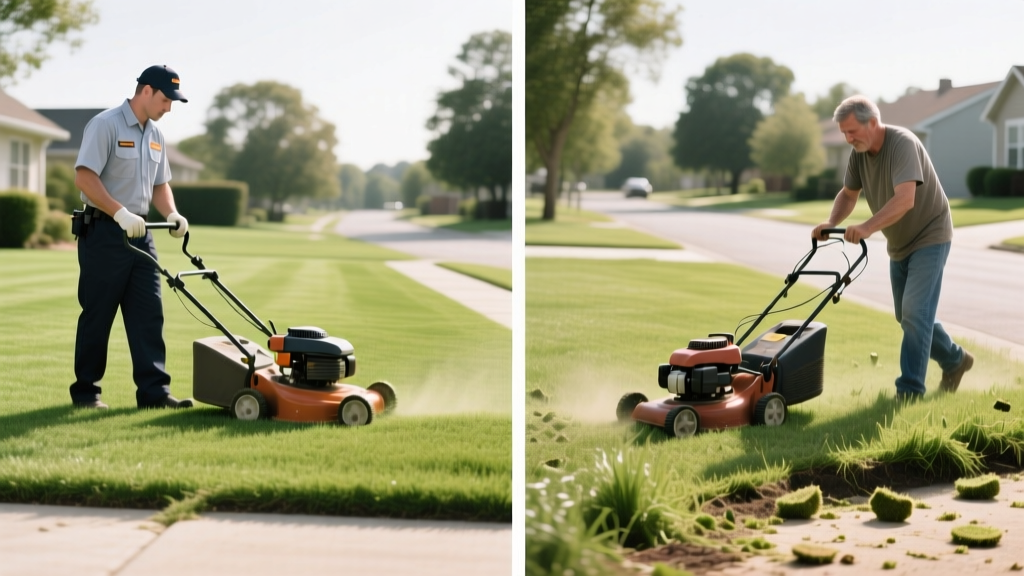
Lawn Care Pricing Guide: Professional vs DIY Costs
Sarah ChenPublished
Introduction to Lawn Care Budgeting
Maintaining a pristine, lush green lawn is a point of pride for many homeowners, but it is also a significant financial and temporal investment. Whether you are battling stubborn crabgrass, trying to achieve deep turf roots, or simply keeping the grass at an optimal height, every lawn care decision carries a price tag. For homeowners trying to balance their budgets, the ultimate question often boils down to this: Should you hire a professional lawn care service, or should you tackle the yard work yourself?
Understanding the true cost of lawn maintenance requires looking beyond just the sticker price of a bag of fertilizer or a monthly landscaping invoice. It involves calculating equipment depreciation, material costs, water usage, and perhaps most importantly, the value of your own time. In this comprehensive pricing guide, we will break down the national averages for professional lawn care services, itemize the expenses associated with the DIY approach, and help you determine which route offers the best return on investment for your specific landscape.
National Averages for Professional Lawn Care
Hiring a professional landscaping or lawn care company transfers the physical labor, technical expertise, and equipment maintenance to trained specialists. According to industry data compiled by Angi, the national average cost for comprehensive professional lawn care ranges from $100 to $300 per month, depending on the size of your yard and the specific services included in your contract.
Basic Maintenance Services
Basic maintenance typically includes weekly or bi-weekly mowing, edging, string trimming, and blowing off clippings from hardscapes. Professionals use commercial-grade zero-turn mowers that cut mowing time in half while providing a manicured, striped finish. For an average suburban lawn of 5,000 to 10,000 square feet, professional mowing services generally cost between $40 and $80 per visit. Over a 30-week mowing season, this translates to an annual cost of $1,200 to $2,400.
Fertilization and Weed Control
Professional fertilization and weed control programs usually consist of 5 to 7 applications per year, spaced roughly four to six weeks apart. These programs utilize commercial-grade pre-emergents (like Prodiamine) to stop crabgrass before it germinates, and selective post-emergent herbicides (like Trimec) to target broadleaf weeds without harming the turf. Based on pricing aggregates from HomeGuide, professional lawn treatment programs cost between $50 and $100 per application, totaling $300 to $700 annually for an average-sized yard.
Core Aeration and Overseeding
Core aeration relieves soil compaction and allows oxygen, water, and nutrients to reach the root zone. When paired with overseeding, it is the most effective way to thicken a thinning lawn. Because aeration requires heavy, specialized machinery, it is a highly outsourced service. Professionals typically charge $15 to $17 per 1,000 square feet for aeration, and an additional $10 to $15 per 1,000 square feet if premium seed (such as turf-type tall fescue or Kentucky bluegrass blends) is included. For a 5,000-square-foot lawn, expect to pay between $125 and $160 for this vital fall or spring service.
Breaking Down the DIY Lawn Care Costs
The DIY route is often perceived as the cheaper alternative, but the upfront capital required to purchase commercial-quality equipment and high-grade materials can be substantial. Furthermore, DIY lawn care demands a strict adherence to seasonal schedules and a willingness to perform physical labor in varying weather conditions.
Equipment Investments
To achieve professional-level results, you cannot rely on entry-level residential equipment. A high-quality, self-propelled gas or battery-powered push mower (such as the Honda HRR216 or EGO Power+ 21-inch) will cost between $400 and $600. You will also need a dedicated string trimmer ($150 to $250), an edger ($100 to $200), and a leaf blower ($100 to $200). If you choose to aerate your own lawn, renting a core aerator from a local hardware store typically costs $70 to $100 per day, while purchasing a standalone aerator can exceed $800.
Consumables and Materials
DIY materials require careful calculation to avoid over-applying or under-applying products. A standard 50-pound bag of professional-grade fertilizer (like Lesco or Andersons) with a balanced NPK ratio (e.g., 24-0-11) costs around $60 to $80 and covers up to 15,000 square feet. For weed control, a half-gallon of concentrated liquid herbicide costs roughly $50 to $90 and requires a backpack sprayer ($80 to $150) for even application. Over the course of a year, a DIY homeowner will spend approximately $200 to $400 on fertilizers, herbicides, grass seed, and fuel or battery charging costs.
Irrigation and Water Bills
Watering is a massive, often overlooked expense in lawn care. Turfgrass generally requires 1 to 1.5 inches of water per week during the growing season. According to the United States Environmental Protection Agency (EPA), outdoor water use accounts for nearly 30% of total household water consumption, with some homes in arid regions using up to 60% of their water outdoors. Depending on your local municipal water rates, keeping a 5,000-square-foot lawn properly irrigated throughout a dry summer can add $150 to $400 to your seasonal utility bills.
Comprehensive Cost Comparison Table
To visualize the financial differences, the table below outlines the estimated annual costs for maintaining an average 5,000-square-foot cool-season lawn. Note that DIY costs do not factor in the monetary value of your labor.
| Service Category | DIY Annual Cost | Professional Annual Cost | Estimated DIY Time Investment |
|---|---|---|---|
| Mowing, Edging, Trimming | $150 - $250 (Fuel/Maintenance) | $1,200 - $2,400 | 45 - 60 hours/year |
| Fertilization & Weed Control | $200 - $350 | $300 - $700 | 10 - 15 hours/year |
| Core Aeration & Overseeding | $150 - $250 (Rental + Seed) | $150 - $300 | 6 - 8 hours/year |
| Equipment Depreciation & Repair | $100 - $300 | $0 (Included in Service) | 5 - 10 hours/year |
| Total Estimated Annual Cost | $600 - $1,150 | $1,650 - $3,400 | 66 - 93 hours/year |
Hidden Costs and the Time Tax of DIY
When analyzing the table above, the DIY route appears significantly cheaper. However, this financial comparison ignores the hidden costs and the 'time tax' associated with self-maintenance. First, there is the cost of mistakes. Over-applying synthetic nitrogen can lead to fertilizer burn, killing patches of grass and requiring costly sod replacement. Misidentifying a fungal disease like Brown Patch and treating it with the wrong fungicide can result in widespread turf loss.
Additionally, DIY lawn care demands weekend labor. Spending 90 hours a year mowing, trimming, spraying, and cleaning up yard waste equates to more than two full 40-hour workweeks. If you value your weekend leisure time, or if your hourly wage at your primary job exceeds $30 to $50 an hour, the opportunity cost of DIY lawn care quickly eclipses the savings generated by not hiring a professional.
Key Factors That Alter Your Pricing
Several variables will cause your specific lawn care costs to deviate from the national averages:
- Lawn Size and Terrain: Costs scale linearly with square footage. Furthermore, steep slopes, numerous obstacles (trees, garden beds), and narrow gates that prevent the use of commercial zero-turn mowers will increase professional labor quotes and DIY fatigue.
- Grass Type: Warm-season grasses like Bermuda and Zoysia require frequent mowing and specific dethatching schedules, while cool-season grasses like Fescue and Bluegrass demand heavy fall fertilization and overseeding.
- Regional Climate: Homeowners in the Southeast may face higher weed control costs due to aggressive warm-season weeds like nutsedge and dallisgrass, while those in the Pacific Northwest might spend more on moss control and drainage solutions.
- Soil Health: Poor soil requires amendments. If a soil test reveals highly acidic soil, you will need to purchase and apply pulverized lime multiple times a year, adding to your material costs.
Making the Final Decision
Choosing between professional lawn care and the DIY approach ultimately depends on your budget, your physical capability, and your passion for landscaping. If you view yard work as a therapeutic weekend hobby and enjoy the precision of edging a perfect driveway line, the DIY route offers immense satisfaction and notable financial savings. You also gain complete control over the chemicals and organic products applied to your soil.
Conversely, if you travel frequently, have a demanding career, or simply dread the summer heat and humidity, outsourcing to a licensed and insured lawn care professional is a worthy investment. Professionals guarantee their work, often offering free re-treatments if weeds persist or if weather washes away an application. By weighing the hard costs of materials and equipment against the soft costs of your time and energy, you can build a lawn care budget that keeps both your turf and your wallet healthy.