Lawn Care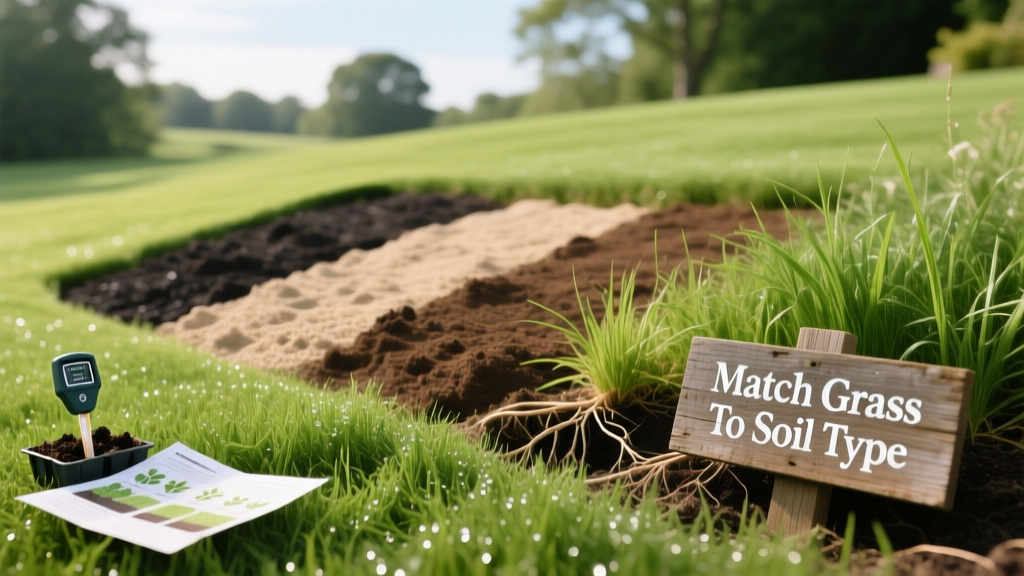
Match Grass to Soil Type: Ultimate Lawn Care Guide
James MillerPublished
Why Soil Type Dictates Your Lawn's Success
Building a lush, resilient lawn goes far beyond simply scattering seed and turning on the sprinkler. The hidden foundation of your turf's health lies beneath the surface in your soil's texture and composition. Soil is generally categorized into three main types based on particle size: sand, silt, and clay. The ratio of these particles determines your soil's drainage capabilities, nutrient retention, and aeration levels. Planting a shade-loving, moisture-dependent grass in fast-draining sandy soil, or a drought-tolerant species in heavy, waterlogged clay, will result in an endless cycle of disease, thinning turf, and wasted money.
According to the USDA Natural Resources Conservation Service, understanding your local soil survey data is the first step in any successful landscaping or agricultural project. By matching your grass species to your native soil type—and strategically amending the ground where necessary—you can drastically reduce water usage, minimize fertilizer runoff, and achieve a thicker, greener lawn.
Identifying Your Soil Type: The Mason Jar Test
Before purchasing seed or fertilizer, you must accurately identify your soil type. While professional laboratory testing is the gold standard for determining pH and exact nutrient deficiencies, you can determine your soil's physical texture at home using the DIY Mason Jar Test.
Step-by-Step Jar Test Instructions
- Collect a Sample: Dig down 4 to 6 inches below the thatch layer and collect about one cup of soil from various spots across your lawn.
- Prepare the Jar: Fill a clear, straight-sided mason jar about one-third full with your soil sample.
- Add Water and Soap: Fill the rest of the jar with water, leaving an inch of air at the top. Add one teaspoon of liquid dish soap (this acts as a dispersing agent to separate soil particles).
- Shake and Settle: Shake the jar vigorously for three minutes, then set it on a flat surface undisturbed for 24 to 48 hours.
- Measure the Layers: Sand will settle at the bottom within a minute. Silt will form the middle layer after a few hours. Clay will form the top layer once the water clears completely.
Once settled, measure the height of each layer and calculate the percentages. A balanced loam consists of roughly 40% sand, 40% silt, and 20% clay.
Professional soil testing through your local university extension office typically costs between $15 and $30. It is highly recommended to test your soil every three years to monitor pH shifts and baseline macronutrients.
Sandy Soil: The Drainage Champion (and Moisture Challenge)
Sandy soil features large, coarse particles that create massive pore spaces. This results in excellent drainage and aeration, meaning roots rarely suffocate. However, sandy soil suffers from a very low Cation Exchange Capacity (CEC). In simple terms, it cannot hold onto water or essential nutrients like nitrogen and potassium, which quickly leach away with every rainfall or irrigation cycle.
Best Grass Species for Sandy Soil
You need grasses with deep, aggressive root systems and high drought tolerance. For warm-season lawns, Bermuda grass and Zoysia grass are exceptional choices. For cool-season regions, Tall Fescue (specifically turf-type or dwarf varieties like 'Titan Ultra') is the undisputed champion because its roots can plunge up to three feet deep to chase moisture.
Amendment and Care Strategy
- Watering: Avoid applying 1 inch of water all at once. Instead, apply 0.5 inches of water twice a week to prevent immediate runoff and leaching.
- Fertilization: Exclusively use slow-release, organic, or sulfur-coated nitrogen fertilizers (e.g., Milorganite or Scotts Turf Builder). Fast-release synthetic fertilizers will wash straight into the water table.
- Topdressing: Apply a 1/4-inch layer of screened organic compost every fall to gradually build up the soil's organic matter and improve its nutrient-holding capacity.
Clay Soil: The Nutrient Vault (and Compaction Trap)
Clay particles are microscopic and flat, packing tightly together. This creates a soil type with an incredibly high CEC, meaning it hoards nutrients brilliantly. Unfortunately, those same tight spaces leave almost no room for oxygen or water movement. Clay lawns are notoriously prone to severe compaction, standing water, and shallow root systems that fry during summer heatwaves.
Best Grass Species for Clay Soil
Cool-season lawns thrive with Kentucky Bluegrass (which spreads via rhizomes to heal compacted areas) and Tall Fescue. For warm-season zones, Buffalo Grass and Zoysia are tough enough to push through dense clay profiles.
The Sand-in-Clay Myth
A pervasive and destructive landscaping myth suggests that adding sand to clay soil will improve drainage. In reality, mixing large sand particles with microscopic clay particles creates a substance with the structural integrity of concrete. According to turf scientists at NC State Extension Turfgrass, the only effective way to break up heavy clay is through the addition of organic matter and physical aeration, not sand.
Amendment and Care Strategy
- Core Aeration: This is non-negotiable for clay lawns. You must perform mechanical core aeration every early fall, pulling 3-inch plugs of soil to the surface to allow oxygen, water, and nutrients to reach the root zone.
- Liquid Aeration: Products containing humic acid or fulvic acid can help chelate bound nutrients in clay, making them available to grass roots.
- Mowing Height: Keep clay-bound grass slightly taller (3 to 4 inches) to encourage deeper root growth and shade the soil, preventing the clay from baking into a hard crust during summer.
Loam and Silt Soils: The Goldilocks Zone
Loam is the horticultural ideal, offering a perfect balance of drainage, moisture retention, and nutrient availability. Silt soils, while highly fertile, can sometimes form a crust that impedes seedling emergence. If you are blessed with a true loam soil, your primary focus should be on maintenance rather than drastic amendment.
Best Grass Species for Loam Soil
Loam supports virtually any turfgrass. Perennial Ryegrass, Fine Fescues, and premium Kentucky Bluegrass blends will perform spectacularly here. Because the soil environment is optimal, you can focus on selecting grasses based on your sun/shade exposure and foot traffic needs rather than soil survival traits.
Grass Species and Soil Compatibility Chart
| Grass Species | Season | Ideal Soil Type | Drainage Tolerance | Amendment Priority |
|---|---|---|---|---|
| Bermuda Grass | Warm | Sandy / Loam | Low (Needs fast drainage) | Compost Topdressing |
| Tall Fescue | Cool | Clay / Loam | Moderate | Core Aeration |
| Kentucky Bluegrass | Cool | Loam / Silt | Moderate | Organic Fertilizer |
| Zoysia Grass | Warm | Clay / Sandy | High (Very adaptable) | Thatch Management |
| Buffalo Grass | Warm | Heavy Clay | High (Survives waterlogging) | Minimal Intervention |
| Fine Fescue | Cool | Sandy / Loam | Low (Requires good drainage) | Avoid Heavy Nitrogen |
Actionable Soil Amendment Schedule and Costs
Transforming poor soil into a turf-friendly environment requires time and strategic investment. According to guidelines published by the University of Minnesota Extension, consistent, light applications of organic matter outperform heavy, one-time chemical fixes. Below is a practical amendment schedule and cost breakdown for a standard 5,000-square-foot lawn.
Cost Breakdown per 5,000 Square Feet
- DIY Soil Testing: $15 - $30 (One time every 3 years via university extension).
- Compost Topdressing: To apply a 1/4-inch layer over 5,000 sq ft, you need approximately 3.8 cubic yards of screened compost. At $40 per cubic yard, expect to spend around $150 on materials, plus delivery fees.
- Core Aeration Rental: Renting a walk-behind aerator costs roughly $75 to $100 for a half-day. Hiring a professional lawn care service will cost between $75 and $125 for the same area.
- Humic Acid Treatment: A high-quality liquid humic acid concentrate (like Simple Lawn Solutions) costs about $35 per bottle, which is enough to treat 5,000 sq ft multiple times a season.
Seasonal Amendment Timeline
- Early Spring: Apply liquid humic acid to clay soils to soften the ground and stimulate microbial activity before the summer heat.
- Late Summer (Pre-Aeration): Mow the lawn short and mark sprinkler heads in preparation for fall aeration.
- Early Fall: Perform core aeration on clay and compacted loam soils. Immediately follow with overseeding and a 1/4-inch compost topdressing. The aeration holes will act as funnels, pulling the compost and seed directly into the root zone.
- Late Fall: Apply a winterizer fertilizer high in potassium to strengthen grass cell walls against winter freeze-thaw cycles, which can cause heaving in clay soils.
Conclusion
Matching your grass species to your native soil type is the single most effective way to reduce lawn care maintenance and chemical reliance. While sandy soils demand moisture-retention strategies and slow-release nutrients, clay soils require aggressive aeration and organic matter integration. By utilizing the Mason Jar test, following a strategic amendment schedule, and selecting the correct turfgrass cultivars, you can build a deep, resilient root system that will keep your lawn green and thriving for decades.