Lawn Care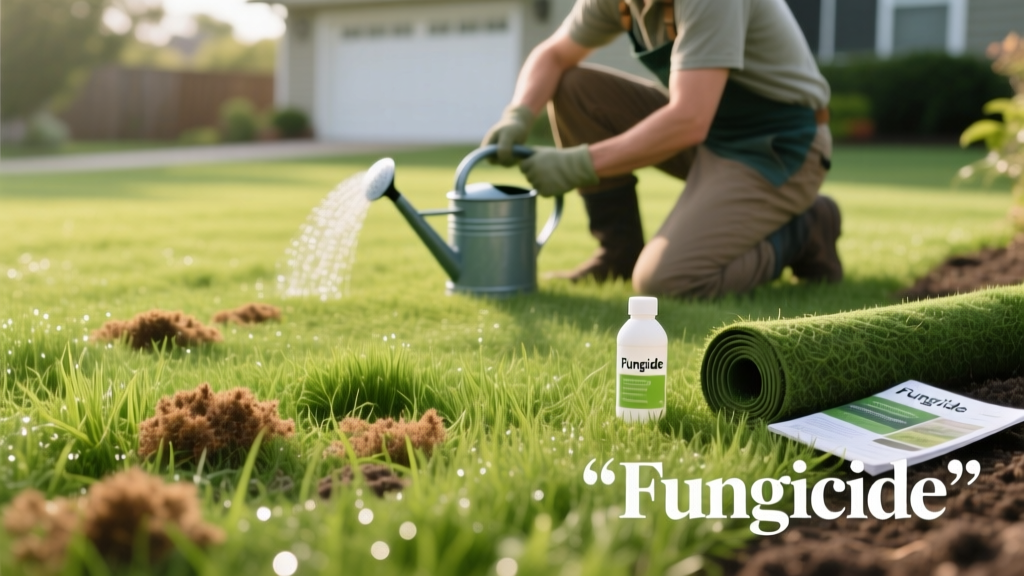
How to Identify and Treat Brown Patch Lawn Disease
Lisa ThompsonPublished
What is Brown Patch Disease?
Brown patch, caused by the fungal pathogen Rhizoctonia solani, is one of the most common and destructive turfgrass diseases in North America. It thrives in hot, humid conditions and can rapidly transform a lush, green lawn into a patchy, blighted mess seemingly overnight. For homeowners and lawn care professionals alike, understanding the life cycle, environmental triggers, and treatment protocols for brown patch is essential for maintaining a pristine landscape. According to turfgrass pathology experts at NC State University's TurfFiles, the disease primarily attacks the leaf blades and sheaths, leading to severe thinning and, in extreme cases, crown rot that kills the plant entirely.
Identifying Brown Patch: Symptoms and Signs
Accurate identification is the first step toward effective treatment. Brown patch typically manifests as circular or irregularly shaped patches of dead or dying grass ranging from a few inches to several feet in diameter.
Key Visual Indicators
- The 'Smoke Ring': In the early morning, when dew is present, you may notice a dark, purplish-black 'smoke ring' at the outer edge of the patch. This indicates active fungal growth.
- Mycelium: Under high humidity and morning dew, white, cobweb-like fungal threads (mycelium) may be visible on the grass blades.
- Lesions: Individual grass blades will exhibit tan or light brown lesions with dark brown margins. The leaves often twist and collapse.
- 'Frog-Eye' Appearance: In some turf types, particularly Kentucky Bluegrass, the center of the patch may recover slightly while the outer ring remains blighted, creating a donut or 'frog-eye' shape.
Grass Susceptibility Chart
Not all grasses are equally vulnerable to Rhizoctonia solani. Cool-season grasses are generally at higher risk during the summer, while warm-season grasses face threats during their transitional growing periods. Below is a susceptibility comparison chart based on data from Penn State Extension:
| Grass Type | Classification | Susceptibility Level | Peak Risk Season |
|---|---|---|---|
| Perennial Ryegrass | Cool-Season | Very High | Early to Mid-Summer |
| Tall Fescue | Cool-Season | High | Early to Mid-Summer |
| Kentucky Bluegrass | Cool-Season | Moderate | Mid-Summer |
| Bermudagrass | Warm-Season | Moderate to High | Late Spring / Early Fall |
| Zoysiagrass | Warm-Season | Moderate | Late Spring / Early Fall |
| Centipedegrass | Warm-Season | Low to Moderate | Late Spring |
Environmental Triggers: Why Brown Patch Attacks
The brown patch fungus is almost always present in the soil, but it only becomes destructive when specific environmental conditions align. The pathogen requires a combination of high humidity, extended periods of leaf wetness (10 to 12 hours), and warm temperatures. Specifically, night temperatures consistently above 68°F (20°C) combined with daytime highs over 80°F (26°C) create the perfect breeding ground.
Furthermore, cultural practices heavily influence disease severity. Lawns that receive excessive amounts of quick-release nitrogen fertilizer in late spring or early summer produce lush, soft, and succulent leaf tissue that is highly susceptible to fungal penetration. Poor soil drainage, compacted soil, and excessive thatch buildup (greater than 0.5 inches) also trap moisture against the grass crown, exacerbating the problem.
How to Treat Brown Patch: Fungicide Strategies
When cultural controls are insufficient, or when an outbreak is actively spreading, chemical intervention is necessary. Fungicides are most effective when used preventatively, but certain products can halt the spread of an active (curative) infection.
Choosing the Right Active Ingredient
To prevent the fungus from developing chemical resistance, it is critical to rotate fungicides with different modes of action, categorized by FRAC (Fungicide Resistance Action Committee) codes.
- Azoxystrobin (FRAC 11): Found in products like Scotts DiseaseEX and professional-grade Syngenta Heritage. This is a broad-spectrum strobilurin that provides excellent preventative control and stops active lesions from expanding. Cost: Approximately $25 to $30 per 5,000 sq. ft. bag of granular.
- Propiconazole (FRAC 3): Found in BioAdvanced Fungus Control and Banner Maxx. This is a DMI (demethylation inhibitor) triazole fungicide that offers strong curative action. Cost: Roughly $15 to $20 per 5,000 sq. ft. liquid application.
- Myclobutanil (FRAC 3): A more affordable, widely available triazole found in Spectracide Immunox. Best used for mild infections or as a rotational partner with FRAC 11.
Application Rates and Timing
For preventative treatment, apply granular Azoxystrobin at a rate of 1.5 to 2.0 lbs per 1,000 square feet just before the onset of hot, humid weather (typically late May to early June, depending on your zone). For curative treatment when active smoke rings are visible, increase the application rate to the maximum label allowance (usually 2.0 to 2.5 lbs per 1,000 sq. ft.) and water the granules in immediately to move the active ingredient into the thatch and soil layer. Repeat applications every 14 to 28 days as directed by the product label, alternating between FRAC 11 and FRAC 3 chemistries.
Cultural Practices for Long-Term Prevention
While fungicides act as a powerful reset button, long-term lawn health relies on modifying the environment to make it hostile to Rhizoctonia solani. The Ohio State University Extension emphasizes that integrating cultural controls drastically reduces the need for chemical interventions.
Smart Irrigation Techniques
Watering practices dictate leaf wetness duration, which is the primary catalyst for brown patch. Always water your lawn deeply and infrequently, aiming for 1 to 1.5 inches of water per week. Crucially, irrigate only in the early morning hours (between 4:00 AM and 8:00 AM). This allows the grass blades to dry quickly once the sun rises, depriving the fungus of the 10+ hours of continuous moisture it needs to infect the plant. Never water in the evening.
Fertilization and Mowing Rules
Avoid applying high-nitrogen, quick-release fertilizers (like urea) during the peak summer months for cool-season grasses. If you must feed your lawn in early summer, use a slow-release, organic-based nitrogen source at a low rate (0.5 lbs of nitrogen per 1,000 sq. ft.). Additionally, never mow wet grass, as mowers will physically spread fungal spores from blade to blade and create open wounds on the grass that invite infection. Keep your mower blades razor-sharp to ensure clean cuts that heal rapidly.
Aeration and Thatch Management
Core aeration, performed in the fall for cool-season grasses or late spring for warm-season varieties, alleviates soil compaction and improves drainage. If your thatch layer exceeds 0.5 inches, use a dethatching rake or power rake to remove the organic debris that harbors fungal pathogens and traps humidity against the soil surface. By combining vigilant monitoring, strategic fungicide rotation, and disciplined cultural habits, you can successfully defend your lawn against the devastating effects of brown patch disease.