Tree Care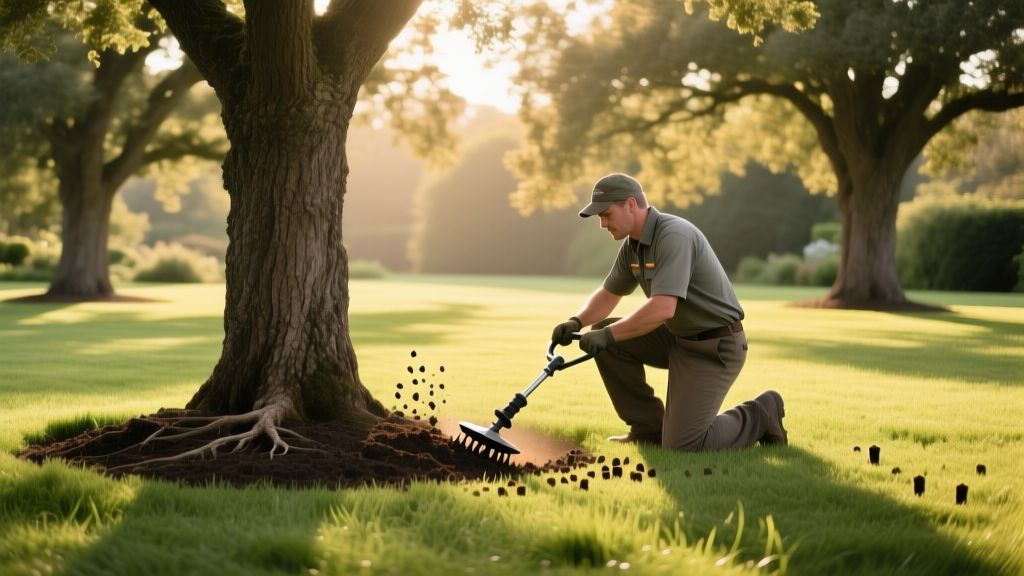
How To Aerate And Overseed Lawns Around Mature Trees Safely
Sarah ChenPublished
The Dilemma: Turf Grass vs. Tree Roots
Homeowners often face a frustrating landscaping paradox: the very trees that provide beautiful shade and increase property value are often the same features causing the lawn beneath them to thin, yellow, and die. In an attempt to fix bare, compacted patches under the canopy, many well-meaning gardeners deploy heavy mechanical core aerators and aggressive overseeding routines. Unfortunately, treating the soil around a mature tree exactly like an open, sun-drenched lawn is a recipe for disaster. The competition for water, nutrients, and physical space between turfgrass and tree roots is intense. When you add soil compaction into the mix, both the grass and the tree suffer. However, with the right specialized techniques, you can successfully aerate the soil and overseed the understory without compromising the structural integrity or health of your mature trees.
Understanding the Critical Root Zone (CRZ)
Before dropping a single grass seed or punching a single hole in the ground, you must understand the Critical Root Zone (CRZ). The CRZ is the area of soil that contains the majority of a tree's vital, water-absorbing feeder roots. A standard rule of thumb used by certified arborists is to calculate the CRZ by measuring one foot of radius for every one inch of trunk diameter at breast height (DBH). For a mature oak with a 20-inch trunk, the CRZ extends 20 feet out from the trunk in all directions.
Contrary to popular belief, a tree's root system does not mirror its canopy deep underground. According to the University of Florida IFAS Extension, the vast majority of a tree's absorbing roots are located in the top 6 to 12 inches of the soil profile. These fine, hair-like feeder roots are incredibly sensitive to changes in soil oxygen levels, moisture, and physical damage. Because they occupy the exact same shallow soil horizon as turfgrass roots, any aggressive lawn care practice directly impacts the tree's ability to sustain itself.
Why Traditional Core Aeration Harms Trees
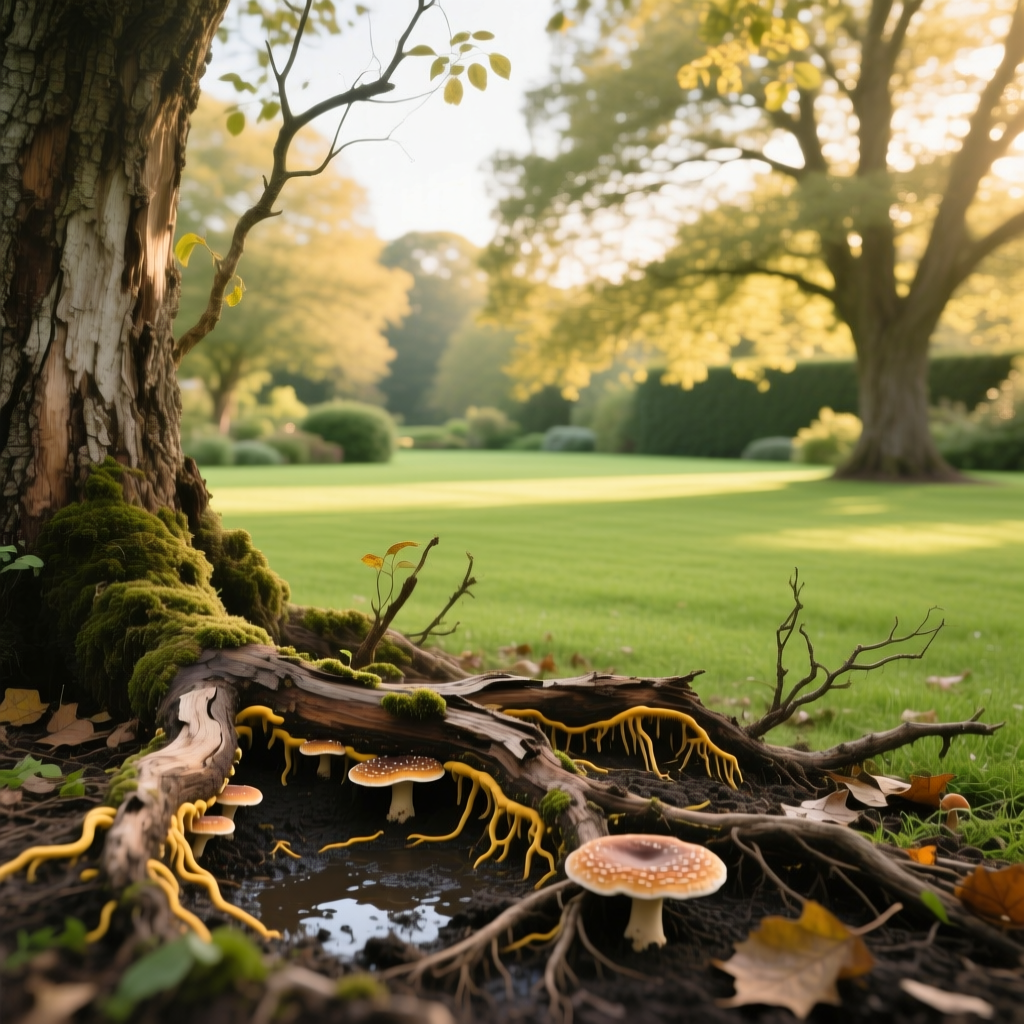
Standard mechanical core aeration involves pulling 2-to-3-inch soil plugs from the ground using heavy, gas-powered tines. In an open lawn, this relieves compaction and allows oxygen to reach grassroots. Inside a tree's CRZ, however, these metal tines act like a blender. They sever the delicate feeder roots responsible for nutrient uptake. Furthermore, the open wounds left in the soil can invite opportunistic soil-borne pathogens, such as Armillaria root rot or Phytophthora, directly into the tree's vascular system. Repeated core aeration under a mature tree's drip line can lead to a slow, irreversible decline in tree vigor, manifesting as canopy dieback and increased susceptibility to borers and environmental stress.
Safe Aeration Techniques for Tree Zones
To relieve soil compaction around trees without causing mechanical damage, you must utilize specialized aeration methods that prioritize root preservation.
1. Liquid Aeration (The Safest DIY Option)
Liquid aeration relies on chemical and biological surfactants rather than physical tines. Products containing ammonium lauryl sulfate, humic acids, and yucca extract work by breaking the ionic bonds between compacted clay particles, effectively creating microscopic channels for water and oxygen to penetrate. Because it is applied via a standard hose-end sprayer, there is zero physical trauma to the tree's shallow root system. For best results, apply liquid aerators in early fall or spring when soil temperatures are between 55°F and 75°F, and water deeply immediately after application to pull the solution into the root zone.
2. Radial Trenching and Vertical Mulching
For severely compacted soils where water pools after rainstorms, radial trenching is a highly effective, albeit labor-intensive, solution. This involves digging narrow trenches (2 to 4 inches wide and 8 to 12 inches deep) that radiate outward from the trunk like spokes on a wheel, starting at least 3 feet away from the base to avoid major structural anchor roots. These trenches are then backfilled with a mix of coarse compost, pine bark fines, and expanded shale. This provides long-term pathways for oxygen and moisture while slowly feeding the tree. Vertical mulching follows a similar concept but uses a 2-inch auger to drill holes in a grid pattern across the CRZ, which are then filled with the same porous amendments.
3. Air Spading (Professional Root Zone Excavation)
If your tree is showing severe signs of decline due to construction damage or extreme compaction, hire an ISA Certified Arborist to perform AirSpading. This technique uses a specialized pneumatic tool that blows compressed air at supersonic speeds to fracture and excavate compacted soil. Because soil particles are much lighter and less cohesive than living wood, the air safely blows the dirt away from the roots without tearing or bruising the bark. The exposed roots can then be treated, and the soil can be replaced with a highly engineered, structural soil mix that resists future compaction. This professional service typically costs between $500 and $1,500 depending on the tree's size and site access.
Overseeding Strategies in the Tree Canopy
Once the soil is safely aerated, overseeding requires a delicate touch to ensure seed-to-soil contact without tilling or slicing through tree roots.
Choosing the Right Shade-Tolerant Seed
Standard Kentucky Bluegrass or Perennial Ryegrass blends will fail under a dense tree canopy. You must select species specifically adapted to low-light, high-competition environments. The University of Minnesota Extension strongly recommends Fine Fescues for shaded tree zones. Specifically, look for seed blends containing Creeping Red Fescue, Chewings Fescue, and Hard Fescue. These species have incredibly fine leaf blades, require less nitrogen, and are highly drought-tolerant, which helps them compete with the tree's massive water demand.
Achieving Seed-to-Soil Contact Safely
Do not use aggressive power rakes or deep slit-seeders under the drip line. Instead, gently rake the area with a flexible leaf rake to remove debris and lightly scratch the very top layer of soil. Broadcast your fine fescue seed at a rate of 4 to 5 pounds per 1,000 square feet. To ensure the seed makes contact and retains moisture, topdress the seeded area with a very thin layer (no more than 1/4 inch) of screened, aged compost. Thicker layers of compost or topsoil will suffocate the tree's shallow feeder roots by burying them too deeply, cutting off their oxygen supply.
When to Stop Overseeding and Start Mulching
Sometimes, the most responsible tree care decision is to abandon the idea of grass entirely. Turfgrass requires a minimum of 3 to 4 hours of direct or brightly dappled sunlight to photosynthesize and survive. If your tree's canopy is so dense that the ground remains in deep shade, no amount of aeration or premium seed will result in a lasting lawn. In these areas, the continuous cycle of failing grass, fungal diseases, and soil compaction from foot traffic will eventually kill the tree. According to the International Society of Arboriculture (ISA), maintaining a 2-to-4-inch layer of organic mulch (like shredded hardwood or pine bark) out to the drip line is the single best practice for tree health. Mulch eliminates root competition, retains soil moisture, regulates soil temperature, and prevents lawnmowers from causing devastating trunk wounds.
Comparison Chart: Aeration Methods for Tree Zones
| Aeration Method | Penetration Depth | Root Damage Risk | Estimated Cost | Best Use Case |
|---|---|---|---|---|
| Traditional Core Aeration | 2 - 3 inches | High (Severs feeder roots) | $15 - $25 / 1,000 sq ft | Outside the tree's Critical Root Zone only |
| Liquid Aeration | Up to 6 inches (chemical) | None | $30 - $50 (DIY materials) | Mild compaction, annual maintenance inside CRZ |
| Radial Trenching | 8 - 12 inches | Low (If done outside 3ft radius) | $200 - $400 (Labor intensive) | Severe compaction, poor drainage, declining trees |
| AirSpade Excavation | Variable (up to 18+ inches) | Very Low (Non-invasive) | $500 - $1,500+ (Professional) | Construction damage, girdling root correction, extreme compaction |
Step-by-Step Action Plan for Fall or Spring
To successfully integrate turfgrass and tree health, follow this seasonal timeline. Fall is generally the optimal time for this process, as cool-season grasses establish well, and trees are actively storing carbohydrates in their roots for the winter.
- Step 1: Soil Testing. Pull soil samples from both the open lawn and the tree zone. Tree zones often become highly acidic due to decaying leaf litter, while lawn grass prefers a pH of 6.0 to 7.0. Apply pelletized lime only if the soil test dictates it, as altering pH too rapidly can shock the tree.
- Step 2: Gentle Debris Removal. Use a blower or a flexible rake to clear heavy accumulations of wet leaves and matted thatch from the tree base. Never use a metal landscaping rake aggressively near the trunk.
- Step 3: Targeted Aeration. Use liquid aeration across the entire CRZ. If you are dealing with heavy clay outside the immediate trunk zone (at least 4 feet away), you may carefully use a manual, foot-press core aerator to pull a few plugs, but avoid motorized, heavy-tine machines.
- Step 4: Overseed and Topdress. Broadcast your shade-tolerant Fine Fescue blend. Apply a 1/4 inch layer of screened compost to protect the seed.
- Step 5: Strategic Watering. Tree roots and new grass seed both require consistent moisture, but overwatering will drown the tree's shallow roots and cause seed rot. Water lightly twice a day for 10-15 minutes for the first 14 days to keep the top inch of soil moist. Once the grass germinates, transition to deep, infrequent watering (1 inch per week) to encourage both grass and tree roots to grow deeper.
By respecting the biology of the tree's root system and adapting your lawn care techniques accordingly, you can cultivate a lush, shaded landscape where both the canopy above and the turf below thrive in harmony.