Tree Care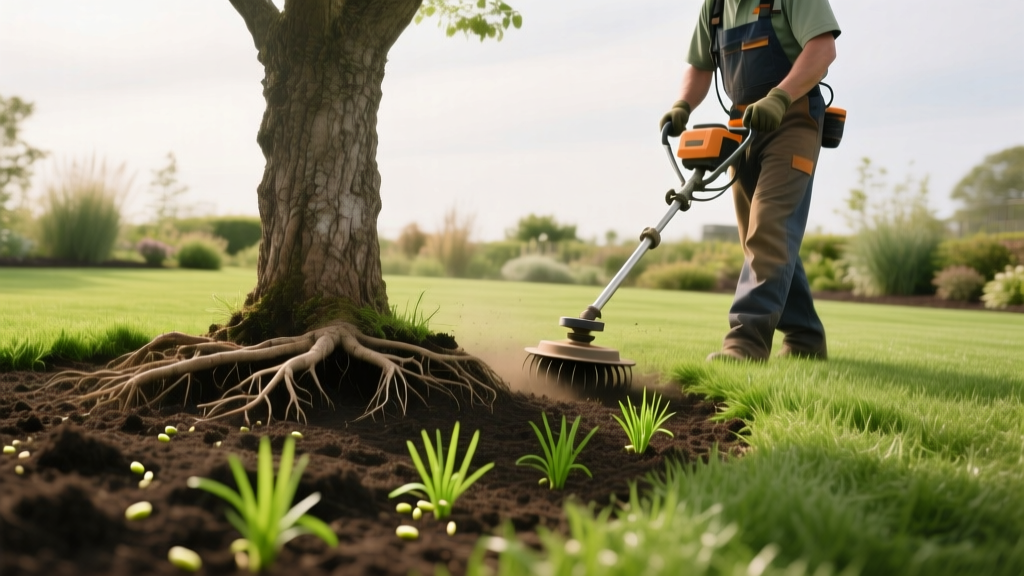
Safely Aerating and Overseeding Lawns Around Trees
Anna KowalskiPublished
The Hidden Conflict Between Turfgrass and Tree Roots
For many homeowners, the ideal landscape features a vibrant, emerald-green lawn perfectly framing majestic, mature shade trees. However, achieving this picturesque vision requires navigating a complex ecological conflict beneath the soil surface. Turfgrass and trees are not naturally complementary; in fact, they are fierce competitors. Grass thrives in full sunlight, requires frequent and shallow irrigation, and demands high-nitrogen fertilizers. Trees, conversely, prefer deep, infrequent watering, cast heavy shade that stifles grass growth, and rely on a massive, sprawling network of shallow roots that occupy the exact same topsoil horizon as your turf.
When homeowners undertake standard lawn care practices—specifically mechanical core aeration and aggressive overseeding—they often inadvertently inflict severe damage on their trees. The very techniques used to relieve soil compaction for grass can act like a rototiller through delicate tree feeder roots. Understanding how to balance the needs of your turf with the biological imperatives of your trees is essential for long-term landscape health. This guide explores advanced, tree-safe aeration and overseeding techniques that promote vigorous turf without compromising the structural integrity or vitality of your mature trees.
Mapping the Critical Root Zone (CRZ)
Before you rent a core aerator or spread grass seed, you must identify and map the Critical Root Zone (CRZ) of every tree on your property. The CRZ is the area of soil that contains the vast majority of a tree's fine, water-absorbing feeder roots. Contrary to popular belief, tree roots do not mirror the shape of the canopy deep underground. Instead, up to 80% of a tree's root mass is located in the top 6 to 12 inches of soil, often extending two to three times beyond the drip line (the outer edge of the leaf canopy).
Arborists generally calculate the CRZ using the trunk diameter rule: measure the diameter of the trunk at breast height (DBH, about 4.5 feet off the ground) in inches, and multiply that by 1.5 to get the radius of the critical root zone in feet. For example, a tree with a 20-inch trunk diameter has a CRZ extending 30 feet outward from the trunk in all directions. According to the University of Minnesota Extension, protecting the soil structure within this zone from heavy machinery and aggressive tilling is paramount to preventing irreversible decline, canopy dieback, and structural failure.
Safe Lawn Aeration Techniques Near Mature Trees
Soil compaction is the enemy of both turfgrass and tree roots. Compacted soil lacks the pore space necessary for oxygen exchange, water infiltration, and root expansion. While aeration is necessary, the method you choose within the tree's drip line dictates the survival of the root system.
1. Core Aeration with Depth Limitations
Standard mechanical core aeration involves a machine pulling 3-inch to 4-inch plugs of soil from the earth. While excellent for open lawn spaces, dragging a heavy, gas-powered core aerator over a tree's CRZ will sever thousands of vital feeder roots. If you must use a core aerator near the outer edges of the drip line, adjust the depth pins on the machine to pull cores no deeper than 2 inches. Avoid making multiple passes in overlapping directions, as this exponentially increases root shearing. Never use a core aerator within the inner half of the drip line.
2. Liquid Aeration: The Chemical Alternative
For the soil directly beneath the tree canopy, liquid aeration is the safest and most effective modern technique. Liquid aerators utilize active ingredients like ammonium lauryl sulfate, combined with humic and fulvic acids. When applied via a hose-end or pump sprayer, these surfactants break the surface tension of the soil, allowing water and oxygen to penetrate deeply without any physical disruption to the root network. While liquid aeration does not physically remove soil cores, it effectively softens hardpan clay and encourages deeper root growth for both the turf and the tree.
3. Air Spading: Professional Decompaction
If the soil around your mature tree is severely compacted due to past construction, heavy foot traffic, or years of aggressive mowing, you may need professional intervention. Arborists use a tool called an AirSpade, which fires a supersonic stream of compressed air to fracture and excavate compacted soil without cutting or tearing the flexible tree roots. According to the International Society of Arboriculture's Trees Are Good resource, pneumatic excavation is the gold standard for root collar excavation, radial trenching, and severe soil decompaction within the CRZ. This service typically costs between $150 and $300 per tree but can add decades to a mature tree's lifespan.
Overseeding the Drip Line: Best Practices for Tree Health
Overseeding a lawn shaded by mature trees presents unique challenges. The shade limits photosynthesis for the grass, while the tree's dense root mat aggressively outcompetes new grass seedlings for moisture and nutrients. Furthermore, the physical act of preparing the seedbed can harm the tree.
Avoid using power slicers or dethatchers with rigid metal blades within the tree's CRZ. These machines slice through the top inch of soil to create seed furrows, effectively decapitating the tree's most active feeder roots. Instead, prepare the seedbed using a flexible bamboo leaf rake or a specialized turf rake with flexible tines. Gently scratch the soil surface just enough to ensure seed-to-soil contact without penetrating deeper than a quarter-inch.
When selecting seed, opt for shade-tolerant, low-input grass species that require less water and fertilizer, thereby reducing competition with the tree. Fine fescues, such as Chewings fescue, creeping red fescue, and hard fescue, are excellent choices. They have fine, needle-like blades, require minimal mowing, and thrive in the dappled light of a tree canopy.
The Danger of Topdressing and Burying the Root Flare
A common overseeding practice is topdressing the lawn with a layer of compost or topsoil to protect the seed and retain moisture. While a thin layer (no more than 1/4 inch) is generally safe for the wider lawn, you must be incredibly careful near the base of the tree. The root flare—the area where the trunk widens and transitions into the root system—must always be visible and exposed to the air. Burying the root flare with topsoil, compost, or excessive mulch traps moisture against the bark, leading to fungal decay, the development of suffocating girdling roots, and eventually, the death of the tree. When topdressing near the trunk, pull the compost back at least 6 to 12 inches from the bark, creating a donut shape that protects the root flare.
Comparison Chart: Aeration Methods in Tree Zones
Choosing the right aeration method depends on your location relative to the tree and the severity of the soil compaction. Refer to the chart below to make an informed decision for your landscape.
| Aeration Method | Mechanism | Root Damage Risk | Est. Cost (per 1,000 sq ft) | Best Application Zone |
|---|---|---|---|---|
| Core Aeration | Physical extraction of 3-inch soil plugs | High (severs fine feeder roots) | $15 - $25 | Outside the drip line |
| Liquid Aeration | Surfactants reduce soil water tension | None (chemical process) | $20 - $35 | Inside the Critical Root Zone |
| Air Spading | Compressed air fractures compacted soil | None (roots remain intact) | $150 - $300 (per tree) | Severe compaction / Root flare excavation |
| Spike Aeration | Solid tines punch holes into soil | Moderate (causes lateral compaction) | $10 - $20 | Not recommended near trees |
Protecting Mycorrhizal Fungi Networks
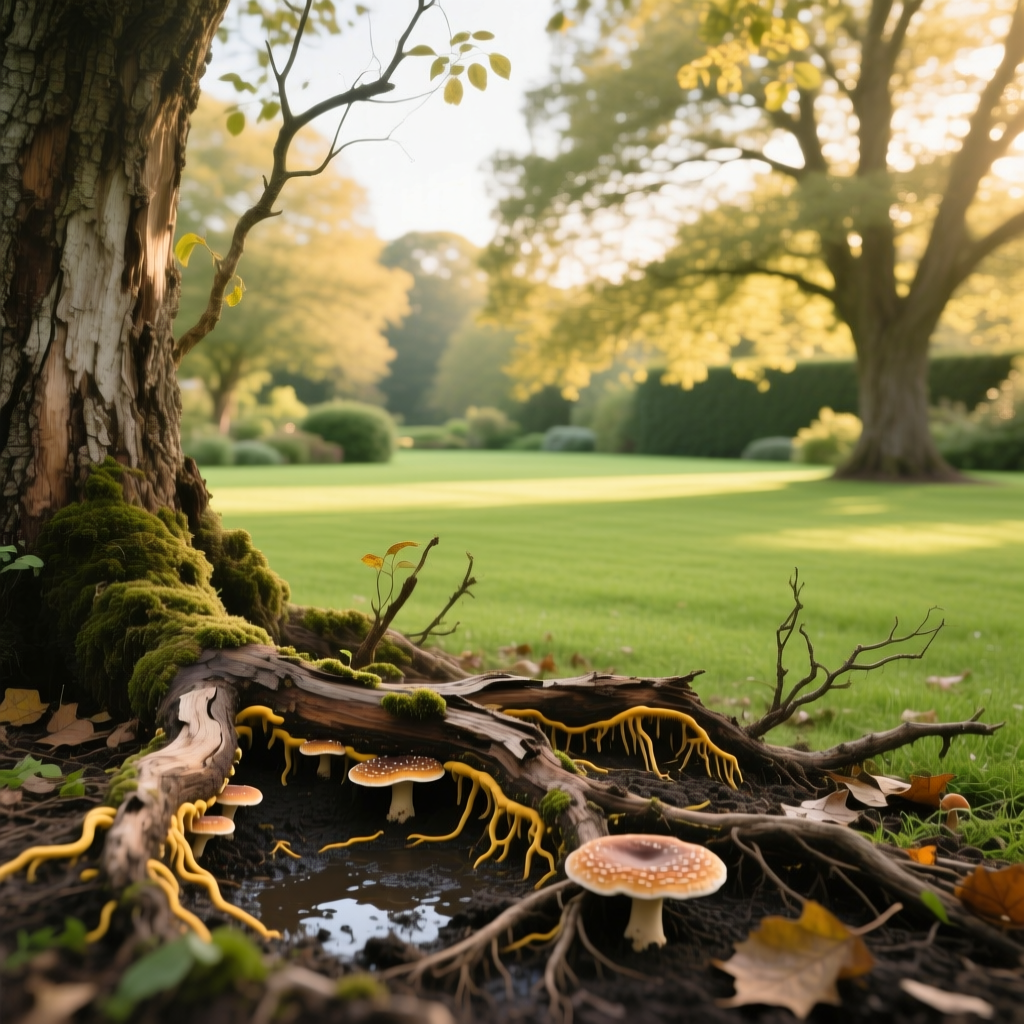
When managing the soil around trees, it is vital to consider the unseen biological workforce beneath your feet. Trees rely heavily on mycorrhizal fungi—a symbiotic network of fungal threads that attach to tree roots and extend far into the soil, acting as a secondary root system. These fungi mine the soil for phosphorus, micronutrients, and water, trading them to the tree in exchange for carbohydrates produced through photosynthesis.
Aggressive lawn care practices can devastate these fungal networks. Deep core aeration physically tears the mycelial threads, while the heavy application of synthetic, high-phosphorus lawn fertilizers can render the fungi obsolete, causing the tree to shed its fungal partners. When overseeding and fertilizing near trees, choose organic, slow-release fertilizers that are low in phosphorus. Incorporating mycorrhizal inoculants into your seed mix or topdressing compost can help rebuild these vital networks, ensuring both your new turf and your mature trees thrive in a shared, biologically active soil ecosystem.
Seasonal Timing: Balancing Tree and Turf Needs
Timing your aeration and overseeding correctly is just as important as the technique used. For cool-season turfgrasses and most deciduous trees, early fall (late August to early October) is the optimal window. During this period, soil temperatures are still warm enough to encourage rapid grass seed germination, while the cooling air temperatures reduce heat stress on the seedlings.
More importantly, fall is when trees are actively storing carbohydrates in their root systems to survive the upcoming winter dormancy and fuel the spring flush. By using gentle, non-destructive aeration methods like liquid aeration in the fall, you improve oxygen and water flow to the tree's roots precisely when they need it most, without causing the stress and energy drain associated with root severing. Avoid aerating or overseeding within the tree's CRZ during the hot, dry summer months, as any root damage combined with heat stress can trigger premature leaf drop and severe canopy dieback.
Conclusion
Maintaining a lush lawn beneath the sprawling canopy of a mature tree requires a shift in perspective. By viewing the landscape as an interconnected ecosystem rather than two separate entities, you can adopt practices that support both. Ditch the heavy mechanical core aerators within the drip line, embrace the science of liquid aeration, and be fiercely protective of the tree's root flare and critical root zone. With careful seed selection, gentle soil preparation, and a deep respect for the hidden biology of the soil, you can cultivate a landscape where both your turf and your trees flourish for generations to come.