Tree Care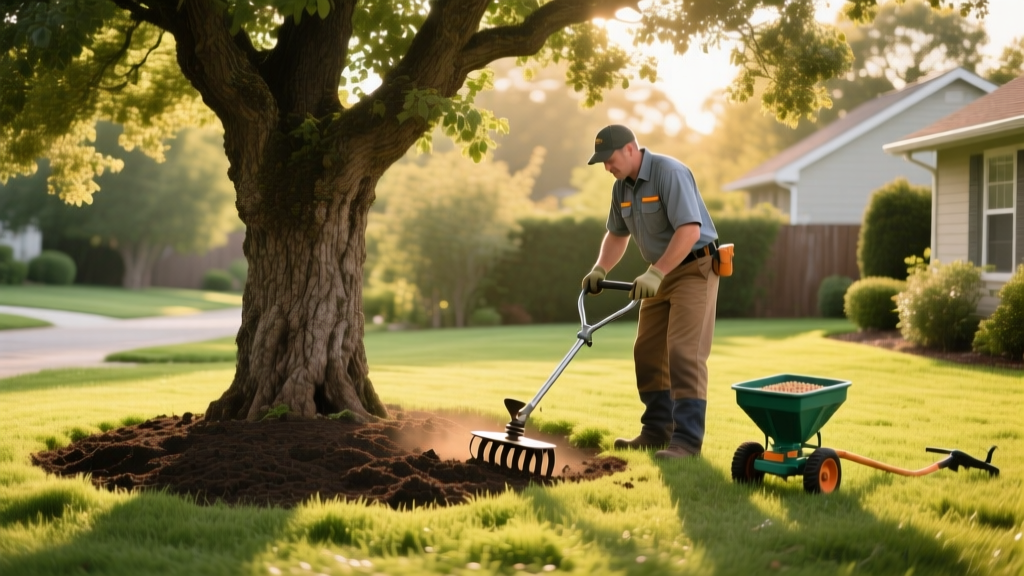
Aerating Lawns Around Trees: Protect Roots While Overseeding
Sarah ChenPublished
The Tree-Turf Conflict: Why Standard Lawn Care Fails
Lawns and trees are natural competitors. In a forest ecosystem, trees drop leaves that decompose into a rich, spongy duff layer, naturally aerating the soil and retaining moisture. In a manicured landscape, we replace that duff layer with turfgrass, creating an environment where two vastly different plant types fight for the same resources. Turfgrass requires full sun, frequent shallow watering, and high nitrogen levels. Trees, conversely, require deep, infrequent watering and have vast networks of fine feeder roots located in the top 6 to 12 inches of soil. This is the exact same zone where turfgrass lives and where standard lawn aeration occurs.
According to the Colorado State University Extension, this competition for water, nutrients, and space is known as the tree-turf conflict. When homeowners blindly run heavy, gas-powered core aerators over the root zones of mature oaks, maples, or pines, they risk severing the very feeder roots the tree relies on for canopy health and structural stability. To maintain a lush lawn without compromising tree health, you must adapt your aeration and overseeding techniques to respect the tree's biological needs.
Mapping the Critical Root Zone (CRZ) Before You Aerate
Before starting any aeration or overseeding project, you must map the tree's Critical Root Zone (CRZ). The CRZ is the area where the majority of the tree's fine, water-absorbing roots are located. It generally extends to the tree's drip line (the outer edge of the canopy) and often beyond. A standard arboricultural rule of thumb for calculating the minimum protected root zone is to allow 1 to 1.5 feet of radial distance per inch of trunk diameter at breast height (DBH).
- Step 1: Measure the trunk diameter at 4.5 feet above the ground.
- Step 2: Multiply that diameter by 1.5 to get the radius in feet.
- Step 3: Mark this circular zone with landscaping paint or flags.
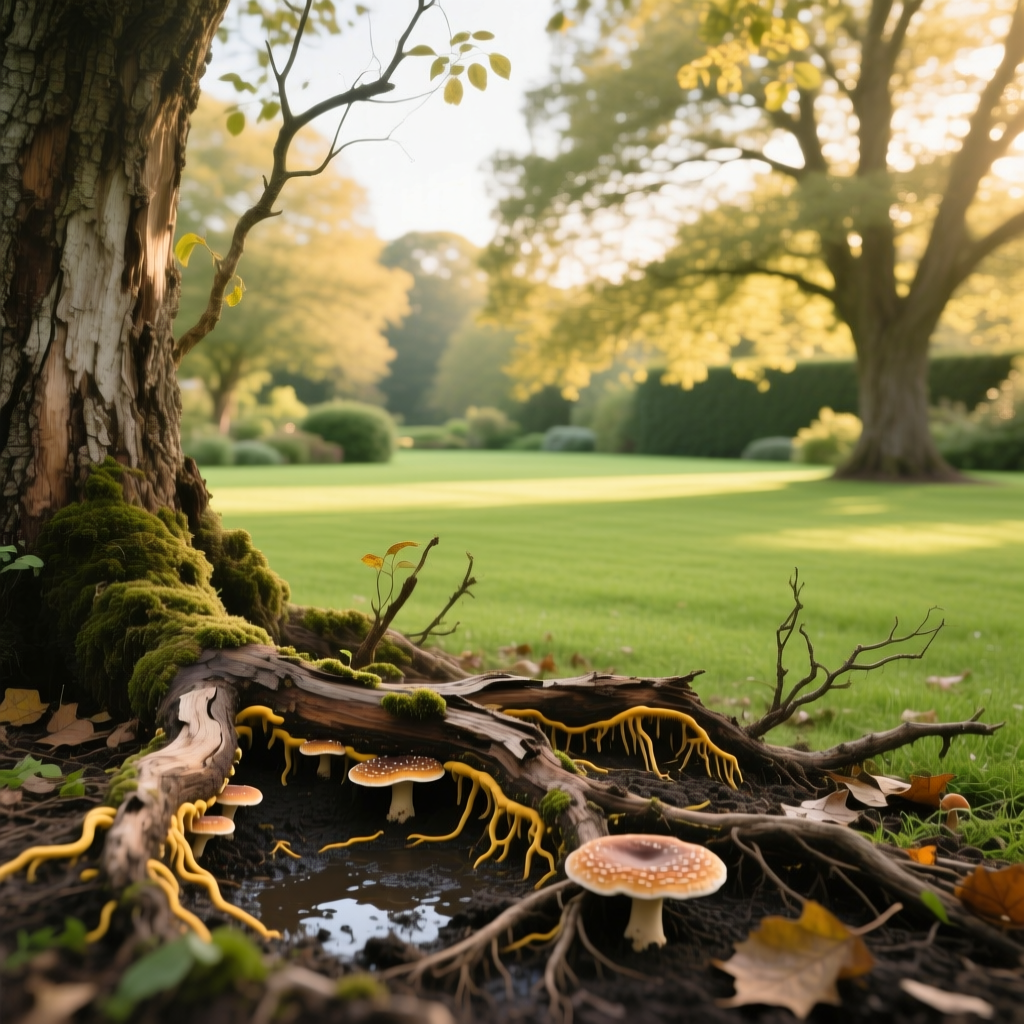
Within this marked zone, the soil is heavily populated with delicate surface roots. Heavy equipment and deep tines can cause catastrophic damage to the tree's vascular system and invite fatal pathogens like Armillaria root rot.
Safe Core Aeration Techniques Near Established Trees
Standard lawn aeration pulls 3-inch to 4-inch soil cores to relieve compaction. As noted by Penn State Extension, core aeration is vital for turf health, allowing oxygen, water, and nutrients to reach the root zone. However, near trees, you must drastically adapt your technique to avoid root pruning.
Equipment Selection and Depth Control
Avoid heavy, tractor-mounted aerators or stand-on commercial machines that cause severe soil compaction and crush surface roots. Instead, use a lightweight, walk-behind drum aerator or a manual core aerator. When working inside the CRZ, limit your tine depth to a maximum of 2 inches. This is deep enough to break through the thatch layer and shallow turf roots, but shallow enough to avoid severing the tree's primary feeder roots.
Furthermore, you must establish a strict 'no-aeration' buffer around the trunk base. Keep all aerator tines at least 3 to 5 feet away from the trunk to protect the root flare and major structural roots. Exposing or damaging the root flare can lead to girdling roots and severe trunk decay.
Timing Your Aeration and Soil Testing
Timing is critical when balancing tree and turf health. For cool-season lawns, early fall (late August to mid-September) is the ideal time for aeration and overseeding. During this period, trees are beginning to enter dormancy, reducing their active water uptake and making them more resilient to minor soil disturbances. Simultaneously, cool-season grasses are entering their peak growth phase, allowing for rapid seed germination.
Before overseeding, conduct a soil test. Trees like oaks, pines, and spruces prefer slightly acidic soil (pH 5.5 to 6.5), while turfgrass thrives at a pH of 6.0 to 7.0. Aim for a compromise pH of 6.2 to 6.5. Apply pelletized lime or sulfur based on your soil test results to reach this sweet spot, ensuring neither the tree nor the turf suffers from nutrient lockout.
Overseeding the Shade: Choosing the Right Grass
Once the soil is safely aerated, overseeding is necessary to fill in bare, shaded spots. Standard Kentucky Bluegrass will quickly thin out and die under a dense tree canopy. You must select shade-tolerant, low-competition grasses that require less water and fertilizer.
- Fine Fescues: Varieties like Chewings fescue, creeping red fescue, and hard fescue are the gold standard for tree-shaded lawns. They have needle-like blades, require minimal nitrogen, and tolerate dry shade exceptionally well.
- Application Rate: Apply fine fescue seed at a rate of 4 to 6 lbs per 1,000 square feet.
- Fertilizer Choice: Use a starter fertilizer low in nitrogen but high in phosphorus (e.g., a 10-18-10 blend) to encourage deep turf root growth without forcing excessive top growth that steals sunlight from the tree's lower branches.
Vertical Mulching: The Arborist's Alternative
If the soil under your tree is heavily compacted but the roots are too shallow for safe core aeration, utilize a technique called vertical mulching. This involves drilling 2-inch wide holes, 8 to 12 inches deep, in a grid pattern under the drip line. These holes are then filled with a mixture of compost, vermiculite, and slow-release tree fertilizer. This bypasses the surface feeder roots and delivers oxygen and organic matter directly to the deeper root profile without tearing the upper soil horizons.
Comparison Chart: Core Aeration vs. Vertical Mulching
| Feature | Standard Core Aeration | Vertical Mulching |
|---|---|---|
| Primary Target | Turfgrass root zone (Top 2-3 inches) | Tree feeder roots (Top 8-12 inches) |
| Equipment Used | Walk-behind drum aerator | 2-inch auger bit on heavy-duty drill |
| Root Impact | Minor pruning of surface roots | Bypasses surface roots; minimal damage |
| Best Use Case | Open lawn areas and outer CRZ edges | Heavily compacted soil directly under canopy |
Post-Overseeding Care and Proper Mulching Boundaries
Watering newly overseeded lawns around trees requires a careful balancing act. New grass seed needs light, daily watering to keep the top inch of soil moist. Trees, however, need deep, slow soaking to encourage deep root growth. To compromise, water the entire area deeply in the early morning to satisfy the tree, and apply a light mist in the afternoon strictly to the seeded turf areas to prevent the seed from drying out.
Finally, maintain a strict mulch boundary to separate the turf from the tree trunk. The Morton Arboretum strongly advises keeping mulch, turf, and mechanical equipment away from the tree trunk to prevent rot, girdling roots, and rodent damage. Create a 3-foot wide mulch ring around the trunk using 2 to 3 inches of organic wood chips. Crucially, keep the mulch 3 inches away from the bark itself to prevent trunk suffocation. This mulch ring acts as a physical barrier, ensuring your lawnmower, string trimmer, and aerator never accidentally strike the tree base, securing the long-term health of both your lawn and your canopy.