Tree Care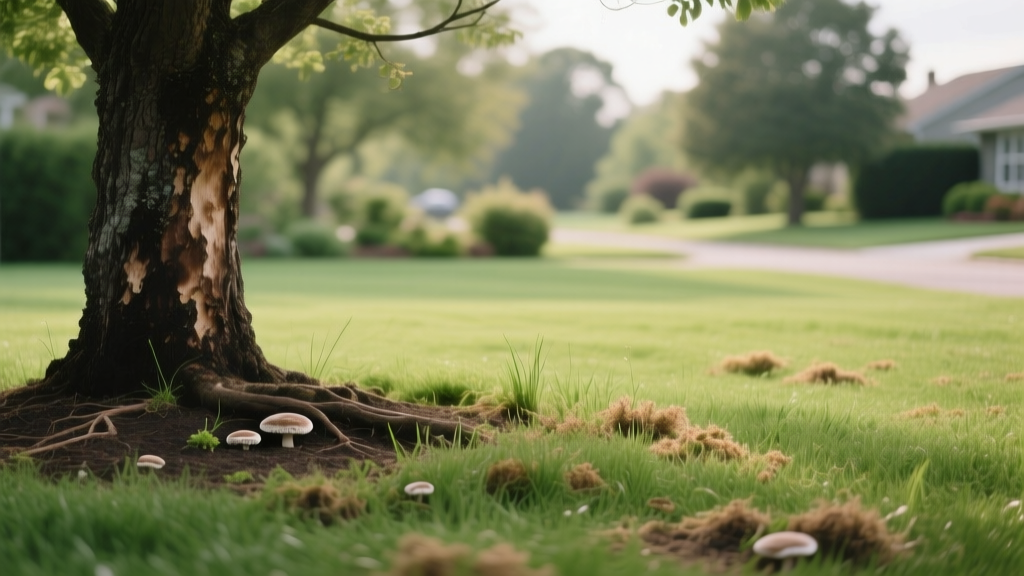
Armillaria Root Rot: When Tree Disease Kills Your Lawn
Robert HayesPublished
The Hidden Threat Beneath Your Lawn
When you notice a distinct, expanding ring of dead or yellowing grass around the base of a mature tree, your first instinct might be to blame a turfgrass pathogen. Homeowners frequently misdiagnose these dead lawn patches as Dollar Spot, Brown Patch, or even a Fairy Ring fungus. However, if the dying grass is accompanied by a declining tree canopy, you are likely dealing with a severe tree pathogen that has spilled over into your lawn: Armillaria root rot, commonly known as Oak Root Fungus.
Understanding the intersection between tree health and lawn disease is critical for effective landscape management. Treating the grass alone will not solve the problem if the underlying root system of your tree is actively harboring a destructive fungus. In this comprehensive guide, we will explore how to identify Armillaria root rot, differentiate it from common lawn diseases, and implement actionable, professional-grade treatment strategies to save your tree and restore your turf.
Identifying Armillaria Root Rot in Trees and Turf
Armillaria mellea and related species are aggressive, wood-decaying fungi that attack the roots and lower trunks of hundreds of tree species, including oaks, maples, pines, and fruit trees. The fungus survives in dead wood and soil for decades, spreading via root-like structures called rhizomorphs.
Tree Symptoms: The Source of the Infection
Before the lawn shows severe distress, the tree will exhibit telltale signs of root failure:
- Canopy Decline: Leaves may turn yellow, wilt, or drop prematurely, often starting on one side of the tree before spreading.
- Resin or Sap Flow: Conifers may exude excessive resin at the base of the trunk, while hardwoods might show dark, weeping stains on the lower bark.
- Mycelial Fans: If you peel back the bark at the root collar (where the trunk meets the soil), you will find white, fan-shaped sheets of fungal tissue with a distinct, strong mushroom odor.
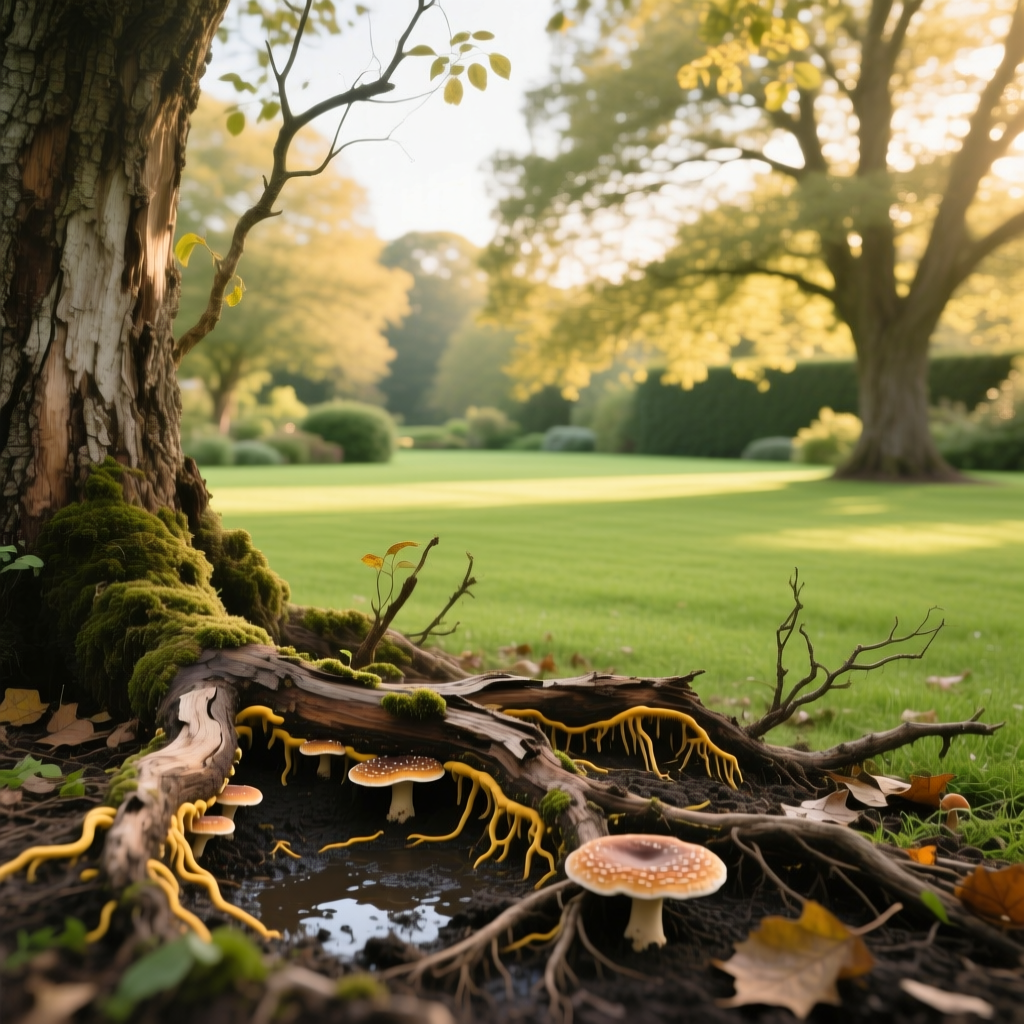
- Honey-Colored Mushrooms: In the autumn, following heavy rains, clusters of honey-colored mushrooms may fruit at the base of the tree or along exposed surface roots.
Lawn Symptoms: The 'Lawn Disease' Mimic
As the Armillaria fungus consumes the tree's root system, it spreads outward into the surrounding soil via black, shoestring-like rhizomorphs. These structures can infect the roots of nearby shrubs and disrupt the soil ecology beneath your lawn. The resulting lawn symptoms include:
- Irregular Dead Patches: Unlike the perfect circles of a Fairy Ring, Armillaria creates irregular, jagged patches of dead grass that follow the path of the decaying tree roots beneath the surface.
- Hydrophobic Soil: The decaying root mass and fungal mycelium can create a hydrophobic (water-repellent) layer in the soil, causing the grass above to dry out and die, even with regular irrigation.
- Secondary Turf Fungi: The stressed, poorly drained soil around a dying tree becomes a breeding ground for secondary lawn diseases like Pythium blight or Rhizoctonia.
Armillaria Root Rot vs. Common Lawn Diseases
To avoid wasting time and money on the wrong fungicides, use this comparison chart to differentiate Armillaria from standard turfgrass diseases.
| Diagnostic Feature | Armillaria Root Rot (Tree Pathogen) | Fairy Ring (Turf Disease) | Brown Patch (Turf Disease) |
|---|---|---|---|
| Primary Host | Trees, shrubs, and woody ornamentals | Turfgrass and thatch layer | Turfgrass (especially tall fescue and ryegrass) |
| Visual Pattern | Irregular patches radiating from a tree base | Distinct, expanding rings or arcs in the lawn | Circular patches with a 'smoke ring' border |
| Mushroom Type | Honey-colored, clustered at wood/roots (Autumn) | Puffballs or small tan mushrooms in a ring (Summer) | None |
| Subsurface Signs | Black 'shoestrings' and white fans under bark | Dense white, spongy mycelium in the thatch/soil | None; lesions on grass blades |
| Tree Health Impact | Severe; causes structural failure and tree death | None; purely a cosmetic turf issue | None; purely a turf issue |
Actionable Treatment and Management Strategies
According to plant pathology experts at the University of Wisconsin-Madison Extension, there is no chemical cure that will completely eradicate Armillaria from an infected tree or the surrounding soil. However, you can manage the disease, prolong the tree's life, and halt the spread to your lawn through a combination of cultural and chemical controls.
1. Root Collar Excavation and Aeration
Armillaria thrives in cool, moist, and poorly aerated environments. The first step in treatment is exposing the root flare.
- Action: Hire a certified arborist to perform an air-spade excavation around the base of the tree. This removes soil and mulch from the root collar, exposing the lower trunk and primary roots to air and sunlight.
- Cost: Professional air-spade services typically cost between $250 and $500, depending on the tree's size and site accessibility.
- Timing: Perform this in early spring or late fall when the tree is dormant to minimize stress.
2. Fungicide Soil Drenches and Trunk Injections
While fungicides cannot cure the disease, systemic phosphonate fungicides can boost the tree's natural defenses and slow the fungal progression.
- Product Recommendation: Use a phosphite-based fungicide such as Agri-Fos (Potassium Phosphite) or Alamo (Propiconazole).
- Application Rate: For soil drenching, mix 1 to 2 fluid ounces of Agri-Fos per inch of trunk diameter (measured at breast height) with enough water to penetrate the root zone. Apply to the soil immediately outside the drip line.
- Frequency: Apply once in the spring and once in the early fall. The Clemson University Home & Garden Information Center notes that consistent, multi-year applications are required for any meaningful suppression.
3. Lawn Repair and Soil Solarization
If the tree is already dead or structurally compromised, removal is the safest option. According to Penn State Extension, removing the stump and as much of the root system as possible is critical to preventing the fungus from spreading to adjacent plants and turf.
- Stump Grinding: Grind the stump to at least 12 inches below grade. Remove the resulting wood chips, as they harbor the fungus.
- Soil Solarization: Before laying new sod or planting grass seed, clear the area of debris and cover the soil with clear, 2-mil plastic sheeting for 4 to 6 weeks during the hottest part of the summer. This traps solar heat and pasteurizes the top layer of soil, killing residual rhizomorphs.
- Replanting: Avoid planting susceptible woody ornamentals in the same spot for at least two years. Opt for Armillaria-resistant groundcovers or simply restore the area with a deep-rooted turfgrass blend like Tall Fescue, which is less susceptible to root disruption.
Preventing Future Outbreaks in Your Landscape
Prevention is always more cost-effective than treatment. Armillaria is an opportunistic pathogen that primarily attacks trees weakened by environmental stress, drought, or poor landscaping practices.
'The most effective management strategy for Armillaria root disease is to maintain tree vigor. Trees that are properly watered, fertilized, and protected from mechanical injury are far more capable of compartmentalizing the fungus and preventing it from spreading into the surrounding landscape.'
— Plant Pathology Guidelines, University of Wisconsin-Madison Extension
Best Practices for Tree and Lawn Coexistence
- Proper Mulching: Never pile mulch against the trunk of a tree (a practice known as 'volcano mulching'). Keep mulch 3 to 4 inches away from the root collar and limit the layer to 2-3 inches deep to ensure adequate gas exchange.
- Deep, Infrequent Watering: Turfgrass requires frequent, shallow watering, which can lead to waterlogged soil around tree roots. Use drip irrigation for trees to deliver water directly to the deep root zone without saturating the surface lawn.
- Avoid Soil Compaction: Heavy foot traffic and lawn mowers compact the soil over tree roots, suffocating them and making them vulnerable to infection. Install physical barriers or use permeable paving stones in high-traffic areas beneath the tree canopy.
- Sanitize Equipment: If you are pruning an infected tree or aerating a lawn with known Armillaria presence, sanitize your tools and aerator tines with a 10% bleach solution or 70% isopropyl alcohol to prevent mechanically spreading the rhizomorphs to healthy areas of your yard.
Conclusion
When a dying lawn patch overlaps with a declining tree, it is vital to look beneath the surface. By correctly identifying Armillaria root rot rather than misdiagnosing it as a standard lawn disease, you can implement targeted cultural practices, utilize systemic fungicides, and make informed decisions about tree removal and lawn renovation. Protecting the structural integrity of your trees and the health of your turf requires a holistic approach to landscape pathology, ensuring your outdoor space remains safe, beautiful, and disease-free for years to come.