Tree Care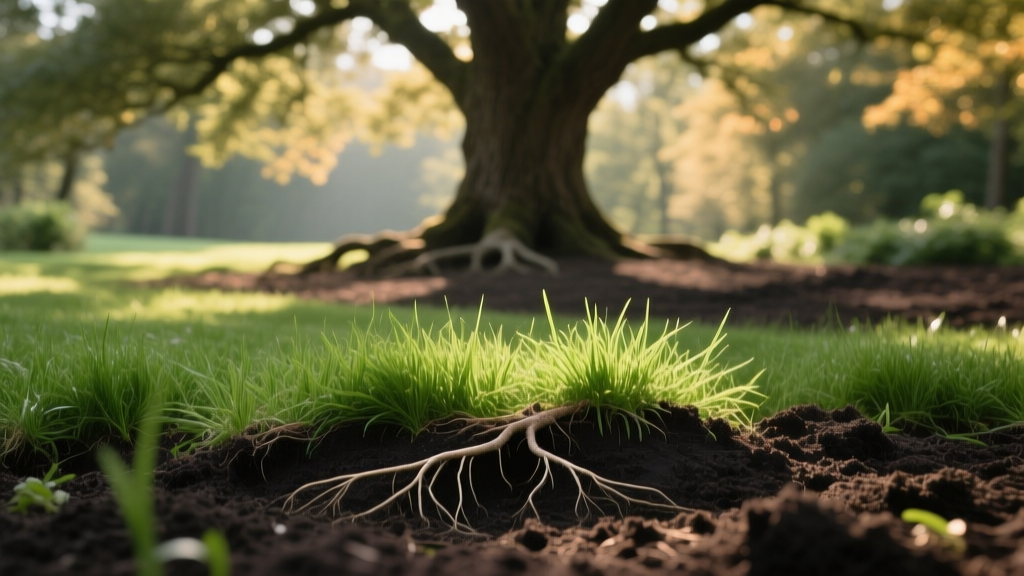
Growing Grass Under Trees: Soil Types & Turf Matching
James MillerPublished
The Hidden Battle: Tree Roots vs. Turfgrass
Homeowners often view the patch of earth beneath a mature shade tree as just another section of the lawn. However, from an ecological and arboricultural perspective, forcing turfgrass to grow directly under a tree canopy creates a high-stress microclimate. In nature, dense forests and open grasslands are distinct biomes that rarely overlap. Trees and turfgrass have fundamentally different requirements for light, water, soil oxygen, and nutrient cycling. When we attempt to merge them in a residential landscape, the result is often a thin, patchy lawn and a stressed, declining tree.
The key to resolving this conflict lies in understanding the specific soil types found beneath the canopy and matching the right shade-tolerant grass species to those exact edaphic conditions. By analyzing your under-canopy soil profile and adjusting your tree care and turf management practices, you can achieve a healthier landscape without sacrificing the vitality of your mature trees.
How Tree Canopies Alter Soil Types and Chemistry
The soil beneath a tree is not the same as the soil in the middle of your sunny front yard. The tree canopy and root system actively modify the soil environment in several critical ways:
- Rainfall Interception: A dense tree canopy can intercept and evaporate 30% to 40% of annual rainfall before it ever reaches the soil surface. This leaves the soil beneath the tree significantly drier than surrounding exposed areas.
- Leaf Litter and pH Shifts: As leaves decompose, they alter the soil chemistry. Oak and pine needles release tannins and organic acids that lower soil pH, creating highly acidic conditions. Conversely, species like ash or maple may maintain a more neutral pH.
- Root Competition and Compaction: The vast majority of a tree's absorbing roots reside in the top 12 to 18 inches of soil—the exact same zone where turfgrass roots establish. Furthermore, the shade under trees often invites foot traffic and the placement of heavy lawn furniture, leading to severe soil compaction that restricts oxygen to both tree and grass roots.
According to The Morton Arboretum, the competition for water and nutrients is so fierce that attempting to maintain a pristine lawn under a mature tree can actually stunt the tree's growth and make it more susceptible to pests and diseases.
Identifying Your Under-Canopy Soil Profile
Before selecting a grass seed, you must identify the soil type beneath your tree. The physical structure of the soil dictates drainage, aeration, and nutrient-holding capacity (Cation Exchange Capacity, or CEC).
Clay Soils
Clay soils hold moisture and nutrients exceptionally well but suffer from poor drainage and low oxygen levels. Under a tree canopy, where evaporation is reduced by shade, clay soils can remain perpetually damp and cold. This environment promotes shallow grass roots and encourages fungal turf diseases like powdery mildew and brown patch. Tree roots in heavy clay may also grow closer to the surface in search of oxygen, making them highly vulnerable to lawnmower damage.
Sandy Soils
Sandy soils drain rapidly and warm up quickly, but they leach nutrients easily. Under a tree, the canopy intercepts light rain, meaning the sandy soil beneath can become hydrophobic and bone-dry. While tree roots in sandy soil tend to grow deeper, turfgrass will struggle to access the deep moisture reserves and will require frequent, targeted irrigation and higher rates of nitrogen fertilizer.
Loam and Compacted Urban Soils
While loam is the ideal agricultural soil, urban soils under trees are often heavily compacted subsoils left over from construction. Compaction destroys soil structure, collapsing the macropores needed for water infiltration and gas exchange. If water pools on the surface after a rainstorm, or if the soil feels like concrete when you try to insert a screwdriver, you are dealing with severe compaction.
Matching Shade-Tolerant Grass to Soil Types
Not all shade grasses are created equal. You must match the turf species to both the light levels and the specific soil type beneath your tree. The experts at Penn State Extension emphasize that fine fescues are generally the most reliable choice for heavily shaded, well-drained soils, while tall fescues are better suited for heavier soils and transitional zones.
| Grass Species | Best Soil Type | Shade Tolerance | Soil pH Preference | Maintenance Level |
|---|---|---|---|---|
| Creeping Red Fescue | Sandy / Loam | High | 5.5 - 6.5 (Acidic) | Low |
| Hard Fescue | Sandy / Rocky | High | 5.5 - 7.0 | Very Low |
| Tall Fescue (Turf-type) | Clay / Heavy Loam | Moderate | 6.0 - 7.0 (Neutral) | Moderate |
| St. Augustinegrass | Sandy / Clay (Warm) | Moderate | 5.0 - 7.5 | High |
| Zoysiagrass | Loam / Clay (Warm) | Light Shade Only | 6.0 - 6.5 | Moderate |
Note: Cool-season grasses (Fescues) are best for northern climates, while warm-season grasses (St. Augustine, Zoysia) are suited for southern regions where trees provide relief from intense heat.
Soil Preparation Without Damaging Tree Roots
The most common mistake homeowners make when trying to establish grass under a tree is aggressively tilling the soil or burying the tree's root flare under thick layers of imported topsoil. Never add more than 0.5 to 1 inch of topsoil or compost over a tree's root zone. Burying the root flare cuts off oxygen to the cambium layer, leading to girdling roots, trunk rot, and eventual tree death.
To prepare the soil safely:
- Aerate with an AirSpade: Instead of mechanical core aerators, which can sever vital structural roots, hire a certified arborist to use a pneumatic AirSpade. This tool uses compressed air to safely fracture compacted soil without tearing tree roots.
- Apply Thin Compost Layers: Top-dress the area with a high-quality, screened leaf compost at a depth of no more than 0.5 inches. This slowly improves soil structure and introduces beneficial mycorrhizal fungi that help both tree and grass roots absorb phosphorus.
- Adjust Soil pH: Test your soil. If oak or pine trees have dropped the pH below 5.5, apply pelletized lime at the rate recommended by your local extension office to bring it back to a level where turfgrass can access essential nutrients.
Adjusting Irrigation and Fertilization Strategies
Watering a lawn under a tree requires a delicate balancing act. Turfgrass generally requires frequent, shallow watering (about 1 to 1.5 inches per week), while trees require deep, infrequent soakings that penetrate 12 to 18 inches into the soil profile.
If you water lightly every day to keep the grass green, you encourage the tree to send its fine feeder roots to the surface. These surface roots will then compete directly with the grass and become vulnerable to drought and mower damage. To compromise, water the area deeply twice a week, applying roughly 0.75 inches of water per session. This encourages the grass roots to grow deeper and satisfies the tree's need for deep soil moisture.
Regarding fertilization, University of Minnesota Extension notes that shade grasses require up to 50% less nitrogen than grasses in full sun. Excess nitrogen forces the grass to produce lush, weak, and succulent blade growth that is highly susceptible to disease and unable to withstand root competition. Use a slow-release, organic nitrogen fertilizer at half the standard rate in the early fall, which is the optimal time for cool-season shade grasses to build root mass.
The Allelopathy Factor: When Soil Chemistry Fights Grass
In some cases, no amount of soil matching or turf selection will work because the tree is actively poisoning the soil. This phenomenon, known as allelopathy, occurs when certain trees secrete biochemicals that inhibit the growth of competing plants. The most famous example is the Black Walnut (Juglans nigra), which secretes juglone from its roots, leaves, and nut husks. Juglone causes rapid wilting and death in many turfgrasses and garden plants. If you have a Black Walnut, Tree-of-Heaven, or certain species of Eucalyptus, abandon the idea of growing turfgrass beneath the drip line and opt for a mulch ring or juglone-tolerant groundcovers instead.
Knowing When to Surrender: The Mulch Alternative
Sometimes, the best tree care decision is to stop fighting nature. If your tree casts deep, heavy shade (less than 3 hours of direct sunlight per day) and the soil is heavily compromised, turfgrass will inevitably fail. In these scenarios, replacing the struggling grass with a proper mulch ring is the gold standard for tree health.
"A mulch ring mimics the natural forest floor, moderating soil temperature, retaining moisture, and eliminating the need for mowing, which is a leading cause of trunk damage and soil compaction under trees."
Follow the 3-3-3 Rule for tree mulching:
- Apply a 3-inch layer of organic wood chips or shredded bark.
- Extend the mulch ring out to a 3-foot radius from the trunk (or out to the drip line if possible).
- Keep the mulch 3 inches away from the actual tree trunk to prevent moisture buildup against the bark, which invites fungal pathogens and rodent damage.
By understanding the intricate relationship between tree roots, soil chemistry, and turfgrass requirements, you can make informed decisions that enhance the beauty of your landscape while prioritizing the long-term health and structural integrity of your trees. Whether you choose a specialized fine fescue blend for your acidic sandy soil or opt for a protective mulch ring over compacted clay, matching your ground cover to the soil type is the ultimate key to success.