Tree Care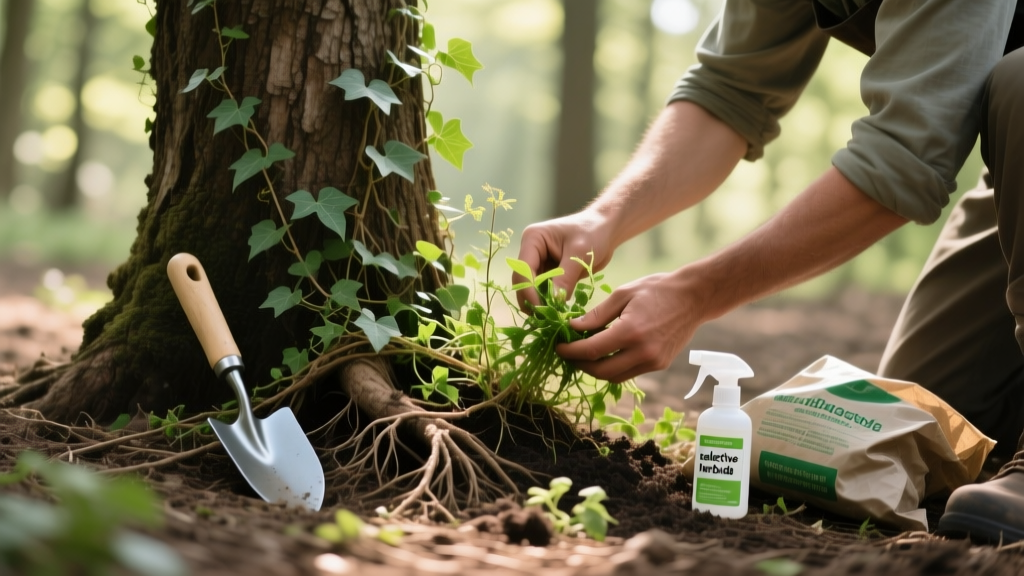
Identify and Remove Invasive Weeds Around Trees Safely
Lisa ThompsonPublished
The Hidden Threat: Why Weeds Endanger Tree Health
When homeowners think of tree care, they often focus on pruning, watering, and fertilizing. However, one of the most significant threats to both newly planted saplings and mature shade trees lurks right at their base: invasive weeds. Weeds and aggressive vines do not merely look unsightly; they actively compete with trees for vital soil moisture, oxygen, and essential nutrients. In severe cases, climbing weeds can girdle trunks, smother the canopy, and introduce fatal fungal pathogens into the tree's vascular system.
Managing the 'tree ring'—the critical area immediately surrounding the trunk—requires a strategic approach. You must correctly identify the specific weed species, understand their growth habits, and employ removal techniques that eradicate the weed without damaging the tree's shallow, sensitive feeder roots. According to the USDA Forest Service, invasive vines and groundcovers are responsible for millions of dollars in ecological and structural damage to urban and rural forests annually, often toppling trees during storms due to the excessive weight of the vine canopy.
Identifying the Most Destructive Tree-Smothering Weeds
Before you can remove a weed, you must identify it. Different species require vastly different eradication strategies. Here are the most common and destructive weeds found around tree bases:
1. English Ivy (Hedera helix)
Often planted as a benign groundcover, English Ivy is a notorious tree killer. When it reaches a vertical surface like a tree trunk, it transitions to its woody, climbing phase. It attaches to the bark using aerial rootlets, adding immense weight to the tree's structure. This makes the tree highly susceptible to windthrow during storms. Furthermore, the dense ivy canopy traps moisture against the bark, inviting rot and hiding structural decay from arborists.
2. Field Bindweed (Convolvulus arvensis)
Bindweed is a persistent perennial vine with arrow-shaped leaves and white, morning-glory-like flowers. It wraps tightly around tree trunks and lower branches, effectively girdling young saplings and restricting the flow of water and nutrients through the phloem. Its root system can extend up to 20 feet deep, making manual removal nearly impossible without targeted intervention.
3. Kudzu (Pueraria montana)
Known as 'the vine that ate the South,' Kudzu grows at an astonishing rate of up to a foot per day. It completely engulfs trees, blocking out all sunlight and effectively suffocating the host tree's canopy. Kudzu requires aggressive, multi-year management strategies to eradicate.
4. Poison Ivy (Toxicodendron radicans)
While native, Poison Ivy is a hazard to humans and a competitor to trees. It climbs using hairy aerial roots and can cause severe allergic reactions during removal. It thrives in the dappled shade of tree canopies and competes heavily for soil nutrients.
The Danger of 'Mower Blight' and Mechanical Damage
Many homeowners attempt to keep weeds down around trees by using string trimmers (weed whackers) and lawn mowers right up to the trunk. This practice, known in arboriculture as 'mower blight,' is fatal to trees. The bark of a tree protects the cambium layer—the microscopic vascular tissue responsible for transporting water and nutrients. Repeated strikes from a nylon string trimmer strip away the bark and sever the cambium. Over time, this girdling starves the roots, leading to a slow, inevitable decline and death of the tree. Creating a dedicated, weed-free mulch ring eliminates the need to trim near the trunk entirely.
Proven Methods for Safe Weed Removal Around Trees
When removing weeds around trees, the primary goal is to eliminate the weed while preserving the tree's delicate surface roots. Here are the three most effective methodologies:
Manual Extraction
For annual weeds and shallow-rooted perennials, manual removal is the safest option. Use a stand-up weed puller tool (such as the Fiskars Stand-Up Weeder, costing approximately $35) to extract the weed along with its taproot. Timing is critical: pull weeds in early spring or immediately after a heavy rain when the soil is soft, ensuring you get the entire root system without having to aggressively dig and sever tree roots.
Sheet Mulching (The Cardboard Method)
For heavily infested tree rings, sheet mulching is a highly effective, chemical-free eradication technique. This involves smothering the weeds to block photosynthesis. Proper mulching techniques, as outlined by Penn State Extension, are critical for tree health and weed suppression. Lay down overlapping layers of plain, uncoated corrugated cardboard directly over the weeds (do not use glossy or wax-coated cardboard). Wet the cardboard thoroughly, then cover it with 3 to 4 inches of coarse arborist wood chips. The cardboard will decompose in 6 to 8 weeks, killing the weeds beneath while improving soil biology. Keep the mulch at least 3 to 6 inches away from the actual tree trunk to prevent collar rot.
Targeted Chemical Control (Cut-Stump Method)
For woody, climbing vines like English Ivy, Kudzu, or Wisteria that have already scaled the tree, pulling them off can strip the tree's bark. Instead, use the 'cut-stump' method. Cut the vine cleanly at the base of the tree using loppers or a pruning saw. Within 60 seconds of cutting, paint the exposed stump with a systemic herbicide containing Triclopyr (such as Garlon 4 or Ortho Brush-B-Gon). The vine will absorb the chemical, killing the root system below ground, while the upper vine attached to the tree will simply dry out and fall off naturally over the winter. Note: Never spray liquid herbicides around the base of a tree, as trees can absorb chemicals through their shallow roots or thin bark.
Weed Control Method Comparison Chart
| Control Method | Estimated Cost | Effectiveness on Woody Vines | Risk to Tree Roots | Best Application Scenario |
|---|---|---|---|---|
| Manual Pulling | $0 - $40 (Tools) | Low | Moderate (if digging near roots) | Annual weeds, small saplings |
| Sheet Mulching | $0 - $20 (Mulch) | Medium (Slow acting) | None (Highly beneficial) | Groundcover weeds, grass encroachment |
| Cut-Stump Herbicide | $20 - $60 (Chemical) | Very High | Low (if applied carefully to stump) | Mature climbing ivy, kudzu, honeysuckle |
| String Trimming | Gas/Electric costs | Low (Temporary) | Extreme (Cambium damage) | Never recommended near tree trunks |
Step-by-Step Guide to Creating a Weed-Free Tree Ring
Establishing a proper tree ring is the best long-term defense against weed competition. Follow these steps to create a healthy, low-maintenance zone around your trees:
- Measure the Radius: For newly planted trees, create a ring with a minimum 3-foot diameter. For mature trees, extend the ring to the tree's drip line (the outer edge of the canopy) if possible, or at least a 6-foot diameter.
- Clear the Vegetation: Mow or trim the existing grass and weeds as low as possible. Do not use a sod cutter or rototiller, as this will destroy the tree's vital feeder roots located in the top 6 inches of soil.
- Apply the Smothering Layer: Lay down your overlapping cardboard layers, extending slightly past the edge of your desired ring.
- Add the Mulch: Apply 3 to 4 inches of organic mulch (pine bark, arborist chips, or shredded hardwood) over the cardboard. Crucial Rule: Pull the mulch back 4 to 6 inches from the tree trunk. Mulch piled against the trunk ('volcano mulching') traps moisture, invites fungal cankers, and encourages girdling roots.
- Edge the Perimeter: Use a half-moon edger to create a clean, 2-inch deep trench around the outer edge of the mulch ring. This physical barrier prevents aggressive lawn grasses like Bermuda or Zoysia from creeping back into the tree zone.
Seasonal Maintenance and Monitoring
Weed management is an ongoing process. In early spring, inspect your tree rings for any perennial weeds that may have pushed through the mulch layer. Spot-treat these immediately by hand-pulling or applying a targeted drop of glyphosate directly to the weed's leaves using a sponge brush, ensuring zero drift onto the tree. In the fall, replenish your mulch layer if it has decomposed below the 3-inch mark. Fallen autumn leaves can also be raked into the tree ring to serve as a natural, nutrient-rich weed barrier. For specific invasive species identification and localized management protocols, the Clemson University Home & Garden Information Center provides excellent regional guidelines on handling persistent vines.
By dedicating time to properly identifying and safely removing weeds around your trees, you eliminate severe competition for water and nutrients, protect the trunk from mechanical damage, and ensure your trees remain structurally sound and vibrant for decades to come.