Tree Care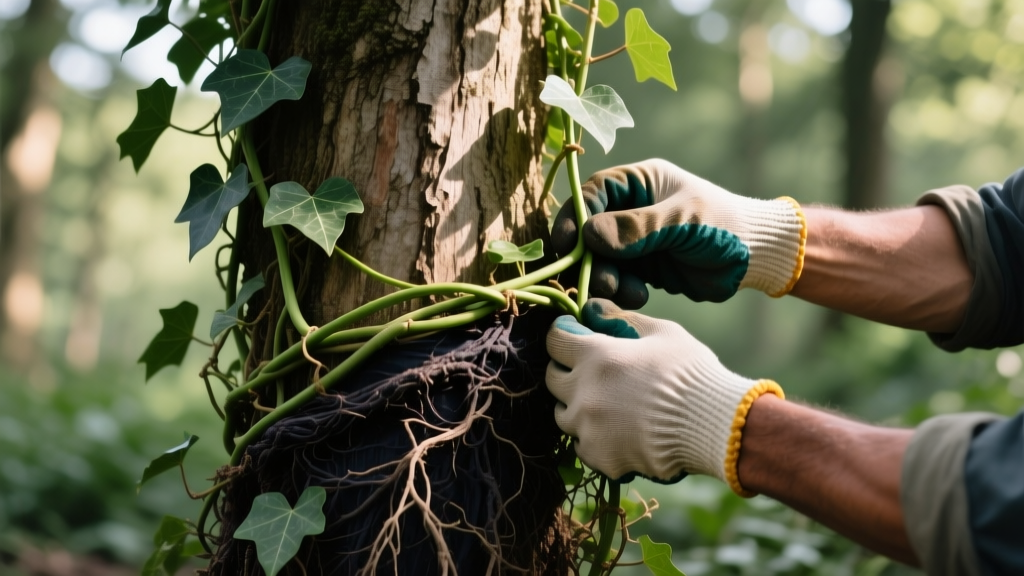
Identifying and Removing Invasive Vines Choking Trees
Sarah ChenPublished
The Hidden Threat: Weeds and Vines in the Tree Ring
Trees are the anchors of our home landscapes, providing essential shade, improving air quality, and boosting property value. However, the base of the tree—often referred to as the tree ring or root flare—is a prime target for aggressive weeds and invasive vines. While a naturalized woodland edge might look charming, allowing weeds and vines to climb your trees or choke the root zone is a recipe for long-term arboricultural disaster. Weeds compete directly with your trees for vital soil moisture and nutrients, while climbing vines can structurally compromise the canopy, trap moisture against the bark, and invite fatal fungal pathogens. In this comprehensive weed identification and removal guide, we will explore how to identify the most destructive tree-choking plants, safely eradicate them, and implement preventative tree ring care to ensure your trees thrive for decades to come.
Identifying Common Tree-Choking Weeds and Vines
Before you can effectively remove invasive plants, you must accurately identify them. Misidentification can lead to ineffective treatment or, worse, accidental exposure to toxic plants. Here are the most common culprits found invading tree rings and trunks.
1. English Ivy (Hedera helix)
English ivy is an aggressive evergreen vine that is notoriously difficult to eradicate once established. It uses aerial rootlets to cling to tree bark, eventually smothering the lower canopy and blocking sunlight from reaching the tree's own leaves. According to the Clemson University Extension, English ivy can add hundreds of pounds of extra weight to a tree, making it highly susceptible to windthrow and branch failure during storms. Look for dark green, leathery leaves with distinct lobes on climbing stems, and a woody, hairy vine base.
2. Poison Ivy (Toxicodendron radicans)
Poison ivy frequently uses trees as a trellis, climbing trunks via dense, hairy aerial roots. The Penn State Extension notes that poison ivy contains urushiol, an oily resin that causes severe contact dermatitis in humans. Identifying features include compound leaves with three leaflets (hence the adage, leaves of three, let it be), which can be glossy or dull, with edges that are smooth or slightly toothed. In autumn, the leaves turn brilliant shades of red and orange, and the plant produces clusters of off-white berries.
3. Field Bindweed (Convolvulus arvensis)
Unlike the thick woody vines of ivy, field bindweed is a herbaceous perennial weed that wraps tightly around tree trunks and low-hanging branches. It features arrowhead-shaped leaves and white or pink trumpet-shaped flowers that resemble morning glories. Bindweed possesses an incredibly deep and extensive root system, making it a fierce competitor for water and nutrients in the tree ring.
4. Kudzu (Pueraria montana)
Primarily a threat in the southeastern United States, kudzu is a fast-growing deciduous vine that can grow up to a foot per day. It features large, trifoliate leaves and produces fragrant, purple pea-like flowers. Kudzu will completely engulf a tree, blocking all sunlight and eventually killing the host tree through starvation and sheer physical weight.
How Vines and Weeds Damage Tree Health
Understanding the mechanics of plant damage helps underscore the urgency of removal. Vines and weeds harm trees through three primary pathways:
- Canopy Smothering and Light Competition: Climbing vines reach the upper canopy and spread out, shading the tree's own leaves. This severely restricts the tree's ability to photosynthesize, leading to stunted growth and dieback.
- Moisture Trapping and Disease: Dense vine foliage pressed against the tree trunk traps humidity and prevents the bark from drying. This creates an ideal microclimate for fungal infections, wood-decaying organisms, and boring insects.
- Root Zone Resource Theft: Weeds like bindweed, dandelions, and invasive grasses form dense mats in the tree ring. Their fibrous root networks intercept rainfall and applied fertilizers before they can reach the deeper, more critical structural and feeder roots of the tree.
Step-by-Step Weed and Vine Removal Guide
Removing established vines and weeds requires a strategic approach. Ripping vines directly off a tree trunk can tear the bark, creating open wounds that invite pests and diseases. Follow this two-phase removal protocol for safe and effective eradication.
Phase 1: The Cut-and-Pull Method (Manual Control)
For woody vines like English ivy and poison ivy, manual removal should focus on severing the vine rather than pulling it from the canopy.
- Suit Up: Wear thick leather gloves, long sleeves, and eye protection. If dealing with poison ivy, consider disposable coveralls and use a barrier cream like bentoquatam.
- Clear the Base: Use a hand trowel or weeding tool to clear all ground-level weeds and vine roots within a 3-foot radius of the tree trunk.
- Sever the Vines: Using loppers or a pruning saw, cut the main vine stems at both ankle height and chest height. This creates a gap.
- Remove the Lower Section: Carefully pry the lower section of the vine away from the bark using a flathead screwdriver or a specialized weeding tool. Roll it away from the tree base.
- Leave the Upper Section: Do NOT pull the upper vines out of the canopy. Severed from their root system, the upper vines will die, dry out, and eventually fall off naturally without damaging the tree bark.
Phase 2: Targeted Chemical Control
For stubborn perennial weeds like bindweed or massive, multi-stemmed vine infestations, herbicides may be necessary. The most effective technique is the cut-stump treatment.
- Select the Right Herbicide: A systemic herbicide containing Glyphosate (41%) or Triclopyr is highly effective. Triclopyr is particularly useful for broadleaf vines and woody weeds as it translocates down to the root system.
- Cut and Paint: Immediately after cutting the vine stem near the soil line, use a small paintbrush to apply the undiluted herbicide directly to the freshly exposed cambium layer (the outer ring of the cut stem).
- Timing is Critical: Apply chemical treatments in late summer or early fall. During this period, plants are actively transporting carbohydrates down to their roots for winter storage, which pulls the herbicide directly into the root system, ensuring a complete kill.
Comparison Chart: Manual vs. Chemical Weed Removal
| Feature | Manual Removal (Cut-and-Pull) | Chemical Control (Cut-Stump) |
|---|---|---|
| Best For | Young vines, sensitive environments, poison ivy (with proper gear) | Mature, thick-stemmed woody vines, widespread bindweed |
| Risk to Tree Bark | Moderate (if upper vines are pulled incorrectly) | Very Low (herbicide is applied only to the weed stump) |
| Time to Results | Immediate visual clearance; roots may resprout | 2 to 4 weeks for complete root death |
| Cost | Low (cost of gloves, loppers, and labor) | Moderate (cost of targeted systemic herbicide) |
| Environmental Impact | Zero chemical runoff or soil contamination | Minimal when painted on stumps; avoid foliar spraying near tree roots |
Preventing Regrowth: Proper Tree Ring Mulching
Once the weeds and vines are eradicated, the bare soil in the tree ring is highly vulnerable to new weed seeds. The most effective, aesthetically pleasing, and tree-friendly preventative measure is proper mulching. However, incorrect mulching can be just as harmful as the weeds themselves.
According to the University of Minnesota Extension, mulch should be applied using the donut method. Never pile mulch against the tree trunk in a volcano shape, as this traps moisture against the root flare, promotes bark rot, and encourages girdling roots.
The Donut Mulching Technique
- Clear the Zone: Maintain a weed-free circle around the tree that is at least 3 feet in diameter for young trees, and up to 6 feet for mature specimens.
- Mind the Gap: Keep all mulch materials 3 to 6 inches away from the actual trunk of the tree. The root flare should be completely visible and exposed to the air.
- Depth Matters: Apply a layer of organic mulch (such as shredded hardwood bark, pine needles, or wood chips) to a depth of 2 to 4 inches. Any deeper, and you risk suffocating the tree's shallow feeder roots by restricting oxygen exchange.
- Annual Maintenance: Rake the mulch annually to prevent it from becoming compacted and hydrophobic. Top dress with an inch of fresh mulch as needed, but never let the total depth exceed 4 inches.
Pro Tip: Avoid using landscape fabric or plastic weed barriers under your mulch. These materials restrict water penetration, disrupt soil gas exchange, and eventually degrade, leaving a tangled mess of plastic and weed roots that is nearly impossible to remove without damaging the tree's surface roots.
Seasonal Maintenance Schedule for Tree Rings
To keep your trees safe from invasive weeds year-round, integrate tree ring inspection into your seasonal lawn and garden care schedule.
- Early Spring: Inspect the tree ring for early-emerging weeds like chickweed and dandelion. Hand-pull them while the soil is moist and roots are shallow.
- Mid-Summer: Check for new vine growth attempting to climb the trunk. Snip them off immediately with pruning shears before they develop aerial rootlets.
- Early Fall: This is the optimal window for applying cut-stump herbicide treatments to stubborn perennial weeds and vines, as sap flow is moving downward.
- Late Fall: Refresh your mulch layer using fallen, shredded leaves or wood chips to insulate the root zone against winter temperature fluctuations and suppress early spring weed germination.
Conclusion
Weeds and invasive vines are more than just an aesthetic nuisance; they are active competitors that threaten the structural integrity and biological health of your trees. By accurately identifying threats like English ivy, poison ivy, and bindweed, and employing safe removal techniques like the cut-and-pull and cut-stump methods, you can reclaim your tree rings. Follow up with proper donut mulching and seasonal inspections to ensure your trees remain vigorous, healthy, and beautiful for generations to come.