Tree Care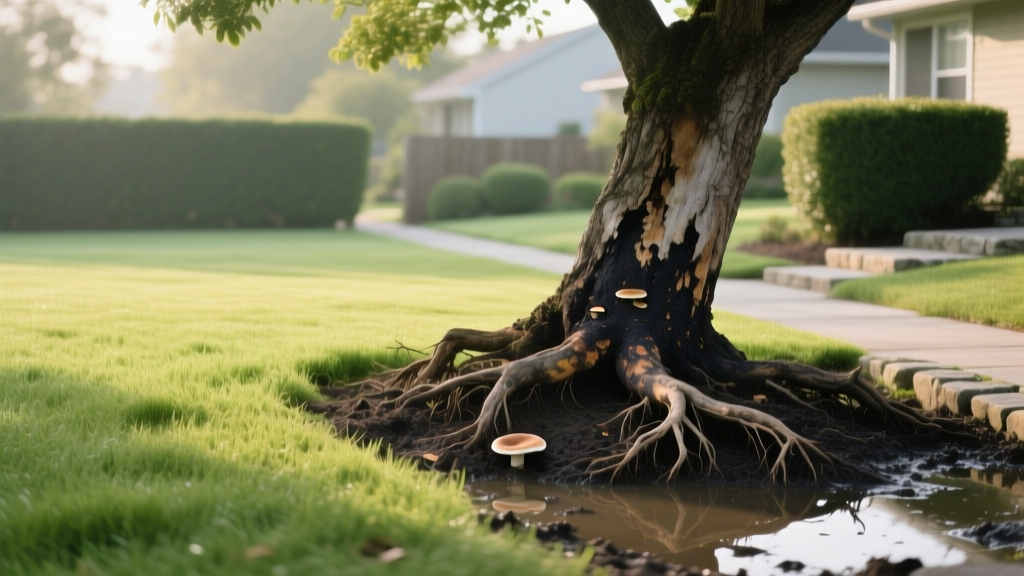
Phytophthora Root Rot: Saving Trees From Lawn Fungal Diseases
Emily WatsonPublished
The Hidden Link Between Lawn Irrigation and Tree Root Rot
Homeowners often invest heavily in lawn disease identification and treatment, focusing on common turfgrass issues like brown patch, dollar spot, or Pythium blight. However, the environmental conditions that trigger these turf diseases—specifically prolonged soil saturation, poor drainage, and excessive irrigation—are the exact same conditions that silently kill mature landscape trees. The most devastating of these shared threats is Phytophthora root rot, a destructive water mold (oomycete) that thrives in overwatered lawns and attacks the critical root zones of trees.
While often grouped with fungal diseases, Phytophthora and Pythium (which causes severe lawn diseases) are actually water molds. They require standing water or heavily saturated soil to reproduce and spread their motile spores, known as zoospores. When you maintain a lush lawn with frequent, shallow irrigation, you inadvertently create a breeding ground for these pathogens. The zoospores swim through the water-filled soil pores, locate tree roots, and infect them, eventually girdling the root system and starving the tree of water and nutrients. Understanding how to manage your lawn's microenvironment is the first step in saving your trees from this lethal pathogen.
Identifying Phytophthora Root Rot in Your Landscape
Identifying Phytophthora root rot can be challenging because the above-ground symptoms often mimic drought stress, leading well-meaning homeowners to apply even more water, which only accelerates the disease. According to Penn State Extension, early detection is critical for successful treatment. Look for the following diagnostic signs:
- Canopy Dieback and Thinning: Leaves may appear undersized, turn pale green or yellow, and drop prematurely. Dieback usually starts in the upper canopy and progresses downward.
- Basal Cankers: Inspect the lower trunk near the soil line. Infected trees often develop dark, sunken cankers that may ooze a reddish-brown or dark amber sap (gummosis).
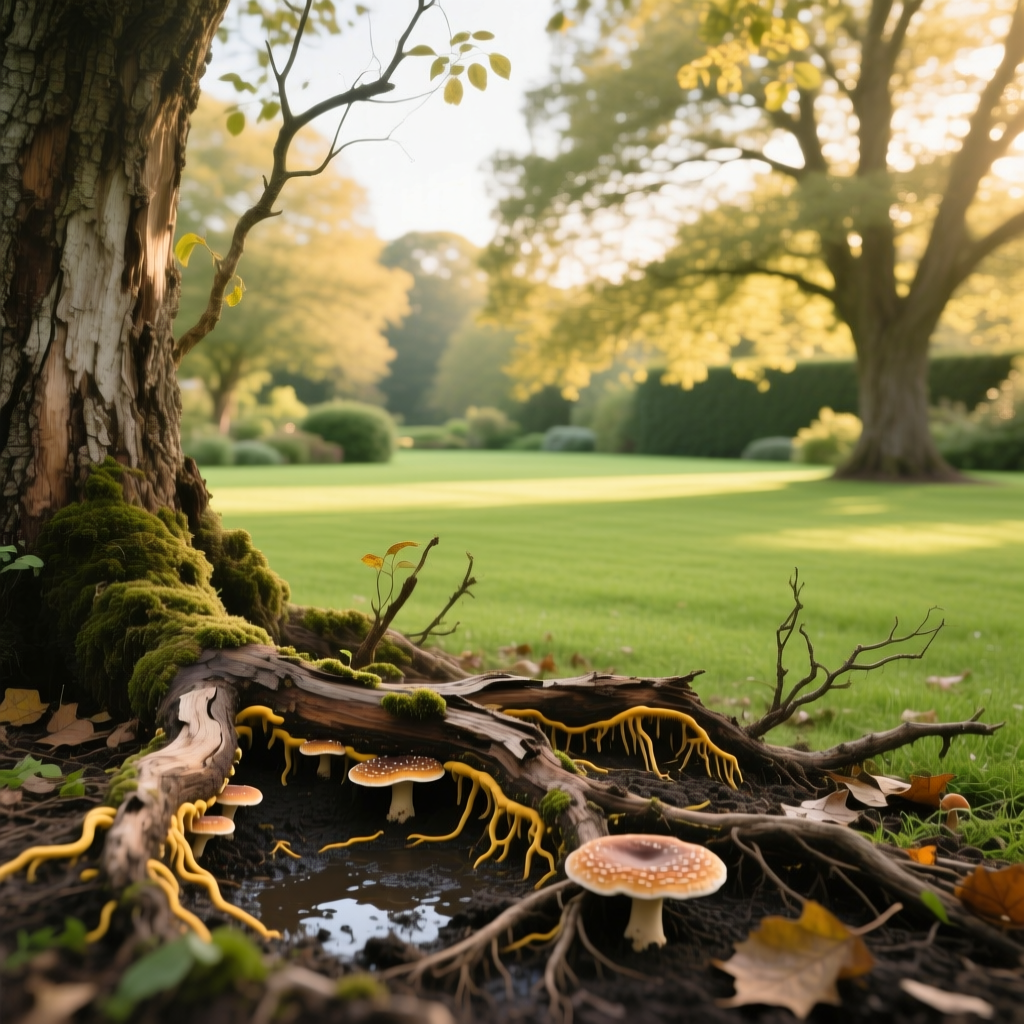
- Root Decay: If you carefully excavate the soil around the root flare, healthy roots will appear firm and white or tan. Infected roots will be dark brown, mushy, and lack fine feeder roots. The outer layer of the root (cortex) may easily slip off the inner core when pulled.
- Wilting Despite Wet Soil: The tree will exhibit severe wilting during hot afternoons, even when the surrounding lawn soil is visibly moist or saturated.
The Turf vs. Tree Watering Conflict
The root cause of Phytophthora in residential landscapes is usually a conflict between turfgrass watering needs and tree watering needs. Turfgrass generally requires frequent, shallow watering to maintain its green color, while trees require deep, infrequent watering to encourage deep root growth and prevent soil saturation. The Clemson Home and Garden Information Center emphasizes that chronic overwatering of lawns is the primary catalyst for root rot in shade trees and ornamentals.
Comparison Chart: Turfgrass vs. Tree Watering Requirements
| Feature | Standard Turfgrass Lawn | Mature Landscape Trees |
|---|---|---|
| Irrigation Frequency | 1 to 3 times per week | Every 7 to 14 days (during drought) |
| Water Depth per Session | 0.5 to 1 inch (shallow root zone) | 1 to 2 inches (deep root soaking) |
| Soil Moisture Goal | Consistently moist top 4 inches | Moist to a depth of 12-18 inches, then dry out |
| Disease Risk if Overwatered | Pythium Blight, Brown Patch | Phytophthora Root Rot, Armillaria |
Cultural Treatments: Modifying the Lawn Environment
Before reaching for chemical fungicides, you must alter the lawn environment to make it inhospitable to water molds. Cultural control is the most effective long-term strategy for managing diseases that cross over from turf to trees.
1. Remove Turf from the Critical Root Zone: Grass growing up to the trunk of a tree competes for water and traps moisture against the bark. Remove all lawn grass and weeds within the tree's drip line (or at least a 3-foot radius from the trunk). Replace the grass with a 2-to-3-inch layer of coarse wood chip mulch, keeping the mulch strictly away from the trunk flare to prevent bark rot.
2. Adjust Irrigation Zones: Audit your sprinkler system. Ensure that spray heads are not directly hitting tree trunks or saturating the soil immediately around the root flare. If possible, place trees and shrubs on separate irrigation valves from the turfgrass, utilizing drip irrigation or deep-root watering probes for the trees.
3. Improve Soil Drainage: Compacted lawn soil prevents water from percolating downward, leaving it pooled in the tree's root zone. Perform core aeration on the lawn surrounding the tree to relieve compaction. In severe cases, radial trenching or vertical mulching around the tree's drip line may be necessary to introduce oxygen to the suffocating roots.
Chemical Treatments: Fungicides and Soil Drenches
When cultural practices are not enough to halt the progression of the disease, chemical intervention is required. According to the University of Minnesota Extension, systemic fungicides can suppress Phytophthora and protect new root growth, but they must be applied correctly and in conjunction with improved drainage.
The most effective chemical controls for Phytophthora are phosphonates (phosphorous acid) and specific oomycete-targeted fungicides like mefenoxam. These products do not "cure" dead roots, but they protect healthy tissue and allow the tree to regenerate its feeder roots once the soil dries out.
Recommended Fungicide Products and Application Rates
- Mefenoxam (e.g., Subdue MAXX): A highly effective systemic fungicide specifically targeting water molds. It is typically applied as a soil drench. Rate: Generally 1 to 2 fluid ounces per 1,000 square feet of soil area, watered in with at least 0.25 inches of irrigation to move the active ingredient into the root zone.
- Phosphonates (e.g., Agri-Fos, Alamo): These can be applied as soil drenches, foliar sprays, or trunk injections. Trunk injections are often preferred for large trees in lawn settings because they bypass the saturated soil entirely and deliver the chemical directly into the tree's vascular system. Rate: Varies by trunk diameter; follow label instructions precisely for injection capsule spacing.
- Fosetyl-Al (e.g., Aliette): Often used as a preventive foliar spray or soil drench, it moves both upward and downward within the plant (xylem and phloem mobile), offering comprehensive protection.
Step-by-Step Action Plan for Homeowners
- Diagnose Accurately: Use a trowel to gently excavate the soil near the tree's root flare. Look for dark, mushy roots and oozing cankers. If the soil smells sour or like swamp water, you have a severe drainage and pathogen issue.
- Halt Lawn Irrigation: Immediately stop watering the lawn in the affected zone. Allow the top 4 to 6 inches of soil to dry out completely. Phytophthora zoospores cannot swim or infect without free water.
- Clear the Trunk Base: Pull back any mulch, soil, or grass that is touching the tree trunk. The root flare must be exposed to the air to dry out and halt basal canker expansion.
- Apply Fungicide: Once the soil surface begins to dry, apply a soil drench of Mefenoxam or schedule a professional trunk injection of Phosphonates. Water the drench in lightly, but do not saturate the soil.
- Reconfigure the Landscape: Once the tree stabilizes, kill the surrounding lawn using a targeted herbicide or solarization, and install a wide mulch ring. Replant the outer areas with drought-tolerant groundcovers that require minimal irrigation.
Expert Tip: Never add soil or heavy mulch over a tree's root flare to "hide" the cankers or level out a sloped lawn. Burying the root flare suffocates the tree and guarantees the continued spread of root rot pathogens. Always grade your lawn so that surface water drains away from the base of your trees.
By treating your lawn and trees as a single, interconnected ecosystem, you can effectively manage fungal and oomycete diseases. Adjusting your lawn care habits not only saves water and reduces turf diseases but also protects the structural integrity and longevity of your most valuable landscape assets: your trees.