Tree Care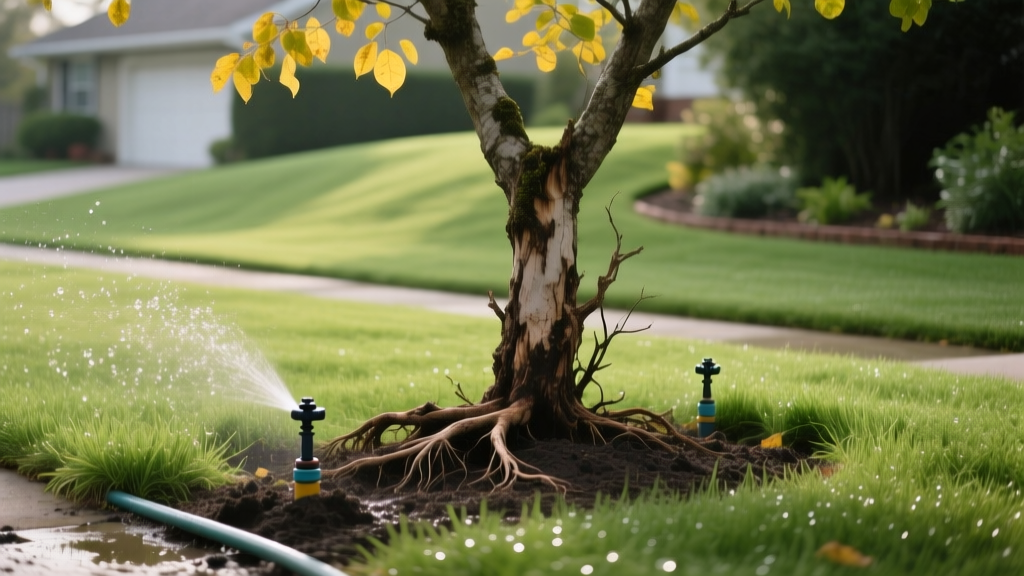
Phytophthora Root Rot in Trees: Fixing Lawn Irrigation
Mike RodriguezPublished
The Hidden Link Between Lawn Irrigation and Tree Disease
Homeowners and landscape professionals often approach tree care and lawn maintenance as two entirely separate disciplines. However, when we examine the landscape through the lens of lawn disease identification and treatment, a critical and often destructive overlap emerges: soil-borne water molds. While turfgrass managers are highly trained to spot and treat fungal issues like Brown Patch or Pythium blight, the very irrigation practices used to maintain a lush lawn are frequently the root cause of fatal diseases in mature landscape trees.
The most devastating of these is Phytophthora root rot. Unlike true fungi, Phytophthora species are oomycetes, or water molds. According to the American Phytopathological Society, these pathogens require free water in the soil to produce motile zoospores that swim toward and infect plant roots. When a lawn is overwatered to keep the turf green during summer heat, the top layers of soil become perpetually saturated. This creates a perched water table that suffocates the shallow feeder roots of trees and invites aggressive Phytophthora infections.
Turfgrass pathogens like Pythium aphanidermatum thrive in these exact same hot, wet, and poorly drained conditions. If you are constantly battling lawn diseases that require frequent fungicide applications, it is highly likely that the soil environment around your trees is also highly conducive to root rot. Understanding this shared pathology is the first step in saving your canopy.
Identifying Phytophthora Root Rot in Landscape Trees
Above-Ground Symptoms vs. Lawn Disease Symptoms
Identifying Phytophthora in trees requires a trained eye, as the above-ground symptoms often mimic drought stress or nutrient deficiencies. Because the pathogen destroys the root system's ability to uptake water, the tree's canopy will begin to wilt, even when the surrounding lawn soil is visibly wet. Leaves may exhibit chlorosis (yellowing), starting in the lower canopy and moving upward. In severe cases, branches will experience dieback, and the tree may drop leaves prematurely in late summer.
Diagnostic Warning: The most common mistake homeowners make is assuming a wilting tree is suffering from drought. If your lawn is receiving 1 to 1.5 inches of water per week and the tree is still wilting, do not increase irrigation. You are likely accelerating a fatal root rot infection.
Below-Ground Diagnostics
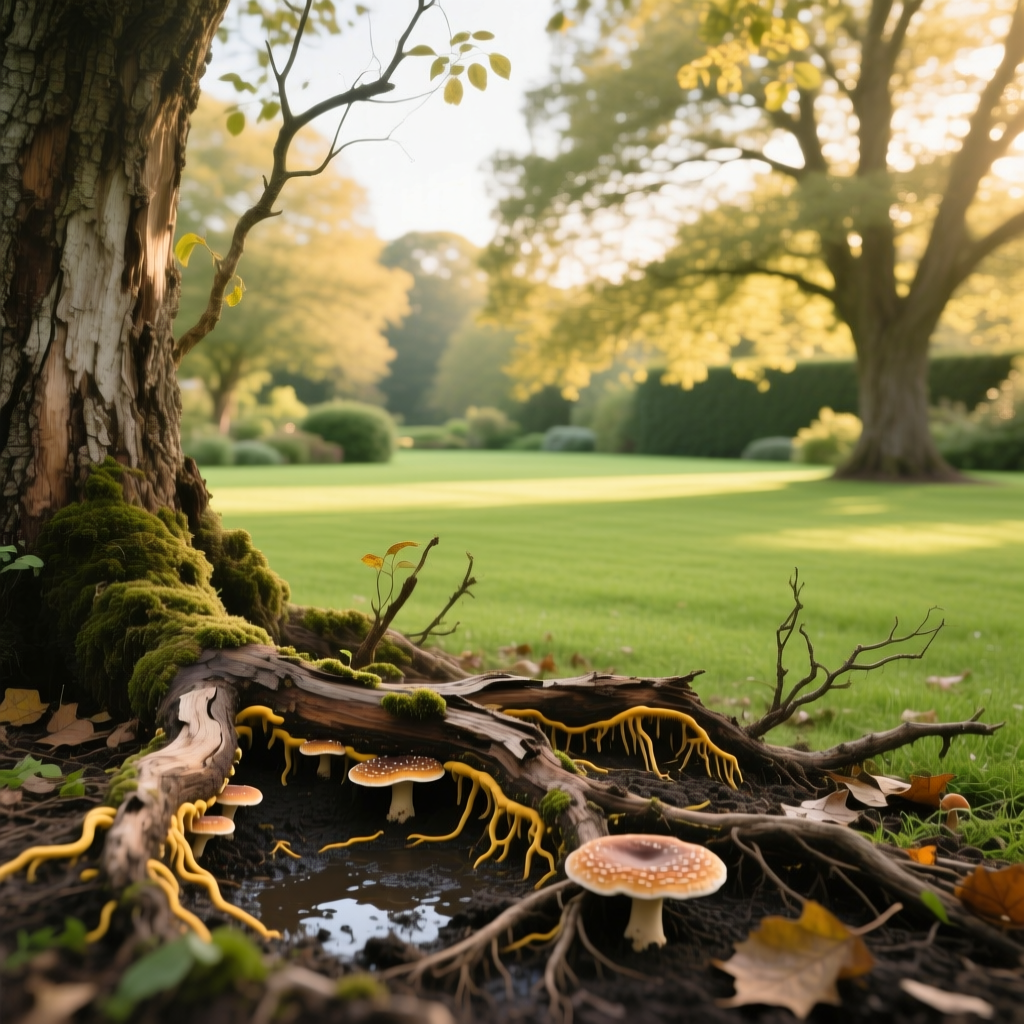
To confirm Phytophthora root rot, you must examine the root flare and the structural roots. Carefully excavate the soil at the base of the tree using an air spade or a gentle hand trowel. According to diagnostic guidelines from The Morton Arboretum, infected roots will appear water-soaked, dark brown, and brittle. If you peel back the outer bark of an infected structural root or the lower trunk, the inner cambium layer will reveal a distinct cinnamon-brown to reddish-brown discoloration, often with a sharp margin separating it from the healthy, creamy-white tissue.
Why Standard Lawn Fungicides Fail on Tree Root Rot
A common mistake in integrated landscape management is attempting to treat tree root rot with leftover lawn fungicides. Broad-spectrum contact fungicides commonly used for turf diseases—such as Azoxystrobin (Heritage) or Fludioxonil (Medallion)—are highly effective against true fungi on grass blades and thatch layers. However, they lack the systemic mobility required to protect a tree's massive, deep vascular system.
Furthermore, many lawn fungicides are not labeled for oomycetes. Phytophthora requires specific chemistries, primarily phosphonates or phenylamides, that can be translocated through the tree's xylem and phloem to reach the actively growing root tips. Applying lawn granular fungicides to the soil surface under a tree's canopy will result in zero efficacy, as the active ingredients will bind to the thatch and topsoil without ever reaching the infected root zone.
Treatment and Soil Management Strategies
Adjusting Your Lawn Irrigation Schedule
Treating the disease chemically is useless if the soil environment remains saturated. You must transition your lawn irrigation strategy from shallow, frequent watering to deep, infrequent watering. Lawns generally require 1 to 1.5 inches of water per week, but this should be applied in one or two deep watering sessions rather than daily 15-minute bursts. Deep watering encourages turf roots to grow downward and allows the top few inches of soil to dry out between cycles, depriving Phytophthora zoospores of the free water they need to swim and infect tree roots. Invest in a digital soil moisture meter and probe the soil at a 6-inch depth near the tree's drip line; only irrigate when the soil feels dry and crumbly at this depth.
Chemical and Biological Treatments
When cultural controls are not enough, targeted chemical and biological interventions are necessary. Below is a comparison of professional-grade treatments used to manage Phytophthora in landscape trees.
| Active Ingredient | Product Type | Application Method | Target Pathogen | Approx. Cost per Acre |
|---|---|---|---|---|
| Fosetyl-Al (e.g., Aliette) | Systemic Fungicide | Trunk Injection / Foliar Spray | Oomycetes (Phytophthora) | $150 - $220 |
| Mefenoxam (e.g., Subdue MAXX) | Systemic/Contact | Soil Drench / Band Application | Oomycetes (Phytophthora/Pythium) | $90 - $140 |
| Phosphorous Acid | Systemic Fungicide | Basal Bark Spray / Soil Drench | Oomycetes | $60 - $100 |
| Trichoderma harzianum | Biological Control | Soil Incorporation / Drench | Broad Spectrum Soil Pathogens | $45 - $85 |
Note: Always read and follow the manufacturer's label instructions. Trunk injections should only be performed by certified arborists to avoid unnecessary wounding of the tree's vascular system.
Preventative Mulching and Soil Grading
Lawn maintenance practices often inadvertently bury tree root flares. Mowers and string trimmers cause damage to the lower trunk, prompting homeowners to pile mulch against the bark to 'hide' the damage or retain moisture. This practice, known as 'volcano mulching,' keeps the bark perpetually wet and mimics the conditions of a flooded soil profile, inviting Phytophthora directly into the trunk.
To prevent this, implement a strict 'donut mulching' strategy. Apply a 2 to 4-inch layer of coarse, organic wood chip mulch starting 6 inches away from the trunk and extending to the tree's drip line. Keep the root flare completely exposed to the air. If your lawn has been regraded or built up over the years, the soil grade may be too high. The USDA Forest Service Forest Health Protection program emphasizes that correcting soil drainage and removing excess soil from the root flare is one of the most effective long-term preventative measures against root rot.
For severely compacted lawns surrounding mature trees, avoid traditional core aeration, which can sever vital feeder roots. Instead, utilize vertical mulching or radial trenching with an air spade to relieve compaction, introduce oxygen to the root zone, and incorporate beneficial mycorrhizal fungi that compete with pathogenic water molds. By aligning your tree care protocols with a deep understanding of soil-borne lawn diseases, you can create a resilient, thriving landscape from the soil up.