Tree Care
Phytophthora Root Rot in Trees: Lawn Disease Spillover
Lisa ThompsonPublished
The Hidden Link Between Lawn Fungi and Tree Decline
When homeowners spot yellowing patches, thinning turf, or mushroom rings in their grass, they often immediately think of lawn diseases. However, the same soil-borne pathogens that wreak havoc on your turf can silently migrate to your landscape trees, leading to catastrophic decline. At LawnsGuide, we frequently see cases where aggressive lawn watering schedules designed to keep turf lush inadvertently create the perfect breeding ground for devastating tree diseases. The most notorious of these is Phytophthora root rot, a water mold (oomycete) that thrives in the saturated soils often found in heavily irrigated lawns.
Understanding the intersection of lawn disease identification and tree care is critical for modern landscape management. Soil-borne fungi and water molds do not respect the boundaries between your Kentucky Bluegrass and the root zone of your prized Oak or Maple. By recognizing how lawn care practices contribute to tree infections, you can implement targeted treatments that protect your entire landscape ecosystem.
Identifying Phytophthora Root Rot in Trees
Phytophthora cinnamomi and Phytophthora nicotianae are the primary culprits behind root and crown rot in ornamental trees. These pathogens thrive in poorly drained soils—a common issue in lawns with heavy clay subsoils or compacted turf areas. When lawn irrigation systems run too frequently, the soil pores remain filled with water, suffocating tree roots and allowing Phytophthora zoospores to swim through the soil matrix and infect the root hairs.
Identifying this disease requires a keen eye, as early symptoms often mimic environmental stress. According to plant pathology experts at Penn State Extension, keeping the root crown dry is essential because the pathogen typically attacks the fine feeder roots first before moving up to the main structural roots and the root crown.
Key Symptoms to Monitor:
- Canopy Dieback: Leaves in the upper canopy begin to yellow, wilt, and drop prematurely, often starting on one side of the tree.
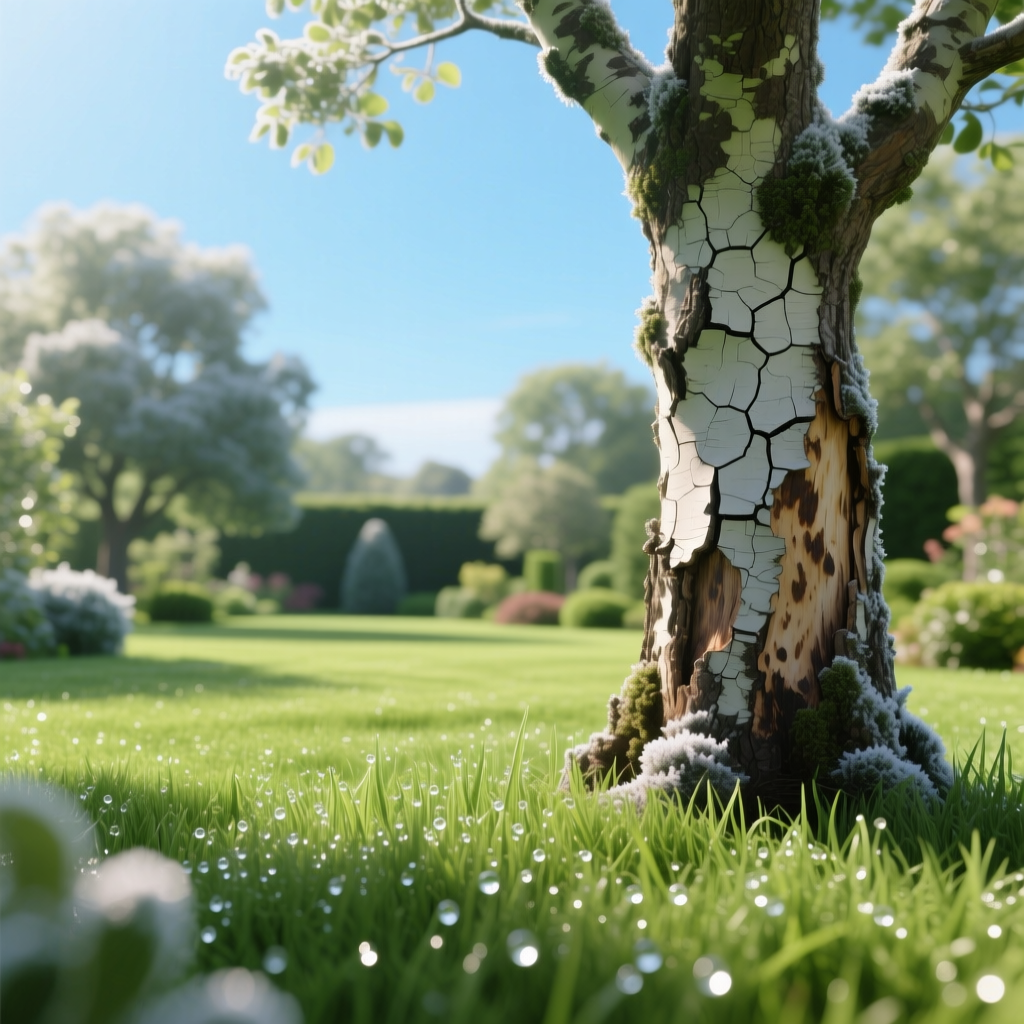
- Crown Cankers: Dark, water-soaked lesions appear on the lower trunk near the soil line. These cankers may ooze a reddish-brown sap, often mistaken for mechanical damage from string trimmers.
- Root Decay: If you excavate the soil near the base, infected roots will appear dark brown, mushy, and lack the white, healthy tissue found inside a snapped healthy root.
- Stunted Growth: New shoots are sparse, and leaves that do emerge are often undersized and pale green.
Armillaria Root Disease: The Lawn-to-Tree Fungal Threat
While Phytophthora is a water mold, true fungi like Armillaria mellea (commonly known as Oak Root Fungus or Honey Mushroom) also exploit overwatered lawn environments. Armillaria is an opportunistic pathogen that attacks trees already weakened by drought, soil compaction from heavy lawn equipment, or root damage from aggressive lawn aeration.
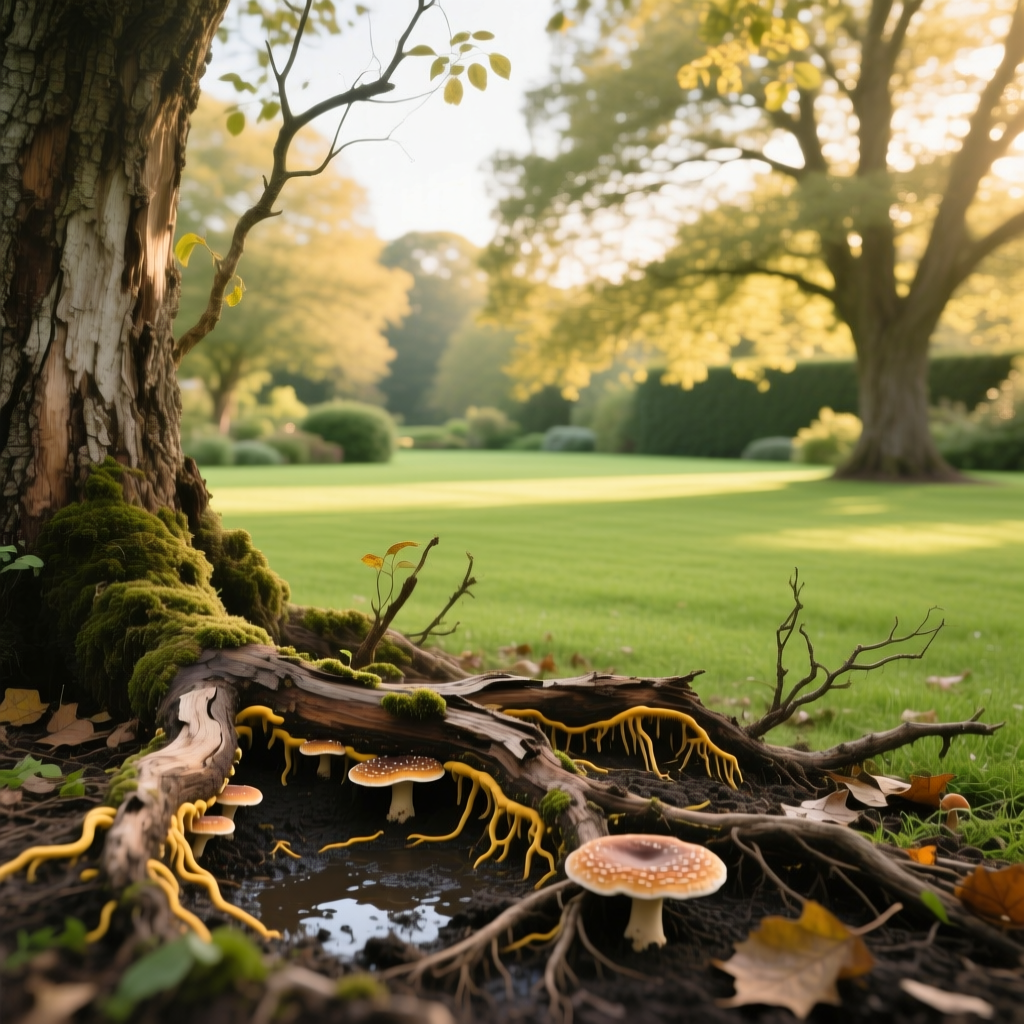
The University of Minnesota Extension notes that Armillaria spreads via thick, black, shoestring-like structures called rhizomorphs that grow through the soil from decaying wood or infected roots to healthy trees. In the fall, you may notice clusters of honey-colored mushrooms at the base of your trees or popping up in the adjacent lawn, signaling an advanced, often fatal, infection beneath the soil.
Comparison Chart: Drought Stress vs. Root Rot
Because both drought stress and root rot cause wilting and canopy dieback, misidentification is common. Treating a root-rot-infected tree with more water (assuming it is drought-stressed) will only accelerate the tree's death. Use this comparison chart to guide your diagnosis:
| Symptom / Indicator | Drought Stress | Phytophthora Root Rot |
|---|---|---|
| Soil Moisture | Dry, crumbly, pulling away from trunk | Wet, soggy, poorly draining |
| Leaf Margins | Crispy, brown, scorched appearance | Yellowing (chlorosis), drooping, soft |
| Trunk Base | Dry, cracked bark, no sap flow | Dark cankers, oozing reddish-brown sap |
| Root Inspection | Brittle, dry roots; hard to snap | Mushy, dark brown roots; foul odor |
| Response to Watering | Rapid improvement within 24-48 hours | Accelerated decline and worsening symptoms |
Treatment and Management Strategies
Successfully managing tree diseases that originate from lawn care practices requires a two-pronged approach: cultural modifications to the lawn environment and targeted chemical treatments.
1. Cultural Controls and Irrigation Adjustments
The most critical step is altering your lawn watering schedule. Trees and turfgrass have vastly different water requirements. Turf benefits from deep, infrequent watering, but tree root crowns must remain relatively dry.
- Relocate Sprinkler Heads: Move lawn irrigation heads at least 3 to 5 feet away from the trunk of mature trees to prevent water from pooling against the root flare.
- Remove Turf from the Drip Line: Carefully remove grass from around the base of the tree and replace it with a 2-to-3-inch layer of coarse wood chip mulch. Ensure the mulch does not touch the trunk (avoiding the dreaded 'mulch volcano').
- Improve Drainage: If water pools in the lawn near your trees, install French drains or perform deep-tine aeration in the turf areas to encourage lateral water movement away from the tree's root zone.
2. Chemical Fungicide Applications
When cultural controls are not enough, systemic fungicides can halt the progression of Phytophthora. Phosphonate-based fungicides are the industry standard for this pathogen.
- Product Recommendation: Agri-Fos (Potassium Phosphite) or Alamo. These products boost the tree's natural defense mechanisms and directly inhibit the water mold.
- Soil Drench Application: For smaller trees or preventative treatments, mix 1.25 fl oz of Agri-Fos per gallon of water. Apply as a soil drench over a 10-square-foot area around the drip line. Cost: Approximately $40-$60 per treatment.
- Trunk Injection: For large, high-value trees, professional trunk injection using phosphites or propiconazole is highly effective. This bypasses the damaged root system and delivers the active ingredient directly into the xylem. Cost: Expect to pay $15 to $25 per inch of trunk diameter (DBH) for professional injection services.
- Lawn/Turf Preventative: If the surrounding lawn has a history of Pythium or Phytophthora blight, applying a systemic turf fungicide like Subdue MAXX (mefenoxam) at a rate of 1-2 pints per 1,000 sq ft can reduce the overall pathogen load in the soil.
The Percolation Test: Diagnosing Soil Drainage
Before applying expensive treatments, confirm that poor drainage is the underlying cause. A simple percolation test can save you time and money.
- Dig a hole 12 inches deep and 12 inches wide in the lawn area near the tree's drip line.
- Fill the hole with water and let it drain completely (this pre-soaks the soil).
- Refill the hole to the top and measure the water level.
- Wait one hour and measure the drop in water level.
Interpretation: If the water drops less than 1 inch per hour, your soil has severe drainage issues. The tree's roots are sitting in a bathtub, making chemical treatments largely ineffective unless the physical drainage is corrected first.
Preventative Lawn and Tree Care Schedules
Integrating tree health into your lawn care calendar prevents disease spillover before it starts.
- Spring: Inspect tree trunks for winter damage and cankers. Adjust lawn sprinkler heads to ensure they are not spraying directly onto tree trunks. Apply preventative phosphonate soil drenches if the tree has a history of root rot.
- Summer: Monitor for canopy dieback. Water the lawn deeply but infrequently (1 inch per week, including rainfall). Avoid summer fertilization of trees, which pushes tender new growth susceptible to fungal attack.
- Fall: Aerate the lawn to relieve compaction, but avoid trenching or aggressive aeration within the tree's critical root zone. Rake fallen leaves from both the lawn and tree base to remove overwintering fungal spores.
- Winter: Prune dead or diseased tree branches. Sterilize pruning tools with a 10% bleach solution or 70% isopropyl alcohol between cuts to prevent spreading pathogens.
Expert Tip: Proper irrigation is critical for both turf and trees, but their needs conflict. As highlighted by the Clemson University Home & Garden Information Center, establishing separate irrigation zones for trees and lawn grass is one of the most effective, long-term investments you can make in your landscape's health.
Conclusion
Treating tree diseases requires looking beyond the canopy and examining the lawn environment below. By recognizing how lawn fungal diseases and over-irrigation contribute to Phytophthora and Armillaria root rots, homeowners can pivot from reactive tree removal to proactive landscape management. Adjust your watering, improve soil drainage, and utilize targeted phosphonate treatments to ensure your trees and turf coexist in a healthy, balanced ecosystem.