Tree Care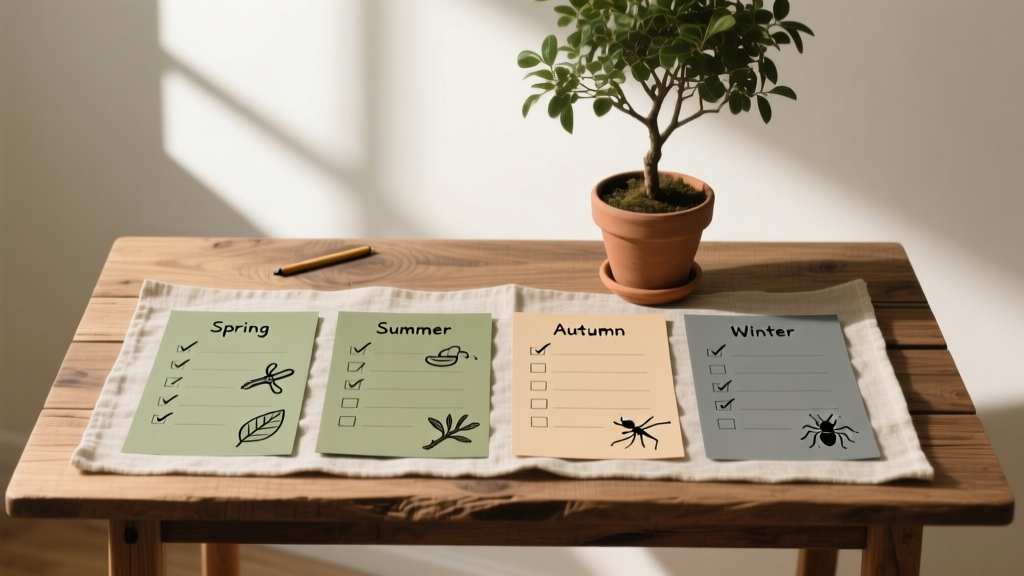
The Ultimate Seasonal Tree Care Schedule and Checklist
James MillerPublished
Why Your Trees Need a Dedicated Care Schedule
When homeowners think about lawn care checklists, their minds immediately jump to turfgrass: mowing schedules, aeration, overseeding, and fertilizer applications. However, the towering anchors of your landscape—your trees—require just as much structured attention. Trees and turfgrass are often locked in a silent battle for water, nutrients, and sunlight. Without a dedicated seasonal tree care schedule, your canopy can suffer from hidden stressors that eventually lead to decline, hazardous limb drops, or costly removals.
Integrating tree maintenance into your broader lawn care calendar ensures that your entire landscape thrives in harmony. This comprehensive, season-by-season checklist provides actionable advice, specific product recommendations, and estimated costs to help you maintain a robust, vibrant, and safe tree canopy year-round.
Spring Tree Care Checklist: Awakening and Assessment
Spring is the season of explosive growth. As soil temperatures rise above 45°F (7°C), tree roots become highly active, drawing up moisture and nutrients to support leaf flush and flowering. Your spring checklist should focus on inspection, soil preparation, and correcting winter damage.
1. Visual Health and Structural Inspection
Before the canopy fully leafs out, the tree's structure is still visible. Walk your property and look for the following:
- Winter Damage: Look for cracked or hanging branches (hangers) caused by heavy snow or ice. Remove these immediately to prevent property damage.
- Cankers and Bark Splitting: Inspect the trunk for vertical cracks or sunken, discolored areas (cankers) which indicate fungal or bacterial infections.
- Root Flare Examination: Ensure the root flare (where the trunk widens at the base) is visible. If your tree looks like a telephone pole stuck in the ground, it is planted too deep or buried under excess mulch, which can lead to fatal girdling roots.
2. Corrective Spring Pruning
While major structural pruning is best left for winter, spring is the time to remove dead, diseased, or damaged wood (the 3 Ds). Use sterilized bypass pruners (wipe blades with a 10% bleach solution or 70% isopropyl alcohol between cuts) to prevent the spread of pathogens like Fire Blight, which is highly active in warm, wet spring weather.
3. Mulching and Soil Preparation
Proper mulching retains soil moisture and regulates temperature, but improper mulching kills trees. Refresh your mulch beds following these strict parameters:
- Depth: Maintain a 2 to 4-inch layer of organic wood chips or shredded bark.
- Diameter: Extend the mulch ring to the tree's drip line (the outer edge of the canopy) if possible, or at least a 3-foot radius around the trunk.
- The Golden Rule: Keep mulch at least 3 inches away from the trunk itself. Avoid 'volcano mulching,' which traps moisture against the bark, inviting rot and rodent damage.
Estimated Cost: $30-$50 per cubic yard of premium hardwood mulch, plus delivery.
Summer Tree Care Checklist: Hydration and Protection
Summer introduces heat stress, drought conditions, and peak pest activity. Your primary focus shifts to deep hydration and proactive monitoring.
1. Deep Watering Protocols
Lawns require frequent, shallow watering, but trees need the exact opposite. Shallow watering encourages weak, surface-level roots that are prone to drought stress and lawnmower damage. According to the University of Minnesota Extension, trees require deep, infrequent watering to encourage roots to grow downward into the cooler, moister soil layers.
- Measurement: Apply 10 gallons of water per inch of trunk diameter (measured at knee height) each week during dry spells.
- Method: Use a soaker hose coiled around the drip line, or a slow-trickling garden hose left on for 1-2 hours. Avoid overhead sprinklers, which waste water to evaporation and wet the foliage, encouraging fungal diseases.
- Soil Testing: Push a 12-inch screwdriver into the soil near the tree. If it meets resistance before reaching 8 inches deep, your tree needs water immediately.
2. Pest and Disease Monitoring
Summer is prime time for sap-sucking insects like aphids, scale, and spider mites, which weaken trees and excrete sticky honeydew that ruins patios and promotes sooty mold.
- Identification: Check the undersides of leaves for stippling (spider mites) or clustered green/black bugs (aphids).
- Treatment: For minor infestations, a strong blast of water from a hose can dislodge aphids. For persistent issues, apply Neem oil or insecticidal soap ($15-$25 per bottle) in the early evening to avoid harming beneficial pollinators like bees.
Fall Tree Care Checklist: Winterization and Root Growth
While the canopy may be going dormant and dropping leaves, a tree's root system continues to grow actively well into late fall until the ground freezes. Fall care is all about setting the tree up for winter survival.
1. Late-Season Deep Watering
Evergreens, in particular, lose moisture through their needles all winter. If they enter the winter with dry soil, they will suffer from severe desiccation (winter burn). The Colorado State University Extension emphasizes that fall and winter watering is critical in regions with dry, windy winters. Water all trees deeply right before the ground freezes solid, usually in late November or early December, depending on your hardiness zone.
2. Anti-Desiccant Application for Evergreens
For vulnerable broadleaf evergreens (like Rhododendrons or Holly) and newly planted conifers, apply an anti-desiccant spray such as Wilt Pruf. This organic polymer coats the needles and leaves, reducing moisture loss from harsh winter winds. Apply when temperatures are between 40°F and 50°F (4°C - 10°C) so the spray can dry properly before freezing.
Estimated Cost: $25-$40 for a ready-to-use pump sprayer.
3. Leaf Management and Fertilization
Do not let thick layers of wet leaves mat against the trunk or smother the root zone, as this creates a haven for fungal spores and rodents. Rake leaves away from the trunk, but consider mulching them into your lawn to return organic matter to the soil. Fall is also the ideal time to apply a slow-release, low-nitrogen fertilizer (like a 10-10-10 or specialized tree spikes) if a soil test indicates a nutrient deficiency.
Winter Tree Care Checklist: Dormancy and Structural Work
Winter is the unsung hero of the tree care calendar. With the tree fully dormant, the risk of spreading diseases via pruning cuts is drastically reduced, and the branch architecture is completely visible.
1. Dormant Pruning
The Penn State Extension notes that late winter (February to early March, before bud break) is the optimal time for major structural pruning on most deciduous trees. Wounds heal faster once spring growth initiates, and the absence of leaves allows arborists to see crossing branches, weak crotches, and co-dominant leaders.
- DIY vs. Professional: Homeowners should only prune branches smaller than 3 inches in diameter that are reachable from the ground with a pole pruner. Anything higher, or near power lines, requires a professional.
- Hiring an Arborist: Always hire an ISA (International Society of Arboriculture) Certified Arborist. Expect to pay between $150 and $500 for a standard pruning visit, depending on tree size and accessibility.
2. Frost and Snow Protection
Heavy, wet snows can snap the multiple leaders of arborvitae and junipers. Gently brush heavy snow off evergreen branches using a broom, sweeping upward to avoid snapping the brittle, frozen wood. For young, thin-barked trees (like Maples or Fruit trees), wrap the lower trunk with white tree wrap or plastic guards to prevent 'sunscald'—a condition where winter sun warms the bark during the day, causing cells to activate, only to freeze and die when the sun sets and temperatures plummet at night.
Comprehensive Seasonal Tree Care Matrix
Use this quick-reference table to integrate tree care into your monthly lawn maintenance schedule.
| Task | Target Season | Frequency | Primary Tools / Products | Estimated Cost (DIY) |
|---|---|---|---|---|
| Visual Inspection & 3 Ds Pruning | Early Spring | 1x / year | Bypass pruners, rubbing alcohol | $20 (tools) |
| Mulch Ring Refresh | Mid Spring | 1x / year | Organic hardwood mulch, rake | $40 / yard |
| Deep Root Watering | Summer & Fall | Weekly (during drought) | Soaker hose, soil probe | $30 (hose) |
| Pest Monitoring & Treatment | Summer | Bi-weekly checks | Neem oil, insecticidal soap | $25 / bottle |
| Anti-Desiccant Spray | Late Fall | 1-2x / winter | Wilt Pruf, pump sprayer | $35 / jug |
| Structural Dormant Pruning | Late Winter | Every 2-3 years | Pole saw, ISA Certified Arborist | $150 - $500 (Pro) |
| Trunk Wrapping (Sunscald) | Late Fall / Winter | 1x / year (young trees) | White crepe tree wrap | $10 / roll |
Final Thoughts on Canopy and Turf Harmony
Treating your trees as an afterthought to your lawn is a costly mistake. By adopting this seasonal tree care schedule, you not only protect your investment in your landscape but also improve the overall microclimate of your yard. Healthy trees provide essential shade that reduces turf heat stress in the summer, while their deep root systems improve soil drainage and structure. Print this checklist, pin it to your garage wall, and give your trees the structured, proactive care they need to stand tall for generations.