Tree Care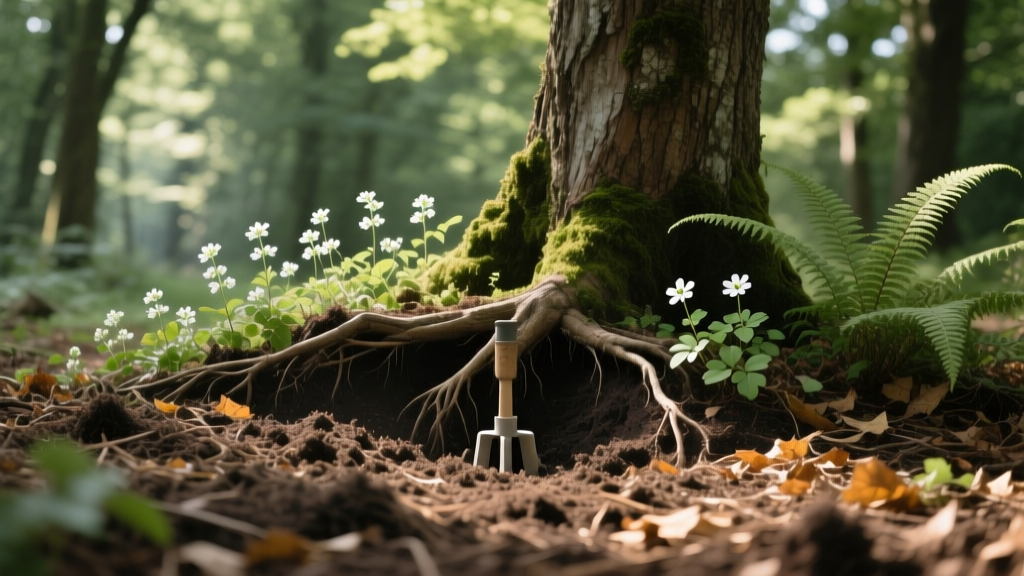
Tree Root Zone Aeration and Shade Groundcover Planting
Sarah ChenPublished
The Conflict Between Lawn Care and Tree Health
For homeowners dedicated to maintaining a pristine landscape, autumn and spring bring the familiar rituals of core aeration and overseeding. These practices are the gold standard for alleviating soil compaction and thickening turfgrass. However, when these lawn care techniques cross over into the tree's dripline—the area directly beneath the outer circumference of the tree's branches—they can cause catastrophic damage to the tree's root system. Understanding how to adapt aeration and overseeding techniques specifically for tree care is essential for the long-term health of your urban and suburban canopy.
Unlike turfgrass, which thrives on regular cultivation and heavy fertilization, trees have evolved in forest environments where soil is naturally aerated by decaying organic matter and undisturbed by mechanical equipment. The critical root zone of a mature tree contains millions of delicate, fibrous feeder roots responsible for absorbing water and nutrients. According to the International Society of Arboriculture, proper root zone management is critical for urban tree survival, as the majority of these absorbing roots reside in the top six to twelve inches of the soil profile (Trees Are Good). When we apply standard lawn care practices under the canopy, we inadvertently wage war on the tree's life support system.
The Dripline Dilemma: Why Traditional Aeration Harms Trees
Standard lawn core aerators use heavy, hollow metal tines to punch into the earth, extracting plugs of soil to reduce bulk density and increase macropore space. While this is excellent for a Kentucky Bluegrass lawn, driving a mechanical core aerator under a mature oak or maple is highly destructive. The heavy machinery causes secondary compaction through its sheer weight, while the tines sever the fine, hair-like feeder roots that the tree relies on for drought resistance and nutrient uptake.
Furthermore, traditional overseeding introduces aggressive turfgrass species into the root zone. Turfgrass is a heavy feeder and a fierce competitor for moisture. In shaded environments beneath a tree canopy, grass naturally thins out, leading homeowners to repeatedly overseed and apply synthetic fertilizers. This creates a toxic cycle: the fertilizer promotes shallow grass roots, which outcompete the tree's fine roots for surface moisture, while the frequent watering required for grass seed germination deprives the deeper tree roots of the oxygen they need to survive.
Tree-Safe Aeration Techniques to Relieve Compaction
To relieve soil compaction in the tree root zone without causing mechanical damage, certified arborists utilize specialized, non-invasive aeration techniques. These methods prioritize soil structure improvement while preserving root integrity.
1. Air Spading (Pneumatic Excavation)
Air spading uses a specialized tool connected to an industrial air compressor to blast compressed air into the soil at supersonic speeds (typically around 90 to 120 PSI). The force of the air fractures and pulverizes compacted soil but safely bends and flows around flexible, living tree roots without tearing or cutting them. Arborists often use air spading to perform 'root collar excavations,' removing suffocating soil and girdling roots from the base of the trunk, or to till compacted soil in the dripline to a depth of eight inches before amending it with organic compost.
2. Radial Trenching
Radial trenching involves creating four to eight spoke-like trenches that radiate outward from the trunk toward the dripline. To protect the tree's structural buttress roots, trenching must begin at least three to four feet away from the trunk. Using an air spade or careful hand tools, trenches are dug approximately two to four inches wide and eight to twelve inches deep. These trenches are then backfilled with a mixture of coarse sand, expanded shale, and high-quality organic compost, creating permanent pathways for oxygen, water, and nutrients to reach the deeper root zones.
3. Vertical Mulching
Vertical mulching is a highly effective, lower-cost alternative to full air spading. Using a two-inch diameter hand auger or a specialized drill, holes are bored into the soil in a grid pattern beneath the canopy, spaced roughly two to three feet apart. The holes are drilled to a depth of eight to twelve inches and subsequently filled with a porous mix of pine bark fines, compost, and pea gravel. This technique mimics the natural macropores created by decaying roots and earthworms, significantly improving soil gas exchange.
Rethinking Overseeding: Groundcovers vs. Turfgrass
Instead of overseeding with turfgrass, the best practice for the area beneath a tree's dripline is to establish shade-tolerant groundcovers or apply a proper mulch ring. The University of Minnesota Extension emphasizes that replacing turf with mulch or groundcovers significantly reduces competition for water and nutrients, leading to vastly superior tree growth rates and canopy density (UMN Extension).
When 'overseeding' or planting under a tree, avoid rototilling the soil, which will decimate the root system. Instead, use a small hand trowel to carefully dig individual planting holes between the existing tree roots. Excellent shade-tolerant groundcover options include:
- Sweet Woodruff (Galium odoratum): A delicate, low-growing perennial that thrives in dry shade and produces tiny white spring flowers.
- Creeping Jenny (Lysimachia nummularia): Ideal for moist, shaded areas, providing vibrant golden-green foliage that spills beautifully over root flares.
- Barrenwort (Epimedium): Exceptionally drought-tolerant once established, with heart-shaped leaves and unique spring blooms.
- Hostas and Ferns: Classic choices for deep shade that provide lush, tropical textures without demanding heavy fertilization.
Comparison of Tree Root Zone Management Techniques
| Technique | Depth of Treatment | Root Damage Risk | Estimated Cost | Best Application |
|---|---|---|---|---|
| Mechanical Core Aeration | 2 - 3 inches | High (Severs fine roots) | $15 - $25 per 1,000 sq ft | Open lawn areas ONLY |
| Air Spading | 8 - 12+ inches | Very Low (Safe for roots) | $150 - $300 per hour | Severe compaction, root collar excavation |
| Radial Trenching | 8 - 12 inches | Low (If done outside buttress) | $500 - $1,200 per tree | Mature trees in heavy clay soils |
| Vertical Mulching | 8 - 12 inches | Low (Minor localized cutting) | $200 - $600 per tree | Periodic maintenance, moderate compaction |
| Organic Mulch Ring | 2 - 4 inches (Surface) | None | $30 - $80 in materials | All trees, annual maintenance |
Step-by-Step Guide to Planting Under the Canopy
If you decide to transition your tree's understory from failing turfgrass to a thriving groundcover or mulch bed, follow these arborist-approved steps:
Step 1: Smother the Existing Turf. Do not use chemical herbicides near the tree's root zone, as products like glyphosate can be absorbed by surface roots or harm the tree if sprayed on the trunk. Instead, lay down overlapping layers of plain cardboard over the grass, extending out to the dripline. Wet the cardboard thoroughly.
Step 2: Apply Organic Mulch. Spread a two to four-inch layer of aged wood chips or shredded bark over the cardboard. This will block sunlight, killing the grass beneath while eventually breaking down to feed the soil biology. Arborists at the Morton Arboretum note that maintaining a proper mulch ring is one of the single most beneficial things a homeowner can do to reduce soil compaction and moderate soil temperature (Morton Arboretum).
Step 3: Plant Groundcover Plugs. Once the grass has died back (usually after 6 to 8 weeks), use a hand trowel to cut small 'X' shapes into the cardboard and soil. Plant your shade-tolerant groundcover plugs into these pockets, carefully working around any tree roots you encounter. Water deeply to settle the soil around the new plugs.
Step 4: Maintain the Trunk Flare. Whether you use mulch or groundcovers, never pile material against the trunk of the tree. 'Mulch volcanoes' trap moisture against the bark, inviting fungal pathogens, rot, and girdling roots. Always leave a three to four-inch gap of bare soil around the base of the trunk to allow the root flare to breathe.
Conclusion
Adapting your landscape maintenance routines to respect the biological needs of your trees is a hallmark of advanced property stewardship. By abandoning mechanical core aeration and turfgrass overseeding beneath the dripline, and instead utilizing pneumatic soil fracturing, vertical mulching, and shade-tolerant groundcovers, you eliminate the competition between your lawn and your trees. The result is a healthier, more resilient landscape where both the canopy above and the soil below can thrive in harmony.