Lawn Care
How to Aerate and Overseed a Cool-Season Lawn in Fall
The Ultimate Fall Lawn Renovation: Aeration and Overseeding
If you maintain a cool-season lawn featuring Kentucky Bluegrass, Tall Fescue, or Perennial Ryegrass, autumn is not the time to put away your gardening tools. In fact, the weeks between late August and mid-October represent the most critical window for lawn renovation. Over the summer, foot traffic, heavy mowing, and heat stress cause soil compaction and thatch buildup, suffocating grassroots and creating a hostile environment for new growth. By combining core aeration with overseeding, you can reverse this damage and cultivate a thick, resilient turf.
This practical, step-by-step guide will walk you through the exact process of aerating and overseeding your cool-season lawn. We will cover specific product recommendations, precise seed application rates, equipment rental costs, and the crucial post-seeding watering schedule required to guarantee germination.
The Science Behind the Synergy
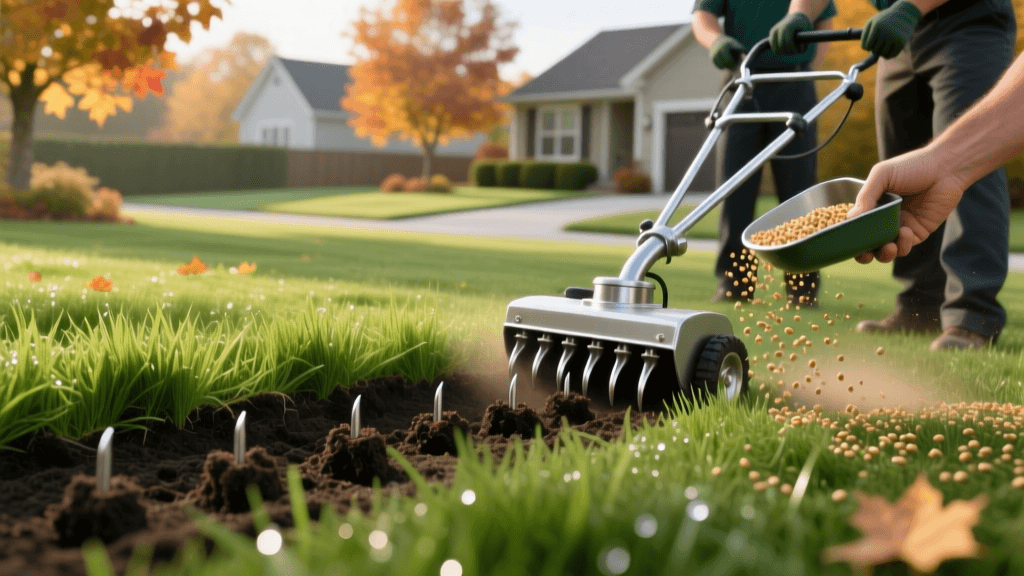
Core aeration involves using a machine to extract small plugs of soil and thatch from the lawn. This process alleviates soil compaction, improves water infiltration, and allows oxygen to reach the root zone. However, aeration alone leaves behind open holes in the soil. This is where overseeding comes in. When you broadcast grass seed immediately after aerating, the seeds fall directly into the aeration holes. These holes provide a protected microenvironment with direct soil contact, which is the absolute gold standard for seed-to-soil contact and rapid germination.
Tools and Materials Needed
Before beginning, gather the necessary equipment. Budget approximately $200 to $300 for a complete weekend DIY renovation of a standard 5,000-square-foot lawn.
- Core Aerator: Rent a walk-behind core aerator from a local hardware store. Expect to pay between $80 and $120 for a half-day rental. Avoid spike aerators, as they can actually increase soil compaction.
- Broadcast Spreader: A quality broadcast spreader (like the Scotts Classic Drop or Lesco Professional) ensures even seed and fertilizer distribution. Cost: $40 to $70.
- Grass Seed: Purchase high-quality, weed-free seed. For Tall Fescue, look for brands like Jonathan Green Black Beauty or Pennington Smart Seed. Budget $60 to $90 per 50-pound bag.
- Starter Fertilizer: Use a fertilizer high in phosphorus to promote root development, such as Scotts Turf Builder Starter Food (24-25-4). Cost: $35 per 15-pound bag.
- Lawn Mower: To scalp the lawn prior to aeration.
- Garden Hose and Sprinkler: Or a functioning in-ground irrigation system.
Step 1: Prepare the Lawn (Timing and Mowing)
Timing is everything. According to the University of Minnesota Extension, the ideal time to overseed cool-season grasses is when soil temperatures are consistently between 50°F and 65°F. This usually aligns with daytime air temperatures of 70°F to 75°F.
Two days before you plan to aerate, water your lawn deeply. Apply at least 1 inch of water across the entire yard. This softens the soil, allowing the aerator tines to penetrate deeply and extract full, 2-to-3-inch plugs. If the soil is too dry, the aerator will bounce off the surface; if it is muddy, the tines will clog.
The day before aerating, mow your lawn shorter than usual. Lower your mower deck to 1.5 or 2 inches and bag the clippings. This removes the canopy barrier, allowing the aerator to reach the soil and ensuring the new seed makes direct contact with the earth rather than getting trapped in existing grass blades.
Step 2: Core Aeration Technique
Operating a walk-behind aerator is similar to driving a heavy, self-propelled lawnmower. Start at one corner of your lawn and walk in straight, overlapping lines. To maximize the number of holes and ensure thorough compaction relief, perform a double pass. Make your first pass in a North-South direction, and your second pass in an East-West direction.
You should aim for 20 to 40 holes per square foot. Leave the extracted soil plugs on the lawn. They will break down naturally over the next two to three weeks, depositing beneficial soil microorganisms back into the thatch layer to aid in natural decomposition. Do not rake them up.
Step 3: Overseeding with Precision
Immediately after aerating, it is time to lay down the seed. For the most even coverage, divide your total seed volume in half. Apply the first half walking in one direction, and the second half walking in a perpendicular direction. This cross-hatching technique eliminates striping and bare spots.
Refer to the table below to ensure you are applying the correct amount of seed. Overseeding requires significantly less seed than establishing a brand-new lawn from bare dirt, as you are simply filling in thin areas and introducing new genetic strains to an existing turf.
| Grass Type | New Lawn Rate (lbs / 1,000 sq ft) | Overseeding Rate (lbs / 1,000 sq ft) | Germination Time (Days) |
|---|---|---|---|
| Tall Fescue | 8 - 10 lbs | 4 - 5 lbs | 7 - 14 days |
| Kentucky Bluegrass | 2 - 3 lbs | 1 - 1.5 lbs | 14 - 30 days |
| Perennial Ryegrass | 6 - 8 lbs | 3 - 4 lbs | 5 - 10 days |
| Fine Fescue | 5 - 7 lbs | 2.5 - 3.5 lbs | 7 - 14 days |
Step 4: Fertilization and Seed-to-Soil Contact
Once the seed is down, apply a starter fertilizer using your broadcast spreader. Starter fertilizers are specifically formulated with higher phosphorus levels (the middle number on the bag, such as 24-25-4). Phosphorus is the primary macronutrient responsible for vigorous root development, which is exactly what a germinating seedling needs to survive the upcoming winter.
After fertilizing, take a piece of chain-link fence, a specialized lawn drag mat, or the back of a heavy garden rake and lightly drag it across the lawn. This step is crucial. It knocks seed that may be resting on top of the aeration plugs down into the holes and ensures intimate seed-to-soil contact. If a seed is left exposed to the air and autumn sun, it will dry out and die before it can germinate.
Step 5: The Critical 28-Day Watering Schedule
Watering is the single most important factor in the success or failure of your overseeding project. Grass seed must remain consistently moist until the radicle (the first root) anchors into the soil. If the seed swells with water and then dries out, the embryo inside will die. Follow this strict watering schedule for the first month:
| Timeline | Watering Frequency | Duration per Zone | Goal |
|---|---|---|---|
| Days 1 - 14 | 2 to 3 times daily | 5 - 10 minutes | Keep top 1 inch of soil constantly moist. |
| Days 15 - 21 | 1 time daily | 15 - 20 minutes | Encourage roots to grow deeper into the soil. |
| Days 22 - 28 | Every other day | 30 - 40 minutes | Transition to standard deep, infrequent watering. |
Always water in the early morning (between 5:00 AM and 9:00 AM) to minimize evaporation and reduce the risk of fungal diseases like Pythium blight, which thrive in warm, stagnant evening moisture.
Step 6: Post-Germination Mowing and Weed Control
Patience is required when mowing a newly overseeded lawn. Do not mow until the new grass reaches a height of at least 3.5 to 4 inches. When you do mow, ensure your mower blade is razor-sharp. A dull blade will tear the tender, young grass seedlings right out of the soil. Set your mower to 2.5 or 3 inches and only remove the top third of the grass blade.
Regarding weed control, you must wait. Do not apply any pre-emergent herbicides before overseeding, as they will prevent your grass seed from germinating. Furthermore, wait until you have mowed the new grass at least three times before applying any broadleaf weed killers (like 2,4-D or Dicamba). Applying herbicides too early will severely stunt or kill the young grass.
Expert Insights for Long-Term Success
'Overseeding is an excellent way to introduce improved, disease-resistant turfgrass cultivars into an existing lawn. However, success is entirely dependent on seed-to-soil contact and moisture management. Homeowners who simply throw seed on top of an existing lawn without aerating or dethatching first will see germination rates of less than 10 percent.' - University of Minnesota Extension, Lawn Care Guidelines
By investing a single weekend into core aeration and overseeding, you are fundamentally upgrading the genetic makeup and soil structure of your lawn. The upfront costs of renting an aerator and buying premium seed pale in comparison to the long-term savings of reduced water usage, fewer chemical treatments, and the immense curb appeal of a dense, emerald-green lawn the following spring.