Lawn Care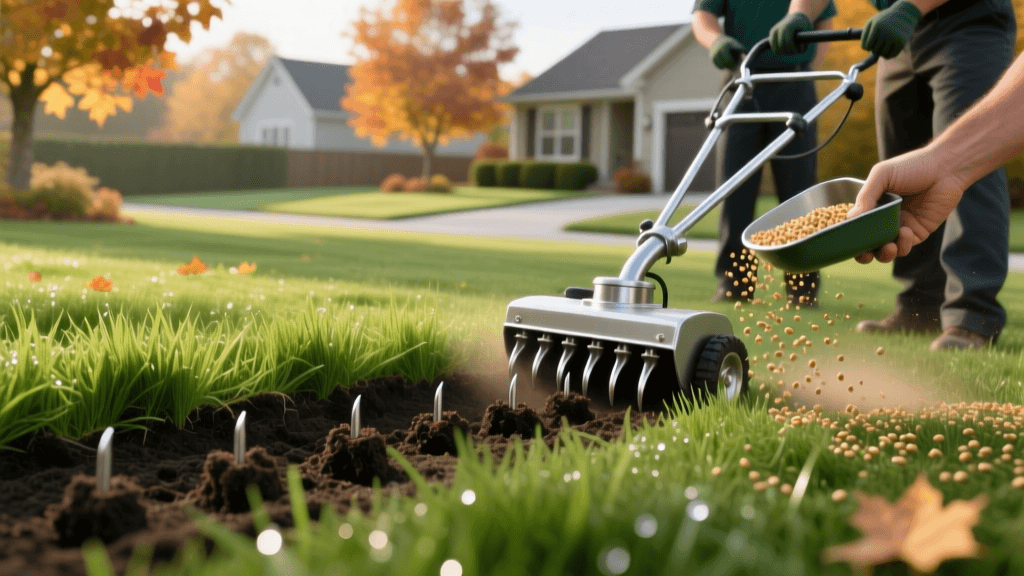
Fall Lawn Care: Aeration and Overseeding Cool-Season Grasses
The Biological Advantage of Fall Lawn Care
For homeowners cultivating cool-season grasses—such as Kentucky Bluegrass, Tall Fescue, and Perennial Ryegrass—autumn is not the end of the growing season; it is the most critical period for long-term lawn health. While spring often gets the glory for lush, green growth, fall is when cool-season grasses focus their energy on deep root development and carbohydrate storage. The soil temperatures in early fall (between 60°F and 70°F) are ideal for seed germination and root establishment, while cooler air temperatures reduce heat stress and weed competition.
According to turfgrass specialists at Penn State Extension, the root systems of cool-season grasses experience their most significant growth spurts in the autumn months. Failing to capitalize on this biological window by aerating, overseeding, and fertilizing can leave your lawn vulnerable to summer drought, disease, and aggressive weed invasion the following year. This comprehensive guide will walk you through the exact timing, costs, and step-by-step methods for executing a professional-grade fall lawn care regimen.
Step 1: Soil Testing and Preparation (Late August)
Before you spend hundreds of dollars on seed and fertilizer, you must understand your soil's baseline chemistry. Cool-season grasses thrive in a soil pH range of 6.0 to 7.0. If your soil is too acidic (below 6.0), essential nutrients like phosphorus and potassium become locked up and unavailable to the grass roots, regardless of how much fertilizer you apply.
Actionable Soil Testing Advice:
- Cost: $15 to $30 for a comprehensive laboratory analysis.
- Where to Test: Send your soil samples to your local university cooperative extension office or a private lab like Logan Laboratories. Avoid cheap DIY color-changing kits from hardware stores, as they lack the precision needed to calculate exact lime and amendment requirements.
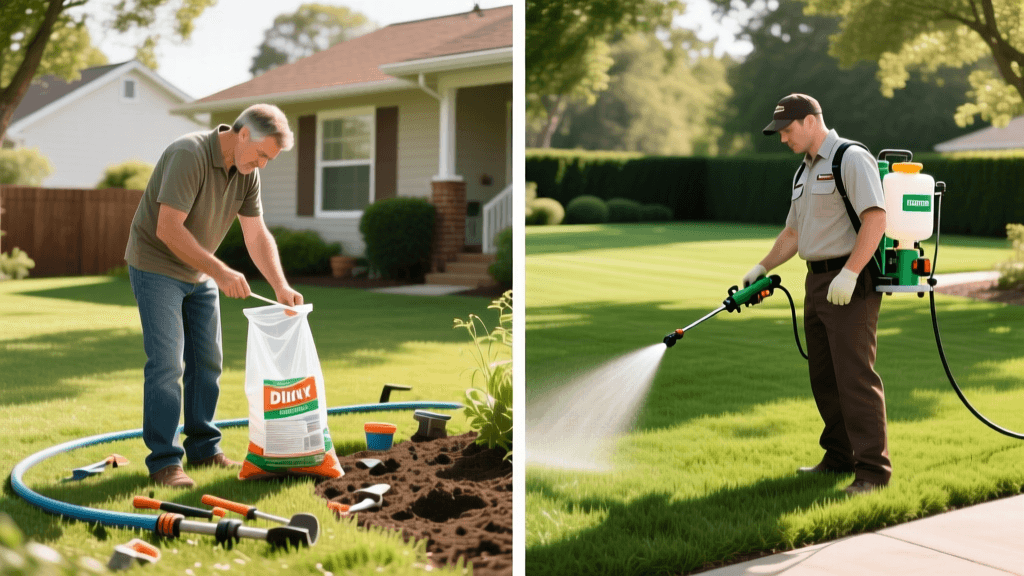
- Sampling Method: Use a clean trowel or soil probe to extract 5 to 10 cores from the top 3 to 4 inches of soil across your lawn. Mix them in a clean plastic bucket, let the soil air dry, and submit the required one-cup sample.
- Amendments: If your test recommends lime to raise the pH, apply pelletized calcitic or dolomitic lime in early September. Plan to apply roughly 50 lbs of lime per 1,000 square feet to raise the pH by half a point, though you should always defer to your specific lab results.
Step 2: Core Aeration (Early to Mid-September)
Over the summer, foot traffic, heavy mowing equipment, and intense rainfall cause soil compaction. Compacted soil restricts the flow of oxygen, water, and nutrients to the root zone. Core aeration involves using a machine with hollow tines to physically extract plugs of soil, alleviating compaction and creating micro-environments for new roots to expand.
Aeration Specifications and Costs:
- Equipment: Rent a walk-behind core aerator from a local equipment rental center. Ensure the machine uses hollow tines, not solid spikes. Solid spikes merely push soil sideways, worsening compaction.
- Plug Depth and Spacing: Adjust the machine to pull cores that are 2 to 3 inches deep and spaced 2 to 3 inches apart.
- Cost Breakdown: Renting a commercial-grade aerator typically costs $75 to $100 for a half-day. Hiring a professional lawn care service to perform core aeration usually ranges from $0.10 to $0.15 per square foot (e.g., $500 to $750 for a 5,000 sq ft lawn).
- Pro-Tip: Water your lawn deeply 24 hours before aerating. Moist soil allows the tines to penetrate deeply and cleanly eject the cores. Leave the extracted soil plugs on the lawn; they will break down and redistribute beneficial microbes over the next two weeks.
Step 3: Overseeding (Immediately After Aeration)
Overseeding introduces new, disease-resistant grass cultivars into your existing turf, thickening the canopy to naturally choke out crabgrass and dandelions. The holes left behind by the core aerator provide perfect seed-to-soil contact, which is mandatory for germination.
Seed Selection and Application Rates:
Do not buy generic 'contractor mix' seed. Invest in premium, coated seeds that include fungicides and moisture-retaining polymers. Top-tier brands include Jonathan Green Black Beauty Ultra or Scotts Turf Builder Grass Seed.
| Grass Type | Overseeding Rate (per 1,000 sq ft) | Germination Time | Best Characteristics |
|---|---|---|---|
| Kentucky Bluegrass | 1.0 to 2.0 lbs | 14 to 21 days | Spreads via rhizomes, excellent color, self-repairing |
| Tall Fescue | 6.0 to 8.0 lbs | 7 to 12 days | Deep roots, high drought tolerance, wear-resistant |
| Perennial Ryegrass | 5.0 to 7.0 lbs | 5 to 7 days | Fastest germination, nurse grass, high traffic tolerance |
Fertilizing the Seed:
Immediately after spreading the seed, apply a high-phosphorus starter fertilizer to promote rapid root development. A product like Scotts Starter Fertilizer (24-25-4) or an organic alternative like Espoma Organic Lawn Starter (9-0-0 with bone meal) works exceptionally well. Apply using a broadcast spreader, ensuring even coverage to prevent fertilizer burn.
Step 4: The 6-Week Fall Watering and Maintenance Timeline
Seed and fertilizer are useless without proper moisture management. Here is your week-by-week timeline to ensure maximum germination and establishment:
- Weeks 1 to 3 (Germination Phase): Water lightly 2 to 3 times per day for 10 to 15 minutes. The top inch of soil must remain consistently moist but not waterlogged. If the seed dries out even once during germination, it will die.
- Weeks 4 to 5 (Establishment Phase): Reduce watering frequency to once daily, but increase the duration to 30 minutes. This encourages the new roots to grow deeper into the aeration holes.
- Week 6 (First Mow): Once the new grass reaches 3.5 to 4 inches tall, mow it down to 3 inches. Ensure your mower blades are freshly sharpened; dull blades will rip tender seedlings out of the soil.
- Week 8 (Winterizer Fertilizer): In late October or early November, apply a winterizer fertilizer. Look for a high-potassium (K) ratio, such as 10-0-20. Potassium acts like antifreeze for grass cells, increasing cold hardiness and disease resistance. Lesco Professional Winterizer is a highly recommended commercial-grade option.
Expert Insights on Fall Lawn Health
The consensus among academic turfgrass researchers is clear: autumn dictates summer survival. As noted by Purdue University's turfgrass science program, the carbohydrate reserves stored in the roots during the fall are the primary energy source the grass relies on to break dormancy in the spring and survive summer stress.
According to Dr. Cale Bigelow, a turfgrass science professor and extension specialist at Purdue University, 'Fall is the absolute best time to seed and fertilize cool-season lawns. The root system established in September and October will dictate the lawn's survival and vigor during the following summer's heat and drought. Spring fertilization often just forces excessive top growth at the expense of the root system, making the lawn weaker in the long run.'
Common Fall Lawn Care Mistakes to Avoid
Even with the best intentions, homeowners frequently make errors that sabotage their fall lawn care efforts. Avoid these costly pitfalls:
- Applying Weed and Feed While Overseeding: Most broadleaf weed killers (like 2,4-D and Dicamba) contain pre-emergent or post-emergent herbicides that will stunt or completely kill germinating grass seed. Wait until the new grass has been mowed at least three times before applying any chemical weed control.
- Mowing Too Short Before Winter: While it is wise to lower your mower deck slightly for aeration and overseeding (down to 2 inches), you must raise it back up to 3 or 3.5 inches for the final mow of the season. Longer grass blades provide vital insulation for the soil crown against freezing winter winds and help shade out early-spring weeds.
- Leaving Thick Layers of Autumn Leaves: A few mulched leaves are fine and provide organic matter, but a thick mat of wet leaves will block sunlight, trap moisture, and promote snow mold diseases like Microdochium nivale. Mulch leaves weekly with your mower or use a backpack blower to keep the turf canopy exposed to the autumn sun.
Conclusion: Investing in Spring Vigor
Treating your lawn in the fall is an investment that pays massive dividends the following spring. By combining mechanical core aeration, premium overseeding, and scientifically timed fertilization, you transition your lawn from a fragile, weed-prone turf into a dense, resilient, and deeply rooted ecosystem. Follow this seasonal maintenance schedule, track your soil's health annually, and you will achieve the thick, carpet-like cool-season lawn that neighbors envy.