Lawn Care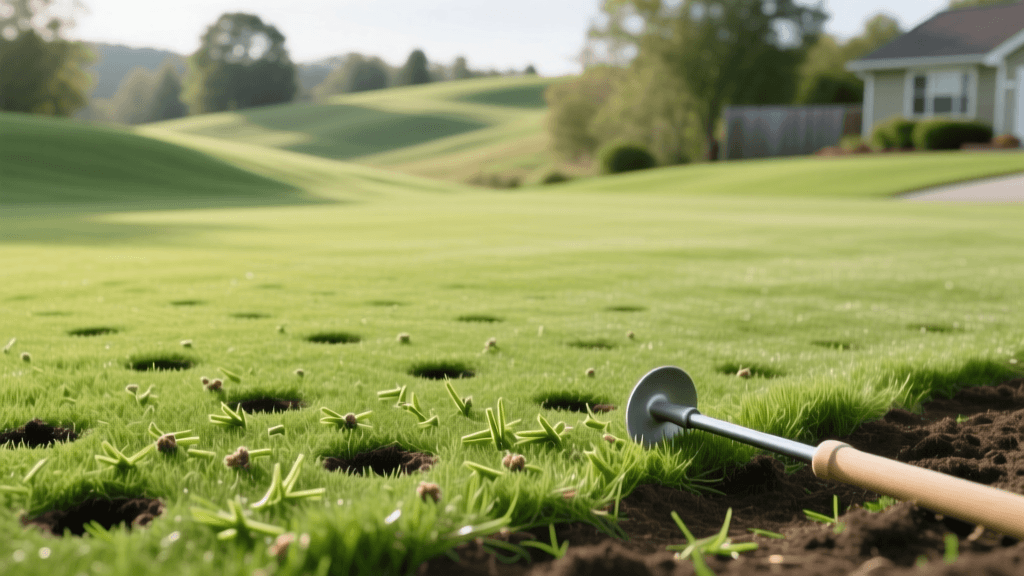
Step-by-Step Guide to Aerating and Overseeding Lawns
Why Core Aeration and Overseeding Are Essential
Over time, even the most meticulously maintained cool-season lawns fall victim to soil compaction and thatch buildup. Foot traffic, heavy mowing equipment, and natural soil settling compress the dirt, squeezing out the vital oxygen, water, and nutrients that grass roots need to thrive. When soil becomes compacted, turf thins out, making it highly susceptible to drought stress, disease, and invasive weeds like crabgrass and dandelions.
Core aeration is the mechanical process of removing small plugs of soil and thatch—typically 2 to 3 inches deep—from the lawn. This creates physical channels that alleviate compaction and allow essential resources to reach the root zone. When you pair aeration with overseeding, you create the perfect environment for new grass seed to fall directly into these holes, ensuring optimal seed-to-soil contact. The result is a dramatically thicker, more resilient lawn that can naturally choke out weeds and survive harsh environmental conditions.
When to Aerate and Overseed Cool-Season Grasses
Timing is the single most critical factor in lawn renovation. Cool-season grasses, such as Tall Fescue, Kentucky Bluegrass, and Perennial Ryegrass, experience their peak growth periods in the early fall. The ideal window for aerating and overseeding is between late August and mid-October, depending on your specific hardiness zone.
During this window, soil temperatures are generally between 50°F and 65°F, which is the optimal range for cool-season seed germination. Furthermore, the air temperatures are cooling down (typically 60°F to 75°F), reducing heat stress on vulnerable seedlings. Fall planting also gives the new grass two full growing seasons (fall and spring) to establish deep root systems before facing the brutal heat of summer. Crucially, overseeding in the fall avoids the spring germination window of annual weeds like crabgrass, drastically reducing competition for your new turf.
Tools and Materials You Will Need
Before beginning your lawn renovation project, gather the following tools and materials. Budgeting for this project typically ranges from $150 to $300 for an average 5,000-square-foot lawn, depending on whether you buy or rent equipment.
- Core Aerator: Rent a walk-behind gas-powered core aerator from a local hardware store or equipment rental yard. Expect to pay between $80 and $120 for a four-hour or full-day rental. Avoid spike aerators or pull-behind models, as they do not remove soil cores and can actually worsen compaction.
- Broadcast Spreader: A high-quality push broadcast spreader (like the Scotts EdgeGuard Deluxe) ensures an even distribution of both seed and fertilizer.
- Grass Seed: Purchase a premium, weed-free cool-season seed blend. Brands like Jonathan Green Black Beauty or Pennington Smart Seed offer excellent drought resistance and disease tolerance.
- Starter Fertilizer: New seedlings require high levels of phosphorus for root development. Look for a starter fertilizer with an N-P-K ratio similar to 24-25-4 (such as Scotts Turf Builder Starter Food or Lesco Professional Starter Fertilizer).
- Irrigation Flags: Neon flags to mark shallow utility lines, cable lines, and sprinkler heads to prevent damage from the aerator tines.
Step 1: Prepare the Lawn for Aeration
Proper preparation dictates the success of your aeration and overseeding project. Begin by mowing your lawn shorter than usual, dropping your mower deck to a height of 1.5 to 2 inches. Bag the clippings during this mow to expose the soil surface and remove any barriers that might block seed-to-soil contact.
Next, water your lawn deeply. Apply approximately 1 inch of water 24 to 48 hours before you plan to aerate. The goal is to soften the top 3 to 4 inches of soil so the aerator tines can easily penetrate and pull deep, intact cores. If the ground is too dry and hard, the aerator will bounce across the surface, yielding shallow, ineffective plugs. Finally, walk the property and mark all sprinkler heads, shallow irrigation lines, and invisible dog fences with neon flags to avoid costly repairs.
Step 2: Core Aerate the Lawn
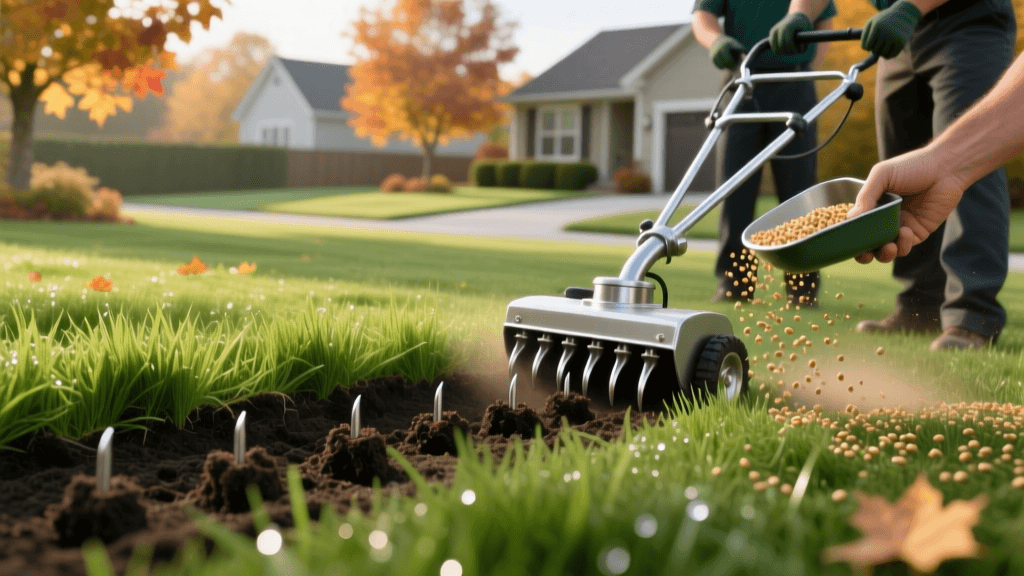
Operating a walk-behind core aerator requires physical effort, as these machines are heavy and self-propelled. Start along the perimeter of your lawn and work in straight lines, similar to how you would mow. For the best results, make two complete passes over the entire lawn: one horizontally and one vertically. This crisscross pattern ensures maximum soil disruption and creates a dense grid of aeration holes.
As you work, the machine will deposit thousands of soil plugs on the surface of your lawn. Do not rake or remove these plugs. They contain beneficial microorganisms that will naturally break down and filter back into the thatch layer over the next two to three weeks, acting as a natural topdressing and accelerating thatch decomposition.
Step 3: Overseed the Lawn
With the soil opened up, it is time to introduce new grass seed. Calibrate your broadcast spreader according to the specific overseeding rate listed on your seed bag. As a general rule, you will apply about half the rate used for planting a brand-new lawn from scratch.
Split your total seed volume in half. Apply the first half while walking in horizontal rows, and apply the second half while walking in vertical rows. This perpendicular application method prevents striping and ensures a uniform, dense carpet of grass. Pay special attention to bare spots or heavily compacted areas, using a handheld spreader to lightly spot-treat these trouble zones with an extra handful of seed.
Step 4: Apply Starter Fertilizer and Topdress
Immediately after overseeding, apply a high-quality starter fertilizer. Phosphorus (the middle number in the N-P-K ratio) is heavily restricted in many states for established lawns due to environmental runoff concerns, but it is legally permitted and highly recommended when seeding. The phosphorus will fuel rapid root development in the new seedlings.
Warning: Never apply a standard 'weed and feed' product when overseeding. Most broadleaf herbicides and pre-emergents (with the exception of those containing mesotrione, like Tenacity) will kill new grass seedlings or prevent them from germinating entirely. Stick strictly to a dedicated starter fertilizer.
If your lawn has severe unevenness or heavy clay soil, consider adding a light layer of compost topdressing. Use a landscaping rake to gently drag the compost across the lawn, pushing the seed and fertilizer down into the aeration holes while leaving the existing grass blades exposed to sunlight.
Step 5: The Crucial Watering Schedule
Grass seed must remain consistently moist to germinate; if it dries out even once during the germination window, the seed will die. For the first 14 to 21 days, you must water the lawn lightly 2 to 3 times per day for about 10 to 15 minutes per zone. The goal is not to flood the soil, but to keep the top half-inch of soil and the seed constantly damp.
Once the new grass reaches a height of about 1 inch and you see widespread germination, begin tapering off the frequency. Transition to watering once a day for longer periods, eventually moving to a deep, infrequent watering schedule (1 to 1.5 inches of water per week) to encourage the new roots to grow deep into the aeration channels. Wait to mow the new grass until it reaches at least 3.5 inches in height, and ensure your mower blade is freshly sharpened to avoid tearing the tender seedlings out of the ground.
Cool-Season Grass Seed Comparison Chart
Choosing the right seed is vital for long-term lawn health. Refer to the chart below to select the best cool-season grass for your specific yard conditions.
| Grass Type | Overseeding Rate (lbs/1,000 sq ft) | Germination Time | Shade Tolerance | Drought Tolerance |
|---|---|---|---|---|
| Tall Fescue | 6 - 8 lbs | 7 - 14 Days | Moderate | High |
| Kentucky Bluegrass | 1 - 2 lbs | 14 - 30 Days | Low | Moderate |
| Perennial Ryegrass | 4 - 6 lbs | 5 - 10 Days | Moderate | Low |
| Fine Fescue | 3 - 5 lbs | 7 - 14 Days | High | Moderate |
Expert Insights and Authoritative Citations
The practices outlined in this guide align with the recommendations of leading turfgrass scientists. According to the Penn State Extension guide on Lawn Aeration and Overseeding, 'Core aeration is one of the most important cultural practices for maintaining a healthy lawn... The best time to aerate and overseed cool-season lawns is in late summer to early fall.' They emphasize that seed-to-soil contact is the primary driver of germination success, which is why broadcasting seed immediately after pulling soil cores yields the highest survival rates for new turf.
Furthermore, turfgrass specialists at Purdue Extension note that applying a starter fertilizer containing roughly 1.0 lb of phosphorus (P2O5) per 1,000 square feet at the time of seeding significantly accelerates root establishment and improves the lawn's ability to survive its first winter dormancy. By following these scientifically backed, practical steps, you can transform a tired, thinning lawn into a lush, vibrant landscape.