Lawn Care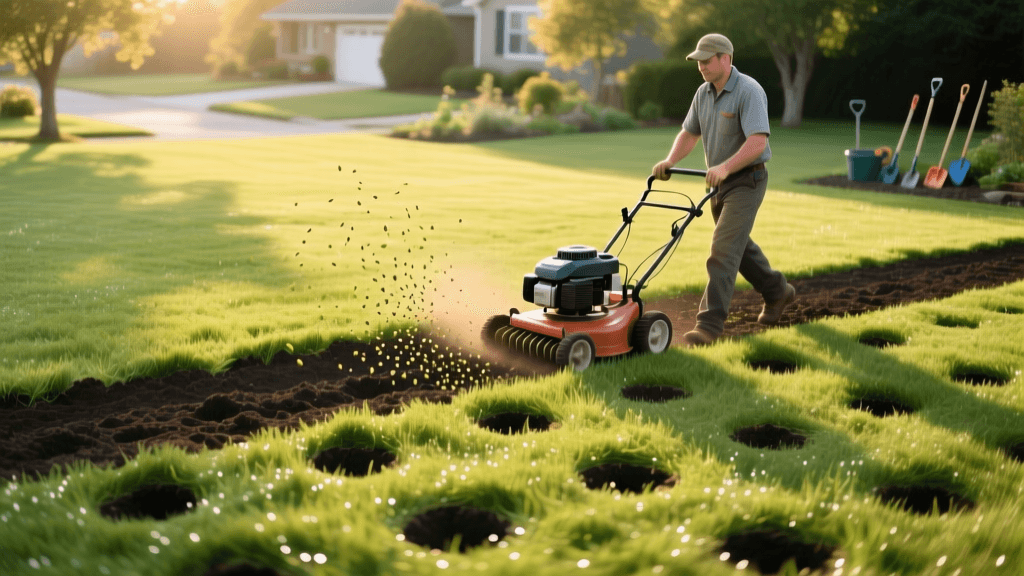
Expert Guide to Core Aeration and Overseeding Cool-Season Lawns
The Synergy of Core Aeration and Overseeding
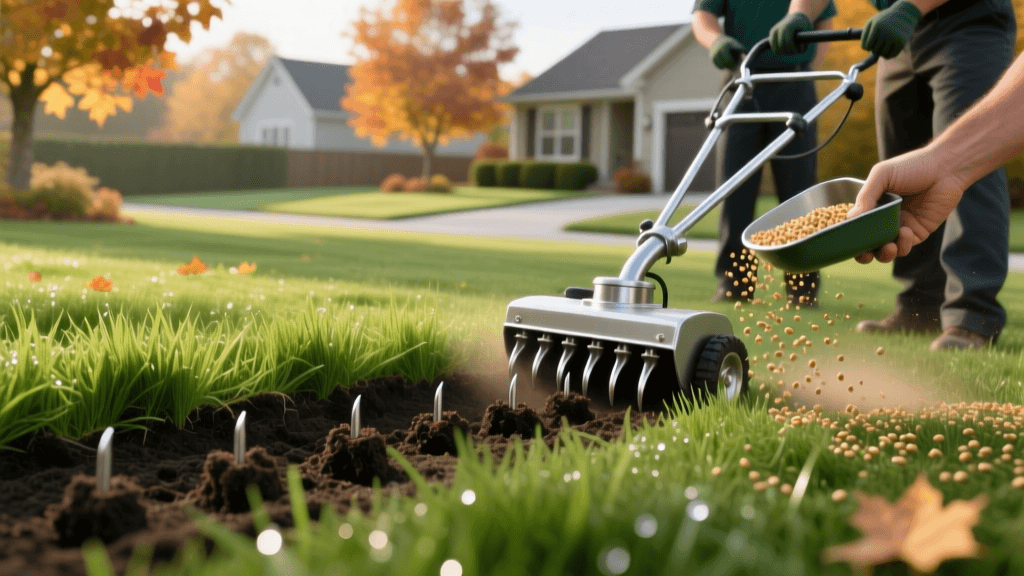
Every autumn, homeowners with cool-season lawns—such as Kentucky Bluegrass, Tall Fescue, and Perennial Ryegrass—face a critical window of opportunity. While routine mowing and fertilization maintain the status quo, the combination of core aeration and overseeding is the ultimate best practice for transforming a thin, compacted yard into a dense, resilient carpet of grass. As a senior turfgrass manager, I always tell my clients that seeding without aerating is like planting seeds on a concrete driveway. The synergy between these two practices ensures vital seed-to-soil contact, which is the single most important factor in germination success and long-term turf vitality.
Why Core Aeration is Non-Negotiable
Soil compaction is the silent killer of cool-season lawns. Foot traffic, heavy mowing equipment, and natural settling compress soil particles, eliminating the pore spaces required for oxygen, water, and nutrient movement. Core aeration physically removes small plugs of soil and thatch, typically 2 to 3 inches long and 0.5 to 0.75 inches in diameter. According to turfgrass specialists at Penn State Extension, 'Core aeration relieves soil compaction, enhances soil water infiltration, and improves the exchange of gases between the soil and the atmosphere.' By leaving these cores on the lawn surface, you also introduce beneficial soil microorganisms to the top layer, which helps break down excess thatch layers naturally over the following weeks.
Optimal Timing for Cool-Season Grasses
Timing is everything when executing this dual-service treatment. Cool-season grasses experience their peak root growth in the early fall when soil temperatures drop to between 50°F and 65°F, while air temperatures range from 60°F to 75°F. Overseeding in late summer to early fall (typically late August through mid-October, depending on your USDA hardiness zone) allows seedlings to establish deep root systems before the winter freeze and the following summer's heat stress.
| Grass Type | Target Soil Temp | Optimal Seeding Window | Days to Germinate |
|---|---|---|---|
| Tall Fescue | 50°F - 65°F | Aug 15 - Sep 30 | 7 - 12 Days |
| Kentucky Bluegrass | 50°F - 60°F | Aug 15 - Sep 15 | 14 - 21 Days |
| Perennial Ryegrass | 50°F - 65°F | Aug 20 - Oct 10 | 5 - 10 Days |
Step-by-Step Expert Execution
1. Soil Testing and Preparation
Never guess your soil's needs. Conduct a soil test 30 days prior to aeration using a kit from your local university extension or a reputable lab like Logan Labs. If your pH is below 6.0, apply pelletized lime at a rate of 50 lbs per 1,000 square feet. If your soil test indicates a phosphorus deficiency, you will need a specific starter fertilizer, which we will cover in step five.
2. Mowing and Dethatching
Lower your mower deck to 1.5 or 2 inches—significantly lower than your normal summer cutting height. Bag the clippings to expose the soil surface. If your thatch layer exceeds 0.5 inches, rent a power dethatcher (vertical mower) before aerating. Removing this barrier is crucial for the aerator tines to penetrate deeply into the soil profile.
3. Core Aeration Best Practices
Rent a heavy-duty, walk-behind core aerator from a local equipment rental yard. Avoid spike aerators or aerator shoes; they merely push soil outward and worsen compaction. Water the lawn deeply (about 1 inch) 24 hours before aerating to soften the soil, allowing the tines to pull maximum-depth plugs. Make two passes over the lawn: the first in a North-South direction, and the second in an East-West direction. This cross-hatching ensures plugs are spaced roughly 2 to 3 inches apart, creating an ideal seedbed.
4. Selecting and Applying Seed
Choose a high-quality, weed-free seed blend with zero fillers. Premium brands like Jonathan Green Black Beauty or Scotts Turf Builder Grass Seed offer excellent disease resistance and drought tolerance. Apply seed using a broadcast spreader at the following expert overseeding rates:
- Tall Fescue: 5 to 8 lbs per 1,000 sq ft
- Kentucky Bluegrass: 2 to 3 lbs per 1,000 sq ft
- Perennial Ryegrass: 4 to 6 lbs per 1,000 sq ft
Pro Tip: Split your seed application in half. Apply the first half walking North-South, and the second half walking East-West to ensure perfectly even distribution without striping.
5. Starter Fertilizer and Topdressing
Apply a starter fertilizer high in phosphorus (e.g., a 10-18-10 NPK ratio like Scotts Turf Builder Starter Food) immediately after seeding to promote rapid root development. Apply at a rate that delivers 0.5 lbs of nitrogen per 1,000 square feet. For elite, golf-course-level results, drag a piece of chain-link fence or a specialized lawn leveling rake over the yard. This breaks up the aeration cores, topdresses the lawn with native soil, and buries the seed slightly, protecting it from birds and wind.
Post-Overseeding Irrigation and Maintenance
Germination requires constant, gentle moisture. For the first 14 to 21 days, water the lawn lightly 2 to 3 times per day for 5 to 10 minutes per zone. The goal is to keep the top 1 inch of soil consistently damp, not waterlogged. If the seed dries out even once during germination, it will die. Once the new grass reaches 2.5 inches in height, transition to deep, infrequent watering (about 1 inch per week, applied in one or two sessions) to encourage deep root growth.
Hold off on broadleaf weed control (like 2,4-D, dicamba, or carfentrazone) until the new grass has been mowed at least three times. Applying herbicides too early will severely stunt or kill young cool-season seedlings.
When it is time for the first mow, ensure your mower blades are freshly sharpened. Dull blades will rip the young seedlings out of the ground by their fragile roots. Set the deck to 3 inches and never remove more than one-third of the grass blade in a single pass.
Cost Breakdown: DIY vs. Professional
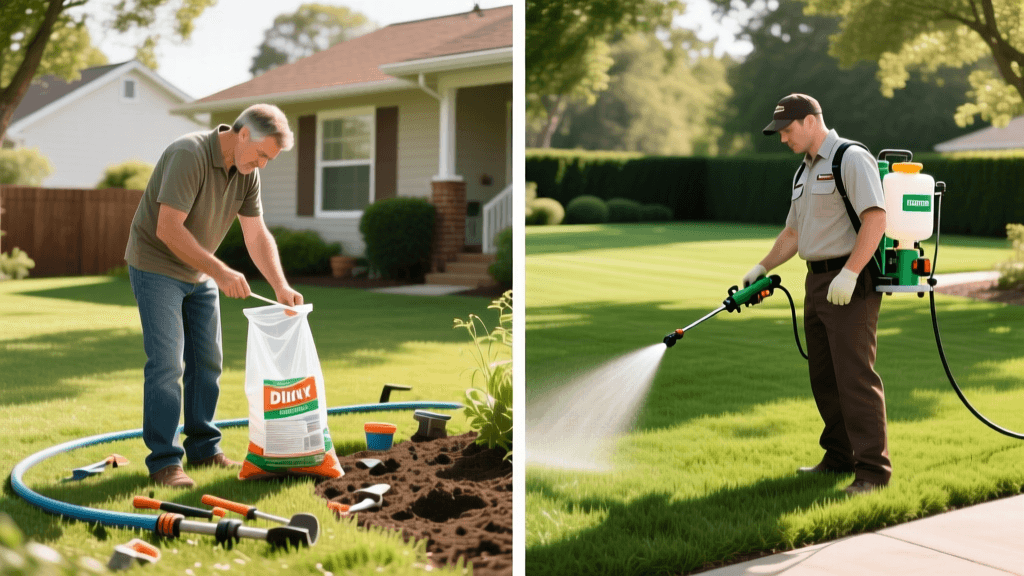
Deciding whether to tackle this project yourself or hire a professional lawn care service depends on your budget, physical capability, and access to equipment. Below is a comparative cost analysis for an average 5,000 square foot cool-season lawn.
| Expense Category | DIY Cost (5,000 sq ft) | Professional Service Cost |
|---|---|---|
| Equipment Rental (Core Aerator) | $80 - $120 (Half Day) | Included in Service |
| Premium Grass Seed (25-40 lbs) | $120 - $200 | Included in Service |
| Starter Fertilizer | $35 - $50 | Included in Service |
| Labor & Expertise | 4 - 6 Hours of Hard Labor | 1 - 2 Hours (Crew) |
| Total Estimated Cost | $235 - $370 | $350 - $550 |
While the DIY route can save you money, professionals utilize commercial-grade slicer-seeders and stand-on aerators that provide superior seed-to-soil contact and save you from moving a 300-pound machine around your property. If your soil is heavily compacted clay, hiring a professional is often worth the premium.
Conclusion
Core aeration and overseeding represent the gold standard in cool-season lawn renovation. By adhering to precise soil temperature windows, utilizing correct seed rates, and following a strict post-seeding irrigation schedule, you can effectively reverse years of soil compaction and turf thinning. Implement these expert best practices this fall, and you will be rewarded with a thick, vibrant, and weed-resistant lawn come spring.