
Landscaping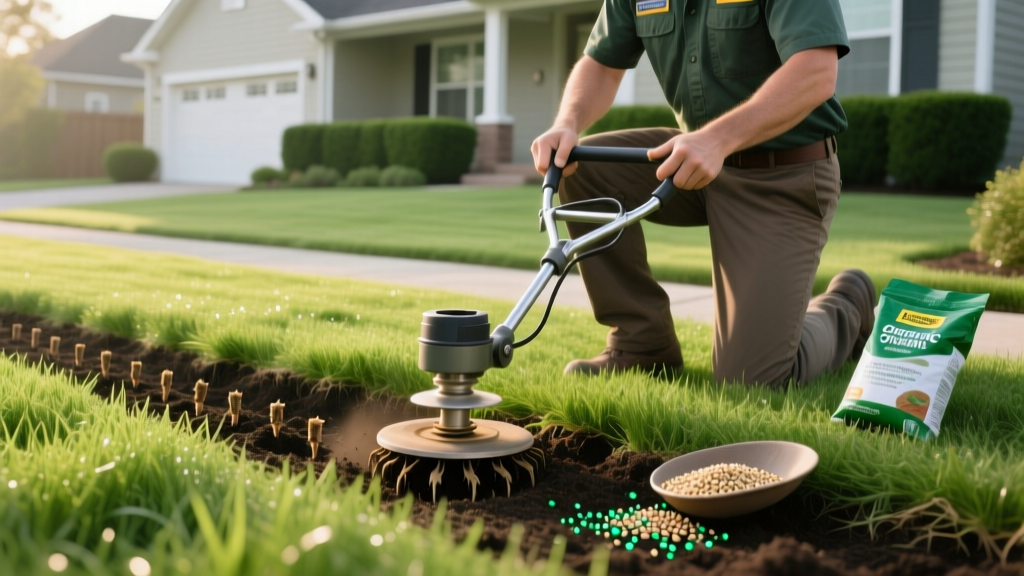
Core Aeration and Overseeding for Landscape Curb Appeal
Emily WatsonPublished
The Foundation of Curb Appeal: Turf and Soil Health
When homeowners and landscape architects design outdoor living spaces, the focus often gravitates toward hardscaping elements like retaining walls, permeable pavers, and vibrant garden beds. However, the unifying canvas of any landscape is the turfgrass. Compacted soil and thinning grass can undermine even the most expensive landscape design. According to the University of Minnesota Extension, soil compaction restricts the movement of water, nutrients, and oxygen to the root zone, leading to shallow root systems and increased vulnerability to drought and disease. Integrating core aeration and overseeding into your annual landscaping maintenance plan is essential for sustaining a lush, resilient lawn that complements your hardscape and garden beds.
Comparing Aeration Techniques for Landscape Soils
Before purchasing seed or renting equipment, it is crucial to select the right aeration method for your specific landscape conditions. Below is a comparison of the three primary aeration techniques used in modern landscaping.
| Method | Mechanism | Best Soil Type | Effectiveness | Estimated Cost (per 5,000 sq ft) |
|---|---|---|---|---|
| Core Aeration | Extracts 2-3 inch soil plugs | Heavy Clay, Compacted | High | $80 - $120 (Rental) |
| Spike Aeration | Punches solid holes into soil | Sandy, Loamy | Low-Medium | $40 - $60 (Manual/Rental) |
| Liquid Aeration | Surfactants reduce soil surface tension | All types (mild compaction) | Medium | $30 - $50 (Product cost) |
For most residential landscapes with heavy foot traffic or clay-heavy soils, core aeration remains the gold standard. As noted by Clemson University Cooperative Extension, core aeration physically fractures the soil profile, allowing deep water infiltration and providing ideal seed-to-soil contact for overseeding. Spike aeration can actually worsen compaction in clay soils by pressing soil outward, while liquid aeration is best reserved for maintenance between mechanical core aeration cycles.
Timing Your Aeration and Overseeding
The success of your overseeding project hinges entirely on timing. For cool-season grasses commonly used in landscape design—such as Kentucky Bluegrass (KBG), Perennial Ryegrass, and Tall Fescue—the optimal window is early fall, typically between late August and mid-October. During this period, soil temperatures hover between 55°F and 65°F, which is ideal for seed germination, while cooler air temperatures reduce heat stress on young seedlings. Furthermore, fall weed competition is minimal, giving your new turf a chance to establish before winter dormancy.
Step-by-Step Aeration and Overseeding Protocol
1. Site Preparation and Hardscape Protection
Begin by mowing the existing turf to a height of 1.5 to 2 inches. This allows the aerator tines to penetrate deeply and ensures new seed reaches the soil. Crucially, flag all irrigation heads, valve boxes, and shallow landscape lighting wires. When working near hardscaping edges or garden bed borders, use a manual hand aerator to prevent damage to retaining wall caps, stone edging, or delicate perennial root systems.
2. Executing the Core Aeration
Rent a walk-behind core aerator from a local equipment supplier. Make two passes over the entire lawn: the first in a straight line, and the second diagonally to create a cross-hatch pattern. Aim for 20 to 40 holes per square foot. Leave the extracted soil plugs on the lawn; they will break down naturally within a few weeks, returning valuable microbes and organic matter to the surface.
3. Overseeding and Fertilizing
Use a broadcast or drop spreader to apply high-quality turf seed. For landscape renovation, apply Tall Fescue at a rate of 6 to 8 pounds per 1,000 square feet, or Kentucky Bluegrass at 2 to 3 pounds per 1,000 square feet. Immediately follow seeding with a phosphorus-rich starter fertilizer, such as Scotts Turf Builder Starter Food for New Grass (24-25-4), to promote rapid root development.
4. Topdressing and Irrigation
For premium landscape results, apply a thin layer (about 1/4 inch) of screened compost or peat moss over the seeded area. This topdressing retains moisture and protects seeds from birds and wind. Water the lawn lightly two to three times daily for the first 14 days to keep the top inch of soil consistently moist.
Seed Selection for Specific Landscape Zones
Not all areas of your landscape experience the same environmental conditions. Selecting the right seed blend is critical for uniform curb appeal. For high-traffic zones near outdoor kitchens and entertainment patios, utilize a blend heavy in Perennial Ryegrass and Tall Fescue, as these species offer superior wear tolerance and rapid establishment. For areas shaded by mature canopy trees or positioned near north-facing retaining walls, choose Fine Fescues or shade-tolerant Kentucky Bluegrass cultivars. Fine Fescues require less nitrogen and thrive in the lower light conditions typical of heavily landscaped garden beds.
Material and Cost Considerations for Landscaping Budgets
Integrating aeration and overseeding into your annual landscape maintenance budget requires understanding the cost breakdown. A DIY approach for a standard 5,000 square foot lawn typically costs between $180 and $250, factoring in equipment rental ($90 average), premium seed ($60), and starter fertilizer ($40). Conversely, hiring a professional landscaping contractor to perform the same service generally ranges from $250 to $450, depending on regional labor rates and the inclusion of topdressing services. While the upfront cost of professional service is higher, it guarantees commercial-grade equipment and precise seed calibration.
Sustainable Landscaping and Hardscape Protection
Modern landscape design heavily emphasizes sustainability and water conservation. The Environmental Protection Agency (EPA) WaterSense program highlights that healthy, deeply rooted turfgrass requires significantly less supplemental irrigation than shallow-rooted, compacted lawns. By aerating and overseeding with drought-tolerant cultivars like Turf-Type Tall Fescue, you align your turf care with sustainable landscaping principles.
Properly aerated soils act as a natural sponge, reducing stormwater runoff and preventing the erosion of mulch and soil from adjacent garden beds into your hardscaped patios and walkways.
When executing these techniques, always sweep stray soil plugs and seed off permeable pavers and stone walkways immediately. If seed and soil are allowed to wash into the joints of permeable hardscaping, they can germinate and compromise the drainage integrity of the pavement base. By treating your turf and your hardscaping as an interconnected ecosystem, you ensure that your entire landscape maintains peak curb appeal and structural integrity for years to come.
Post-Germination Care and Transition to Winter
Once the new grass reaches a height of 3 inches, typically around three to four weeks post-seeding, it is safe to perform the first mowing. Ensure your mower blades are freshly sharpened to prevent tearing the tender new shoots. As late autumn approaches, transition your watering schedule from frequent, light applications to deeper, less frequent soakings. This encourages the new root systems to plunge deeper into the aerated soil profile, seeking moisture and anchoring the turf before the ground freezes. Applying a winterizer fertilizer in late November will provide the stored carbohydrates necessary for a vibrant, early-spring green-up, ensuring your landscape is the envy of the neighborhood from the very first thaw.

