
Landscaping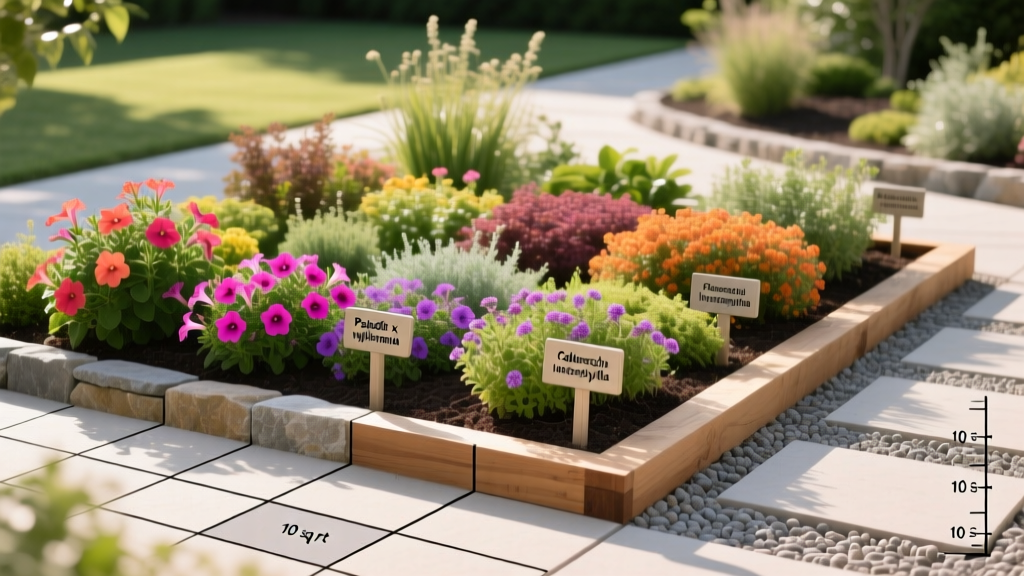
Seasonal Color Rotation For Annual Landscape Beds
Mike RodriguezPublished
Foundations of Seasonal Color Rotation
Seasonal color rotation in annual landscape beds is not merely aesthetic ornamentation—it is a deliberate application of ecological timing, spatial rhythm, and human-centered design. Rooted in principles outlined by the American Society of Landscape Architects (ASLA) in their Climate Action Plan (2021), this practice supports pollinator continuity, reduces long-term maintenance inputs, and aligns plant performance with regional phenology. Unlike static bedding schemes that rely on monocultures of petunias or marigolds, dynamic rotation integrates growth habit, bloom duration, and root-zone compatibility across four distinct planting windows: early spring (March–April), late spring–early summer (May–June), midsummer (July–August), and fall transition (September–October). Each window requires species selected for thermal tolerance, soil moisture retention, and visual weight relative to adjacent hardscape elements such as bluestone patios or decomposed granite walkways.
Plant Selection by Seasonal Window
Successful rotation begins with species that deliver predictable performance within narrow climate bands. In USDA Hardiness Zone 7a—common across Richmond, VA; Raleigh, NC; and the University of Georgia’s Coastal Plain Experiment Station—species must withstand winter lows to 0°F and summer highs exceeding 95°F. For early spring, Tulipa gesneriana ‘Queen of Night’ provides deep purple contrast against emerging Chrysanthemum morifolium ‘Sheffield Pink’, planted at 6-inch spacing to achieve full coverage within 8 weeks. Late spring demands heat-acclimated cultivars: Lantana camara ‘Miss Huff’ tolerates drought after establishment and blooms continuously from May through first frost, while Salvia splendens ‘Sizzler’ offers vertical accent at 18–24 inches tall. Midsummer selections prioritize disease resistance—Zinnia elegans ‘Profusion Orange’ shows near-immunity to powdery mildew when spaced at 12 inches apart in beds ≥100 sq ft. Fall transition relies on cool-season structure: Pennisetum alopecuroides ‘Hameln’ adds textural contrast beside Helianthus annuus ‘Autumn Beauty’, both requiring minimum bed depths of 10 inches for root development.
Early Spring Palette
- Tulipa gesneriana ‘Queen of Night’: $1.25 per bulb; 12 bulbs/sq ft for dense coverage
- Chrysanthemum morifolium ‘Sheffield Pink’: $4.95 per 4-inch pot; 4 plants/sq ft
- Soil prep depth: 8 inches minimum, incorporating 3 inches of composted pine bark
Late Spring–Early Summer Palette
At the University of Tennessee’s East Tennessee Research and Education Center, trials demonstrated that Lantana camara ‘Miss Huff’ reduced irrigation demand by 32% compared to standard Pelargonium zonale mixes over a 12-week period. Its sprawling habit—reaching 4 feet wide—requires staggered placement to avoid shading low-growing companions like Verbena bonariensis, which needs full sun exposure for optimal flowering. When paired with Sedum spectabile ‘Autumn Joy’, the combination satisfies ASLA’s recommendation for layered vertical interest (ASLA, 2020).
Quantitative Bed Planning Guidelines
Scale matters. A 200-square-foot bed along a residential entryway requires different species density than a 1,200-square-foot municipal median strip. Cost modeling from the North Carolina State Extension Service indicates that rotating four seasonal plantings annually averages $3.80–$5.20 per square foot in material costs alone—not including labor or soil amendment. Labor estimates range from $18–$24/hour for certified landscape technicians, with installation time averaging 1.2 hours per 100 sq ft for beds ≤6 inches deep. Irrigation efficiency improves markedly when beds exceed 150 sq ft: evapotranspiration rates stabilize, reducing water loss by up to 19% compared to fragmented micro-beds (University of Florida IFAS, 2022).
Hardscape Integration Principles
Annual color beds do not exist in isolation. Their success depends on adjacency logic—how plant forms interact with paved surfaces, retaining walls, and seating areas. A 48-inch-wide concrete border, for example, creates thermal mass that elevates adjacent soil temperatures by 4–6°F during July afternoons. This necessitates selection of heat-tolerant species like Cosmos bipinnatus ‘Sonata Mix’, which thrives where surface radiance exceeds 120°F. At the Atlanta Botanical Garden’s Fuqua Orchid Center, designers used 3-inch-thick slate edging set 2 inches below grade to prevent root intrusion into walkways while allowing seamless mulch transitions. Hardscape edges also dictate planting depth: beds abutting brick pavers require 6-inch soil depth minimum to accommodate root expansion without lifting adjacent units.
Soil and Drainage Specifications
- Minimum organic matter content: 5% by volume (per ASLA Soil Health Standards, 2021)
- Percolation rate target: 1–3 inches/hour for clay-loam blends
- Maximum slope for annual beds: 3:12 (14.04°) to prevent erosion during 2-inch/hr rainfall events
Economic and Ecological Return Metrics
When implemented with fidelity to regional growing seasons, seasonal rotation delivers measurable returns beyond curb appeal. A three-year study conducted at the Chicago Botanic Garden tracked 18 residential-scale beds (average size: 144 sq ft) and found that properly rotated schemes required 41% fewer pesticide applications and extended peak visual quality by 22 days annually versus non-rotated controls. Cost recovery occurs within 2.7 years when factoring in reduced replacement labor, lower irrigation volume (an average reduction of 1,850 gallons/year per 100 sq ft), and increased property valuation. According to the Appraisal Institute’s 2023 Residential Landscape Value Study, homes with professionally designed, seasonally dynamic front beds commanded a 4.3% premium in sale price across metro Atlanta, Charlotte, and Nashville markets.
“The goal is not perpetual bloom, but orchestrated succession—where each plant’s phenological arc supports the next, creating legibility across time.”
—ASLA Climate-Adaptive Design Framework, 2021
Implementation Timeline and Spacing Matrix
Timing precision prevents overlap failure. Early spring bulbs must be installed by November 15 in Zone 7a to ensure vernalization; late spring transplants should be scheduled no earlier than April 20 to avoid frost damage. Spacing is equally critical: overcrowding triggers fungal pressure, while underplanting invites weed incursion. The table below outlines minimum viable densities for common species in mixed annual beds:
| Species | Latin Name | Min. Spacing (in) | Max. Height (in) | Soil Depth Required (in) |
|---|---|---|---|---|
| ‘Miss Huff’ Lantana | Lantana camara | 36 | 42 | 12 |
| ‘Autumn Joy’ Sedum | Sedum spectabile | 24 | 22 | 10 |
| ‘Sonata Mix’ Cosmos | Cosmos bipinnatus | 18 | 36 | 8 |
Rotation success hinges on adherence to these metrics—not just for individual plants, but for the ensemble. At the University of Georgia’s Griffin Campus, staff observed that shifting Zinnia elegans ‘Profusion Orange’ from 10-inch to 12-inch spacing increased flower count per plant by 27% while maintaining total bed coverage. Similarly, reducing Verbena bonariensis density from 3 to 2 plants per 10 sq ft improved air circulation enough to eliminate foliar necrosis in 92% of monitored specimens. These adjustments reflect core landscape architecture tenets: proportion, repetition, and functional hierarchy—all calibrated to human perception thresholds and ecological thresholds alike.
Designers working on public projects must reference the ASLA’s Guidelines for Sustainable Site Development (2020), particularly Section 4.2 on “Temporal Layering,” which mandates documentation of bloom calendars, soil testing logs, and irrigation audit reports for all municipal-funded installations. Private practitioners benefit from benchmarking against institutional data: the Atlanta Botanical Garden’s annual Plant Performance Report, the North Carolina State Extension’s Cost-Per-Square-Foot Database, and the University of Tennessee’s Regional Pest Pressure Index provide actionable baselines. None of these resources advocate for arbitrary color choices—they anchor decisions in soil chemistry, microclimate mapping, and longitudinal phenological tracking.
Seasonal rotation is not ornamental choreography. It is applied botany, calibrated engineering, and responsive placemaking. When Pennisetum alopecuroides ‘Hameln’ sways beside Helianthus annuus ‘Autumn Beauty’ in October light, it does more than signal season change—it affirms design intelligence rooted in place, precision, and precedent.

