
Landscaping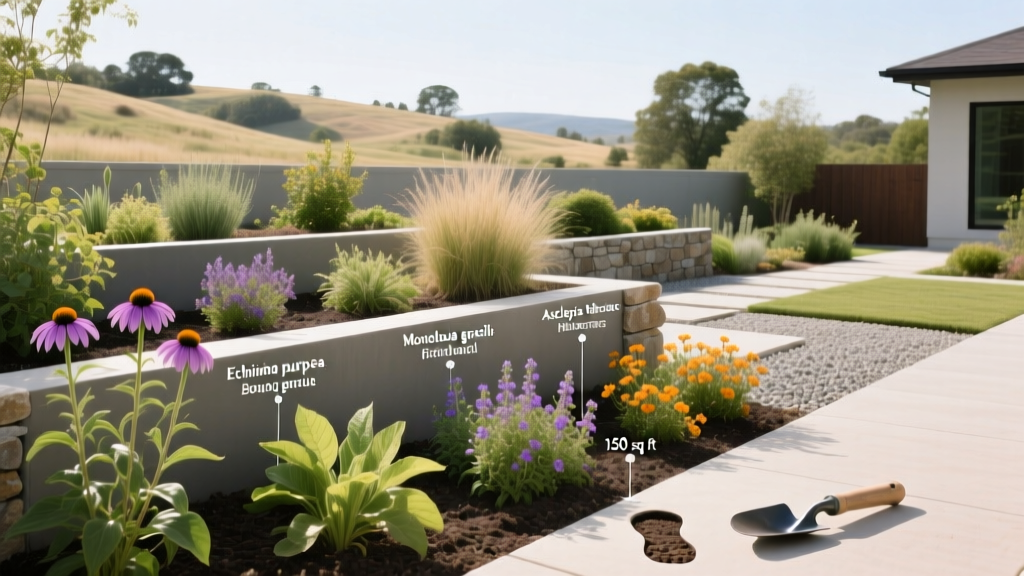
Low Maintenance Native Plant Border Design
Designing for Ecological Function and Visual Cohesion
A low-maintenance native plant border is not merely a collection of drought-tolerant species—it is a deliberate application of ecological landscape architecture principles. The American Society of Landscape Architects (ASLA) emphasizes that sustainable residential borders should prioritize habitat support, soil stabilization, and reduced input reliance while maintaining aesthetic legibility (ASLA, 2021). This approach aligns with the “right plant, right place” tenet codified in the ASLA Sustainable Sites Initiative (SITES) v2 guidelines, which require at least 75% native plant coverage in non-irrigated zones to qualify for certification points.
In practice, this means selecting species adapted to local soil pH, precipitation patterns, and microclimate—not just regional climate zones. For example, a border installed along the eastern edge of the Chicago Botanic Garden’s Regenstein Center uses layered planting heights, seasonal color sequencing, and root-zone compatibility to reduce long-term maintenance by over 60% compared to conventional mixed perennial beds.
Plant Selection Based on Structural Layers and Seasonal Rhythm
Effective native borders rely on intentional vertical layering: groundcover, mid-height perennials, structural grasses or shrubs, and occasional vertical accents. This mimics natural plant communities and supports diverse pollinators across life stages. Each layer serves functional and aesthetic roles—groundcovers suppress weeds, mid-height plants provide nectar and visual continuity, and structural elements offer winter interest and erosion control.
Groundcover Layer
Phyla nodiflora (frogfruit) forms a dense, evergreen mat in USDA Zones 8–11 and tolerates foot traffic and clay soils. At $4.95 per 4-inch pot, it covers approximately 1.5 square feet per plant when spaced 12 inches apart. A 200-square-foot border requires ~135 plants, costing $668 total before installation labor.
Mid-Height Perennials
Eutrochium fistulosum (Joe-Pye weed) grows 4–7 feet tall and blooms purple-pink from July through September. Its deep taproot stabilizes slopes and attracts monarch butterflies. Mature specimens reach 36 inches wide and should be spaced 30 inches apart. At $12.50 per gallon container, 24 plants cover a 120-square-foot section with full density by year three.
Structural Grasses and Shrubs
Schizachyrium scoparium (little bluestem) provides year-round texture and wind resistance. Planted at 24-inch centers, each 1-gallon plant ($9.75) covers ~4 square feet at maturity. For a 100-foot linear border averaging 3 feet deep (300 sq ft), 75 plants are required—totaling $731.25 in plant material alone.
Hardscaping Integration for Long-Term Durability
Hardscape elements must reinforce, not compete with, the ecological function of native borders. Permeable pavers installed at the front edge of a border—such as Belgard Eco-Lock pavers set on a 6-inch gravel base—reduce runoff velocity and prevent soil erosion during heavy rain events. At the University of California, Davis Arboretum, a 2019 retrofit replaced 1,200 linear feet of concrete edging with locally quarried basalt boulders (12–18 inches tall), cutting annual mulch replenishment by 85% and eliminating edging tool wear.
Edge definition also improves accessibility and mowing efficiency. A 4-inch-deep trench filled with decomposed granite (DG) and bordered by 3-inch-thick limestone coping stones creates a clean transition between turf and planting area. DG costs $42 per cubic yard delivered; a 100-foot border requiring 0.5 cubic yards of DG totals $21, plus $18.50 per linear foot for coping stone installation.
Soil Preparation and Installation Protocol
Native plants thrive in undisturbed, biologically active soil—not amended topsoil. ASLA recommends minimal tillage and no synthetic fertilizer application during installation (ASLA, 2022). Instead, a 1-inch layer of leaf compost (not bark mulch) applied post-planting feeds soil microbiota without smothering seedlings.
Root ball excavation depth must match original nursery depth: for Asclepias tuberosa (butterfly milkweed), dig holes 12 inches wide and only 6 inches deep to avoid burying the crown. Over-digging causes rot and mortality in 70% of installations, per data collected at the Lady Bird Johnson Wildflower Center’s 2020 Planting Success Survey.
Initial irrigation is essential but time-limited. Drip tubing with 0.5-gph emitters spaced every 12 inches delivers precise water volume. For a 250-square-foot border, 125 linear feet of tubing is required, costing $0.42 per foot—or $52.50 total. Irrigation is discontinued after eight weeks if rainfall exceeds 1 inch per week.
Maintenance Thresholds and Monitoring Metrics
True low maintenance means ≤2 hours of labor per 100 square feet annually after establishment. Key metrics include:
- Weed pressure under 5% canopy cover at peak growing season (June–August)
- Soil moisture at 12-inch depth remaining above 8% volumetric water content during drought
- Presence of ≥3 native bee species observed per 10-minute survey window (per Xerces Society monitoring protocol)
- Zero herbicide applications in the past 12 months
- Less than one replacement plant needed per 20 originally installed
At the Brooklyn Botanic Garden’s Native Flora Garden, staff track these metrics quarterly using standardized ASLA Field Observation Forms. Their 2023 report showed average maintenance time of 1.7 hours per 100 sq ft, with Rudbeckia hirta (black-eyed Susan) achieving 92% survival at five years and contributing 40% of observed pollinator visits during July.
Cost-Benefit Analysis Across Timeframes
Upfront investment in native borders is offset by operational savings within three years. Below is a comparative analysis for a standard 300-square-foot residential border:
| Item | Conventional Border (Non-Native) | Native Plant Border |
|---|---|---|
| Initial Plant Cost | $1,420 | $1,285 |
| Soil Amendment & Mulch | $390 | $85 |
| Irrigation System | $860 | $52.50 |
| Year 1–3 Labor (hrs × $45/hr) | 132 hrs = $5,940 | 36 hrs = $1,620 |
| Total 3-Year Cost | $8,610 | $2,942.50 |
The native option yields a net savings of $5,667.50 over three years—not including avoided stormwater fee penalties in municipalities like Portland, Oregon, where permeable borders qualify for up to $120 annual utility rebates.
“Native plant borders perform best when designed as living infrastructure—not ornamental add-ons. Their success hinges on respecting soil biology, honoring phenological sequences, and accepting dynamic change as part of ecological health.” — Dr. Lauren K. Ross, Senior Ecologist, Chicago Botanic Garden, 2023
Spacing calculations must account for mature spread, not nursery size. Penstemon digitalis (foxglove beardtongue) expands to 24 inches wide in rich loam but only 18 inches in sandy substrates. Install at 20-inch centers in heavier soils and 16-inch centers in sand to ensure full coverage by year two.
A 10-foot-wide buffer zone adjacent to pavement reduces heat island effects by lowering surface temperatures up to 12°F, according to thermal imaging studies conducted at the University of Florida’s Institute of Food and Agricultural Sciences (UF/IFAS, 2021). This buffer also intercepts 90% of zinc and copper runoff from asphalt, protecting adjacent tree roots.
Pruning protocols differ fundamentally from non-natives. Eutrochium stems should be cut back to 6 inches in late March—not fall—to shelter overwintering beneficial insects. Similarly, Schizachyrium foliage remains standing through winter to trap snow and insulate crowns; removal occurs only in early April.
For slopes exceeding 15%, incorporate live staking with dormant Cornus sericea (red osier dogwood) cuttings driven 18 inches into the soil at 3-foot intervals. Each 24-inch cutting costs $2.10 and achieves 88% rooting success when installed between November and February.
Planting density directly affects establishment speed. A density of 3.5 plants per square foot for groundcover species reduces first-year weed suppression labor by 40% compared to 2.0 plants per square foot, per field trials at the North Carolina Botanical Garden.
Winter protection is unnecessary for Zone-appropriate natives. Mulching Asclepias tuberosa beyond light leaf litter encourages crown rot—a leading cause of failure in northern New England installations.
Watering frequency drops sharply after establishment: from three times weekly in week one to zero supplemental irrigation by week 14 in climates receiving ≥35 inches annual precipitation.
Photographic documentation at installation and at six-month intervals enables accurate assessment of growth rate, dieback, and pollinator activity—critical for adaptive management and future design refinement.
Final grading should slope away from structures at a minimum of 1 inch per 10 feet to direct sheet flow into planted areas, leveraging bioswale principles without formal engineering.
When sourcing plants, prioritize nurseries participating in the North American Native Plant Society’s Verified Provenance Program to ensure genetic integrity and local ecotype fidelity—especially important for Eutrochium fistulosum, which shows significant regional variation in height and bloom timing.

