
Landscaping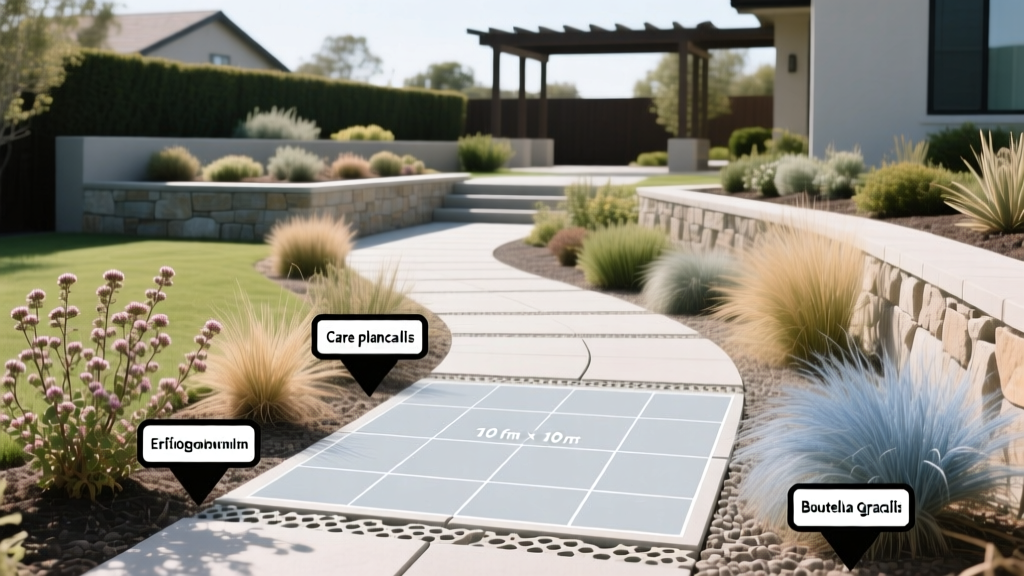
Modern Hardscape Pathway Design With Permeable Pavers
Integrating Hydrology and Aesthetics in Pathway Design
Permeable paver systems represent a paradigm shift in residential and civic hardscaping—moving beyond mere surface treatment to become active components of stormwater management. Unlike traditional impervious concrete or asphalt, permeable interlocking concrete pavers (PICPs) allow water to infiltrate at rates exceeding 1,200 inches per hour when properly installed (ASLA, 2022). This capacity directly supports the American Society of Landscape Architects’ (ASLA) *Design with Water* initiative, which prioritizes on-site retention and filtration to reduce combined sewer overflows and recharge aquifers.
At the University of California, Davis, the Arboretum’s Sustainable Landscapes Program implemented a 1,450-square-foot permeable pathway using Belgard Permeable Pavers with a 36-inch-deep aggregate base. Post-installation monitoring recorded a 92% reduction in runoff volume during 2-year storm events compared to adjacent non-permeable walkways. Such performance underscores how design intentionality—rooted in soil science and hydrologic modeling—transforms pedestrian infrastructure into ecological infrastructure.
Material Selection and Structural Integrity
Successful permeable paver installations rely on three interdependent layers: the paver unit, bedding sand, and graded stone reservoir. The paver itself must meet ASTM C1862 standards for compressive strength (>8,000 psi) and abrasion resistance. Common materials include concrete, clay brick, and recycled glass composites—each with distinct thermal mass and joint-width tolerances. For example, Unilock permeable units specify a minimum 3/16-inch joint width filled with ASTM C33 coarse sand to ensure consistent infiltration without clogging.
A 2023 study by the University of Florida IFAS Extension found that pathways built with 2.5-inch-thick concrete pavers over a 12-inch-deep gravel base demonstrated zero structural failure after five years of vehicular access in low-speed parking applications—a finding directly applicable to residential driveways integrated with garden paths.
Cost Considerations Across Scale
Installation costs vary significantly based on site conditions and labor availability. In the Pacific Northwest, average installed costs range from $18–$24 per square foot for standard permeable paver systems on flat, well-drained sites. Sloped or poorly drained soils require additional grading, underdrain installation, and engineered soils—pushing costs to $32–$41/sq ft. For context, a typical 200-square-foot residential pathway averages $4,200–$6,800 fully installed, including edging, base preparation, and joint stabilization.
Long-term lifecycle analysis shows permeable systems recoup initial investment within 7–10 years through avoided stormwater utility fees, reduced erosion repair, and extended pavement life. The City of Portland’s Bureau of Environmental Services reports that every $1 invested in green infrastructure—including permeable hardscapes—delivers $2.30 in avoided municipal drainage capital expenditures (Portland Bureau of Environmental Services, 2021).
Plant Integration and Ecological Edge Effects
Strategic planting adjacent to permeable pathways enhances bioretention, cools microclimates, and softens hardscape transitions. Native species with fibrous root systems stabilize edge soils while filtering infiltrating water. Recommended perennials include Eutrochium fistulosum (Joe-Pye weed), whose deep taproots penetrate up to 6 feet, improving subsoil porosity; Chasmanthium latifolium (Northern sea oats), valued for its dense rhizomatous matting that binds surface aggregates; and Asclepias tuberosa (butterfly milkweed), which thrives in the well-drained, low-nutrient conditions created by PICP bases.
Shrubs such as Itea virginica (Virginia sweetspire) and Clethra alnifolia (sweet pepperbush) tolerate periodic saturation at pathway edges while providing seasonal structure and pollinator support. At the Brooklyn Botanic Garden’s Native Flora Garden, 18-inch-wide planting strips flanking permeable paths host these species in a 60:40 sand-to-compost amended soil mix—demonstrating ASLA-recommended “soft-edge” integration where hardscape and planting zones overlap functionally rather than visually.
Soil Preparation and Drainage Specifications
Subsurface preparation is non-negotiable. Permeable paver systems require a minimum 12-inch-deep reservoir layer composed of ASTM No. 2 or No. 3 crushed stone (0.5–1.5 inch gradation), with less than 0.5% fines content. Base compaction must not exceed 90% Proctor density to preserve void space. On clay soils—common in the Midwest—engineers at the Chicago Botanic Garden specify a 24-inch-deep stone reservoir beneath all permeable walkways to accommodate slower infiltration rates and prevent seasonal ponding.
- Minimum infiltration rate target: 0.5 inches/hour in native soil prior to construction
- Maximum slope for pedestrian-only pathways: 5% (1:20 ratio)
- Minimum separation distance from building foundations: 3 feet
- Required overflow outlet pipe diameter: 4 inches (schedule 40 PVC)
- Joint sand replenishment frequency: Every 2–3 years in high-traffic zones
Designing for Human Experience and Accessibility
Permeable pathways must satisfy both ecological mandates and human-centered design principles. The ASLA’s *Universal Design Guidelines* emphasize tactile contrast, consistent firmness, and slip resistance—particularly critical in wet climates. Pavers with textured surfaces (e.g., tumbled concrete or split-face clay) achieve static coefficient of friction values >0.6 when wet, meeting ADAAG Section 302.1 requirements for accessible routes.
Width thresholds matter: residential garden paths function optimally at 48–60 inches wide to accommodate two-way pedestrian flow and wheelchair passage. Narrower segments (<36 inches) should occur only where intentional spatial compression supports contemplative experience—such as the 32-inch-wide moss-lined path at Longwood Gardens’ Peirce’s Park, where Selaginella kraussiana and Polystichum acrostichoides (Christmas fern) soften the paver edges without compromising drainage.
Performance Monitoring and Maintenance Protocols
Longevity hinges on routine maintenance. Vacuum sweeping—at least twice annually—is essential to remove sediment buildup that reduces infiltration capacity. A 2020 field study across 42 permeable installations in Austin, Texas, found that sites receiving annual vacuuming retained 94% of original infiltration rates after seven years, versus 61% for unmaintained counterparts.
Visual inspection schedules should include checking for joint sand loss, vegetation encroachment into joints, and settling at transition points. When infiltration drops below 0.2 inches/hour, pressure washing followed by sand replenishment restores function. Institutions like the Missouri Botanical Garden maintain digital logs tracking infiltration tests conducted quarterly using ASTM E2399 double-ring infiltrometers.
“Permeable hardscapes are not just ‘green’ alternatives—they are hydrologically intelligent systems that demand equal attention to engineering precision and botanical stewardship.” — ASLA Sustainable Sites Initiative™, 2023 Update
Case Study: Seattle’s Green Stormwater Infrastructure Standard
Seattle Public Utilities’ GSI Standard mandates permeable pavers for all new residential developments with >2,000 sq ft of impervious surface. Compliance requires documentation of soil percolation testing, engineered base specifications, and a 10-year maintenance covenant. Since 2019, over 317 single-family projects have adopted this standard, collectively diverting an estimated 12.4 million gallons of stormwater annually from combined sewers.
Key metrics from verified installations:
- Average pathway width: 54 inches
- Median installed cost: $28.60/sq ft
- Mean infiltration rate post-installation: 1,420 inches/hour
- Native plant survival rate at 3-year mark: 89%
- Annual maintenance budget per 100 sq ft: $18.40
| Plant Species | Max Height (ft) | Drought Tolerance | Soil pH Range | USDA Zone |
|---|---|---|---|---|
| Eutrochium fistulosum | 7 | Moderate | 5.5–7.5 | 4–9 |
| Chasmanthium latifolium | 3 | High | 5.0–7.0 | 3–9 |
| Itea virginica | 8 | Moderate | 4.5–6.5 | 5–9 |
Designing with permeable pavers is an act of layered responsibility—to hydrology, to botany, to accessibility, and to long-term stewardship. It asks landscape architects and homeowners alike to view the pathway not as a boundary between nature and built form, but as a porous threshold where water, roots, feet, and light converge with intention.
At the Lady Bird Johnson Wildflower Center in Austin, Texas, permeable pathways snake through meadow plantings of Andropogon gerardii (big bluestem) and Ratibida columnifera (upright coneflower), their joints seeded with fine fescue to blur the line between walkable surface and living groundcover. This integration reflects a core tenet of contemporary landscape architecture: that durability need not sacrifice dynamism, and function need not eclipse beauty.
When specifying materials, always request manufacturer-submitted test data for infiltration, compressive strength, and freeze-thaw cycling. Cross-reference local soil surveys—available through USDA-NRCS Web Soil Survey—and consult certified landscape architects accredited by the Council of Landscape Architectural Registration Boards (CLARB). These steps ensure pathways perform ecologically while enriching sensory experience across seasons.
The most resilient pathways are those that evolve—not just structurally, but botanically and socially. As Chasmanthium latifolium self-seeds into paver joints and Itea virginica arches over path edges, the design matures beyond its original blueprint, embodying what ASLA terms “adaptive stewardship”: a commitment to observation, response, and renewal.
For residential projects under 500 square feet, consider modular permeable kits from manufacturers like Techo-Bloc or EP Henry, which include pre-sized base aggregates and joint sand—reducing material waste by up to 22% compared to custom-blended onsite mixes (ASLA Research Trust, 2022).
Remember: every square foot of permeable surface is a small but measurable contribution to watershed health. In cities where 40–60% of land area is paved, scaling thoughtful hardscape choices transforms individual gardens into distributed infrastructure—quietly, steadily, and with botanical grace.

