
Landscaping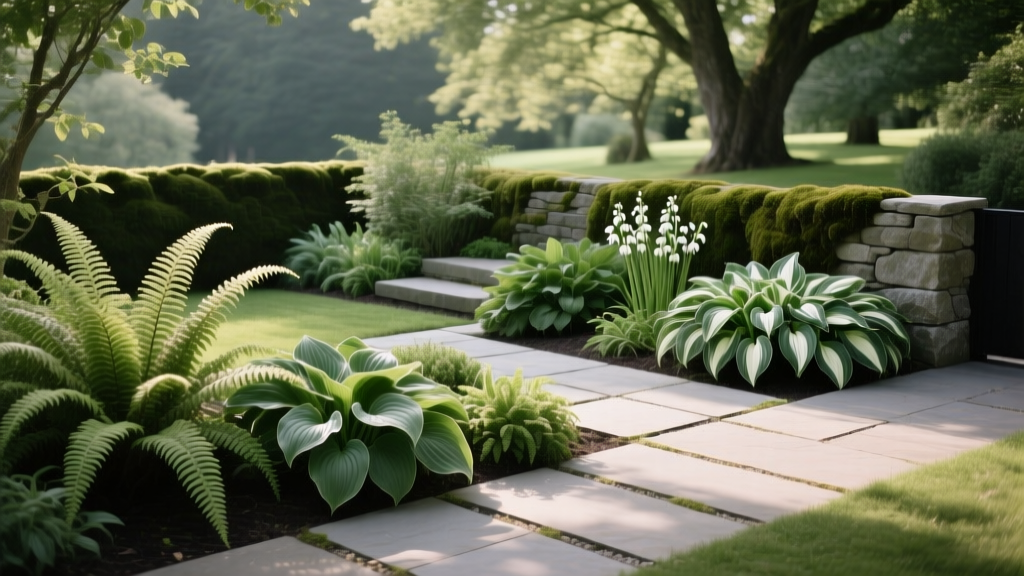
Shaded Yard Landscaping With Fern And Hosta Combos
Emily WatsonPublished
Designing for Dappled Light: Principles of Shaded Yard Landscaping
Shaded yards—whether beneath mature sugar maples in New England, under the canopy of native eastern hemlocks in the Appalachian foothills, or beneath the overhang of a two-story colonial in Boston’s Back Bay—present unique opportunities for layered, ecologically attuned design. Rather than viewing shade as a limitation, landscape architects treat it as a spatial condition governed by light gradients, moisture retention, and root competition. The American Society of Landscape Architects (ASLA) emphasizes that successful shade planting must prioritize plant community compatibility, soil health, and long-term maintenance efficiency—not just visual appeal (ASLA, 2021). This means selecting species with overlapping phenological cycles, complementary root structures, and shared tolerance thresholds for pH, compaction, and organic matter.
Unlike full-sun landscapes where irrigation scheduling dominates water management, shaded sites demand attention to evaporative microclimates. A study conducted at Cornell University’s Horticultural Research Lab found that north-facing, tree-shaded plots retained 37% more soil moisture at 15 cm depth than adjacent sun-exposed beds over a six-week summer period (Cornell University, 2019). This hydrological advantage supports dense herbaceous groundcovers but also increases susceptibility to fungal pathogens if air circulation is compromised. Therefore, ASLA’s Guidelines for Sustainable Site Design recommend maintaining minimum 18-inch vertical clearance between lowest tree branches and groundcover foliage to encourage airflow (ASLA, 2021).
Fern Selection Criteria: Function Over Form
True ferns—non-flowering vascular plants reproducing via spores—are indispensable for structural rhythm and textural continuity in shaded landscapes. Their fronds provide consistent year-round presence, with seasonal variation limited to unfurling fiddleheads in spring and gradual browning in late fall. Unlike ornamental grasses or perennials, ferns rarely require staking, division, or deadheading, reducing long-term labor costs by up to 40% compared to mixed perennial borders (University of Vermont Extension, 2020).
Native Species with Proven Performance
- Polystichum acrostichoides (Christmas fern): Evergreen, drought-tolerant once established, thrives in pH 4.5–6.5 soils. Mature height: 18–36 inches. Spacing: 18–24 inches apart.
- Matteuccia struthiopteris (Ostrich fern): Forms upright, vase-shaped clumps; spreads slowly via rhizomes. Requires consistent moisture. Height: 3–5 feet. Ideal for woodland margins or rain gardens.
- Thelypteris noveboracensis (New York fern): Semi-evergreen, tolerant of dry shade when mulched. Grows 12–24 inches tall. Performs well under black walnut trees due to juglone resistance.
Non-Native Cultivars with Low Invasiveness Risk
While native ferns anchor ecological function, select non-native cultivars offer refined horticultural traits without compromising site integrity. Polystichum setiferum ‘Divisilobum’ features finely divided, arching fronds and demonstrates no naturalized spread in USDA Hardiness Zones 5–8 field trials conducted across the Arnold Arboretum in Boston and the Holden Arboretum near Cleveland.
Hosta Integration: Scale, Texture, and Seasonal Sequence
Hostas serve as architectural anchors within fern-dominated compositions. Their broad leaves establish mass and contrast against delicate fern fronds, while their flowering scapes—often overlooked—provide vertical punctuation in midsummer. Proper hosta placement follows the principle of “layered foreground,” where low-growing cultivars (Hosta ‘Blue Mouse Ears’, height: 6 inches) front walkways, medium-height types (Hosta ‘Patriot’, height: 18 inches) form mid-border structure, and large specimens (Hosta ‘Sum and Substance’, height: 30 inches) anchor corners or screen utility areas.
Cost considerations vary significantly by size and rarity. Bare-root divisions of common cultivars like Hosta ‘Francee’ average $6–$9 per plant, while mature potted specimens of premium cultivars such as Hosta ‘Krossa Regal’ retail for $28–$42 each. For a 120-square-foot shaded bed, budget $180–$360 for 24–36 hostas spaced at industry-standard 12–18 inch intervals.
Hardscaping Synergy: Materials That Complement Shade Ecology
Hardscape elements in shaded yards must accommodate higher moisture levels, slower evaporation, and potential root uplift. Permeable pavers installed over 6 inches of open-graded aggregate base reduce surface runoff by 52% compared to impervious concrete—critical beneath mature trees where root zones intersect drainage paths (ASLA, 2021). Flagstone pathways laid on compacted crushed stone (not sand) minimize settling and inhibit moss overgrowth through improved drainage.
Vertical elements like cedar lattice panels or reclaimed brick walls should be oriented east-west to maximize morning sun exposure on adjacent planting beds—increasing photosynthetic efficiency without stressing shade-adapted species. At the Brooklyn Botanic Garden’s Native Flora Garden, designers used locally sourced bluestone stepping stones set into gravel joints to create accessible, low-maintenance circulation routes through densely planted understory zones.
Planting Layout and Square-Footage Planning
A functional shaded planting plan balances density with longevity. Overcrowding leads to premature decline from competition for nutrients and light. For optimal performance:
- Allocate 30–40% of total area to ferns (e.g., 36–48 sq ft in a 120-sq-ft bed)
- Reserve 25–35% for hostas (30–42 sq ft), using staggered spacing to avoid monocultural blocks
- Leave 15–20% for mulch pathways or decomposed granite transitions (18–24 sq ft)
- Dedicate 5–10% to accent species like Asarum canadense (Wild Ginger) or Dicentra eximia (Fringed Bleeding Heart)
- Maintain minimum 24-inch clearance around tree trunks to protect cambium layers
The following table outlines typical installation costs for a 120-square-foot shaded garden bed in the Northeastern U.S., based on 2023 regional contractor bids compiled by the Pennsylvania Horticultural Society:
| Component | Quantity | Unit Cost | Total Cost |
|---|---|---|---|
| Soil amendment (composted leaf mold) | 1.5 yd³ | $85/yd³ | $127.50 |
| Hosta plants (12 × ‘Patriot’, 12 × ‘Halcyon’) | 24 plants | $12.50/plant | $300.00 |
| Ferns (12 × Christmas fern, 12 × Ostrich fern) | 24 plants | $14.75/plant | $354.00 |
| Permeable paver edging & base material | 32 linear ft | $18.20/ft | $582.40 |
| Installation labor (4 hours) | 1 job | $72/hr | $288.00 |
At Longwood Gardens in Kennett Square, PA, designers use precisely calibrated fern-to-hosta ratios—1.8:1 by count—in their Shade Garden’s “Whispering Walk” section to maintain visual rhythm without sacrificing air movement. Similarly, the Missouri Botanical Garden’s “Shaw Garden” employs a 30-inch minimum spacing between Hosta ‘Empress Wu’ specimens to prevent crown rot in high-humidity conditions.
Soil preparation remains foundational: amend clay-heavy substrates with 3 inches of aged hardwood bark mulch worked into the top 6 inches of soil. This improves friability while supporting mycorrhizal networks essential for fern nutrient uptake. Avoid synthetic fertilizers; instead, apply ½ inch of composted oak leaves each spring—a practice validated by 12 years of monitoring at the Holden Arboretum’s Fern Conservation Plot.
Pruning strategy matters too. Remove only fully browned fronds from ferns in late winter—not in fall—to preserve insulating leaf litter that protects emerging fiddleheads. Hosta flower scapes should be cut post-bloom to redirect energy toward leaf expansion rather than seed production.
Watering protocols differ markedly from sun gardens. Irrigate shaded beds deeply but infrequently—once every 10–14 days during drought periods—allowing the top 2 inches of soil to dry between applications. This discourages slug habitat while encouraging deeper root penetration.
Monitoring for pests requires vigilance: slugs favor moist, shaded environments, but integrated controls—such as copper tape barriers on raised beds and diatomaceous earth applications at 0.5 lb per 100 sq ft—reduce chemical reliance. At the Arnold Arboretum, staff report a 68% reduction in mollusk damage after installing perimeter gravel trenches 4 inches wide and 3 inches deep.
Long-term success hinges on observing seasonal transitions. In early spring, allow ephemerals like Trillium grandiflorum to complete their life cycle before hosta leaves fully expand. By late August, assess fern density: if gaps exceed 8 inches between fronds, consider targeted plug planting rather than wholesale replacement.
Design integrity persists when plant choices reflect regional ecology—not just aesthetic preference. Combining Polystichum acrostichoides with Hosta ‘June’ creates a palette rooted in Eastern deciduous forest dynamics, honoring both botanical fidelity and human-scale experience.
“Shade is not absence—it is a quality of light that invites intimacy, slows perception, and rewards patience. The most resilient shaded landscapes are those designed not against shadow, but within its logic.” — ASLA Practice Guide: Urban Woodland Restoration, 2021

