
Landscaping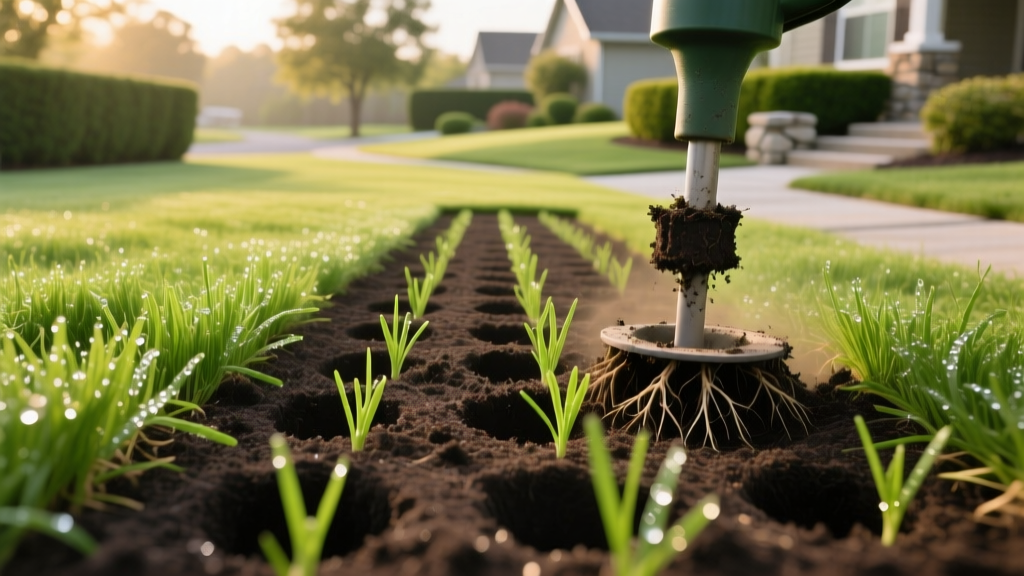
Aeration and Overseeding: The Foundation of Landscape Design
David ParkPublished
The Canvas of Curb Appeal: Why Turf Matters in Landscaping
When homeowners and landscape architects envision a stunning outdoor living space, their minds often drift toward natural stone patios, pergolas, vibrant perennial garden beds, and elegant retaining walls. However, the most critical element of curb appeal is frequently overlooked: the turfgrass canvas that ties the entire landscape together. A patchy, compacted, or weed-ridden lawn can undermine even the most expensive hardscaping projects. To achieve a truly cohesive and sustainable landscape design, integrating core aeration and overseeding techniques is not just a seasonal chore; it is a foundational landscaping strategy.
A lush, dense lawn acts as a visual anchor for garden beds and hardscapes. It provides a cool, usable surface for outdoor recreation, reduces dust and mud tracking into the home, and plays a vital role in the microclimate of your property. According to the United States Environmental Protection Agency (EPA), sustainable landscaping practices, including proper turf management, are essential for reducing outdoor water use, managing stormwater runoff, and maintaining a healthy local ecosystem. By treating your lawn as a living, breathing component of your landscape architecture, you set the stage for long-term curb appeal and environmental resilience.
Soil Compaction: The Silent Enemy of Landscape Drainage
One of the most common issues in established landscapes is soil compaction. Over time, foot traffic, children playing, pets running, and the heavy machinery used to install hardscaping materials compress the soil particles. This compression eliminates the pore spaces necessary for air, water, and nutrients to reach the turfgrass root zone.
From a landscaping perspective, compaction creates severe drainage issues. When water cannot infiltrate the soil, it pools on the surface or runs off into adjacent garden beds, potentially washing away expensive mulch, drowning shallow-rooted perennials, and causing erosion near retaining walls. Core aeration is the mechanical process of removing small plugs of thatch and soil from the lawn to alleviate this compaction. By creating channels in the soil, aeration restores natural drainage patterns, ensuring that rainwater and irrigation are absorbed efficiently rather than contributing to landscape erosion.
Core Aeration Techniques for Landscape Professionals and DIYers
Not all aeration methods are created equal. While spike aerators (which simply poke holes into the ground) are available, they can actually worsen compaction by pressing soil outward and downward around the hole. For meaningful landscape renovation, core aeration is the industry standard.
Optimal Aeration Specifications
- Plug Depth: Aerator tines should penetrate the soil to a depth of 2 to 3 inches. This ensures the root zone is properly fractured.
- Plug Spacing: Holes should be spaced no more than 2 to 3 inches apart across the entire lawn surface.
- Soil Moisture: The soil should be moist but not saturated. Water the lawn deeply 24 hours before aerating to ensure the tines can penetrate deeply without tearing the turf.
- Pattern: Make two passes over the lawn—one in a north-south direction and one in an east-west direction—to maximize soil disruption.
Leave the extracted soil cores on the lawn. They will break down naturally over the next few weeks, depositing beneficial soil microorganisms back onto the surface and helping to decompose the thatch layer. The University of Minnesota Extension notes that allowing these cores to dissolve acts as a natural topdressing, improving the soil structure at the surface level without the need for importing external materials.
Overseeding: Selecting the Right Seed for Your Landscape
Once the soil is opened up through aeration, the landscape is primed for overseeding. Overseeding involves sowing grass seed directly into existing turf, without tearing up the soil or starting from scratch. This technique fills in bare spots, improves turf density, and introduces improved, disease-resistant grass cultivars to your landscape.
Choosing the right seed is critical for maintaining a landscape that thrives in its specific microclimate. Cool-season grasses (like Tall Fescue and Kentucky Bluegrass) dominate northern landscapes, while warm-season grasses (like Bermudagrass and Zoysia) thrive in the south. For high-traffic areas near patios or play structures, modern turf-type tall fescues offer exceptional wear tolerance and deep root systems that aid in drought resistance.
Overseeding Rates and Cost Estimates
| Grass Type | Overseeding Rate (lbs / 1,000 sq ft) | Optimal Season | Est. Seed Cost (per 1,000 sq ft) |
|---|---|---|---|
| Turf-Type Tall Fescue | 6.0 - 8.0 lbs | Early Fall | $12.00 - $18.00 |
| Kentucky Bluegrass | 1.5 - 3.0 lbs | Early Fall | $15.00 - $25.00 |
| Perennial Ryegrass | 4.0 - 6.0 lbs | Early Fall / Spring | $10.00 - $14.00 |
| Bermudagrass | 1.0 - 2.0 lbs (hulled) | Late Spring / Early Summer | $18.00 - $30.00 |
Step-by-Step Execution for Seamless Landscape Integration
Integrating aeration and overseeding into a broader landscaping plan requires careful timing and execution to protect adjacent hardscapes and garden beds.
Step 1: Edge and Protect Hardscapes
Before running heavy aeration machinery, install or refresh the edging between your lawn and garden beds. Use a steel or heavy-duty plastic landscape edging to create a physical barrier. This prevents grass seed from migrating into your mulched perennial beds, where it would become a nuisance weed. Furthermore, be cautious when operating aerators near shallow irrigation lines, landscape lighting wires, and the edges of brick patios to avoid mechanical damage.
Step 2: Mow Low and Dethatch
Mow the existing lawn slightly shorter than your normal maintenance height (around 1.5 to 2 inches). This allows the new grass seed to bypass the existing canopy and make direct contact with the soil. If your lawn has a thatch layer thicker than half an inch, rent a power dethatcher or use a heavy garden rake to remove it before aerating.
Step 3: Aerate and Topdress with Compost
Run the core aerator over the lawn in overlapping patterns. Immediately following aeration, apply a thin layer (about 1/4 inch) of high-quality, screened organic compost over the lawn. The compost will fall into the aeration holes, dramatically improving the soil's water retention and nutrient profile. This practice aligns perfectly with sustainable landscaping principles by recycling organic matter and reducing the need for synthetic fertilizers.
Step 4: Overseed and Apply Starter Fertilizer
Use a broadcast spreader to apply the grass seed at the recommended rate, followed by a specialized starter fertilizer. Starter fertilizers are high in phosphorus, which is crucial for rapid root development in new seedlings. Ensure the seed-to-soil contact is maximized by lightly dragging a piece of chain-link fence or a lawn leveling rake over the area to work the seed into the compost and aeration holes.
Step 5: The Critical Watering Phase
New grass seed must remain consistently moist until germination occurs. This typically requires light watering 2 to 3 times per day for the first 14 to 21 days. Once the seedlings reach about 2 inches in height, transition to deeper, less frequent watering to encourage the deep root growth necessary for a drought-tolerant landscape.
Long-Term Turf Management and Sustainable Landscaping
Aeration and overseeding are not one-time fixes; they are integral components of a long-term landscape management plan. To maintain the density and health of your newly renovated turf, adopt sustainable mowing practices. Never remove more than one-third of the grass blade in a single mowing, and keep cool-season grasses at a height of 3 to 4 inches. Taller grass shades the soil, reducing water evaporation and naturally suppressing weed seed germination.
According to the University of California Agriculture and Natural Resources (UC ANR), proper cultural practices like mowing at the correct height, appropriate irrigation, and routine aeration are the most effective ways to prevent turf diseases and pest infestations without relying heavily on chemical interventions. By prioritizing the health of your soil and turf, you create a resilient, vibrant lawn that perfectly complements your hardscaping, garden beds, and outdoor living spaces, ensuring your landscape design remains breathtaking for years to come.

