Gardening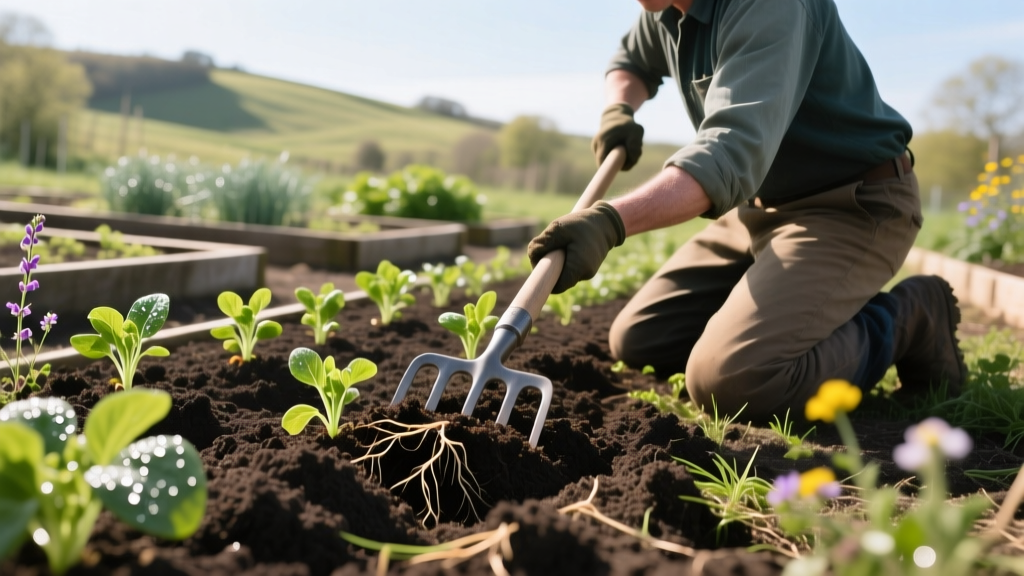
Aeration and Overseeding Techniques for Vegetable Gardens
Robert HayesPublished
Introduction to Garden Soil Aeration and Overseeding
When most homeowners hear the terms aeration and overseeding, they immediately picture sprawling turfgrass lawns, core aerators, and grass seed. However, these fundamental soil management techniques are equally critical in the realm of vegetable and flower gardening. In a garden setting, aeration and overseeding take on a slightly different but profoundly impactful form. Instead of turfgrass, gardeners overseed with cover crops (often called green manures), and instead of mechanical core aeration, they often rely on deep-tine manual tools to preserve the delicate soil food web. Whether you are managing a small backyard raised bed or a large market garden plot, mastering aeration and overseeding techniques will drastically improve your soil structure, water retention, and ultimately, your harvest yields.
Understanding Soil Compaction in Vegetable Beds
Soil compaction is the silent killer of garden productivity. Over the course of a growing season, foot traffic, heavy watering, and the natural settling of soil particles cause the pore spaces between soil aggregates to collapse. Healthy garden soil should consist of roughly 50% solid material (minerals and organic matter) and 50% pore space (half water, half air). When soil becomes compacted, that crucial air and water space is squeezed out.
Compacted soil leads to a host of issues for vegetable gardens. Root systems of heavy feeders like tomatoes, carrots, and squash struggle to penetrate dense earth, resulting in stunted growth and deformed root vegetables. Furthermore, water infiltration drops significantly, leading to surface runoff, erosion, and nutrient leaching. By implementing targeted aeration techniques, you physically fracture the compacted layers, allowing oxygen to reach aerobic soil microbes and creating pathways for deep root growth.
The Hidden Costs of Rototilling
For decades, the standard advice for garden aeration was to fire up a rototiller and churn the earth. While tilling does incorporate organic matter and temporarily fluff the top few inches of soil, it often creates a hardpan—a dense, compacted layer of soil just beneath the reach of the tiller tines. Furthermore, aggressive tilling destroys soil structure, slices up beneficial earthworms, and exposes dormant weed seeds to sunlight. Modern regenerative gardening techniques heavily favor minimal-disturbance aeration methods that maintain the integrity of the soil ecosystem while still alleviating compaction.
Manual Aeration Techniques: The Broadfork Revolution
The broadfork (also known as a U-bar digger) is the ultimate tool for garden bed aeration. Consisting of a wide, U-shaped handle with four to seven long, heavy-duty steel tines, the broadfork is designed to fracture deep soil layers without turning the soil upside down. High-quality broadforks from brands like Meadow Creature or Bully Tools typically cost between $150 and $300, an investment that will last a lifetime and save countless hours of back-breaking labor.
How to Use a Broadfork Correctly
Using a broadfork is an ergonomic process that leverages your body weight rather than brute upper-body strength. Follow these steps for proper garden aeration:
- Step In: Stand behind the broadfork and step onto the crossbar, driving the 10-to-12-inch tines fully into the soil.
- Pull Back: Grasp the handles and lean backward, using your body weight to pull the handles toward you. This action creates a lifting fracture deep in the soil profile.
- Lift and Move: Lift the tool straight up out of the ground, step back about 6 to 8 inches, and repeat the process.
- Leave It Be: Do not turn the soil over. The goal is to crack the earth to let air and water in, not to mix the subsoil with the topsoil.
This technique aerates the soil to a depth of 12 inches, far deeper than most rototillers, and leaves the vital soil microbiome layers intact.
Overseeding: The Role of Cover Crops in Garden Ecology
In lawn care, overseeding means planting new grass into an existing turf canopy. In the vegetable garden, overseeding translates to sowing cover crops into your garden beds, usually at the end of the main growing season or between cash crop rotations. According to the Sustainable Agriculture Research and Education (SARE) program, cover crops are essential for suppressing weeds, managing soil erosion, and building organic matter. When you overseed a garden bed with a cover crop, you are essentially planting a living mulch that works around the clock to protect and feed your soil.
Top Cover Crops for Overseeding Vegetable Beds
Choosing the right seed for overseeding depends on your climate zone, soil needs, and the time of year. Below is a comparison chart of the most effective cover crops for home garden overseeding:
| Cover Crop Type | Seeding Rate (per 1,000 sq ft) | Best Planting Time | Primary Benefit | Winter Hardiness |
|---|---|---|---|---|
| Crimson Clover | 0.5 lbs | Early Fall | Nitrogen fixation, early spring blooms for pollinators | Moderate (Zones 6-9) |
| Cereal Winter Rye | 2.0 - 3.0 lbs | Late Fall | Massive root system for compaction relief, weed suppression | Extremely High (Zones 3-9) |
| Hairy Vetch | 1.0 lbs | Early Fall | Heavy nitrogen fixation, excellent ground cover | High (Zones 4-9) |
| Daikon Radish | 0.5 lbs | Late Summer | Bio-drilling (tillage radish breaks deep hardpans) | Winter-kills (leaves holes for spring planting) |
Step-by-Step Guide to Aerating and Overseeding Your Garden
Combining deep aeration with cover crop overseeding is a powerful one-two punch for soil rehabilitation. Here is how to execute this technique in late summer or early fall, right after you pull out your spent summer crops.
Phase 1: Bed Preparation and Aeration
First, clear the bed of all spent vegetable debris, pulling out large root balls and any remaining weeds. Do not till the bed. Instead, take your broadfork and systematically aerate the entire bed as described above. If your soil is heavy clay, you may need to make two passes, with the second pass perpendicular to the first, to ensure adequate fracturing. After broadforking, use a heavy iron rake to lightly scratch the top 1 inch of soil, creating a fine tilth for seed-to-soil contact.
Phase 2: Overseeding the Cover Crop
Calculate the square footage of your garden bed to determine the correct seed volume. Using a hand-crank broadcast spreader or simply broadcasting by hand, evenly distribute the cover crop seed over the aerated bed. For a robust winter mix, many gardeners combine Cereal Rye and Hairy Vetch. The rye provides a structural trellis for the vining vetch, while the vetch pulls nitrogen from the atmosphere and stores it in root nodules. As noted by the Royal Horticultural Society (RHS), incorporating legume-based green manures can significantly reduce the need for synthetic nitrogen fertilizers in subsequent growing seasons.
Phase 3: Watering and Germination
Cover crop seeds are small and require consistent moisture to germinate. Lightly rake the seed into the top 1/4 inch of soil. If you have access to compost, broadcast a very thin layer (about 1/8 inch) over the seed to protect it from birds and drying winds. Water the bed gently but thoroughly using a sprinkler or a watering wand with a misting nozzle. Keep the top inch of soil consistently moist for the first 7 to 10 days until germination is complete.
Long-Term Soil Health and Maintenance
The true magic of overseeding cover crops happens the following spring. About three to four weeks before you plan to plant your spring vegetables, you must terminate the cover crop. In a no-till garden, this is done by mowing the cover crop down to the soil surface with a string trimmer or a scythe, leaving the roots in the ground to decompose. The decaying roots will leave behind a network of macro-pores, ensuring your soil remains naturally aerated for your new transplants.
According to experts at Cornell University Soil Health, continuous additions of organic matter through cover crop root decay and top-growth mulching are the most effective ways to increase soil aggregate stability. Over a period of three to five years, a garden managed with broadfork aeration and seasonal cover crop overseeding will transform from dense, lifeless dirt into a dark, crumbly, biologically active loam that requires less watering and virtually no synthetic fertilizers.
Conclusion
Adapting lawn care concepts like aeration and overseeding to the vegetable garden is a hallmark of advanced, ecologically minded gardening. By abandoning the destructive rototiller in favor of the broadfork, and by keeping your soil covered year-round with overseeded cover crops, you build a resilient garden ecosystem. The upfront costs of a quality broadfork and a few pounds of cover crop seed are minimal compared to the long-term benefits of reduced labor, fewer weeds, lower water bills, and vastly superior harvests. Start aerating and overseeding your garden beds this season, and watch your soil—and your plants—thrive.
