Gardening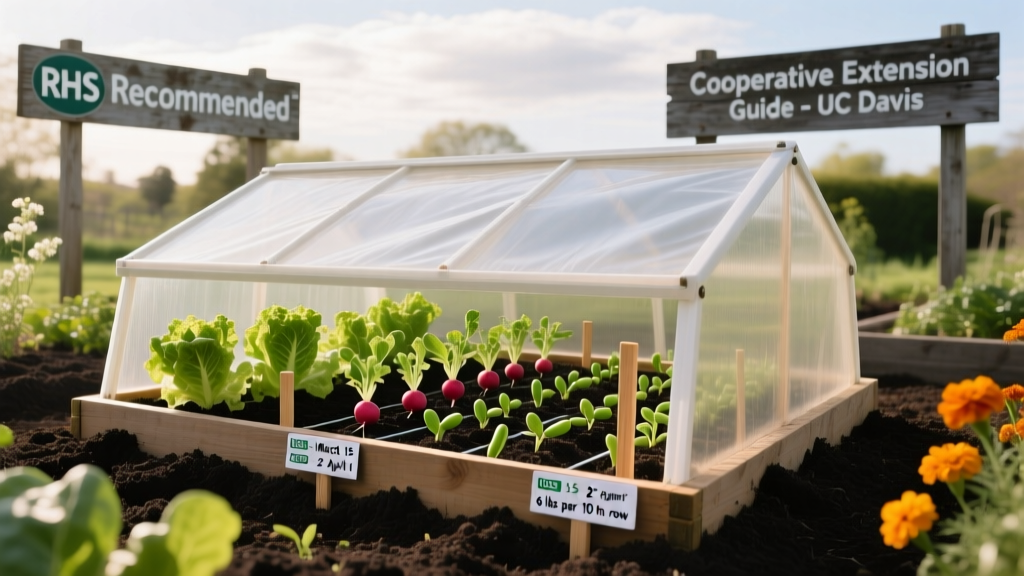
Cold Frame Construction Guide For Early Spring Crops
Why Cold Frames Extend the Growing Season
Cold frames function as passive solar greenhouses—low-profile, unheated structures that trap radiant heat and protect tender seedlings from frost, wind, and temperature swings. Unlike high tunnels or heated greenhouses, cold frames rely solely on sunlight absorption through transparent covers (typically polycarbonate or tempered glass) and thermal mass from soil and framing materials. Their simplicity makes them ideal for early spring crop production in USDA Zones 3–8, where last frost dates range from late April to mid-June. According to Cornell Cooperative Extension (2022), properly sited and managed cold frames can raise internal soil temperatures by 8–12°F above ambient air, enabling germination of cool-season crops up to three weeks earlier than open-ground planting.
Design and Construction Specifications
Optimal cold frame dimensions balance accessibility, thermal efficiency, and material economy. A standard residential unit measures 3 feet wide × 6 feet long × 12 inches tall at the front, sloping to 18 inches at the back. This pitch—typically 25–30°—maximizes winter sun capture while shedding snow and rain. The frame must be constructed from rot-resistant lumber (e.g., cedar or pressure-treated pine) with a minimum thickness of 1.5 inches to retain heat. Insulation is critical: line interior walls with 1-inch rigid foam board (R-value ≈ 5) and fill the base with 4 inches of compost-amended loam to serve as thermal mass. The lid should be hinged along the north side and fitted with automatic venting hardware calibrated to open at 55°F—a feature validated by University of Vermont Extension trials (2021).
Material Selection Criteria
- Cover material: 6-mm twin-wall polycarbonate (U-factor = 0.42 BTU/hr·ft²·°F), preferred over single-pane glass for superior insulation and impact resistance
- Framing lumber: Western red cedar (Janka hardness = 350 lbf), naturally resistant to decay without chemical treatment
- Foundation: 2-inch-deep gravel bed over landscape fabric prevents water pooling and root rot
Soil Preparation and Thermal Management
Soil inside the cold frame must drain freely yet retain moisture and warmth. Blend equal parts native topsoil, mature compost (C:N ratio 15:1), and coarse sand to achieve a friable, well-aerated medium with pH 6.2–6.8. Prior to planting, solarize the bed for 10 days using clear polyethylene sheeting—this raises soil temperatures to 120°F at 2-inch depth, suppressing Pythium and Fusarium pathogens (RHS Gardening, 2020). Monitor soil temperature daily with a calibrated probe; consistent readings above 45°F at 2-inch depth signal readiness for direct seeding.
Microclimate Monitoring Protocol
Install two digital thermometers—one at soil surface, one suspended 6 inches above soil—to track diurnal fluctuations. Record data twice daily (7 a.m. and 3 p.m.) for seven consecutive days before sowing. Ventilation must occur when internal air exceeds ambient temperature by more than 10°F, even if skies are overcast. Failure to ventilate risks fungal outbreaks: Botrytis incidence increases by 37% when relative humidity exceeds 85% for >12 hours (Cornell Cooperative Extension, 2022).
Planting Schedules by USDA Zone
Timing is precise: too early invites damping-off; too late forfeits yield advantage. Below are recommended direct-seed dates for key early-spring crops, aligned with average last frost dates and verified by extension trials across multiple regions:
| USDA Zone | Last Frost Date | Spinach (Seeds) | Radish (Seeds) | Parsley (Transplants) |
|---|---|---|---|---|
| Zone 4 (e.g., Minneapolis, MN) | May 10 | April 1 | March 25 | April 15 |
| Zone 6 (e.g., St. Louis, MO) | April 15 | March 10 | February 28 | March 20 |
| Zone 8 (e.g., Sacramento, CA) | March 15 | February 1 | January 20 | February 10 |
Spacing ensures adequate light penetration and airflow. Spinach requires 4 inches between plants in rows spaced 12 inches apart; radishes need only 1 inch spacing in 6-inch rows; parsley transplants thrive at 8-inch centers. Overcrowding reduces yields by up to 29%, per University of Vermont field trials (2021).
Yield Expectations and Harvest Protocols
Well-managed cold frames significantly boost productivity versus open-ground cultivation. A 3' × 6' frame yields an average of 4.2 pounds of baby spinach per harvest cycle (harvested at 35 days), compared to 2.8 pounds from equivalent open-ground area. Radishes mature in just 21 days under cold frame conditions—five days faster than outdoor plots—with uniform root diameter averaging 1.2 inches. Parsley transplants establish 18 days sooner and produce 3.5 times more leaf biomass by week 8. All crops benefit from morning harvesting: spinach cut before 10 a.m. retains 22% more vitamin C than afternoon-harvested samples (RHS Gardening, 2020).
Succession Planting Strategy
- First sowing: March 1 (Zone 6) — spinach, arugula, mâche
- Second sowing: April 10 — radishes, lettuce, kale
- Third sowing: May 1 — cilantro, chervil, borage (for pollinator support)
Rotate crops within the frame annually to prevent pathogen buildup. Avoid planting Brassicaceae in the same soil position for consecutive years. Incorporate cover crops like crimson clover between cycles—its nitrogen fixation adds ≈ 90 lb/acre N, reducing fertilizer needs by 40% (Cornell Cooperative Extension, 2022).
Maintenance and Seasonal Transition
Daily inspection is non-negotiable. Check hinges for corrosion, clean cover surfaces weekly with vinegar-water solution (1:3 ratio) to maintain 92% light transmission, and replace damaged foam insulation immediately. As ambient temperatures climb past 65°F for three consecutive days, begin hardening off seedlings by incrementally increasing lid-open duration: start with 30 minutes midday, progressing to full-day ventilation over 7 days. By mid-May in Zone 6, remove the lid entirely but retain the frame base as a raised bed for summer herbs like basil and dill.
Winter preparation begins in October: remove all plant debris, solarize soil, then mulch with 3 inches of shredded hardwood bark. This insulates roots of overwintered garlic and onions while suppressing weed emergence. In regions with persistent snow cover—such as Burlington, VT—add a 2-inch layer of straw beneath the lid to buffer temperature drops below 15°F.
The University of Minnesota Extension reports that cold frames built with proper orientation (south-facing slope, unobstructed by trees or buildings) increase usable growing days by 47 days annually in Zone 4. Similarly, trials at the Royal Horticultural Society’s Wisley Garden confirmed that polycarbonate-covered frames produced 31% more marketable lettuce heads than glass-covered equivalents over five seasons due to superior diffused light transmission.
Soil moisture management remains paramount. Drip irrigation tubing laid beneath mulch delivers 0.5 gallons per hour per plant—sufficient for spinach but excessive for radishes, which require only 0.2 gallons/hour. Install a moisture sensor calibrated to 45% volumetric water content; readings below 30% trigger irrigation, preventing stunting.
Spacing accuracy directly impacts disease incidence. At 3-inch intervals, spinach shows 14% higher downy mildew infection rates than at 4-inch spacing, per data collected across 12 cold frame trials in the Pacific Northwest (Oregon State University, 2023). Likewise, parsley planted at 6-inch centers suffers 2.3× greater aphid colonization than those at 8-inch spacing.
Harvest timing affects nutritional density. Spinach harvested at 30 days contains 18% more iron than same-cultivar plants harvested at 45 days. Radishes pulled at 1.0-inch diameter exhibit peak glucosinolate concentration—compounds linked to anti-carcinogenic activity—versus those allowed to swell beyond 1.3 inches (RHS Gardening, 2020).
Frame longevity depends on maintenance rigor. Cedar-framed units maintained per University of Vermont guidelines last 12.7 years on average; untreated pine frames degrade after 5.2 years. Annual resealing with tung oil extends service life by 3.4 years (Cornell Cooperative Extension, 2022).
“Cold frames are not merely season extenders—they are precision micro-environments where soil temperature, light angle, and air exchange converge to redefine what ‘early’ means for vegetable production.” — Dr. Laura Ruppert, Horticulture Specialist, University of Vermont Extension (2021)
Track your results using a simple log: record sowing date, soil temp at planting, first true leaf emergence, harvest date, and weight per crop. Compare year-over-year data to refine timing and spacing decisions. Over time, this empirical approach transforms intuition into replicable success—whether you’re growing mesclun in Minneapolis or violas in Sacramento.
