Tree Care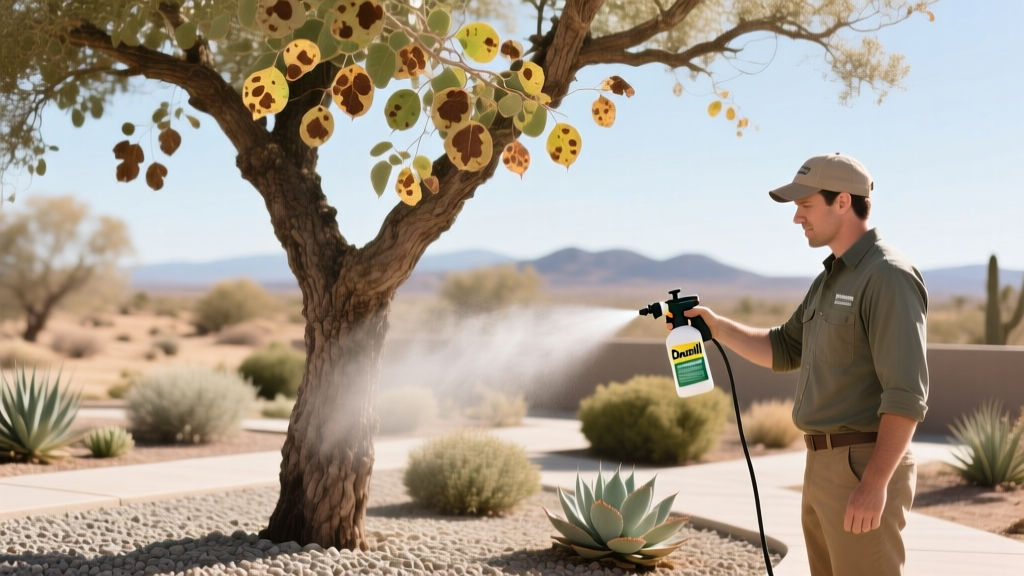
Treating Anthracnose With Daconil: 2026 Xeriscape Tree Guide
James MillerPublished
The Fungal Paradox in Xeriscape Landscapes
Xeriscaping and low-water landscaping are often associated with arid environments, drought-tolerant plantings, and the deliberate elimination of excess moisture. However, a common misconception among homeowners in 2026 is that xeriscape trees are entirely immune to fungal diseases. Anthracnose, a prevalent group of fungal diseases caused by various Apiognomonia and Discula species, can still severely impact shade trees even in meticulously designed low-water environments. Spring rains, unseasonal humidity, and unique microclimates created by urban structures or canyon walls can provide the exact conditions these spores need to germinate and spread.
Identifying Anthracnose vs. Drought Stress
One of the greatest challenges in low-water landscaping is distinguishing between abiotic drought stress and biotic fungal infections. Because xeriscape trees are intentionally subjected to lower soil moisture levels, they frequently exhibit leaf scorch, browning margins, and premature defoliation. Misdiagnosing drought stress as anthracnose can lead to unnecessary chemical applications, while missing an anthracnose outbreak can devastate a mature shade tree that serves as the anchor of your water-wise garden.
Key Symptoms of Anthracnose
- Irregular Lesions: Tan to brown, irregularly shaped lesions that specifically follow and border the leaf veins.
- Cankers: Twig and branch cankers that may ooze or appear sunken during wet periods.
- Defoliation: Severe, sudden leaf drop in late spring or early summer, often mistaken for drought-induced shedding.
- Shot-Hole Appearance: As diseased tissue dries and falls out, leaves take on a tattered, shot-hole look.
According to research published by Penn State Extension, anthracnose lesions typically follow the leaf veins, whereas drought-induced leaf scorch usually begins at the outer leaf margins and moves inward. Recognizing this distinction is the critical first step in xeriscape tree care.
Daconil Fungicide: The 2026 Standard for Anthracnose
When cultural controls are insufficient, Daconil (active ingredient: chlorothalonil) remains a cornerstone for managing severe anthracnose outbreaks. In 2026, Daconil formulations continue to be highly effective as a preventative contact fungicide. It works by creating a protective chemical barrier on the leaf surface, binding to the cuticle and preventing fungal spores from penetrating the plant tissue and establishing an infection.
Why Daconil Fits the Xeriscape Model
Xeriscaping relies heavily on resource efficiency. Many systemic fungicides require soil drenching, a method that demands significant water volumes to carry the active ingredient down into the root zone. This practice directly contradicts low-water landscaping principles and can disrupt the carefully balanced, low-moisture soil ecology of a xeriscape garden. Daconil, applied as a targeted foliar spray, requires minimal water volume for application. It treats the canopy directly without saturating the soil or altering the drought-adapted microbial life in the root zone.
Step-by-Step Daconil Application Guide
Timing is Everything
Fungicides like chlorothalonil are protectants, not curatives. They must be applied before the fungus infects the leaf tissue. For most xeriscape-compatible trees (such as Sycamore, White Oak, and Ash), this means beginning applications at bud break in early spring, just as the new leaves are emerging and are most vulnerable to spore germination.
Mixing and Equipment
- Use a pressurized pump sprayer or a hose-end sprayer calibrated for even coverage.
- Standard mix rate for trees and shrubs: 2.25 teaspoons of Daconil per gallon of water.
- Apply to the point of runoff, ensuring both the upper and lower leaf surfaces are thoroughly coated.
- Repeat applications every 7 to 14 days as long as the weather remains wet and conducive to fungal growth.
Weather and Xeriscape Constraints
Do not apply Daconil if rain is expected within 4 hours, as the product needs time to dry and adhere to the leaf cuticle. In xeriscape designs, avoid overhead irrigation entirely. Overhead watering not only wastes precious water resources but also splashes soil-borne spores onto the lower canopy and creates the prolonged leaf wetness that anthracnose requires to thrive. Rely exclusively on drip emitters or soaker hoses positioned at the tree's drip line to maintain soil moisture without wetting the foliage.
Xeriscape Tree Anthracnose Management Chart
| Xeriscape Tree Species | Anthracnose Susceptibility | Daconil Strategy & Xeriscape Note |
|---|---|---|
| Sycamore | High | Begin Daconil at bud break. Prune heavily for airflow to reduce canopy humidity. |
| White Oak | Moderate | Apply only during historically wet springs. Rely on drip irrigation to keep foliage dry. |
| Ash (Green/White) | Moderate to High | Sanitation is key. Remove all fallen leaves. Use Daconil as a protective barrier in May. |
| Desert Willow | Low | Rarely affected due to arid adaptation. Focus on proper spacing rather than fungicides. |
Complementary Cultural Controls for Low-Water Gardens
Chemical treatments should always be paired with sound cultural practices. The University of Minnesota Extension emphasizes that sanitation and pruning are vital for managing anthracnose. In a xeriscape, this means:
- Pruning for Airflow: Thin the canopy during the dormant season to allow wind to pass through, rapidly drying any moisture that accumulates from morning dew or rare rain events.
- Meticulous Sanitation: Rake and destroy all fallen leaves and twigs. Anthracnose spores overwinter in leaf litter. In a xeriscape, leaving leaf litter might seem like a natural mulching technique, but for anthracnose-prone trees, it is a liability.
- Xeriscape Mulching: Use inorganic mulches like gravel or highly decomposed, dry wood chips around the base of the tree. This prevents soil-borne spores from splashing onto the lower leaves during rainstorms without retaining excess surface moisture that could invite root rot.
Safety and Environmental Precautions
While Daconil is highly effective, it must be used responsibly, especially in 2026 as environmental stewardship remains a top priority for low-water gardeners. Chlorothalonil can be toxic to aquatic life and certain beneficial insects if applied improperly. Never spray near dry creek beds, rain gardens, or xeriscape water features that might experience sudden runoff. Always wear appropriate personal protective equipment (PPE), including chemical-resistant gloves, long sleeves, and eye protection. Apply the fungicide during calm, early morning hours when pollinators like native xeriscape bees are less active, and ensure the spray drifts only onto the target tree canopy. Avoid spraying companion xeriscape plants like lavender, salvia, or agastache unless they are also showing signs of fungal infection, as broad-spectrum fungicides can occasionally disrupt the delicate balance of beneficial microorganisms on the leaves of drought-tolerant perennials.
Conclusion
Maintaining a thriving, low-water landscape does not mean turning a blind eye to fungal threats. Anthracnose can exploit even the most well-designed xeriscape gardens if spring conditions favor spore germination. By accurately distinguishing fungal symptoms from drought stress, utilizing targeted Daconil foliar sprays to avoid soil saturation, and adhering to strict xeriscape irrigation principles, you can protect your valuable shade trees. Implement these 2026 strategies to ensure your water-wise landscape remains resilient, beautiful, and ecologically balanced for decades to come.
