Tree Care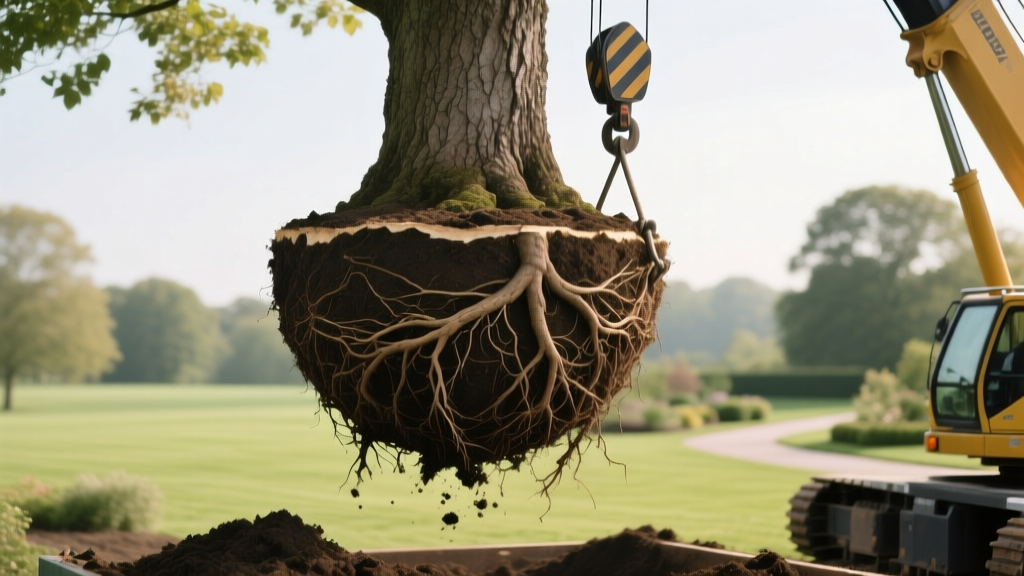
2026 Mature Tree Transplanting: Root Ball Ratios for Lawn Aesthetics
Robert HayesPublished
The Intersection of Lawn Striping and Mature Tree Placement
In the meticulously curated world of high-end landscape design, the intersection of pristine lawn striping and mature tree placement creates breathtaking outdoor spaces. As we move through the 2026 landscaping season, homeowners and landscape architects are increasingly moving away from planting small saplings that take decades to establish. Instead, the focus has shifted toward transplanting mature trees to serve as immediate, commanding focal points within complex lawn patterns. Whether you are mowing a classic checkerboard, a dynamic diamond, or sweeping concentric circles, a mature tree acts as the visual anchor that gives your aesthetic pattern its meaning and scale. However, transplanting a mature tree is a high-stakes endeavor. If the root ball size ratio is miscalculated, or if root pruning is neglected, the tree will suffer from severe transplant shock. A declining, bare-canopy tree will instantly ruin the visual harmony of your carefully striped lawn. To ensure your landscape thrives in 2026 and beyond, mastering the science of root ball ratios and pre-transplant root pruning is absolutely essential.
The Role of Trees in Lawn Striping Aesthetics
When designing a striped lawn, the lines of the pattern must lead the eye somewhere. In geometric turf designs, mature trees are frequently placed at the termination of sightlines or at the exact center of a radial pattern. The shadow cast by a mature canopy adds a secondary layer of depth to the light and dark bands of bent grass blades. Because the aesthetic success of your lawn relies heavily on the health and fullness of the tree's canopy, you cannot afford the multi-year establishment period of a sapling. Transplanting a mature specimen provides immediate scale, shade, and architectural structure. According to the Penn State Extension, successful transplanting of established trees requires meticulous planning, particularly regarding the preservation of the root system. The tree's ability to sustain its expansive canopy—and thereby maintain the visual integrity of your lawn design—depends entirely on the volume of roots retained during the move.
Understanding Root Ball Size Ratios
The foundation of a successful mature tree transplant lies in calculating the correct root ball size ratio. The American National Standards Institute (ANSI) A300 standards provide strict guidelines for these measurements, which remain the gold standard for arborists in 2026. The general rule of thumb is that for every one inch of trunk caliper, you must preserve twelve inches of root ball diameter. Trunk caliper is measured at six inches above the soil line for trees with a caliper up to four inches. For larger, more mature trees with a caliper exceeding four inches, the measurement is taken at twelve inches above the soil line. This ratio ensures that a sufficient mass of fine, water-absorbing roots is retained to support the tree's existing canopy. Failing to meet this ratio will result in a stressed tree that drops its leaves, completely undermining the lush aesthetic you are trying to achieve.
| Trunk Caliper (inches) | Root Ball Diameter (inches) | Root Ball Depth (inches) | Estimated Weight (lbs) |
|---|---|---|---|
| 2 | 24 | 16 | 400 |
| 3 | 36 | 24 | 1,100 |
| 4 | 48 | 28 | 2,200 |
| 5 | 60 | 35 | 3,800 |
Above is a comprehensive data table outlining the ANSI-compliant root ball dimensions and estimated weights for mature trees commonly used as focal points in 2026 landscape designs. Understanding these weights is crucial, as it dictates whether you can use manual labor, a standard skid steer, or if you must rent a specialized 2026-model hydraulic tree spade.
Pre-Transplant Root Pruning Techniques
Root pruning is a vital preparatory step that must be executed months before the actual transplant. This technique involves severing the outer roots of the tree to stimulate the growth of new, fibrous feeder roots within the designated root ball zone. According to the University of Minnesota Extension, root pruning significantly increases the survival rate of transplanted trees by ensuring that the roots retained in the ball are actively absorbing water and nutrients. For a mature tree destined to anchor your lawn's central diamond pattern, root pruning should ideally occur six to twelve months prior to the move. Using a sharp, flat transplanting spade or a modern vibratory root pruner, you will dig a narrow trench along the circumference of your calculated root ball diameter. This clean severing encourages the tree to branch its roots inward, creating a dense, cohesive root mass that will hold the soil together tightly when lifted.
Timing Your Root Pruning and Transplant
The timing of your root pruning and subsequent transplant is critical. In most temperate climates, early spring before bud break or late autumn after leaf drop are the optimal windows. Transplanting during the heat of summer or the freezing depths of winter will induce fatal shock. Once the root ball is fully excavated during the final move, it must be immediately wrapped in heavy-duty burlap and secured with a wire basket or pinning nails. This containment prevents the soil from fracturing away from the roots during transport across your property. When moving the tree over your pristine, freshly striped turf, always use temporary ground protection mats or plywood tracks. The heavy machinery required to lift a 3,000-pound root ball will instantly crush and rut your carefully mowed grass, destroying the aesthetic pattern you worked so hard to create.
Executing the Transplant for Aesthetic Alignment
Once the tree is in the air, aesthetic alignment becomes the priority. Every mature tree has a 'best face'—the side with the most balanced, symmetrical branching structure and the most attractive canopy distribution. Before lowering the tree into its new planting hole, rotate the root ball so that this best face points directly toward the primary vantage point of your lawn, such as the patio or the main driveway. Furthermore, consider how the tree's branches will interact with your mowing patterns. Ensure that the lowest scaffold branches are high enough to allow your zero-turn mower to pass underneath comfortably, or plan for a clean, circular mulch ring that integrates seamlessly with your stripes. The Clemson University Home & Garden Information Center emphasizes that proper planting depth is equally critical; the root flare must be visible and slightly above the surrounding grade to prevent root rot and ensure long-term vitality.
Integrating the Tree into Your Lawn Pattern
Integrating the newly transplanted tree into your lawn striping pattern requires careful attention to the transition zone between the turf and the tree's base. A well-defined mulch ring not only conserves moisture and regulates soil temperature but also provides a crisp, visual boundary that enhances the geometric lines of your lawn. In 2026, landscape professionals recommend using a steel edger to create a sharp, vertical trench between the turfgrass and the mulch ring. This prevents the mulch from spilling onto the grass and interfering with the light reflection necessary for vivid lawn stripes. Fill the ring with two to three inches of high-quality, double-shredded hardwood mulch, keeping it strictly away from the trunk itself to avoid 'volcano mulching,' which invites disease and pests. The contrast between the dark, rich mulch and the vibrant, striped green turf elevates the overall sophistication of the landscape.
Post-Transplant Care and Turf Protection
Post-transplant care in the first year is non-negotiable. The root system of a transplanted mature tree is severely compromised, making it entirely dependent on supplemental irrigation. However, dragging heavy hoses across your lawn can smear the stripes and compact the soil. To solve this, many 2026 landscape designs incorporate smart, sub-surface drip irrigation rings installed directly within the root ball zone. These systems deliver precise, slow-release moisture exactly where the tree needs it, without wetting the surrounding turf or disrupting the visual perfection of your mowing patterns. Additionally, applying a high-quality, slow-release mycorrhizal root stimulator during the first deep watering will accelerate the symbiotic relationship between the tree's roots and the surrounding soil. Monitor the tree weekly for signs of canopy thinning or leaf scorch, and be prepared to adjust your irrigation schedule based on real-time data from wireless soil moisture probes.
Conclusion
Ultimately, transplanting a mature tree to serve as the centerpiece of a striped lawn is a marriage of horticultural science and artistic vision. By strictly adhering to root ball size ratios, executing timely root pruning, and carefully managing the aesthetic integration of the tree into your turf patterns, you can create a landscape that is both biologically resilient and visually stunning. The instant maturity and architectural presence of a well-transplanted tree will transform your lawn from a simple expanse of grass into a masterpiece of outdoor design, ready to be enjoyed throughout 2026 and for decades to come.