Tree Care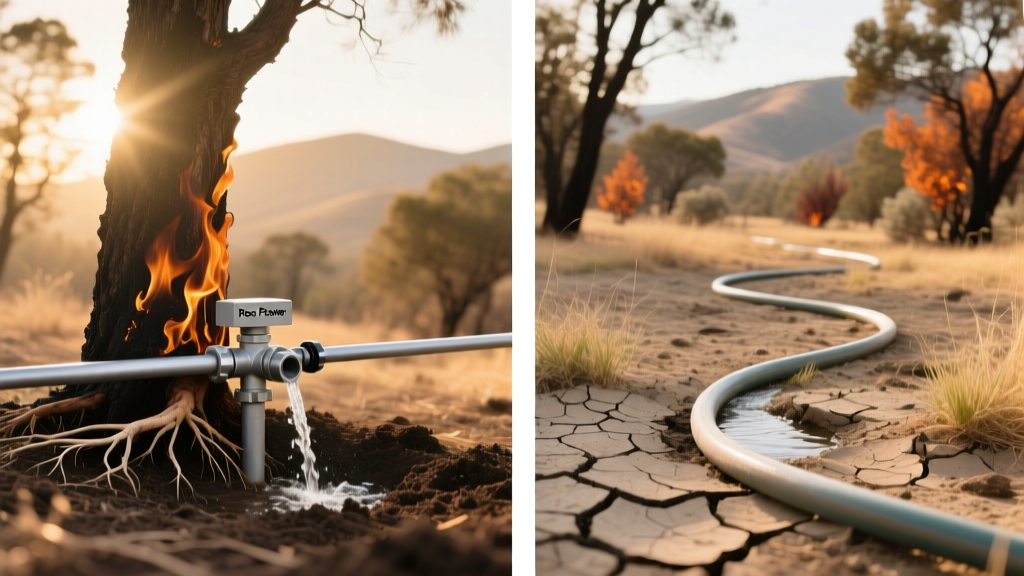
Hydrate Fire-Resistant Trees 2026: Ross Root Feeder vs Soaker Hose
Anna KowalskiPublished
The Critical Role of Tree Hydration in Fire-Resistant Landscaping
As we navigate the 2026 wildfire season, homeowners in fire-prone regions are increasingly recognizing that a well-maintained landscape is the first line of defense against property loss. Creating a defensible space does not mean stripping your yard of all vegetation; rather, it involves strategic plant selection and meticulous maintenance. Trees, when properly hydrated and pruned, can act as effective windbreaks and heat shields. However, a drought-stressed tree quickly transforms from a protective asset into a volatile liability. The key to maintaining fire-resistant trees lies in deep root watering, a practice that ensures high moisture content in the wood and foliage while avoiding the creation of surface-level fire hazards. In this guide, we compare two of the most popular deep watering methods: the Ross Root Feeder and the soaker hose, evaluating their effectiveness specifically through the lens of fire-resistant landscaping.
The Science of Live Fuel Moisture Content (LFMC)
To understand why deep watering is a cornerstone of fire defense, we must look at Live Fuel Moisture Content (LFMC). LFMC is the ratio of water mass to dry mass in a plant's tissues. When a tree's LFMC drops below 60%, its leaves and needles become highly susceptible to ignition from airborne embers, which are the leading cause of home ignitions during wildfires. Deep watering ensures that the tree's extensive root system can pull adequate moisture from the soil, maintaining a high LFMC even during the peak heat of late summer. Furthermore, trees with deep, well-hydrated root systems are less likely to suffer from dieback. Deadwood and dry, peeling bark are notorious ember catchers; by keeping the tree vigorously growing through deep hydration, you naturally minimize the accumulation of these dangerous fine fuels.
Why Surface Watering Sabotages Fire Defense
Traditional sprinklers and shallow surface watering are counterproductive to fire-resistant landscaping for two primary reasons. First, shallow watering encourages roots to grow near the surface, where they are vulnerable to heat and drought, ultimately leading to tree stress and dieback. Second, and more critically, surface watering promotes the rapid growth of shallow-rooted weeds and invasive grasses directly beneath the tree canopy. In a fire scenario, these dry, surface-level weeds act as "ladder fuels," carrying a ground fire up into the tree's lower branches and canopy. Deep watering targets the root zone 12 to 18 inches below the surface, bypassing the topsoil and starving potential ladder fuels of the moisture they need to grow.
The Ross Root Feeder: Targeted Deep Injection
The Ross Root Feeder is a specialized tool that attaches to a standard garden hose and features a long, hollow metal probe. By pushing the probe into the soil around the tree's drip line, you can inject water—and optionally, water-soluble fertilizers—directly into the deep root zone. In 2026, with many western states enforcing strict outdoor water conservation mandates, the Ross Root Feeder has seen a surge in popularity due to its zero-waste application.
Advantages for Fire-Resistant Landscaping
- Zero Surface Moisture: Because the water is injected 12 to 18 inches deep, the top layer of soil remains completely dry. This effectively prevents the germination and growth of flammable weeds, eliminating a major ladder fuel hazard.
- Precision Targeting: You can target specific quadrants of the root ball, ensuring that large, established shade trees receive exactly the volume of water they need without oversaturating the surrounding hardscape or garden beds.
- Soil Aeration: The physical act of pushing the metal probe into the earth creates micro-channels in the soil, relieving compaction and allowing oxygen to reach the roots, which promotes overall tree vigor and disease resistance.
Drawbacks to Consider
The primary drawback of the Ross Root Feeder is labor intensity. Watering a large, mature oak or pine requires moving the probe every few feet around the entire drip line, which can be physically demanding. Additionally, if your soil is heavily compacted clay or rocky, inserting the probe can be difficult and may bend the metal wand if forced.
Soaker Hoses: Slow and Steady Surface Penetration
Soaker hoses are porous tubes, typically made from recycled rubber or flexible vinyl, that "weep" water slowly along their entire length. When laid out in a spiral pattern around the base of a tree and left to run for several hours, the water slowly percolates downward, eventually reaching the deep root zone. They are a staple in drought-tolerant and fire-resistant gardens due to their ease of use and compatibility with smart irrigation timers.
Advantages for Fire-Resistant Landscaping
- Automation and Consistency: Soaker hoses can be easily connected to a smart Bluetooth or Wi-Fi irrigation timer. This allows you to schedule deep watering sessions for the early morning hours, ensuring the tree remains consistently hydrated without manual labor.
- Wide Root Zone Coverage: By spiraling the hose from the trunk outward to the drip line, you ensure that the entire absorbing root mat receives moisture, promoting a wide, stabilizing root structure that helps trees resist windthrow during fire-induced firestorms.
- Cost-Effective: A high-quality, heavy-duty rubber soaker hose is relatively inexpensive and can cover multiple trees in a single run if they are planted in clusters.
Drawbacks to Consider
The major fire-safety drawback of the soaker hose is that it wets the surface soil. If the area beneath the tree is not properly managed, this surface moisture will encourage weed growth. Furthermore, if a soaker hose is left exposed on top of dry mulch or dead leaves, it can act as a conduit for surface fire spread, and the plastic or rubber materials can melt, creating toxic fumes and a mess. To mitigate this, soaker hoses in fire-prone zones must be covered with a thin layer of non-flammable mulch or compost to retain moisture and hide the hose from direct sun and potential embers.
Feature Comparison: Ross Root Feeder vs. Soaker Hose
| Feature | Ross Root Feeder | Soaker Hose |
|---|---|---|
| Water Penetration Depth | 12-18 inches (Instant) | 12-24 inches (Over 4-8 hours) |
| Surface Weed / Ladder Fuel Risk | Extremely Low (Dry Surface) | Moderate (Wets Surface, Requires Mulch) |
| Water Efficiency (Evaporation Loss) | Near 100% (Injected Deep) | 85-95% (Some surface evaporation) |
| Labor Requirement | High (Manual probing) | Low (Set and forget with timer) |
| Best Soil Type | Heavy Clay, Compacted Soils | Sandy Loam, Well-Draining Soils |
| Fire Hazard of Equipment | None (Stored away after use) | Low/Moderate (Can melt if exposed to fire) |
Soil Type Variables in Fire-Prone Regions
Your local soil composition heavily dictates which tool is superior for your fire-resistant landscape. In regions with heavy clay soils—common in parts of California and the Pacific Northwest—water applied via soaker hoses tends to pool on the surface or run off before it can penetrate deeply. This surface pooling encourages the exact type of weedy ladder fuels you are trying to avoid. In clay soils, the Ross Root Feeder is vastly superior, as the pressurized injection forces water past the impermeable top layers directly into the root zone. Conversely, in sandy or decomposed granite soils, water from a root feeder may drain away too quickly laterally. In these fast-draining soils, a soaker hose running at a low volume over a long period allows capillary action to pull the water deep into the soil profile efficiently.
Integrating Deep Watering with Firewise Principles
According to the National Fire Protection Association's Firewise USA program, maintaining a defensible space requires a holistic approach to vegetation management. Deep watering is only one piece of the puzzle. To maximize your tree's fire resistance in 2026, pair your watering strategy with the following practices:
- Strategic Mulching: If using a soaker hose, cover it with no more than 2-3 inches of compost or finely shredded hardwood mulch. Avoid using pine needles, cedar bark, or rubber mulch, as these are highly flammable. Keep all mulch at least 5 inches away from the tree trunk to prevent rot and rodent damage.
- Canopy Spacing and Pruning: The CAL FIRE Defensible Space guidelines mandate the removal of all dead branches and the elevation of the tree canopy. Prune all lower branches so that the lowest foliage is at least 6 to 10 feet off the ground. This ensures that even if a ground fire occurs, there is no ladder fuel to carry the flames into the hydrated canopy.
- Debris Management: Deep watering can cause trees to shed older, interior needles or leaves as they push new, hydrated growth. Rake and remove this dead organic matter from the base of the tree weekly during fire season, as it acts as highly combustible kindling.
Conclusion: Choosing the Right Tool for Your Defensible Space
Both the Ross Root Feeder and the soaker hose are invaluable tools for maintaining the high Live Fuel Moisture Content required for fire-resistant trees in 2026. If your priority is absolute elimination of surface weeds and ladder fuels, and you do not mind the physical labor, the Ross Root Feeder is the ultimate precision tool for fire defense. If you manage a large property with multiple trees, have well-draining soil, and require automated consistency, a soaker hose—when properly concealed beneath fire-resistant mulch and paired with rigorous weed control—is an excellent, labor-saving alternative. By matching the tool to your soil type and committing to regular canopy maintenance, you ensure your trees remain a beautiful, protective asset rather than a wildfire hazard.