
Landscaping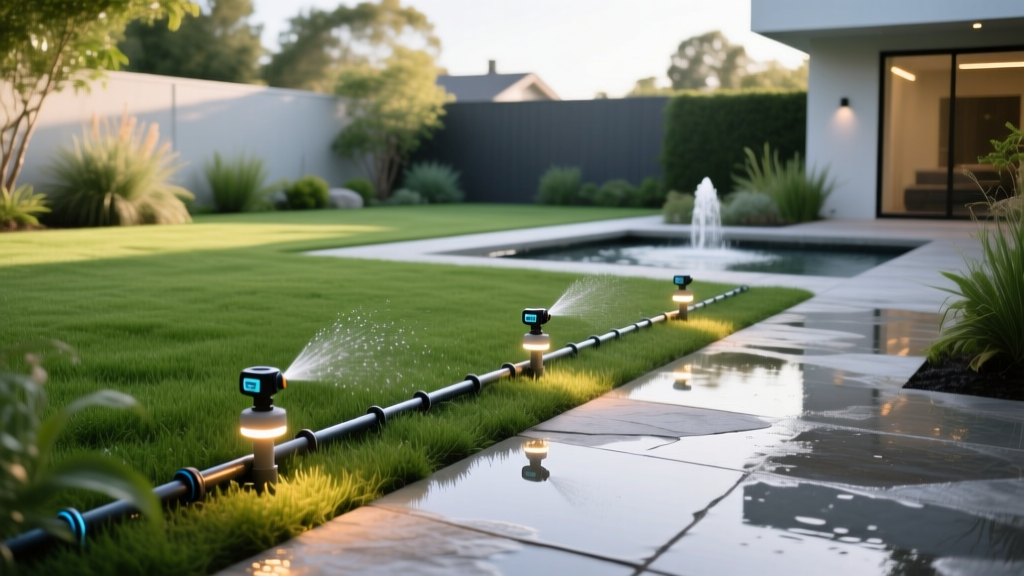
Automate Your Landscape: Smart Irrigation & Lighting
Anna KowalskiPublished
The Rise of the Smart Yard
The concept of the smart home has rapidly expanded beyond the walls of our houses and into the yard. Today, landscaping is no longer just about planting trees and laying pavers; it is about creating an interconnected, automated ecosystem that responds to environmental conditions and your personal schedule. According to the American Society of Landscape Architects (ASLA), smart landscape technology and integrated outdoor living spaces consistently rank among the top residential design trends. By automating your irrigation, lighting, and hardscaping features, you can achieve a pristine lawn, enhance home security, and significantly reduce your environmental footprint.
Smart Irrigation Controllers: Precision Watering
Traditional sprinkler timers are notoriously inefficient, often watering the lawn during rainstorms or applying the same amount of water in cool spring months as they do in peak summer heat. Smart irrigation controllers replace these outdated dials with Wi-Fi-enabled brains that communicate with local weather stations.
Weather-Based vs. Soil Moisture Controllers
When upgrading your system, you will generally choose between two types of smart controllers:
- Weather-Based Controllers (Evapotranspiration or ET): These use local weather data (temperature, humidity, wind, and solar radiation) to calculate the exact water needs of your landscape. The EPA WaterSense program notes that Weather-Based Irrigation Controllers (WBICs) can save the average home nearly 8,800 gallons of water annually.
- Soil Moisture Sensor Controllers: These rely on physical probes buried in the root zone of your garden beds or lawn. They bypass the scheduled watering cycle if the soil already holds adequate moisture, making them ideal for microclimates or heavily shaded yards where evaporation rates differ from regional averages.
Top Product Recommendations
The Rachio 3 Smart Sprinkler Controller is a market leader, offering hyper-local weather intelligence and seamless integration with Amazon Alexa, Apple HomeKit, and Google Home. It retails for approximately $230 and supports up to 8 or 16 zones. For a more budget-friendly option, the Orbit B-hyve XR provides excellent indoor/outdoor durability and Wi-Fi connectivity for around $180.
Automated Landscape Lighting Systems
Landscape lighting enhances curb appeal, highlights architectural features, and deters intruders. Smart lighting transformers and Wi-Fi-enabled fixtures take this a step further by allowing you to control your outdoor ambiance from your smartphone or via voice commands.
Key Features for Outdoor Smart Lighting
When selecting smart lighting for the garden, ensure the hardware is rated for outdoor use. Look for an IP65 or IP67 rating, which guarantees protection against dust and low-pressure water jets from sprinklers.
- Geofencing and Astronomical Timers: Smart transformers, like those from WAC Lighting or Brilliant, use GPS geofencing to turn lights on exactly at dusk, adjusting automatically as the seasons change.
- Color and Temperature Tuning: Fixtures like the Philips Hue Discover Outdoor Floodlight or Ring Smart Lighting allow you to shift color temperatures from a warm 2700K for evening entertaining to a cool 5000K for security and task lighting.
- Zone Grouping: Group your pathway lights, uplights, and deck lights into distinct zones to create automated 'scenes' (e.g., 'Dinner Party' dims the pathway and brightens the patio).
Hardscaping and Outdoor Living Automation
Automation extends to hardscaping elements as well. Motorized pergola louvers (such as those from Struxure) can be programmed to track the sun or automatically close when integrated rain sensors detect precipitation. Smart gas fire pits and Wi-Fi-enabled outdoor audio systems can be triggered simultaneously through a single 'Evening Relaxation' routine on your smart home hub.
Robotic lawnmowers, such as the Husqvarna Automower or Worx Landroid, are another cornerstone of the automated landscape. Modern units utilize GPS and RTK (Real-Time Kinematic) satellite navigation to mow in precise, overlapping patterns without the need for boundary wires. They can be scheduled via smartphone apps to mow at optimal times for grass health, typically in the early morning when dew is present, and automatically return to their charging stations when rain sensors detect a storm.
Device Comparison Chart
| Device Category | Top Product Example | Smart Home Ecosystem | Average Cost | Primary Benefit |
|---|---|---|---|---|
| Smart Sprinkler Controller | Rachio 3 (8-Zone) | Alexa, HomeKit, Google | $230 | Water conservation via ET data |
| Smart Lighting Transformer | WAC Lighting Smart Transformer | WAC App, Alexa, Google | $250 - $350 | Dimming and color temp control |
| Smart Path/Spot Lights | Philips Hue Lily Outdoor | Hue Bridge, HomeKit, Alexa | $100 (per fixture) | 16 million colors, scene syncing |
| Motorized Pergola Louvers | Struxure Pivot X | Proprietary App, Somfy | $8,000+ | Rain sensors, sun tracking |
Step-by-Step Integration Guide
To create a truly cohesive smart landscape, you must integrate your devices into a centralized hub. Here is a practical approach to setting up your outdoor automation:
- Centralize Your Hub: Use a primary ecosystem like Apple HomeKit, Samsung SmartThings, or Amazon Alexa. Ensure your outdoor Wi-Fi coverage is robust; consider installing a weatherproof mesh Wi-Fi node (like the Orbi Outdoor) near your hardscaping areas to guarantee a strong 2.4 GHz signal for smart devices.
- Map Your Zones: Label all irrigation zones and lighting circuits clearly in your respective apps. Take photos of your yard and map which physical valve corresponds to which digital zone.
- Create Automated Routines: Set up conditional logic. For example, program your smart lighting to turn on at 20% brightness at sunset, but trigger to 100% brightness if your smart security camera detects motion in the driveway.
- Implement Seasonal Shifts: Use your smart hub to adjust lighting colors and irrigation schedules based on the time of year. In autumn, shift pathway lights to a warm amber to complement falling leaves, while the smart irrigation controller will naturally scale back watering based on dropping ET rates.
- Network Security Considerations: Because outdoor smart devices are exposed to the elements and potential physical tampering, ensure your Wi-Fi network is secured with WPA3 encryption. Create a dedicated 'IoT' or 'Guest' network specifically for your landscape devices. This isolates your outdoor cameras and sprinkler controllers from your primary home network where personal computers and banking data reside, providing an extra layer of cybersecurity for your smart home ecosystem.
Sustainability and Return on Investment
The financial and environmental ROI of smart landscaping is substantial. Overwatering is a massive issue in residential landscaping. The Water Use It Wisely conservation campaign highlights that smart controllers eliminate the guesswork, preventing runoff and protecting local waterways from fertilizer pollution. Furthermore, many local municipalities and water districts offer rebates ranging from $50 to $150 for installing EPA WaterSense-certified smart controllers, effectively cutting the hardware cost in half.
'Smart irrigation technology doesn't just save homeowners money on their utility bills; it is a critical tool in regional drought resilience and sustainable landscape management.' — Environmental Protection Agency (EPA)
Conclusion
Transitioning to a smart landscape is one of the most impactful upgrades you can make to your property. By replacing dumb timers with intelligent, weather-responsive irrigation controllers and integrating Wi-Fi-enabled landscape lighting, you create an outdoor space that is as efficient as it is beautiful. Whether you are looking to lower your water bill, deter package thieves with automated lighting, or simply enjoy a perfectly timed sunset ambiance on your patio, smart home automation provides the tools to elevate your landscape design into the modern era.

