
Landscaping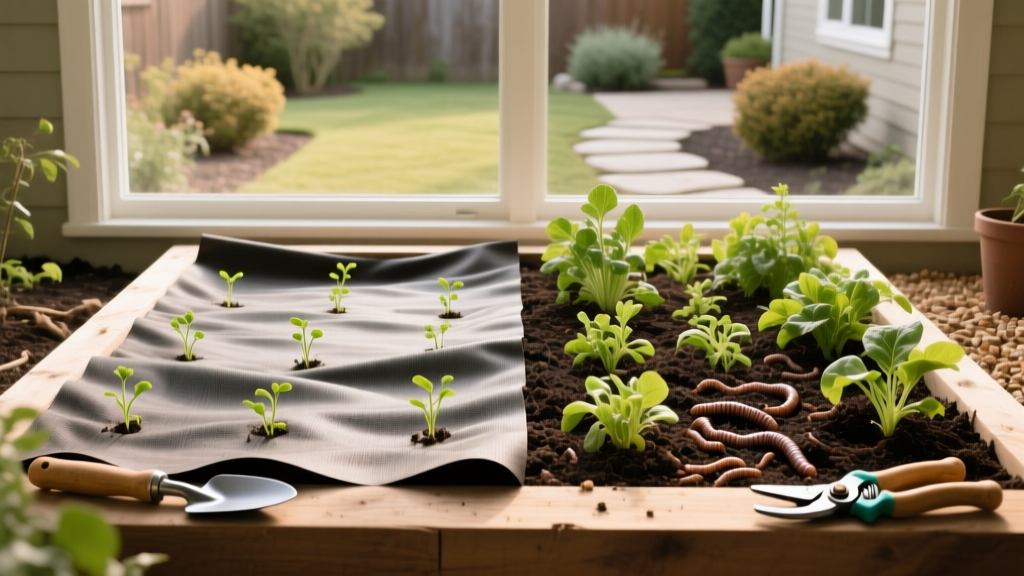
Landscape Fabric Myths: Weed Control vs Soil Health
Sarah ChenPublished
The Allure of the "Permanent" Weed Barrier
Walk into any big-box garden center in early spring, and you will inevitably see towering rolls of black, woven polypropylene material marketed as the ultimate solution for garden weeds. Landscape fabric, often sold under brand names like Dewitt Pro 5 or Typar, promises a hassle-free, permanent barrier against unwanted plant growth. For decades, homeowners and even some landscaping professionals have relied on this material to keep garden beds pristine, believing it to be a "set it and forget it" miracle product.
However, modern horticultural science tells a vastly different story. The widespread use of landscape fabric in planted garden beds is one of the most pervasive and damaging myths in residential landscaping. While it may offer a temporary illusion of control, the long-term consequences for your soil health, drainage, and overall garden vitality are severe. In this comprehensive myth-busting guide, we will separate fact from fiction, explore the hidden costs of weed barriers, and provide a scientifically backed protocol for sustainable weed management.
Myth #1: Landscape Fabric Permanently Stops Weeds
The Fiction: Installing a layer of woven fabric beneath your mulch will create an impenetrable fortress that stops weeds from ever taking root in your garden beds.
The Fact: Landscape fabric does not stop weeds; it merely changes how and where they grow. According to research highlighted by the Michigan State University Extension, weed seeds are constantly blown in by the wind or dropped by birds. These seeds settle on top of the fabric, within the layer of mulch or soil dust that inevitably accumulates on the surface. When these seeds germinate, their roots grow downward, weaving directly into the microscopic pores of the fabric. When you attempt to pull these weeds later, the roots tear, leaving the weed to regenerate, or worse, you rip the fabric itself, compromising its integrity.
Furthermore, aggressive perennial weeds like yellow nutsedge (Cyperus esculentus) and field bindweed possess sharp, specialized rhizomes and taproots that easily pierce through woven and non-woven fabrics. Once they penetrate the barrier, they become nearly impossible to remove without destroying the fabric entirely, turning your garden bed into a tangled, unmanageable mess.
Myth #2: Fabric Allows Water, Air, and Nutrients to Flow Freely
The Fiction: Because landscape fabric is "permeable," it allows essential rainwater, oxygen, and liquid fertilizers to reach the root zones of your desirable plants while blocking sunlight.
The Fact: While brand-new fabric straight out of the roll may allow water to pass through, this permeability is incredibly short-lived. Within one to two growing seasons, the microscopic pores of the fabric become clogged with fine soil particles, decomposing mulch dust, and microbial slime. Once clogged, the fabric becomes effectively impermeable.
This creates a host of severe landscaping issues:
- Surface Runoff and Erosion: Water pools on top of the fabric and runs off into your lawn or hardscaping, rather than penetrating the soil.
- Soil Compaction and Anaerobic Conditions: Deprived of oxygen and the natural aerating action of earthworms (which are physically blocked from reaching the surface), the soil beneath the fabric becomes compacted, hard, and anaerobic.
- Root Suffocation: Desirable shrubs and trees trapped beneath the fabric often develop shallow, girdling roots as they desperately seek oxygen and moisture near the surface, making them highly susceptible to drought and windthrow.
Myth #3: It Saves You Money and Time Long-Term
The Fiction: Paying a premium for high-quality fabric and steel landscape pins is a wise investment that eliminates the need for annual weeding and mulch replacement.
The Fact: Landscape fabric is a depreciating asset that eventually becomes a massive liability. The initial cost of premium woven fabric ranges from $0.75 to $1.50 per square foot, not including the cost of landscape pins ($15 per box of 50) and the top layer of mulch. When the fabric inevitably fails, degrades from UV exposure at the edges, or becomes choked with weeds, removing it is a backbreaking nightmare. You must dig through the tangled roots, pull up rusted steel pins, and dispose of hundreds of pounds of plastic-laden, soil-covered waste that cannot be composted or recycled.
Fact vs. Fiction: Landscape Fabric vs. Organic Mulch
To understand why organic matter is superior, let us compare the long-term performance of landscape fabric against a thick layer of organic mulch, such as arborist wood chips or shredded hardwood bark. The Penn State Extension strongly advocates for organic mulches due to their soil-building properties.
| Feature | Landscape Fabric + Mulch | Organic Mulch Only (3-4 Inches) |
|---|---|---|
| Initial Cost (per 100 sq ft) | $90 - $180 (Fabric, pins, mulch) | $30 - $50 (Approx. 1 cubic yard) |
| Weed Suppression (Year 1) | Excellent | Very Good (if applied thickly) |
| Weed Suppression (Year 3+) | Poor (Surface weeds root into fabric) | Good (Organic matter builds healthy soil ecology) |
| Soil Health & Microbiology | Degrades soil; blocks earthworms | Feeds soil food web; improves structure |
| Water Permeability (Year 2+) | Severely restricted (clogged pores) | Excellent (acts as a sponge) |
| End-of-Life Removal | Extremely difficult; creates plastic waste | None; decomposes into rich topsoil |
The "Fact" Protocol: How to Build a Weed-Resistant Garden Bed
If landscape fabric is out, what is the alternative? The gold standard for sustainable, low-maintenance garden beds is a technique known as sheet mulching, combined with deep organic mulching. Here is your actionable, step-by-step guide to implementing this method.
Step 1: Smother Existing Weeds with Cardboard
Do not reach for chemical herbicides or plastic sheeting. Instead, collect plain, uncoated corrugated cardboard (remove all plastic tape and labels). Lay the cardboard directly over the existing grass or weeds, overlapping the edges by at least 6 inches to prevent weeds from finding a gap. Wet the cardboard thoroughly with a garden hose. This blocks sunlight, killing the vegetation beneath while allowing earthworms to pass through the decomposing paper fibers.
Step 2: Amend with Organic Compost
Once the cardboard is wet and flat, apply a 1-inch to 2-inch layer of high-quality organic compost directly on top. This introduces beneficial mycorrhizal fungi and bacteria that will accelerate the breakdown of the cardboard and the underlying thatch, turning former weeds into rich humus.
Step 3: Apply the Right Mulch at the Right Depth
The Missouri Botanical Garden recommends using coarse, organic mulches for optimal weed suppression and moisture retention. Apply 3 to 4 inches of arborist wood chips, shredded hardwood bark, or pine straw over the compost.
Pro Tip: Avoid "mulch volcanoes" around the base of trees and shrubs. Keep mulch at least 3 inches away from the trunk flare to prevent rot, rodent damage, and fungal infections. Replenish the top 1 inch of mulch annually in the spring or fall as the lower layers decompose into the soil.
Step 4: Utilize Pre-Emergent Herbicides (If Necessary)
For beds with a history of severe annual weed pressure (like crabgrass or spurge), apply a natural, corn-gluten-based pre-emergent herbicide in early spring before soil temperatures reach 55°F. This prevents weed seeds from germinating without harming the soil microbiology or established perennials.
When is Landscape Fabric Actually Useful?
Busting the myth of landscape fabric in garden beds does not mean the material is entirely useless. There is one specific area in landscaping where woven geotextile fabrics excel: hardscaping and drainage projects.
When installing a gravel driveway, a dry creek bed, a French drain, or a retaining wall backfill, landscape fabric is essential. In these scenarios, the goal is to separate the aggregate (gravel or crushed stone) from the underlying native soil. Without a fabric barrier, the gravel will eventually sink into the mud, and the soil will migrate up into the gravel, destroying the drainage capacity and structural integrity of the hardscape. In these non-planted, high-drainage applications, a heavy-duty, needle-punched non-woven geotextile fabric is the correct and necessary choice.
Conclusion: Work With Nature, Not Against It
The desire for a perfectly manicured, weed-free landscape is understandable, but attempting to achieve it by suffocating your soil beneath a plastic barrier is a losing battle. Landscape fabric disrupts the natural soil food web, exacerbates drainage issues, and ultimately creates more work and expense for the homeowner. By embracing the "fact" protocol—utilizing sheet mulching, deep organic composting, and proper mulching techniques—you can achieve beautiful, thriving, and naturally weed-resistant garden beds that improve in health and vitality year after year.

