Gardening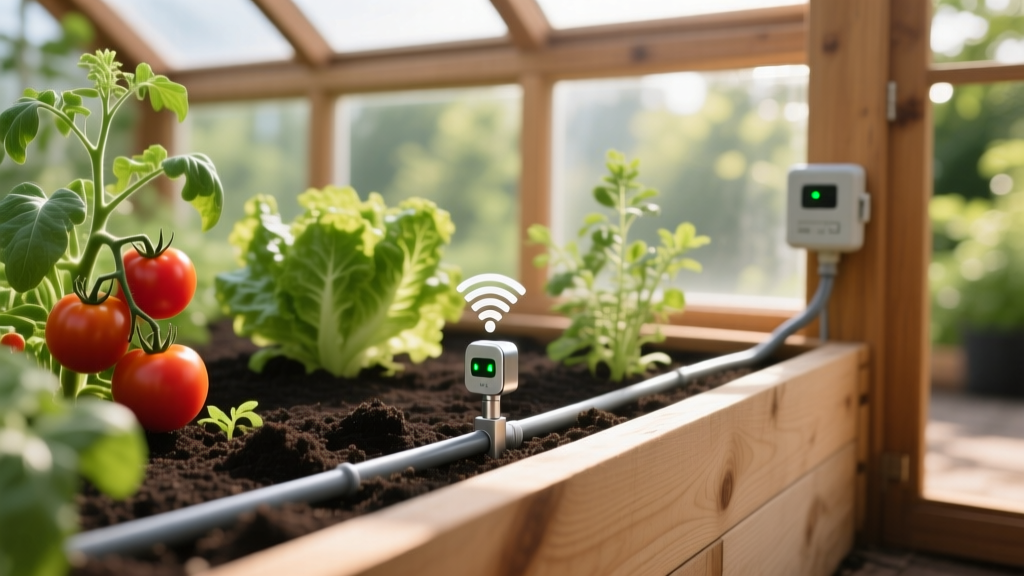
Automate Your Raised Bed Vegetable Garden With Smart Sensors
Anna KowalskiPublished
The Rise of the Smart Garden
Gardening is a deeply rewarding endeavor, but it is also notoriously time-consuming. Between weeding, pruning, harvesting, and monitoring for pests, the modern gardener has a lot on their plate. Perhaps the most demanding chore of all is watering. As smart home technology continues to permeate every corner of our domestic lives, the backyard garden is no exception. By integrating Wi-Fi-enabled irrigation controllers, wireless soil moisture sensors, and automated drip systems, you can transform your traditional raised bed vegetable garden into a highly efficient, self-regulating ecosystem.
Automating your garden is not just about reducing physical labor; it is about precision. Plants thrive on consistency, and human error—whether overwatering during a rainy week or forgetting to water during a heatwave—is one of the leading causes of poor crop yields and plant disease. By leveraging smart home automation, you can ensure your vegetables receive the exact amount of hydration they need, exactly when they need it.
Why Raised Beds Require Precision Automation
Raised beds offer incredible benefits for vegetable gardening, including improved drainage, better soil aeration, and warmer soil temperatures in the spring. However, these same advantages create a unique challenge: raised beds dry out significantly faster than in-ground gardens. The elevated soil profile and loose, well-draining soil mix mean that water moves through the root zone quickly.
During the peak of summer, a raised bed planted with heavy feeders like tomatoes and squash may require daily watering. Relying on a manual hose or a standard oscillating sprinkler is not only inefficient but can lead to fungal diseases by wetting the plant foliage. An automated subsurface or drip irrigation system paired with smart sensors solves this problem entirely, delivering water directly to the root zone while keeping the foliage dry.
Core Components of a Smart Raised Bed System
Wi-Fi Smart Irrigation Controllers
The brain of your automated garden is the smart irrigation controller. Unlike traditional timer-based sprinkler clocks that run on a rigid schedule regardless of the weather, smart controllers connect to your home Wi-Fi network and pull real-time local weather data. They utilize evapotranspiration (ET) data to calculate exactly how much water your plants have lost to the sun and wind, adjusting run times automatically. If a rainstorm is in the forecast, the controller will automatically skip the scheduled watering cycle, saving you water and preventing root rot.
Wireless Soil Moisture Sensors
While weather data is useful, it does not tell you what is actually happening beneath the soil surface. This is where wireless soil moisture sensors come in. Devices like the Ecowitt WH51 or the Xiaomi Mi Flora sensor are pushed directly into the soil of your raised beds. They measure volumetric water content (VWC) and ambient soil temperature, transmitting this data back to a central hub or your smartphone. By integrating these sensors with your smart controller, you can create closed-loop automation: the system will only trigger the drip valves when the soil moisture drops below a specific threshold, regardless of what the weather forecast says.
Drip Irrigation Hardware
For raised beds, drip tubing is the gold standard. You will need a pressure regulator (to drop standard household water pressure of 60 PSI down to a safe 15-25 PSI for drip lines), a mesh filter to prevent clogs, and 1/2-inch poly tubing for the main perimeter. From the mainline, you can run 1/4-inch micro-tubing with inline emitters or use adjustable button drippers. For dense plantings like carrots or lettuce, drip tape with emitters spaced every 8 inches is ideal. For widely spaced plants like tomatoes, adjustable 1 GPH (gallon per hour) button drippers allow you to customize the water output per plant.
Comparison Chart: Top Smart Irrigation Controllers
| Controller Model | Approx. Cost | Zones | Smart Features | Sensor Compatibility |
|---|---|---|---|---|
| Rachio 3 | $229 | 8 or 16 | Weather Intelligence Plus, hyper-local forecasting | Proprietary Rachio Soil Moisture Sensor |
| Orbit B-hyve XR | $149 | 6 to 16 | WeatherSense, EPA WaterSense certified | Universal rain/freeze sensors, analog soil sensors |
| Netro Sprite | $129 | 4 to 8 | AI-driven plant library, auto-scheduling | Netro Whisperer soil sensor (sold separately) |
| Wyze Sprinkler | $99 | 8 | Weather-based skip, budget-friendly smart home integration | Wyze Sprinkler Controller rain sensor |
Step-by-Step: Installing Your Automated Drip System
Setting up an automated raised bed system is a straightforward weekend project that typically costs between $100 and $150 for a standard 4x8-foot bed.
- Step 1: Lay the Mainline (15 Minutes). Run your 1/2-inch poly tubing along the back edge of your raised bed. Secure it to the wood frame using garden staples or tubing hangers. Attach the pressure regulator and filter to your outdoor spigot, then connect the mainline.
- Step 2: Route the Micro-Tubing (30 Minutes). Use a hole punch tool to pierce the 1/2-inch mainline. Insert barbed connectors and run 1/4-inch tubing to the base of each plant. For a 4x8 bed with 16 tomato plants, you will use roughly 40 feet of micro-tubing.
- Step 3: Install Emitters and Flush (10 Minutes). Attach 1 GPH pressure-compensating drippers to the end of each micro-tube. Before capping the end of the mainline, turn the water on for 30 seconds to flush out any plastic shavings or dirt that entered the lines during assembly.
- Step 4: Deploy Soil Sensors (5 Minutes). Insert your wireless soil moisture sensors into the root zone. For shallow-rooted crops like lettuce, place the sensor probes 3 to 4 inches deep. For deep-rooted crops like tomatoes and peppers, push the probes 6 to 8 inches deep to get an accurate reading of the primary root mass.
- Step 5: Configure the App (20 Minutes). Connect your smart controller to your Wi-Fi network. In the app, define the zone as 'Raised Bed / Drip', set the soil type to 'Loam' (standard for raised bed mixes), and input your specific crop types. Enable all weather-skip features, including rain, freeze, and wind skip.
Advanced Integrations: IFTTT and Home Assistant
For the true smart home enthusiast, the automation does not have to stop at watering. Platforms like IFTTT (If This Then That) or local hubs like Home Assistant allow you to cross-pollinate your garden data with other smart devices. For example, you can create an automation where if your soil moisture sensor detects critically low moisture levels and the smart controller fails to run (perhaps due to a Wi-Fi outage), your smart home hub will send a push notification to your phone or trigger a smart siren in your garage.
Additionally, you can integrate smart outdoor lighting. You can set your garden grow lights or pathway lights to turn on automatically when the soil temperature sensor registers a drop below 40°F, providing a minor heat buffer for frost-tender seedlings in early spring.
The ROI: Water Conservation and Plant Health
The financial and environmental return on investment for smart garden automation is substantial. According to the EPA WaterSense program, smart irrigation controllers can save the average home up to 8,800 gallons of water annually by preventing overwatering and utilizing real-time weather data. When you pair a smart controller with drip irrigation, the savings compound. Penn State Extension notes that drip irrigation systems operate at roughly 90% efficiency, delivering water directly to the root zone with minimal evaporation, compared to traditional overhead sprinklers which operate at only 50% to 70% efficiency due to wind drift and evaporation.
Beyond water savings, automated drip systems drastically reduce the incidence of soil-borne and fungal diseases. By keeping water off the leaves of susceptible crops like tomatoes and squash, you prevent the spread of early blight and powdery mildew. The result is a healthier, more vigorous garden that produces higher yields with a fraction of the manual labor.
Conclusion
Transitioning your raised bed vegetable garden to a smart, automated system is one of the most impactful upgrades you can make as a modern gardener. By combining the precision of wireless soil moisture sensors with the efficiency of drip irrigation and the intelligence of Wi-Fi weather tracking, you free yourself from the daily chore of watering. Whether you are growing a simple salad garden or a complex companion-planted polyculture, smart home automation ensures your plants receive optimal care, yielding a more abundant harvest while conserving our most precious natural resource.
