Gardening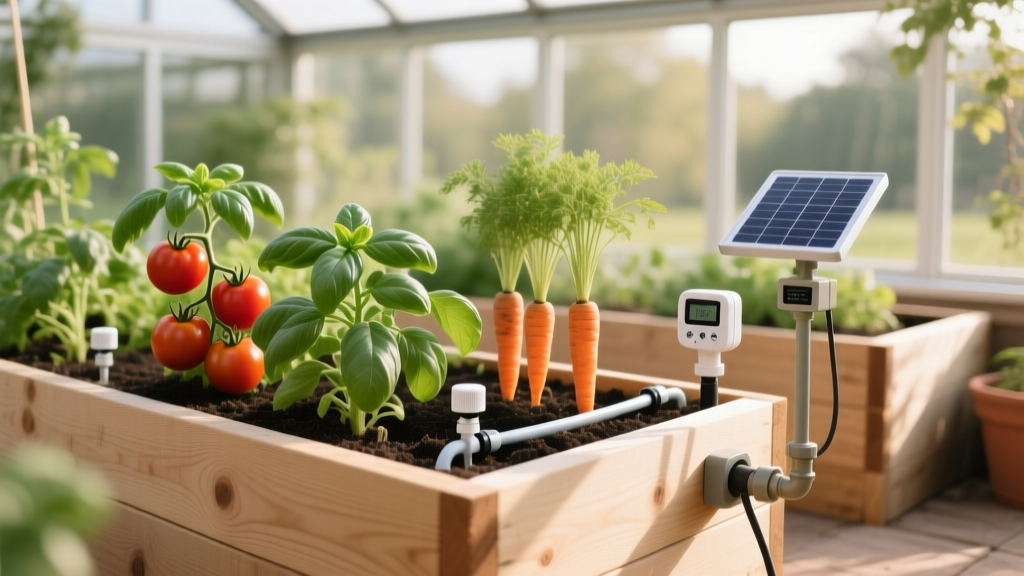
Automate Your Raised Beds With Smart Irrigation Tech
Mike RodriguezPublished
The Rise of the Automated Vegetable Garden
Gardening has traditionally been a tactile, hands-on endeavor, but the modern horticulturist is increasingly turning to smart home automation to optimize plant health and conserve resources. When it comes to raised bed vegetable gardening, maintaining consistent soil moisture is the single most critical factor for success. Fluctuations in water levels can lead to blossom end rot in tomatoes, cracked root vegetables, and increased susceptibility to fungal diseases. By integrating smart irrigation technology, gardeners can delegate the daily chore of watering to intelligent systems that respond in real-time to environmental data. According to the Environmental Protection Agency (EPA), outdoor water use accounts for nearly 30 percent of total household water consumption, making automated precision watering not just a convenience, but an ecological necessity.
Core Components of a Smart Raised Bed System
Building a smart irrigation ecosystem for your raised beds requires three primary components: a Wi-Fi-enabled smart water timer, wireless soil moisture sensors, and a precision drip irrigation network. Unlike traditional spray sprinklers that lose massive amounts of water to wind drift and evaporation, drip systems deliver water directly to the root zone. Colorado State University Extension notes that drip irrigation can achieve up to 90 percent water use efficiency compared to the 50 to 70 percent efficiency of traditional sprinkler systems.
1. Smart Irrigation Controllers
The brain of your operation is the smart controller. Devices like the Rachio 3 or the Orbit B-hyve XR connect to your home’s 2.4GHz Wi-Fi network and utilize local weather data to adjust watering schedules automatically. If a localized frost or heavy rainstorm is forecasted, the controller will automatically skip the scheduled watering cycle, preventing waterlogged soil that can suffocate plant roots and promote anaerobic bacterial growth.
2. Wireless Soil Moisture Sensors
While weather-based controllers are excellent, they do not know the exact microclimate of your specific raised beds. This is where wireless soil moisture sensors, such as the Ecowitt WH51 or Xiaomi Mi Flora, become invaluable. By burying the probe exactly six inches deep—the optimal root zone depth for most leafy greens and peppers—the sensor transmits real-time volumetric water content (VWC) data back to your hub. You can set automation routines to trigger the drip valves only when the soil moisture drops below 35 percent.
System Comparison: Top Smart Controllers for Gardeners
To help you select the right hub for your garden, here is a comparison of the top smart irrigation controllers currently on the market, evaluated on zone capacity, sensor integration, and smart home compatibility.
| Feature | Rachio 3 (8-Zone) | Orbit B-hyve XR (16-Zone) | Gardena Smart Water Control |
|---|---|---|---|
| Average Cost | $229.99 | $179.99 | $189.99 |
| Wi-Fi Requirement | 2.4GHz / 5GHz | 2.4GHz | Requires Smart Gateway |
| Soil Sensor Support | Native & Third-Party | Native Orbit Sensors | Native Gardena Sensors |
| Smart Home Integration | Alexa, Google, HomeKit | Alexa, Google | Alexa, Google, HomeKit |
| Best For | Tech-savvy urban gardeners | Large multi-bed properties | Existing Gardena ecosystems |
Step-by-Step Installation for a 4x8 Raised Bed
Let us break down the exact installation process for a standard 4-foot by 8-foot raised bed to ensure uniform coverage and reliable connectivity.
- Layout the Mainline: Run a 1/2-inch polyethylene mainline tubing along the outside of the wooden bed frame. Secure it with landscape staples every 18 inches to prevent shifting during soil settlement.
- Install the Manifold: Attach a smart valve manifold near your outdoor spigot. Ensure you install a 150-mesh filter and a 25 PSI pressure regulator to prevent the drip emitters from blowing out under standard household water pressure, which often exceeds 60 PSI.
- Run the Drip Lines: For a 4x8 bed growing indeterminate tomatoes and peppers, run four parallel lines of 1/4-inch drip tubing with inline emitters spaced every 12 inches. This provides a uniform grid of moisture across the entire soil profile.
- Place the Sensors: Insert your wireless soil probe in the center of the bed, away from the immediate drip emitter to get an accurate reading of the soil's lateral moisture wicking capabilities.
- Configure the App: Set your baseline schedule to water at 4:30 AM. This timing minimizes evaporation and allows foliage to dry before the sun rises, mitigating powdery mildew risks.
Companion Planting and Micro-Zoning
One challenge of raised bed gardening is that companion planting often groups plants with vastly different water requirements. For instance, pairing drought-tolerant rosemary with moisture-loving cucumbers in the same bed can lead to root rot for the herbs or stunted growth for the vines. Smart automation solves this through micro-zoning. By utilizing a multi-zone smart controller and installing individual 1/4-inch inline drip valves, you can divide a single 4x8 raised bed into distinct hydro-zones. The left side of the bed can receive a heavy, deep watering schedule tailored for squash and melons, while the right side receives a lighter, more frequent misting schedule for shallow-rooted herbs like cilantro and basil. This level of granular control is impossible with a standard soaker hose and ensures that every companion plant thrives in its ideal moisture environment.
Financial ROI and Water Conservation
The upfront cost of a smart irrigation kit—typically ranging from $150 for a basic single-valve Bluetooth timer to $350 for a multi-zone Wi-Fi system with sensors—is quickly offset by water savings. A study published by the University of Florida IFAS Extension demonstrates that smart irrigation controllers can reduce outdoor water use by 15 to 30 percent compared to traditional clock-based timers. For a gardener paying municipal water rates, the system often pays for itself within two growing seasons. Furthermore, the reduction in plant loss due to drought stress or overwatering saves the cost of replacing expensive heirloom starter plants and organic soil amendments.
Advanced Automation Routines
The true power of smart gardening emerges when you integrate your irrigation system with broader smart home platforms like Apple HomeKit, Amazon Alexa, or Home Assistant. You can create complex conditional logic routines. For example, you can program a routine that states: "If the local weather API reports a heatwave exceeding 95 degrees Fahrenheit, AND the soil moisture sensor reads below 40 percent, trigger a 10-minute deep soak at 6:00 PM." You can even integrate smart outdoor cameras to monitor your raised beds for pest activity, creating a fully automated, data-driven horticultural command center right from your smartphone.
Seasonal Adjustments and Winterization
As the growing season transitions from the heat of summer to the crisp days of autumn, your smart system requires seasonal recalibration. Most premium smart controllers feature a "seasonal shift" algorithm that automatically scales back watering durations by 10 to 20 percent each month as daylight hours shorten and evapotranspiration rates drop. However, the physical hardware requires manual winterization if you live in a climate with hard freezes. Before the first frost, you must blow out the 1/2-inch mainlines and 1/4-inch drip tubes using an air compressor set to a maximum of 30 PSI to prevent the water inside the emitters from freezing and cracking the plastic housings. Disconnect the smart valves, remove the AA lithium batteries from the sensor probes, and store the electronic components in a climate-controlled garage until the spring soil temperatures consistently reach 50 degrees Fahrenheit.
