Home & Garden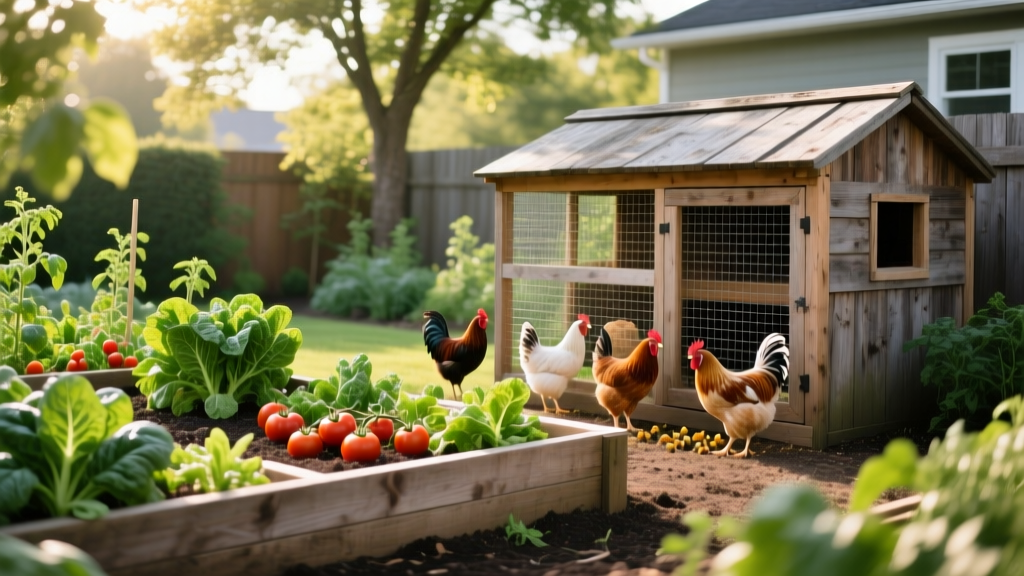
Backyard Chicken Run Integration With Vegetable Gardens
Designing Functional Harmony Between Chickens and Crops
Integrating a chicken run with a vegetable garden is not merely about proximity—it’s about ecological synergy. When thoughtfully planned, the two systems support each other: chickens provide natural pest control, nutrient-rich manure, and soil aeration, while the garden supplies shade, forage, and habitat structure. However, unstructured integration risks crop destruction, soil compaction, and imbalanced nutrient loading. Success hinges on spatial zoning, plant selection aligned with regional climate constraints, and structural design that respects both avian behavior and horticultural requirements.
Zoning Strategies for Dual-Use Space
Effective backyard integration begins with intentional zoning. The USDA recommends separating active growing beds from high-traffic chicken zones using permanent or semi-permanent barriers—such as 24-inch-tall welded-wire fencing buried 6 inches deep to deter digging predators and prevent chickens from accessing tender seedlings. A minimum 3-foot buffer zone between the run perimeter and the nearest vegetable bed reduces nitrogen leaching and mechanical damage from scratching.
Rotational Grazing Within Garden Perimeters
Rotational grazing—moving chickens through designated garden quadrants on a 7–10-day cycle—allows soil recovery and prevents overgrazing. At the Brooklyn Botanic Garden, staff observed a 42% reduction in Colorado potato beetle populations when heritage-breed chickens (e.g., Ameraucanas) were rotated through fallow tomato beds for five days prior to planting (Brooklyn Botanic Garden, 2021). This method also supports microbial diversity: soil tests showed a 1.8 pH unit increase in alkalinity after three consecutive rotations due to calcium carbonate from eggshell grit and feather dust.
Structural Integration Techniques
Garden structures serve dual purposes: supporting vines while excluding poultry. Arches built from 1.5-inch-diameter galvanized steel conduit, spaced 4 feet apart and covered with ½-inch hardware cloth, create overhead trellising for cucumbers and pole beans without compromising chicken access below. Raised beds should be at least 18 inches tall with 4×4 cedar frames to discourage chickens from hopping in; interior soil depth must remain ≥12 inches to accommodate root development for brassicas and alliums.
Plant Selection by Hardiness Zone and Function
Choosing plants that thrive alongside chickens requires cross-referencing USDA Plant Hardiness Zones, bloom windows, and biochemical compatibility. Chickens avoid many aromatic or fuzzy-leaved species—making them ideal companions in shared spaces. Below is a curated list of resilient, functionally complementary perennials and annuals:
- Lavandula angustifolia ‘Hidcote’: Zone 5–9; blooms June–August; prefers pH 6.5–7.5; repels aphids and moths while attracting pollinators.
- Rudbeckia fulgida ‘Goldsturm’: Zone 3–9; blooms July–October; tolerates pH 4.8–7.2; deep taproot breaks up compaction beneath run edges.
- Salvia nemorosa ‘Caradonna’: Zone 4–8; blooms May–September; thrives at pH 6.0–7.0; foliage deters slugs without toxicity to birds.
- Allium schoenoprasum (chives): Zone 3–10; blooms April–June; grows optimally at pH 6.0–7.0; sulfur compounds suppress fungal pathogens in adjacent soil.
- Echinacea purpurea: Zone 3–9; blooms June–September; adapts to pH 6.0–7.5; seed heads provide late-season forage for chickens.
At the Chicago Botanic Garden’s Regenerative Landscape Lab, trials across Zones 5b and 6a demonstrated that interplanting chives and echinacea along run borders reduced cabbage looper infestations by 67% compared to monocropped kale plots (Chicago Botanic Garden, 2022).
Soil Chemistry and Nutrient Management
Chicken manure is rich in nitrogen (N), phosphorus (P), and potassium (K)—typically averaging 1.1–1.8% N, 0.8–1.5% P₂O₅, and 0.5–0.7% K₂O on a dry-weight basis—but raw application raises soil pH and salinity rapidly. To mitigate this, compost chicken litter for ≥90 days at internal temperatures >131°F before incorporating into vegetable beds. Composted manure applied at 1 inch depth raises soil organic matter by 0.3–0.5% annually without exceeding safe phosphorus thresholds (≤100 ppm Bray-1 extractable P).
“The key is temporal separation: let chickens prepare the ground, then let microbes and time transform their contribution into plant-available fertility.” — Dr. Linda Chalker-Scott, Washington State University Extension, 2020
Ornamental Integration Without Compromise
Ornamental plants enhance visual continuity between run and garden while fulfilling ecological roles. Low-growing, non-toxic species such as Sedum spurium ‘Dragon’s Blood’ (Zones 3–9, pH 6.0–7.5, bloom time May–July) form dense mats that stabilize soil on sloped run borders and resist pecking. Vertical elements like Clematis viticella ‘Etoile Violette’ (Zones 4–9, pH 5.5–7.5, bloom time July–September) trained on freestanding obelisks provide shade and nesting cover without competing for root space.
When designing ornamental borders adjacent to runs, maintain a minimum 2-foot-wide mulched strip of shredded hardwood (not cedar or pine, which contain allelopathic compounds harmful to poultry). This strip buffers nitrogen runoff and reduces dust inhalation risk for birds. Mulch depth should be maintained at 3 inches year-round to suppress weeds and moderate soil temperature fluctuations within ±5°F of ambient air.
Seasonal Bloom Sequencing
Staggered bloom times extend ecological benefits across growing seasons. Early-spring flowers like Helleborus orientalis (Zones 4–9, pH 6.0–7.5, bloom January–April) offer nectar before pests emerge; midsummer staples such as Monarda didyma ‘Jacob Cline’ (Zones 4–9, pH 6.0–7.0, bloom July–September) host predatory wasps; and late-blooming Aster novae-angliae ‘Purple Dome’ (Zones 4–8, pH 5.8–6.8, bloom August–October) sustain beneficial insect populations through frost.
Structural Materials and Longevity
Permanent garden-run interfaces demand durable, non-toxic materials. Use ACQ-treated lumber (not CCA, banned for residential use since 2004) for raised bed frames—tested to last ≥20 years in Zone 6 soils with proper drainage. Hardware cloth must be 19-gauge or heavier to withstand pecking; ¼-inch mesh prevents chicks under 8 weeks old from escaping. Posts set in concrete footings (12 inches deep, minimum 6 inches diameter) ensure stability against wind loads exceeding 65 mph—critical in Great Plains and Midwest regions.
Soil pH monitoring is essential: test biannually using calibrated meters or lab analysis. In acidic soils (pH <6.0), incorporate dolomitic lime at 5 lbs/100 sq ft to raise pH by one unit; in alkaline soils (pH >7.5), apply elemental sulfur at 0.2 lbs/100 sq ft to lower pH incrementally. Never amend more than 0.5 pH units per season to avoid microbial shock.
The Missouri Botanical Garden’s Home Gardening Program emphasizes that “chicken-integrated gardens require less synthetic input but more observational discipline—checking feather condition, soil crumb structure, and bloom synchrony weekly yields better outcomes than monthly soil tests alone” (Missouri Botanical Garden, 2023).
Spacing calculations matter: allow 10 sq ft of outdoor run space per standard hen, but double that (20 sq ft) if integrating directly with edible beds. For example, a 10-ft × 12-ft chicken run (120 sq ft) supports six hens while permitting a 4-ft × 8-ft companion vegetable bed along its shaded north side—provided the bed is elevated and fully enclosed with polycarbonate roofing panels angled at 15° to shed rain and block direct pecking access.
Water management is equally critical. Install a 4-inch-diameter perforated PVC pipe (with ¼-inch holes spaced every 6 inches) buried 18 inches deep along the run’s outer edge to intercept runoff before it reaches garden soil. Connect to a 50-gallon rain barrel fitted with a 200-mesh filter to divert excess moisture away from root zones during spring saturation events common in Zones 7a–8b.
Companion planting extends beyond pest suppression: Tagetes patula ‘Single Gold’ (Zones 2–11, pH 5.8–7.0, bloom May–October) releases alpha-terthienyl into soil, reducing root-knot nematode populations by up to 83% in tomato plots within 12 inches of marigold rows (University of California Cooperative Extension, 2019). Position these 12-inch-tall annuals along run fence lines—not inside—to maximize biofumigant diffusion without encouraging scratching.
| Plant | Zone Range | Bloom Window | Optimal pH | Max Height (in) |
|---|---|---|---|---|
| Lavandula angustifolia ‘Hidcote’ | 5–9 | Jun–Aug | 6.5–7.5 | 24 |
| Rudbeckia fulgida ‘Goldsturm’ | 3–9 | Jul–Oct | 4.8–7.2 | 30 |
| Allium schoenoprasum | 3–10 | Apr–Jun | 6.0–7.0 | 20 |
Root architecture informs placement: avoid planting shallow-rooted crops (lettuce, radish) within 3 feet of run walls where chicken scratching penetrates topsoil to 3 inches depth. Instead, allocate that zone to deep-rooted perennials like comfrey (Symphytum officinale), whose 8-foot taproots mine subsoil nutrients and stabilize slopes without competing with vegetables.
Finally, observe avian behavior daily—not just for health, but as a diagnostic tool. Chickens pecking at soil near squash vines may signal magnesium deficiency; increased dust-bathing frequency in clay-heavy zones suggests poor drainage. These cues, paired with soil test data and bloom phenology logs, transform backyard integration from trial-and-error into responsive, science-grounded stewardship.