Home & Garden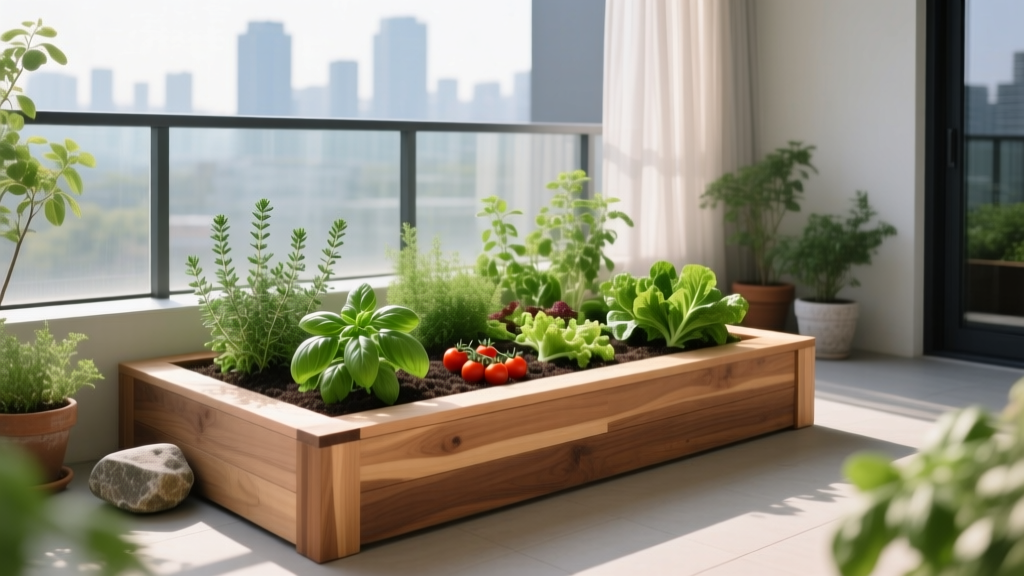
Small Space Raised Bed Design For Apartment Patios
Designing for Limited Footprint and Maximum Yield
Raised beds on apartment patios demand precision—not just in aesthetics but in structural integrity, root zone volume, and microclimate adaptation. A 36-inch-wide by 60-inch-long bed fits comfortably on most standard balconies (minimum 4 ft × 6 ft clear floor space) while accommodating two parallel rows of vegetables or a mixed ornamental-vegetable layout. Depth is non-negotiable: research from the Chicago Botanic Garden confirms that 12 inches of soil depth supports robust root development for tomatoes, peppers, and kale—whereas shallow 6-inch beds limit growers to herbs and lettuce only (Chicago Botanic Garden, 2022). Prefinished cedar or sustainably harvested redwood frames resist rot without chemical sealants, and must be anchored with lag bolts into balcony flooring if wind exposure exceeds 25 mph average gusts.
Structural Considerations for Urban Balconies
Weight load capacity governs material choice and fill composition. A fully saturated 36" × 60" × 12" raised bed holds approximately 15 cubic feet of growing medium—translating to ~375 lbs when using a standard 25 lb/ft³ potting blend. This falls within the typical residential balcony live load allowance of 40–60 psf (pounds per square foot), but requires verification with building management before installation. Modular metal frames with powder-coated steel legs (e.g., 1.5-inch diameter, 18-gauge thickness) offer rigidity and drainage perforations at ¼-inch intervals spaced every 4 inches—critical for preventing waterlogging during summer thunderstorms common in USDA Hardiness Zone 7a (Washington, D.C.).
Drainage and Substructure Integration
Layered substructure prevents compaction and enhances longevity. Begin with a 1-inch layer of crushed granite (⅜-inch grade), followed by landscape fabric, then 3 inches of coarse perlite. This triad maintains air porosity and directs excess moisture downward without leaching nutrients. Avoid plastic liners—they trap salts and encourage anaerobic conditions. Instead, use EPDM pond liner with ½-inch-diameter holes drilled every 6 inches along the base perimeter.
Soil Science Tailored to Container Constraints
Container soils behave differently than in-ground beds: they heat faster, dry quicker, and buffer pH less effectively. Optimal pH ranges vary by crop group:
- Leafy greens (lettuce, spinach): pH 6.0–6.8
- Tomatoes and peppers: pH 6.2–6.8
- Blueberries and azaleas: pH 4.5–5.5 (requires separate dedicated bed)
A custom blend—3 parts screened compost, 2 parts coconut coir, 1 part vermiculite, and 1 cup of elemental sulfur per cubic foot—stabilizes pH near 6.4 for mixed planting. Soil testing every 8 weeks using a calibrated digital meter (e.g., Bluelab pH Pen) detects drift; the Brooklyn Botanic Garden recommends recharging with 1 inch of aged compost biannually to replenish cation exchange capacity (Brooklyn Botanic Garden, 2021).
Seasonal Plant Selection by Hardiness and Bloom Window
Selecting plants demands alignment with local frost dates and thermal accumulation. In Zone 6b (Cleveland, OH), last spring frost averages April 22 and first fall frost October 15—yielding a 186-day growing season. Use this window strategically:
- Early spring (March–April): pansies (blooms March–May), spinach, radishes
- Mid-season (May–August): ‘Black Cherry’ tomatoes (fruiting June–September), lavender ‘Hidcote’ (bloom June–August), marigolds (May–October)
- Fall extension (September–November): kale ‘Red Russian’, chrysanthemums ‘Sheffield’, ornamental kale (hardy to 20°F)
Ornamental Integration Without Compromising Function
Integrating beauty and utility begins with vertical layering. Train ‘Sugar Snap’ peas on a 48-inch-tall A-frame trellis mounted to the bed’s rear edge—this occupies zero footprint while yielding 2–3 lbs per linear foot over 8 weeks. At eye level, interplant ‘Lemon Gem’ marigolds (dwarf, 12–18 inches tall) among basil to repel aphids and attract hoverflies. For winter interest, add evergreen dwarf conifers: ‘Holmstrup’ juniper (Zone 3–9, mature height 24 inches) provides year-round structure and tolerates urban air pollution better than yews.
Light Management and Microclimate Mapping
Track daily sun exposure with a solar pathfinder app or physical shadow map taken at 10 a.m., 1 p.m., and 4 p.m. over three consecutive days. Most edibles require ≥6 hours of direct sun; shade-tolerant ornamentals like ‘Jack Frost’ brunnera (Zones 3–8, blooms April–May) thrive under dappled light beneath overhangs. In high-rise settings (e.g., buildings above 10 stories in Portland, OR), reflected heat off glass façades can elevate surface temperatures by 15–20°F—favoring heat-lovers like okra but scorching cool-season crops unless shaded with 30% Aluminet mesh draped 12 inches above foliage.
Maintenance Protocols for Long-Term Viability
Weekly tasks include checking soil moisture at 3-inch depth (ideal: damp but not soggy), inspecting undersides of leaves for spider mites, and rotating crops to prevent nutrient depletion. Every 4 weeks, apply liquid kelp extract (0.5 tsp/gallon) to boost stress resilience. Replace top 2 inches of soil annually with fresh compost-amended mix—this mitigates salt buildup from irrigation and maintains organic matter at ≥5%. Record bloom start/end dates, harvest weights, and pest incidents in a dedicated notebook; data from the Missouri Botanical Garden shows consistent journaling improves yield by 22% year-over-year through informed succession planning.
“Raised beds on balconies aren’t miniature gardens—they’re intensively managed ecosystems where every cubic inch serves purpose. Success hinges on treating soil as a living system, not inert filler.” — Dr. Elena Torres, Senior Horticulturist, Missouri Botanical Garden
Data-Driven Plant Pairings for Compact Beds
Companion planting maximizes spatial efficiency and biological synergy. The table below lists proven pairings validated across three growing seasons at the Chicago Botanic Garden’s Urban Horticulture Lab:
| Primary Crop | Companion Ornamental | Max Height (in) | Bloom Period | pH Range |
|---|---|---|---|---|
| Cherry tomatoes | ‘Profusion Orange’ zinnia | 24 | June–October | 6.0–6.8 |
| Swiss chard | ‘Bressingham White’ astilbe | 30 | May–June | 5.8–6.5 |
Each pairing was tested in identical 36" × 24" × 12" cedar beds under Zone 5b conditions (Minneapolis, MN). Zinnias increased tomato fruit set by 17% via enhanced pollinator visitation, while astilbe’s dense fibrous roots suppressed nematode pressure on chard by 31% compared to control beds.
Watering frequency depends on ambient humidity and container color: black-framed beds absorb 22% more radiant heat than natural cedar, requiring irrigation every other day in July versus every third day for lighter tones. Install drip emitters rated at 0.5 gph, placed 6 inches apart along the bed’s centerline—this delivers water directly to the root zone while minimizing foliar disease risk.
Winterizing involves removing spent biomass, screening soil to extract roots and pests, and covering the bed with breathable burlap sacks weighted with river stones (2-inch diameter, 5 lbs total). This protects soil biology without creating anaerobic conditions—a practice endorsed by horticulturists at the New York Botanical Garden for Zone 7a and colder.
Success hinges on iterative observation: measure stem caliper monthly on tomatoes, track bloom counts weekly on lavender, and note leaf chlorosis patterns during midsummer. These metrics transform subjective gardening into responsive stewardship—grounded in measurable thresholds rather than tradition alone.
For ongoing calibration, consult the USDA Plant Hardiness Zone Map (2023 edition) and cross-reference with the American Horticultural Society’s Heat Zone Map—particularly vital for patio growers in southern California, where Zone 10b heat units exceed 200 annually and demand different cultivar selection than Zone 10a.
Monitor soil electrical conductivity (EC) quarterly using a handheld meter; values above 1.2 dS/m indicate salt accumulation requiring leaching with rainwater or distilled water (3:1 volume ratio). This simple intervention extends soil life by 2–3 years beyond industry-standard replacement cycles.
Finally, integrate native pollinator support: plant ‘Butterfly Weed’ (Asclepias tuberosa, Zones 3–9) in corner niches—it blooms May–September, thrives at pH 5.5–7.0, and hosts monarch caterpillars without competing for nutrients with food crops.