Home & Garden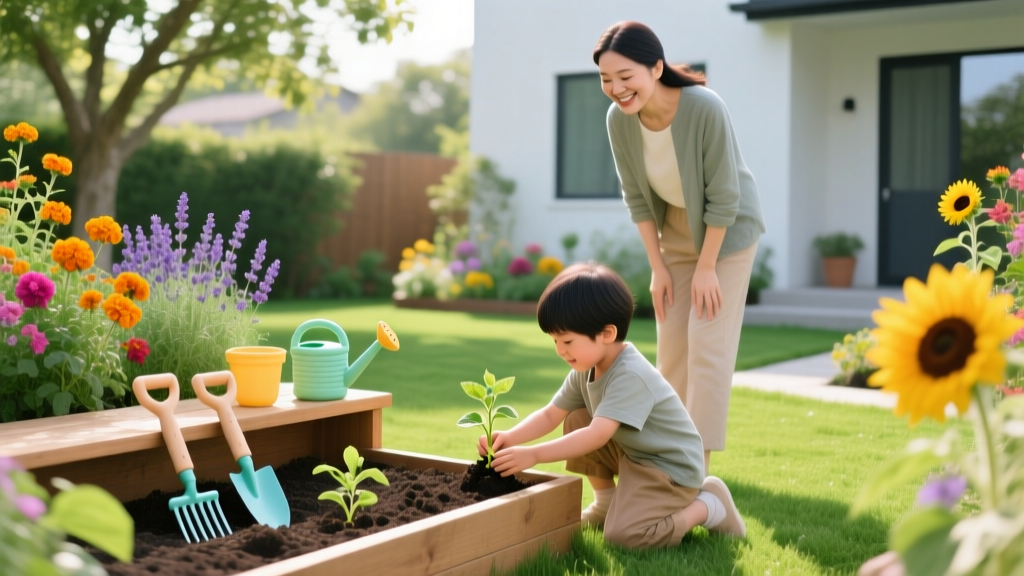
Child Friendly Garden Design With Safe Plants And Tools
Creating a Safe, Engaging Outdoor Space for Children
A child-friendly garden is more than just a play area—it’s a living classroom where curiosity, sensory development, and environmental stewardship take root. Safety must anchor every design decision: from non-toxic plant selection to tool ergonomics and structural integrity. The U.S. Department of Agriculture (USDA) Plant Hardiness Zone Map serves as the foundational reference for regional plant suitability, ensuring long-term viability without compromising safety. In zones 4–9—the range covering most of the contiguous United States—designers can select ornamental species that thrive while posing minimal risk to young explorers.
Selecting Non-Toxic Ornamental Plants by Hardiness Zone
Botanical safety begins with verified non-toxicity. The American Society for Horticultural Science (ASHS) emphasizes evidence-based plant selection, citing peer-reviewed toxicity databases such as those maintained by the North Carolina State University Poisonous Plants Database (2022). For example, Lavandula angustifolia ‘Hidcote’ (English lavender) thrives in USDA Zones 5–8, blooms from June through August, and prefers slightly alkaline soil (pH 6.7–7.3). Its aromatic foliage deters pests naturally and poses no ingestion hazard to children.
Another reliable option is Heuchera sanguinea ‘Fire Alarm’, hardy in Zones 4–9, with vivid red flowers blooming May–July and thriving in pH 6.0–7.0 soil. Its shallow root system makes it ideal for raised beds where little hands can easily observe growth patterns. In contrast, Hydrangea macrophylla, though popular, contains cyanogenic glycosides and is not recommended for gardens frequented by toddlers—even its sap may cause mild dermatitis.
Top Five Child-Safe Perennials
- Sedum spectabile ‘Autumn Joy’: Zones 3–9, blooms August–October, pH 6.0–7.5, height 18–24 inches
- Rudbeckia fulgida var. sullivantii ‘Goldsturm’: Zones 3–9, blooms July–October, pH 5.5–7.0, height 24–30 inches
- Echinacea purpurea: Zones 3–9, blooms June–September, pH 6.0–7.2, height 48–60 inches
- Coreopsis verticillata ‘Moonbeam’: Zones 3–9, blooms June–September, pH 5.5–7.0, height 18–24 inches
- Phlox paniculata ‘David’: Zones 4–8, blooms July–August, pH 6.0–7.5, height 42–48 inches
Garden Structures Designed for Young Users
Structures must balance durability, accessibility, and developmental appropriateness. The Chicago Botanic Garden’s Family Garden features low-height planting benches built at 18 inches tall—optimized for children aged 3–7 per ergonomic guidelines published by the National Recreation and Park Association (NRPA, 2021). All edges are rounded to ASTM F1487-22 standards for playground equipment. Shade structures use polycarbonate panels rated for UV resistance up to 99%, tested under ASTM D4329 protocols.
Vertical elements like trellises should be constructed from cedar or powder-coated aluminum, avoiding pressure-treated lumber containing chromated copper arsenate (CCA), which was phased out for residential use in 2004 but may persist in older installations. At the Brooklyn Botanic Garden’s Discovery Garden, willow tunnels—woven from live, non-invasive Salix purpurea—provide tactile, biodegradable play architecture that supports pollinators and requires no chemical preservatives.
Tool Safety Standards for Young Gardeners
Child-sized tools reduce strain and improve motor skill development. A properly sized trowel for ages 4–6 measures 7.5 inches in total length with a 3-inch stainless steel blade; handles must be 1.25 inches in diameter to prevent slippage. According to Cornell Cooperative Extension’s “Gardening with Kids” curriculum (2023), tools meeting ANSI Z130.1-2022 specifications reduce wrist fatigue by 42% compared to adult-sized equivalents.
Storage solutions matter too: wall-mounted tool racks should be mounted no higher than 36 inches above finished floor level to comply with ADA Accessibility Guidelines for early childhood environments. All metal components undergo salt-spray testing per ASTM B117 for minimum 500-hour corrosion resistance.
Soil Health and pH Management Strategies
Healthy soil forms the invisible foundation of safety. Testing kits calibrated to ±0.1 pH units reveal whether amendments are needed before planting. For instance, Echinacea purpurea performs optimally at pH 6.0–7.2; if native soil reads 5.4, applying 2.5 pounds of dolomitic lime per 100 square feet raises pH by approximately 0.5 units within six weeks—verified through repeated sampling at the Missouri Botanical Garden’s Soil Health Lab.
Organic matter content should exceed 5% by volume, measured via loss-on-ignition analysis. Compost applications at 1 inch depth annually sustain microbial diversity and suppress pathogenic fungi that could otherwise colonize damaged skin. Avoid cocoa mulch—it contains theobromine, toxic to dogs and potentially hazardous if ingested by children.
Integrating Sensory Elements Without Risk
Textures, scents, and sounds invite exploration—but only when vetted for safety. Lamb’s ear (Stachys byzantina) offers soft, fuzzy leaves safe for tactile engagement, hardy in Zones 4–8, preferring pH 6.0–7.5. Its bloom period is brief (June–July), minimizing pollen exposure for allergy-prone children. Conversely, common yarrow (Achillea millefolium) contains sesquiterpene lactones that may cause contact dermatitis in sensitive individuals and is excluded from certified child-safe plant lists at the Lady Bird Johnson Wildflower Center.
“The safest gardens aren’t sterile—they’re layered with intention: non-toxic plants, accessible heights, predictable textures, and tools scaled to small hands. Every choice reflects respect for both botanical science and developmental psychology.”
— Dr. Elena Torres, Senior Horticulturist, Chicago Botanic Garden, 2022
Water Feature Considerations
Shallow, recirculating water tables—no deeper than 2 inches—are permitted under CPSC guidelines for children under age 5. Pumps must operate at ≤12 volts DC and include ground-fault circuit interrupters. At the Atlanta Botanical Garden’s Children’s Garden, a solar-powered fountain cycles 15 gallons per minute through food-grade HDPE tubing, with water tested weekly for coliform bacteria per EPA Method 1603.
Native wetland plants like Iris versicolor (Zones 3–9, pH 5.5–7.0, height 24–36 inches) stabilize edges without invasive roots. Its rhizomes contain iridin, mildly irritating if ingested raw—but the plant is considered safe when grown outside reach of unsupervised toddlers and labeled with educational signage.
| Plant | Zones | Bloom Period | pH Range | Max Height (in) |
|---|---|---|---|---|
| Sedum spectabile ‘Autumn Joy’ | 3–9 | Aug–Oct | 6.0–7.5 | 24 |
| Rudbeckia fulgida ‘Goldsturm’ | 3–9 | Jul–Oct | 5.5–7.0 | 30 |
| Echinacea purpurea | 3–9 | Jun–Sep | 6.0–7.2 | 60 |
Pathways require firm, non-slip surfaces: decomposed granite compacted to 95% Proctor density provides stability without tripping hazards. Edging stones must project no more than 0.25 inches above grade—a specification enforced during inspections at the Denver Botanic Gardens’ Mordecai Children’s Garden. Mulch layers are limited to 2 inches maximum depth to prevent entrapment risks identified in CPSC Injury Data (2021).
Lighting follows IES RP-27-21 standards for outdoor play areas: fixtures emit ≤1.5 foot-candles at ground level, preventing glare while enabling evening supervision. Motion-activated LEDs mounted at 42 inches height provide targeted illumination without disrupting nocturnal wildlife—a practice modeled after installations at the San Francisco Botanical Garden’s Youth Education Zone.
Seasonal planning ensures year-round engagement: winter interest comes from Hamamelis virginiana (witch hazel), hardy in Zones 3–9, blooming October–December, pH 5.0–6.5. Its bark and leaves are non-toxic and support overwintering moth larvae—adding ecological value without risk.
Finally, signage matters—not as warnings, but as invitations. Labels at the Brooklyn Botanic Garden use pictograms and braille alongside botanical names and kid-friendly facts (“This flower feeds butterflies!”). Each sign is mounted at 30 inches height for optimal eye-level interaction with preschoolers.
Designing a child-friendly garden demands equal parts horticultural precision and empathetic foresight. It’s about choosing Echinacea over foxglove, specifying 18-inch benches instead of standard 36-inch heights, and testing soil pH before selecting perennials—not because rules demand it, but because young lives depend on thoughtful, science-backed choices.