
Landscaping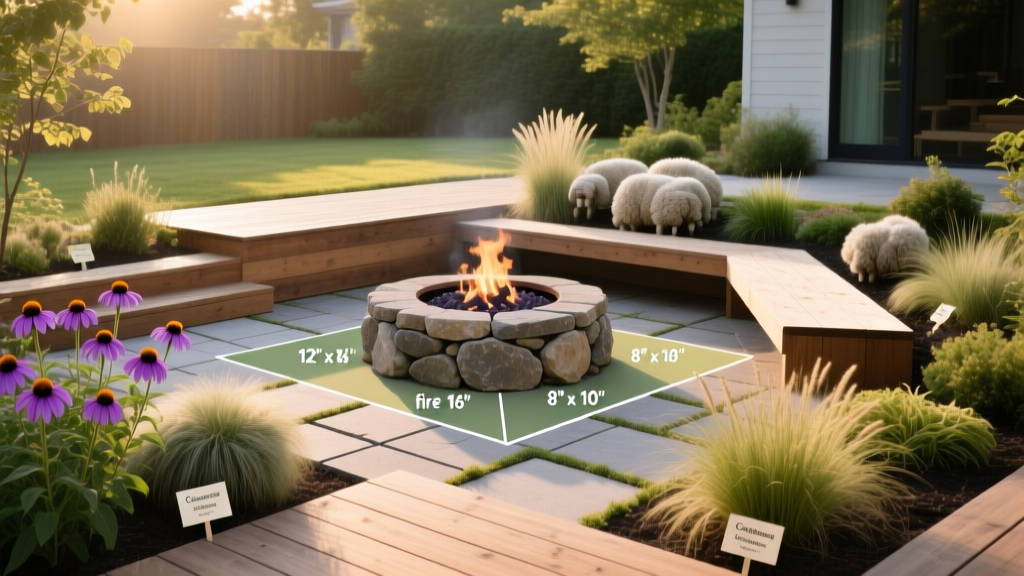
Backyard Fire Pit Area Landscaping Ideas
Designing a Fire Pit Area That Works With Your Landscape
A well-designed backyard fire pit area provides warmth on cool evenings — it also anchors the outdoor living space, creates a natural gathering point, and, when thoughtfully integrated, extends the home's architecture. The difference between a fire pit that feels like an afterthought and one that feels intentional comes down to site selection, material choices, plant placement, and how people actually move through and use outdoor space.
The American Society of Landscape Architects (ASLA, 2023) notes that successful outdoor living areas follow the same spatial hierarchy principles as interior design: a clear arrival sequence, defined activity zones, and transitions that feel natural rather than abrupt. Applying these to a fire pit area means thinking beyond the pit itself and considering the full 20- to 30-foot radius that makes up the functional "room."
Site Selection and Spatial Planning
Before choosing materials or plants, pick the fire pit’s location. Most local fire codes require at least 10 feet of clearance from any structure, fence, or overhead vegetation. The National Fire Protection Association (NFPA, 2022) recommends 25 feet of clearance from structures for wood-burning pits in residential settings — a standard worth following even where local codes allow less.
The ideal fire pit area takes up roughly 150 to 300 square feet of usable space. A 12-foot diameter seating circle — enough for six to eight chairs — needs about 113 square feet just for seating, plus extra buffer space around the perimeter for planting beds, pathways, and circulation. On sloped sites, a retaining wall or grade change of 18 to 24 inches can define the space while helping with drainage.
Prevailing wind direction matters more than most homeowners expect. Position the fire pit so the prevailing wind carries smoke away from the main seating arc — usually by placing the pit slightly upwind of center. That reduces the need to constantly reposition chairs. A simple ribbon test on a calm evening, or checking local wind rose data from the nearest National Weather Service station, can help.
Grading and Drainage Considerations
The hardscape surface around the fire pit should slope away from the pit at a minimum grade of 1 percent (1/8 inch per foot) to keep water from pooling. For permeable paving like decomposed granite or gravel, a compacted base of 4 inches of crushed aggregate under 2 to 3 inches of surface material gives good drainage and stays stable underfoot. On clay-heavy soils, a French drain along the outer edge of the seating area prevents chronic saturation that heaves pavers and kills plants.
Hardscape Materials and the Fire Pit Structure
The fire pit itself sets the material tone for the whole area. A dry-stacked natural stone pit — bluestone, fieldstone, or Pennsylvania flagstone — looks organic and permanent, and works well with informal planting schemes. A poured concrete or cast block pit with clean lines fits contemporary landscapes and pairs naturally with large-format concrete pavers or porcelain tile.
For a mid-range residential project, budget about $15 to $25 per square foot for a decomposed granite seating area, $20 to $35 per square foot for concrete pavers, and $35 to $60 per square foot for natural stone flagging, all installed. The fire pit structure itself runs $500 to $1,500 for a DIY dry-stack stone ring, or $3,000 to $8,000 for a custom masonry build with a gas insert. A complete fire pit area — pit, seating surface, and basic planting — typically costs $8,000 to $20,000 for a 200-square-foot installation when professionally designed and built.
Seating Wall Integration
A low seating wall — 18 inches high and 16 to 20 inches deep — built from the same material as the fire pit ties things together visually and eliminates the need to store and retrieve chairs. Bluestone capstones on a concrete block wall give a durable, comfortable seat that stays cooler than solid stone in direct sun. Shaping the wall into a curve or circle reinforces the sense of enclosure that makes fire pit areas feel intimate instead of exposed.
The Landscape Architecture Foundation's 2021 research on outdoor social spaces found that curved seating arrangements increase face-to-face interaction time by about 30 percent compared to linear ones — a finding that lines up with the traditional campfire circle and supports circular or horseshoe layouts as the practical default for fire pit seating.
Plant Selection for the Fire Pit Perimeter
Plants around a fire pit serve several purposes: they screen the area from neighbors, buffer wind, add seasonal interest, and soften the hardscape. Fire safety is the main limit — no plant material should be within 5 feet of the pit, and plants in the 5- to 15-foot zone should be low-resin, high-moisture species that resist ignition.
The following plant palette works well in USDA Hardiness Zones 5 through 8, covering most of the continental United States, and balances fire safety with year-round visual interest:
- Calamagrostis × acutiflora 'Karl Foerster' (Feather Reed Grass) — Upright habit, 4 to 5 feet tall, adds movement and sound in wind without posing significant fire risk. Plant in masses of 3 to 5 at the outer perimeter, 18 to 24 inches on center.
- Hydrangea paniculata 'Limelight' — Deciduous shrub reaching 6 to 8 feet, with large panicle blooms from midsummer through fall. Good for screening and seasonal color at the 12- to 15-foot radius.
- Pennisetum alopecuroides 'Hameln' (Dwarf Fountain Grass) — Compact mounding grass, 2 to 3 feet, ideal for the mid-ground between hardscape edge and taller screening plants.
- Ilex glabra (Inkberry Holly) — Native evergreen shrub, 5 to 8 feet, gives year-round structure and winter interest. Tolerates wet soils, making it useful near drainage swales.
- Echinacea purpurea (Purple Coneflower) — Native perennial, 2 to 4 feet, attracts pollinators and adds late-summer color. Seed heads last through winter, adding texture.
- Panicum virgatum 'Shenandoah' (Switchgrass) — Native grass with red fall color, 3 to 4 feet tall. Offers ecological value and low maintenance once established.
For the immediate hardscape edge — the 2 to 5 feet between the paving and the planting bed — low-growing ground covers like Thymus serpyllum (Creeping Thyme) or Sedum spurium fill gaps between stepping stones, release fragrance when brushed, and handle the reflected heat from stone surfaces.
Canopy Considerations
Overhead canopy turns a fire pit area from a flat outdoor space into a room. Existing mature trees — especially deciduous species like Quercus rubra (Red Oak) or Acer saccharum (Sugar Maple) — provide summer shade while letting in winter sun after leaves drop. No branch should hang within 15 feet directly above the fire pit. An arborist assessment of any existing trees within 30 feet of the proposed pit location is worth the $150 to $300 consultation fee before construction begins.
Where no existing canopy exists, a pergola or shade sail gives immediate overhead definition while trees grow in. A 12-by-12-foot cedar pergola costs about $4,000 to $8,000 installed and can be planted with Wisteria frutescens 'Amethyst Falls' (American Wisteria) or Campsis radicans (Trumpet Vine) for a naturalistic canopy that develops over three to five years.
Lighting the Fire Pit Area
Lighting for a fire pit area has to work with the fire itself as the main light source. Supplemental lighting should be low-level and warm-toned — 2700K to 3000K — to complement firelight, not compete with it. Pathway lights at 12 to 18 inches above grade guide movement without washing out the atmosphere.
Uplighting specimen plants at the perimeter with 3- to 5-watt LED fixtures adds depth and drama. Avoid downlighting directly over the seating area, which flattens the space and feels institutional. The idea is to light the edges and let the center stay defined by the fire.
"The most successful outdoor rooms are those where artificial light supports the natural hierarchy of the space rather than overriding it. Around a fire, that means keeping fixture lumens low and directing light outward and downward at the perimeter, never inward toward the flame." — Landscape Architecture Magazine, ASLA Annual Review, 2022
Low-voltage landscape lighting systems — 12-volt LED — are DIY-accessible and cost $500 to $1,500 for a full perimeter setup around a 200-square-foot area. Line-voltage systems with in-ground fixtures offer more durability and output but need a licensed electrician and usually cost $2,000 to $5,000 installed.
Seasonal Maintenance and Long-Term Management
A fire pit area needs less upkeep than a traditional garden bed but more than plain hardscape. The main seasonal tasks are:
- Spring: Cut ornamental grasses to 4 to 6 inches before new growth emerges (typically late March to early April in Zone 6). Refresh decomposed granite or gravel surfaces with a 1-inch top dressing. Check mortar joints in stone work for winter heave damage.
- Summer: Deadhead perennials like Echinacea through midsummer to extend bloom, then let seed heads form for fall and winter interest. Check drainage swales after heavy rain.
- Fall: Leave ornamental grass seed heads and perennial structure through winter for wildlife habitat and visual interest. Clean ash from the fire pit — more than 1 inch of buildup can restrict airflow and reduce combustion efficiency.
- Winter: Apply 2 to 3 inches of shredded hardwood mulch to planting beds after the ground freezes to moderate soil temperature swings. Don’t pile mulch against plant crowns or the base of the fire pit structure.
The University of Minnesota Extension (2023) recommends a soil test every three to four years for landscape planting beds, especially where wood ash from the fire pit may mix into adjacent soil. Wood ash raises soil pH and adds potassium — helpful in acidic soils but potentially harmful to acid-loving plants like Hydrangea if applied too heavily.
Material Aging and Patina
Natural stone and weathered steel (Corten) look better with age, developing a patina that blends them into the landscape. Concrete pavers and poured concrete, on the other hand, can stain and spall if not sealed every two to three years with a penetrating silane-siloxane sealer. Bluestone flagging in a wet climate benefits from an annual application of a stone-specific impregnating sealer to prevent freeze-thaw spalling in joints.
The fire pit structure itself, if wood-burning, should be checked each year for cracks in the firebox. Thermal cycling — repeated heating and cooling of masonry — causes small fractures over time. Repointing mortar joints with a high-temperature refractory mortar rated to at least 2,000°F is a straightforward fix that can extend the life of the structure by decades.
Bringing the Design Together
The most enduring fire pit landscapes share a common quality: they feel inevitable, as though the space could not have been arranged any other way. That comes from working out the relationship between the pit, the seating, the planting, and the surrounding landscape before laying a single stone. Sketch the space at scale — 1 inch equals 4 feet works well for most residential lots — and walk the site at different times of day to see how light, wind, and views shift.
Projects worth studying include the fire pit terraces at Longwood Gardens in Kennett Square, Pennsylvania, which show how stone, water, and planting can be layered around a central fire feature at residential scale; the outdoor living areas at the Chicago Botanic Garden in Glencoe, Illinois, which demonstrate native plant integration with hardscape; and the residential fire pit gardens in the ASLA Professional Awards archive, which offer peer-reviewed examples of best practice across climate zones.
A fire pit area built with attention to spatial hierarchy, material coherence, appropriate plant selection, and seasonal management will serve the landscape for 20 to 30 years with modest upkeep, growing more integrated and more beautiful as plants mature and materials weather into the site.
| Material | Installed Cost (per sq ft) | Maintenance Frequency | Lifespan (years) |
|---|---|---|---|
| Decomposed Granite | $15–$25 | Annual top dressing | 5–10 (surface) |
| Concrete Pavers | $20–$35 | Seal every 2–3 years | 25–30 |
| Natural Bluestone Flagging | $35–$60 | Annual sealing in wet climates | 40–50+ |
| Poured Concrete | $10–$20 | Seal every 2–3 years | 20–30 |
| Corten Steel Edging | $8–$15 (linear ft) | None after patina develops | 50+ |

