
Landscaping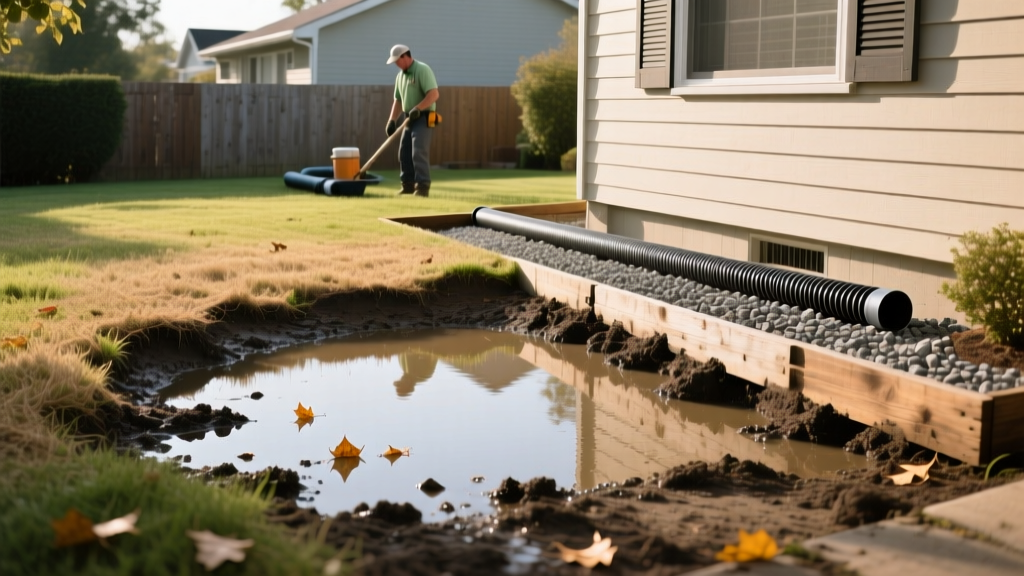
How to Diagnose and Fix Standing Water in Your Yard Fast
Robert HayesPublished
The Hidden Dangers of Standing Water
Waking up to a flooded lawn after a heavy rainstorm is a frustrating experience for any homeowner. While a few puddles might seem harmless, chronic standing water is a symptom of underlying landscape and soil issues that can lead to severe property damage. Prolonged water accumulation compromises your home's foundation, invites wood-destroying organisms, kills turfgrass roots through oxygen deprivation, and creates prime breeding grounds for mosquitoes.
Before you spend thousands of dollars on a landscaper, it is crucial to understand the mechanics of your yard's hydrology. This comprehensive guide will walk you through diagnosing the root cause of your drainage woes and implementing cost-effective, permanent solutions.
Step 1: Diagnose the Source of the Water
Water always follows the path of least resistance. If it is pooling in your yard, it is either being trapped by a physical barrier, sitting in a topographical depression, or failing to percolate through dense soil. To determine the exact culprit, you need to perform a simple soil percolation test and evaluate your yard's grading.
The Soil Percolation Test
Soil composition dictates how quickly water moves through the ground. Clay-heavy soils are notorious for holding water, while sandy soils drain rapidly.
- Dig a test hole approximately 12 inches deep and 6 inches wide in the area where water typically pools.
- Fill the hole completely with water and allow it to drain overnight. This saturates the surrounding soil.
- The next day, refill the hole to the top. Place a ruler in the hole and measure the water level.
- Wait one hour and measure the drop in the water level.
Expert Insight: According to the Purdue University Extension, a percolation rate of less than 1 inch per hour indicates poorly drained soil that will require structural intervention or significant soil amendment to support healthy turf and hardscaping.
Evaluating Yard Grading
If your soil drains well but water still pools near your home, you likely have a negative grade. The ground around your foundation should slope away at a minimum 5% grade—meaning a 6-inch drop over the first 10 feet. Use a string line and a line level to check the slope of your lawn. If the water flows toward your house or settles in a low-lying bowl in the center of the yard, regrading or subsurface drainage is mandatory.
Step 2: Choose the Right Drainage Solution
Once you have identified whether the issue is surface runoff, subsurface water, or negative grading, you can select the appropriate fix. Below is a comparison chart of the most effective landscaping drainage solutions.
| Solution | Best For | Average Cost | Difficulty Level |
|---|---|---|---|
| French Drain | Subsurface water and heavy clay | $20 - $30 per linear ft | Moderate |
| Dry Creek Bed | Surface runoff and erosion control | $10 - $15 per linear ft | Low to Moderate |
| Yard Regrading | Negative slope and foundation pooling | $1,500 - $3,500+ (Total) | High (Requires heavy machinery) |
| Rain Garden | Eco-friendly collection and clay soils | $5 - $15 per sq ft | Moderate |
| Core Aeration and Topdressing | Mild compaction and slow percolation | $150 - $300 (DIY/Rental) | Low |
Deep Dive: Installing a High-Capacity French Drain
A French drain is a gravel-filled trench containing a perforated pipe that redirects groundwater away from problem areas. It is the gold standard for resolving subsurface water issues in heavy clay soils.
Materials and Tools Required
- NDS 4-inch corrugated slotted drain pipe (or rigid PVC SDR 35 for heavy-duty applications)
- Non-woven geotextile landscape fabric (e.g., Drainage Pro 4oz)
- 3/4-inch washed drainage gravel (avoid crushed limestone, which can clog pipes)
- Trenching shovel or mini-excavator
- Line level and marking paint
Installation Steps
1. Plan the Route and Slope: Water requires gravity to move. You must maintain a minimum slope of 1 inch per 8 feet (1% grade) from the collection point to the discharge area (such as a storm drain, dry well, or daylighted pop-up emitter).
2. Dig the Trench: Excavate a trench that is 12 inches deep and 8 to 10 inches wide. Line the entire trench with the non-woven geotextile fabric, leaving enough excess on the sides to fold over the top later. This fabric is critical; it prevents fine soil particles from migrating into the gravel and clogging the pipe.
3. Lay the Pipe and Gravel: Add a 2-inch base layer of washed gravel. Place the perforated pipe on top of the gravel with the slots facing down. (Contrary to popular belief, holes-down prevents sediment from washing directly into the pipe while allowing water to enter from the rising water table). Cover the pipe with gravel until you are 3 inches below the surface grade.
4. Wrap and Finish: Fold the excess landscape fabric over the gravel to create a burrito effect. Top off the trench with 2 inches of native soil and sod, or leave it exposed with decorative river rock for a dry creek bed aesthetic.
Addressing Heavy Clay Soils Without Digging
If your percolation test revealed extremely slow drainage but you do not have the budget or space for a French drain, you must improve the soil structure. Clay particles are microscopic and plate-like, packing tightly together to form an impermeable barrier.
The Sand Myth: Never add sand to clay soil in an attempt to improve drainage. The combination of sand and clay creates a dense, concrete-like substance that will make your drainage problems exponentially worse.
Instead, utilize the following methods:
- Liquid Gypsum Applications: Products like LawnStar Chelated Liquid Gypsum work by causing clay particles to flocculate (clump together), creating microscopic channels for water to escape. Apply 3 ounces per 1,000 square feet every 6 weeks during the growing season.
- Core Aeration and Compost Topdressing: Rent a walk-behind core aerator to pull 3-inch plugs of soil from the lawn. Immediately topdress the area with a 1/4-inch layer of screened, premium organic compost. The compost will work its way into the aeration holes, introducing beneficial microbes and organic matter that permanently loosen the soil profile over time.
The Eco-Friendly Alternative: Building a Rain Garden
If water pools in a specific low-lying area far from your home's foundation, consider transforming the nuisance into an ecological asset. The Environmental Protection Agency (EPA) highly recommends rain gardens as a sustainable stormwater management practice. A rain garden is a shallow depression (typically 6 to 8 inches deep) planted with deep-rooted native species that can tolerate both temporary flooding and drought.
Ideal Rain Garden Plants:
- Asclepias incarnata (Swamp Milkweed)
- Iris versicolor (Blue Flag Iris)
- Eutrochium maculatum (Spotted Joe-Pye Weed)
- Carex muskingumensis (Palm Sedge)
To construct a rain garden, excavate the pooling area to a depth of 8 inches. Amend the removed clay soil with 30% coarse sand and 30% compost before backfilling. The amended soil mixture ensures rapid infiltration while the native plants act as biological filters, absorbing excess nutrients and pollutants before they can leach into the local water table.
When to Call a Professional Landscaper
While DIY drainage projects are highly rewarding, certain scenarios require the expertise of a licensed landscape contractor or civil engineer. You should hire a professional if:
- The water pooling is causing active structural damage to your home's foundation or basement walls.
- You need to tie your drainage system into the municipal storm sewer (which requires permits and code compliance).
- Your yard requires large-scale regrading involving the movement of more than 10 cubic yards of fill dirt.
- You have complex underground utilities (gas, water, fiber optics) in the proposed trenching path. Always call 811 before digging.
Professional drainage contractors typically charge between $75 and $150 per hour for labor, plus materials. While the upfront cost of a professionally installed, comprehensive yard drainage system can range from $3,000 to $8,000, it is a fraction of the cost of repairing a flooded basement or a compromised foundation.
Final Thoughts on Yard Drainage
Solving standing water in your yard requires a methodical approach. By accurately diagnosing the soil type and topographical flow, you can select the most efficient intervention—whether that means installing a gravel-filled French drain, amending heavy clay with liquid gypsum, or cultivating a beautiful, native rain garden. Taking proactive steps to manage stormwater not only protects your property investment but also fosters a healthier, more resilient landscape for years to come.

