
Landscaping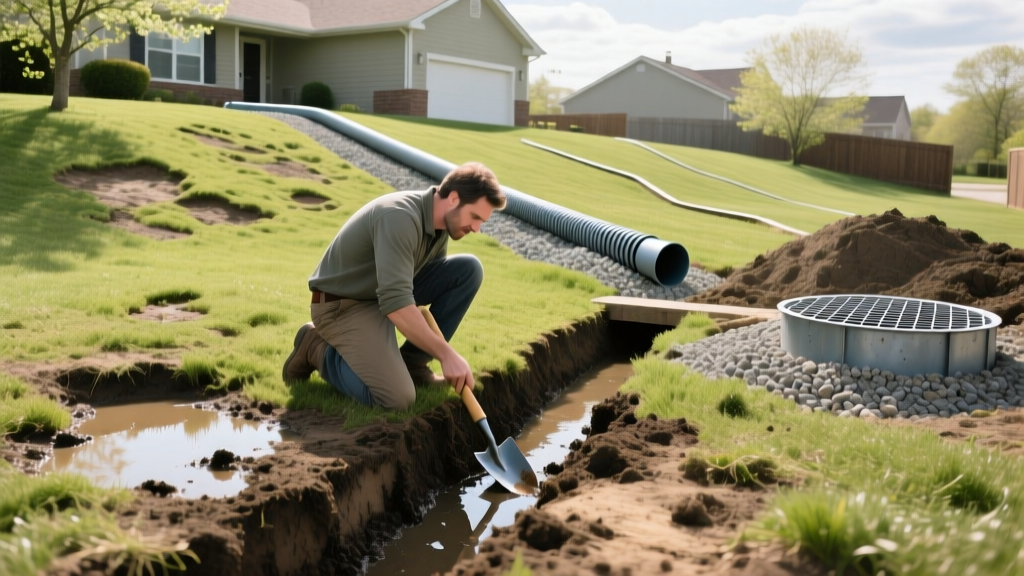
How to Diagnose and Fix Soggy Yard Drainage Problems
David ParkPublished
The Hidden Dangers of Standing Water
A soggy yard is more than just a nuisance that ruins your weekend lawn games; it is a critical landscaping problem that can lead to severe structural and ecological issues. Standing water suffocates turfgrass roots, breeds mosquitoes, and promotes fungal diseases like Pythium blight. More alarmingly, improper yard drainage can cause hydrostatic pressure to build up against your home's foundation, leading to cracked basement walls and costly water intrusion. Diagnosing the exact cause of your drainage failure is the first step toward implementing a permanent, cost-effective solution.
Diagnosing the Root Cause of Yard Drainage Issues
Before you start digging trenches or buying gravel, you must identify why water is pooling in your landscape. Water follows the path of least resistance, and pooling usually indicates a disruption in that natural flow.
1. The Soil Percolation Test
Soil composition dictates how quickly water infiltrates the ground. Heavy clay soils act like a bowl, trapping water on the surface, while sandy loams allow rapid infiltration. To diagnose your soil's drainage capacity, perform a simple percolation test:
- Dig a hole 12 inches deep and 12 inches wide in the problem area.
- Fill the hole with water and let it drain completely to saturate the surrounding soil.
- Refill the hole to the top and measure the water level with a ruler.
- Check the water level every hour. Ideal soil drains at a rate of 1 to 6 inches per hour.
2. Evaluating Grading and Slope
The ground immediately surrounding your home should slope away from the foundation at a minimum grade of 2% (a drop of 2 inches for every 10 feet of horizontal distance). Over time, soil settles, and landscaping additions can create negative grading, directing water back toward your house. Use a string line and a line level, or a laser level, to measure the slope across your yard.
3. Calculating Hardscape and Roof Runoff
Often, the problem isn't the yard itself, but the volume of water being dumped into it. A 1,000-square-foot roof sheds approximately 623 gallons of water during a 1-inch rainstorm. If your downspouts terminate directly at the foundation or onto flat soil, the ground will quickly become overwhelmed. Trace your gutter downspouts and hardscape runoff paths to see if they are dumping excessive water into low-lying garden beds.
Proven Solutions for Soggy Landscapes
Once you have diagnosed the source of the water, you can select the appropriate landscaping intervention. The best time to install drainage systems is in the late spring or early fall when the ground is workable and turfgrass can recover quickly from excavation.
Solution A: Regrading and Topdressing
If your percolation test shows decent drainage but water pools near the foundation, regrading is the most effective fix. This involves adding a mix of screened topsoil and compost to create a positive slope. For minor low spots in the lawn, core aeration followed by topdressing with a sandy loam mix (70% sand, 30% compost) can gradually improve surface drainage and soil structure over a single growing season. Expect to pay between $500 and $1,500 for professional regrading of a standard residential lot.
Solution B: Installing a French Drain
For yards with heavy clay soil or persistent subsurface water, a French drain is the gold standard. A French drain is a gravel-filled trench containing a perforated pipe that intercepts groundwater and redirects it to a safe discharge point, such as a storm drain or a lower elevation on your property.
Materials Needed:
- NDS 4-inch corrugated slotted pipe (or rigid PVC for heavy-load areas)
- Mirafi 500X non-woven landscape fabric (to prevent soil from clogging the gravel)
- 3/4-inch washed crushed stone (avoid pea gravel, which compacts poorly)
Installation Measurements: Dig a trench 12 inches deep and 6 to 8 inches wide. Ensure the trench maintains a continuous downward slope of at least 1/8 inch per foot (1% grade) toward the discharge point. Line the trench with fabric, add 2 inches of gravel, lay the pipe with the slots facing down, cover with gravel, and fold the fabric over the top before covering with soil.
Solution C: Constructing a Dry Well
If you have nowhere to discharge a French drain, a dry well is an excellent sustainable landscaping solution. A dry well is an underground chamber that captures stormwater and allows it to slowly percolate into the surrounding subsoil. Commercial options like the NDS Flo-Well can hold up to 50 gallons of water. Bury the dry well at least 10 feet away from your foundation in an area with decent subsoil drainage, and connect it to your downspouts via solid PVC pipe.
Drainage Solutions Comparison Chart
| Solution | Best Application | Estimated Cost | DIY Difficulty | Lifespan |
|---|---|---|---|---|
| Regrading / Topdressing | Surface pooling, negative foundation slope | $500 - $2,000 | Moderate | 10+ Years |
| French Drain | Subsurface water, heavy clay soils, retaining wall relief | $20 - $35 per linear ft | High | 20 - 30 Years |
| Dry Well | Downspout runoff, areas with no downhill discharge | $200 - $600 | Moderate | 15 - 20 Years |
| Rain Garden | Sustainable runoff management, eco-friendly landscaping | $3 - $10 per sq ft | Low | Indefinite (with maintenance) |
Expert Insights on Soil and Drainage
When dealing with chronic drainage issues, understanding the science of your soil is paramount. Relying on guesswork often leads to failed hardscaping projects and wasted money.
According to Penn State Extension's guidelines on residential stormwater management, 'A percolation rate of less than 1 inch per hour indicates poorly drained soil, often requiring structural drainage interventions rather than simple soil amendments.' They emphasize that amending heavy clay with sand alone can actually create a concrete-like substance; instead, incorporating 3 to 4 inches of organic compost is recommended to improve soil aggregation and long-term infiltration rates.
This expert advice highlights why a French drain or dry well is often necessary for clay-heavy landscapes, as organic amendments alone cannot overcome severe subsurface hardpans.
Step-by-Step Guide: Connecting Downspouts to a Drainage System
One of the most cost-effective ways to solve a soggy yard is to manage water before it hits the soil. Here is how to properly extend your downspouts into an underground drainage system:
- Excavate the Trench: Dig a 10-inch deep trench from the downspout to your discharge area or dry well.
- Lay the Solid Pipe: Use solid 4-inch PVC or corrugated pipe for downspout connections. Unlike French drains, you do not want slots here, as the goal is to transport water away from the foundation without leaking it into the immediate soil.
- Install a Catch Basin: Place an NDS 9x9 catch basin directly under the downspout elbow. This basin features a grate that catches leaves and debris, preventing clogs deep inside your underground pipes.
- Secure the Connections: Use PVC primer and cement for rigid pipes, or stainless steel hose clamps for corrugated pipes, ensuring a watertight seal.
- Backfill and Restore: Cover the pipe with 4 inches of soil and replace your sod or seed the area with a shade-tolerant, moisture-resistant grass blend.
Conclusion
Solving yard drainage problems requires a methodical approach to diagnosis and a commitment to proper installation techniques. By testing your soil percolation, verifying your landscape grading, and calculating your roof runoff, you can pinpoint the exact cause of your soggy lawn. Whether you choose to regrade your soil, install a comprehensive French drain system, or build an eco-friendly rain garden, addressing drainage issues promptly will protect your home's foundation, revive your turfgrass, and transform your outdoor living space into a dry, usable oasis.

