
Landscaping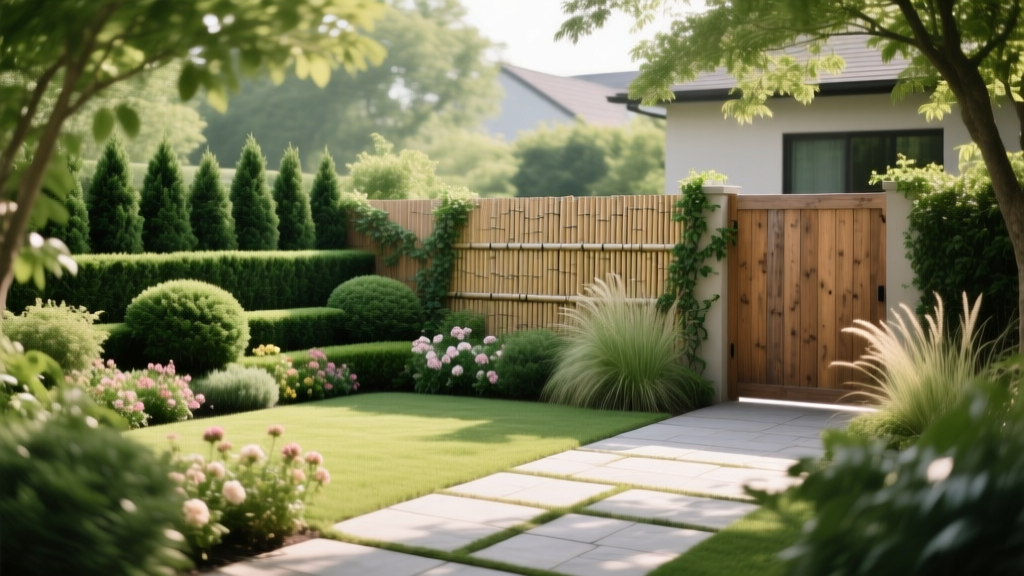
Backyard Privacy Landscaping Plants And Fences
Creating a Private Backyard Retreat with Plants and Fences
A backyard without privacy is just an outdoor room with no walls. Whether neighbors sit elevated on a deck overlooking your yard, or a busy street runs along your property line, the feeling of being watched while you relax outdoors makes it harder to unwind. The good news is that combining strategic fencing with the right plant selections can transform even the most exposed yard into a secluded sanctuary — and often at a lower cost than most homeowners expect.
Privacy landscaping has moved past the old standby of a six-foot wooden fence. Today’s approaches mix hardscape and softscape elements to create living screens that provide year-round coverage, reduce noise, add wildlife habitat, and increase property values. According to the American Nursery and Landscape Association (2023), properties with mature privacy plantings sell for 5 to 12 percent more than comparable homes without them.
Understanding Your Privacy Needs Before You Plant or Build
Before purchasing a single plant or fence panel, spend time in your yard at different times of day and different seasons. Note exactly where sight lines originate — a neighbor's second-story window, a passing car on an elevated road, or a gap between two existing shrubs. Measuring these angles helps you determine the minimum height your privacy solution must reach and where gaps in coverage actually exist.
A standard privacy fence stands 6 feet tall, but that height only blocks views from ground level. If a neighbor's deck sits 4 feet above grade, you need plants or fence extensions that reach at least 10 to 12 feet to provide true screening. This is a calculation many homeowners skip, only to discover their new fence does nothing to block the view from next door's elevated patio.
Measuring Your Screening Zone
Calculate the linear footage of your perimeter that needs screening. A typical suburban backyard might have 120 to 180 linear feet of fence line. At a plant spacing of 4 feet on center for dense evergreens, a 150-foot run requires approximately 38 plants. At $45 to $85 per 3-gallon container for most privacy shrubs, that's a material cost of $1,710 to $3,230 before installation labor, mulch, and soil amendments.
For fence installations, the national average cost runs $15 to $45 per linear foot for wood privacy fencing, and $20 to $60 per linear foot for vinyl, according to HomeAdvisor's 2024 Cost Report. A 150-foot wood fence therefore costs between $2,250 and $6,750 installed. Combining a 6-foot fence with a planted buffer in front typically adds $800 to $2,000 to the project but improves the finished appearance and long-term effectiveness.
Top Evergreen Shrubs and Trees for Year-Round Privacy
Deciduous plants lose their leaves in winter, leaving your yard exposed precisely when you might want to block views of bare, muddy neighboring yards. For true year-round privacy, evergreen species are the backbone of any serious screening plan.
Fast-Growing Evergreen Options
- Green Giant Arborvitae (Thuja standishii × plicata 'Green Giant') — Grows 3 to 5 feet per year once established, reaching 30 to 40 feet at maturity. Deer resistant and tolerant of a wide range of soils. Plant 5 to 6 feet apart for a solid screen. Cost: $40 to $120 per 5-gallon container.
- Emerald Green Arborvitae (Thuja occidentalis 'Smaragd') — Slower growing but more compact, reaching 10 to 15 feet. Ideal for smaller yards. Plant 3 to 4 feet apart. Cost: $30 to $75 per 3-gallon container.
- Leyland Cypress (× Cuprocyparis leylandii) — Extremely fast growth of 3 to 4 feet per year. Reaches 60 to 70 feet if unpruned. Best in USDA zones 6 to 10. Cost: $25 to $60 per 3-gallon container.
- Skip Laurel (Prunus laurocerasus 'Schipkaensis') — Broad-leaved evergreen with glossy foliage. Grows 6 to 10 feet tall and tolerates shade well. Excellent for the Pacific Northwest and Southeast. Cost: $35 to $90 per 3-gallon container.
- Nellie Stevens Holly (Ilex × Nellie R. Stevens) — Dense, pyramidal form reaching 15 to 25 feet. Produces red berries attractive to birds. Tolerates clay soils common in the Mid-Atlantic region. Cost: $50 to $110 per 5-gallon container.
- Eastern Red Cedar (Juniperus virginiana) — Native to much of the eastern US, extremely drought tolerant once established, and provides excellent wildlife habitat. Reaches 40 to 50 feet. Cost: $20 to $55 per 3-gallon container.
In the Atlanta, Georgia metro area, landscape contractors frequently specify Nellie Stevens Holly and Skip Laurel together, using the holly for height and the laurel for dense mid-level coverage. A typical project in Buckhead or Decatur neighborhoods runs $4,500 to $9,000 for a 100-foot privacy planting, including soil preparation and a two-year plant warranty.
Bamboo as a Privacy Screen
Clumping bamboo varieties offer an exotic, fast-growing alternative to traditional evergreens. Fargesia robusta 'Campbell' and Fargesia nitida are non-invasive clumping types that reach 10 to 15 feet and thrive in USDA zones 5 to 9. Unlike running bamboo, clumping varieties stay contained without root barriers. Expect to pay $60 to $150 per 3-gallon container, with plants spacing 3 to 4 feet apart for a solid screen within 3 to 4 years.
Running bamboo species like Phyllostachys aurea (Golden Bamboo) grow faster but require a 24-inch-deep HDPE root barrier installed along the entire planting bed perimeter. The barrier itself costs $1.50 to $3.00 per linear foot, adding $225 to $450 to a 150-foot installation. Skip running bamboo entirely in states like Florida, where it has become invasive in natural areas.
Fence Materials, Styles, and Regional Considerations
Fencing choices depend heavily on local climate, HOA restrictions, and aesthetic preferences. What works beautifully in the Pacific Northwest may rot within five years in humid Florida, and what's permitted in a rural Texas county may violate deed restrictions in a Phoenix subdivision.
| Material | Average Cost per Linear Foot (Installed) | Lifespan | Maintenance Level | Best Regions |
|---|---|---|---|---|
| Pressure-Treated Pine | $15 – $28 | 15 – 20 years | Medium (stain every 2–3 years) | Southeast, Midwest |
| Western Red Cedar | $20 – $38 | 20 – 30 years | Low to Medium | Pacific Northwest, Mountain West |
| Vinyl (PVC) | $22 – $45 | 25 – 40 years | Very Low | All regions |
| Aluminum | $25 – $50 | 30+ years | Very Low | Coastal, humid climates |
| Composite Wood | $30 – $55 | 25 – 35 years | Low | All regions |
| Horizontal Cedar Slat | $35 – $65 | 20 – 25 years | Medium | West Coast, urban markets |
In the Seattle, Washington area, Western Red Cedar is the dominant fence material due to its natural resistance to moisture and insects. Local contractors at firms like Cascade Fence and Deck report that cedar fences in the Puget Sound region regularly last 25 years with minimal maintenance beyond occasional cleaning. The same cedar fence installed in coastal South Carolina would require annual sealing and might show significant deterioration within 10 to 12 years due to humidity and salt air.
Vinyl fencing has gained market share in the Sun Belt states. In Phoenix, Arizona and Las Vegas, Nevada, vinyl outperforms wood because it doesn't dry out, crack, or warp under intense UV exposure and temperature swings that can exceed 100°F in summer. The higher upfront cost of vinyl — typically 30 to 50 percent more than pressure-treated pine — is offset by near-zero maintenance costs over the fence's lifespan.
Layered Privacy Planting Design
The most effective privacy landscapes use a layered approach: a fence or tall evergreen trees at the back, mid-height shrubs in the middle, and ornamental grasses or perennials at the front. This creates visual depth, reduces the institutional look of a solid fence, and provides habitat for birds and pollinators.
"A single row of arborvitae planted against a fence is the most common privacy landscaping mistake we see. The plants compete with the fence for space, the inner branches die from lack of light, and you end up with a brown, gappy screen within five years. Give plants room to grow in front of the fence, and use the fence as a backdrop, not a support structure." — Landscape architect Maria Chen, ASLA, speaking at the 2023 Landscape Industry Conference, Louisville, Kentucky
A well-designed layered privacy planting for a 20-foot-wide section of yard might look like this from back to front: a 6-foot cedar fence, then a row of Green Giant Arborvitae planted 6 feet in front of the fence at 6-foot spacing, then a row of Skip Laurel planted 4 feet in front of the arborvitae at 4-foot spacing, and finally a border of Miscanthus sinensis 'Morning Light' ornamental grass at the front edge. This arrangement requires approximately 8 feet of depth from fence to lawn edge but creates a screen that looks natural, provides coverage from ground level to 20+ feet, and improves with age.
Incorporating Native Plants for Low Maintenance
Native plants adapted to your region require significantly less water, fertilizer, and pest management than exotic species. In the Mid-Atlantic states, American Holly (Ilex opaca) and Eastern Red Cedar (Juniperus virginiana) provide dense evergreen screening while supporting local wildlife. The Lady Bird Johnson Wildflower Center (2024) documents that native plantings require 50 to 75 percent less supplemental irrigation than non-native alternatives once established after the first two growing seasons.
For the Pacific Northwest, Western Red Cedar (Thuja plicata) — the tree, not the fence material — and Oregon Grape (Mahonia aquifolium) create a regionally authentic privacy screen. In the Southeast, Wax Myrtle (Morella cerifera) grows rapidly to 10 to 15 feet, tolerates wet soils, and provides excellent bird habitat. Native plant nurseries in cities like Raleigh, North Carolina and Austin, Texas have expanded their privacy screening selections considerably in recent years, making it easier to source appropriate species locally.
Permits, HOA Rules, and Property Line Considerations
Before breaking ground or ordering materials, verify local regulations. Most municipalities require a permit for fences over 6 feet tall, and many limit front yard fence heights to 3 or 4 feet. HOA communities often restrict fence materials, colors, and styles — some prohibit wood fencing entirely in favor of vinyl or wrought iron.
Property line placement is equally critical. Fences are typically required to be set back 2 to 6 inches from the property line, and some jurisdictions require neighbor notification or consent before installation. Planting trees within 5 to 10 feet of a property line can create legal liability if roots damage a neighbor's foundation or branches fall on their property. Consulting a local landscape attorney or your county extension office before planting large trees near property boundaries is worth the time investment.
- Contact your local building department to confirm fence height limits and permit requirements.
- Review your HOA's Covenants, Conditions, and Restrictions (CC&Rs) for material and style limitations.
- Have your property surveyed if boundary lines are unclear — survey costs of $400 to $700 are far less than the cost of moving a fence after installation.
- Check utility easements; fences and large trees cannot be installed within utility easements, which typically run 5 to 10 feet inside property lines.
- Notify neighbors in writing before installation, even when not legally required — it prevents disputes and maintains good relationships.
A homeowner in Naperville, Illinois learned this lesson after installing a 6-foot cedar fence that encroached 14 inches onto a neighbor's property. The resulting dispute required a survey, legal fees, and ultimately the removal and reinstallation of 40 linear feet of fence at a total additional cost of approximately $3,800. A $500 survey before the project would have prevented the entire situation.
Budgeting a Complete Privacy Landscaping Project
A realistic budget for a complete backyard privacy project — combining fencing and planted screening — depends heavily on yard size, plant selection, and regional labor costs. For a typical suburban backyard with 150 linear feet of perimeter needing screening, expect to invest between $8,000 and $22,000 for a professionally installed combination of 6-foot cedar fencing and a planted buffer of evergreen shrubs and trees.
DIY installation can reduce costs by 40 to 60 percent on the labor side, but requires access to post-hole digging equipment (rental cost: $150 to $300 per day), concrete for fence posts, and the physical capacity to handle heavy materials. Plant installation is more accessible for DIYers — most privacy shrubs in 3-gallon containers weigh under 15 pounds and can be planted with basic hand tools. Renting a gas-powered auger for $80 to $120 per day makes planting large quantities of shrubs significantly faster.
Phasing the project over two to three years is a practical approach for homeowners working within a budget. Install the fence in year one, plant the primary evergreen screen in year two, and add the ornamental layer in year three. This spreads costs while allowing the earliest plantings to establish and begin providing coverage before the project is complete.

