Home & Garden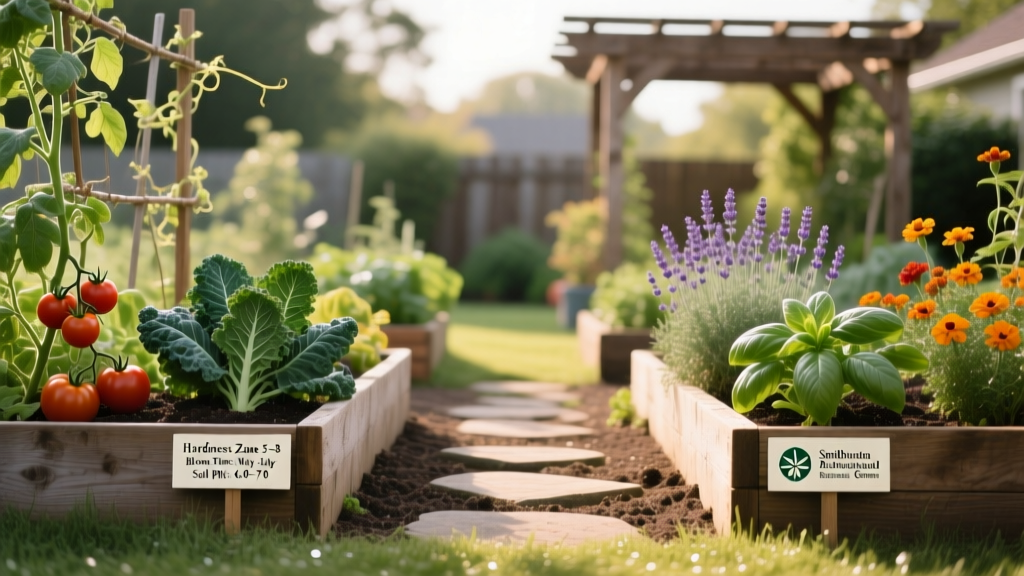
Backyard Vegetable Garden Layout Ideas
Planning Your Backyard Vegetable Garden
A backyard vegetable garden can be both productive and pleasant to look at—even in a small space. Before you plant anything, take time to observe your site: how much sun it gets each day, what the soil is like, how water drains, and whether any spots stay cooler or warmer than others. Most vegetables need 6 to 8 hours of direct sun, so if possible, position your beds where they’ll catch morning and afternoon light—south- or southwest-facing spots usually work best.
The Royal Horticultural Society (2023) advises testing your soil before planting vegetables. Most do well in soil with a pH between 6.0 and 7.0. That slightly acidic range helps tomatoes, peppers, beans, and leafy greens absorb nutrients. Cabbage and broccoli tolerate a bit more alkalinity—around 6.5 to 7.5—while blueberries (if you’re adding fruit) need much more acidic soil, between 4.5 and 5.5.
Raised Beds vs. In-Ground Rows
Raised beds and in-ground rows each have their place, depending on your space and how you like to work. Raised beds are usually 8 to 12 inches deep and no wider than 4 feet—just narrow enough that you can reach the center from either side without stepping into the bed. That width lines up with how far most adults can comfortably stretch, a detail Cornell Cooperative Extension has pointed out for years.
In-ground rows still make sense for larger yards where space isn’t tight. Running rows north to south lets plants get sun from both sides as the day goes on. Spacing depends on the crop: corn needs rows at least 30 inches apart for good pollination, while lettuce and spinach can go in rows just 12 inches apart. One downside to in-ground rows is that walking between them compacts the soil over time, which can make it harder for roots to grow.
Raised Bed Materials and Dimensions
Cedar and redwood are popular choices for raised beds because they resist rot naturally. Untreated pine costs less but usually lasts only 3 to 5 years. Galvanized steel beds are gaining ground—they last 20+ years and have a clean, modern look that fits well with ornamental gardens.
A common size for a single raised bed is 4 feet by 8 feet. Or you might use several 4-by-4-foot beds arranged in a grid, with 18-inch pathways between them. That’s wide enough for most wheelbarrows, which are usually 24 to 26 inches across the wheels. Fill the beds with a mix of 60% topsoil, 30% compost, and 10% perlite or coarse sand—it drains well and holds nutrients.
Integrating Ornamental Plants into the Vegetable Garden
Vegetable gardens don’t have to be all function and no flair. Adding flowers and herbs that also help your crops can make the space more enjoyable without cutting into your harvest. Marigolds (Tagetes spp.) planted along bed edges can discourage aphids and whiteflies—their roots and scent seem to bother those pests. Nasturtiums act as decoys, drawing aphids away from your vegetables while blooming bright orange and yellow from late spring until frost.
The Chicago Botanic Garden has long supported the “potager” style—a French kitchen garden that mixes vegetables, herbs, and flowers in a tidy, geometric layout. In a potager, raised beds often form a symmetrical pattern around a central feature like a sundial, birdbath, or urn. Low herbs such as thyme and parsley edge the beds, while taller plants like fennel or artichokes add height toward the back or center.
Companion Planting and Spatial Efficiency
Companion planting helps you grow more in less space. The classic “Three Sisters” combo—corn, beans, and squash—is a great example. Corn gives beans something to climb, beans pull nitrogen from the air and put it in the soil, and squash spreads out, shading the ground to hold moisture and block weeds.
Succession planting works the same way—spreading out your sowing instead of planting everything at once. Instead of filling a whole bed with lettuce at once, try sowing a short row every two weeks from early spring through midsummer. That gives you steady harvests instead of one big pile all at once. Cool-season crops like spinach, arugula, and radishes can go in as soon as the soil hits 40°F in spring, then be pulled and replaced with basil or bush beans once summer warms up.
- Cool-season crops (plant when soil reaches 40–50°F): lettuce, spinach, peas, radishes, kale, broccoli
- Warm-season crops (plant after last frost, soil above 60°F): tomatoes, peppers, cucumbers, squash, beans, corn
- Long-season crops that occupy space all summer: tomatoes, eggplant, winter squash, melons
- Quick-turnaround crops ideal for succession planting: radishes (25–30 days), lettuce (45–60 days), bush beans (50–60 days)
Vertical Growing Structures
Going vertical opens up more growing room in a small yard. A simple A-frame trellis made from 1×2 lumber and nylon netting takes up just 2 feet by 6 feet but can support cucumbers, pole beans, or small melons—and yield as much as a much larger flat bed. Trellised cucumbers also get better airflow, which helps keep powdery mildew in check, especially where humidity runs high.
Cattle panel arches—16-foot galvanized wire panels bent into tunnels—make bold garden features and useful ones too. Plant climbing squash or gourds along them, and one 16-foot arch can produce 20 to 30 pounds of food in a season, while also forming a shaded walkway underneath. These work especially well in USDA Zones 5 through 9, where the growing season is long enough for vining crops to mature fully.
Understanding Plant Hardiness Zones in Garden Layout
The USDA Plant Hardiness Zone Map splits North America into 13 zones based on average winter lows—each zone covers a 10°F range. For vegetable growers, your zone mainly tells you how long your growing season is and when to expect the last spring frost and first fall frost. In Zone 6b (–5°F to 0°F), common in the mid-Atlantic, the season runs about 160 to 180 days. In Zone 9b along the Gulf Coast, many vegetables can be grown year-round.
Knowing your zone helps you time things realistically. In Zone 5, where the last frost usually falls between May 1 and May 15, wait until mid-May to set out warm-season crops. That means starting tomatoes and peppers indoors 6 to 8 weeks earlier—in late March or early April—so they’re ready to go outside when the weather allows. The Missouri Botanical Garden offers regional planting calendars tied to local frost dates, which take much of the guesswork out of scheduling.
"The single most important factor in vegetable garden success is matching the crop to the climate and the season. A gardener who understands their frost dates and soil temperature windows will consistently outperform one who plants by the calendar date alone."
— Royal Horticultural Society, Vegetable & Fruit Gardening, 2023 edition
Soil Preparation and Amendment Strategies
Good soil matters more than almost anything else in a vegetable garden. No amount of clever layout makes up for compacted, nutrient-poor dirt. A basic soil test from your state’s university extension service—usually $15 to $25—will tell you pH, organic matter level, and amounts of nitrogen, phosphorus, potassium, and some micronutrients. It’ll also suggest amendments based on what you plan to grow.
For most backyard plots, mixing 2 to 4 inches of finished compost into the top 8 to 10 inches of soil before planting gives fertility and texture a real lift. Compost helps clay drain better by forming soil clumps that let water move through, and it helps sandy soil hold onto water by adding organic material. Aiming for 5% organic matter is ideal for vegetables; many suburban soils start at just 1–2%, so it may take a few seasons of regular composting to get there.
| Crop | Preferred Soil pH | Days to Maturity | Minimum Sun (hrs/day) | USDA Zones |
|---|---|---|---|---|
| Tomato | 6.0–6.8 | 60–85 | 8 | 3–11 (annual) |
| Lettuce | 6.0–7.0 | 45–60 | 6 | 4–9 |
| Broccoli | 6.0–7.0 | 80–100 | 6 | 3–10 |
| Cucumber | 6.0–7.0 | 50–70 | 8 | 4–11 (annual) |
| Kale | 6.0–7.5 | 55–75 | 6 | 7–9 (perennial) |
| Blueberry | 4.5–5.5 | Perennial | 8 | 4–7 |
Cover cropping fits neatly into a seasonal garden rhythm. After summer crops finish, try sowing winter rye or crimson clover. When you turn them under in spring, they add organic matter and keep winter weeds down. Legume cover crops like clover or hairy vetch also pull nitrogen from the air—80 to 200 pounds per acre—and even scaled down to a home garden, that’s a real boost.
Water Management and Irrigation Layout
Vegetables need steady moisture, and laying out your irrigation system alongside your beds—not after—makes life easier later. Drip irrigation sends water slowly and directly to the roots—usually 0.5 to 1.0 gallons per hour per emitter. It cuts down on evaporation, keeps leaves dry (which helps prevent fungal disease), and uses 30–50% less water than overhead sprinklers, according to the University of California Cooperative Extension.
For raised beds, a basic drip setup might use 1/2-inch mainline tubing running the length of each bed, with 1/4-inch emitter lines branching off to individual plants. You can install this for $50 to $100 per 100 square feet of bed space. Hook it up to a battery-powered timer, and your garden stays watered even if you’re away or swamped. A 2- to 3-inch layer of straw or wood chips on top of the soil helps hold moisture and smooth out soil temperature swings.
- Sketch your bed layout on paper and measure how much mainline tubing you’ll need.
- Install a backflow preventer and pressure regulator at the faucet before connecting any drip parts.
- Run 1/2-inch mainline along each bed, capping the end of every line.
- Insert 1/4-inch emitter lines every 12 inches for close-planted crops, or space them to match where your bigger transplants will go.
- Test the system and adjust emitters before covering them with mulch.
- Set the timer for early morning—6:00 to 8:00 a.m.—so leaves dry before evening.
Rainwater harvesting fits right in with thoughtful garden design. A 55-gallon rain barrel hooked to a downspout can collect enough water from one moderate rain to water a 200-square-foot garden for several days. Larger cisterns—250 to 500 gallons—are becoming more common in drought-prone areas. Burying part of the tank keeps the water cool and slows algae growth, plus it’s less visible.
The choices you make before planting—where beds face, how wide paths are, where trellises go, how irrigation lines run, which plants go together—all add up over time. A garden laid out with these ideas in mind tends to get easier to manage, more productive per square foot, and more enjoyable to spend time in as the plants, structures, and soil settle in together.
