Home & Garden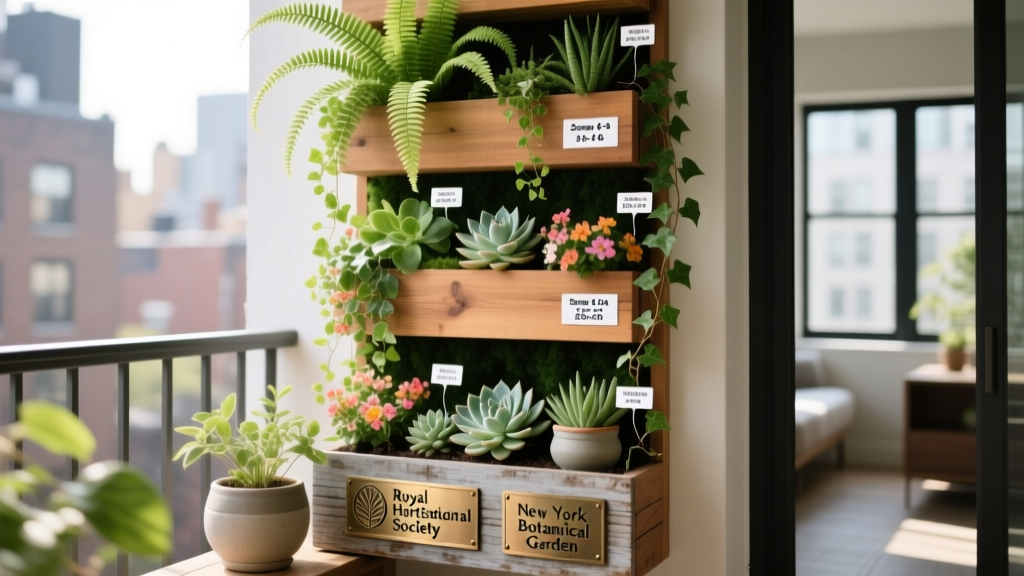
Vertical Garden Ideas For Small Spaces
Making the Most of Limited Space with Vertical Growing
A blank fence, a narrow balcony wall, or the side of a garden shed can become one of the most productive and visually striking features in your outdoor space. Vertical gardening turns flat surfaces into layered, living displays that fit more plants into a square foot than any conventional bed. For urban gardeners, apartment dwellers, and anyone working with a compact yard, growing upward isn’t a backup plan — it’s often the best way to get both beauty and harvest.
The ideas behind vertical garden design go back centuries. Espalier training, for instance, appeared in European walled kitchen gardens as early as the 17th century, and the trellised rose gardens at the Royal Horticultural Society's Wisley garden in Surrey still influence how many gardeners set up their walls today. What’s new is the range of modular systems, lightweight growing media, and drought-tolerant plant varieties now available to home gardeners.
Choosing the Right Structure for Your Wall
The structure you pick affects which plants will do well and how much time you’ll spend on upkeep. Broadly, vertical systems fall into three categories: freestanding trellis panels, wall-mounted pocket planters, and living wall frames with built-in irrigation. Each works better with certain wall types, light conditions, and budgets.
Trellis panels made from powder-coated steel or cedar are the most flexible starting point. A standard panel measuring 180 cm × 90 cm (roughly 6 ft × 3 ft) can hold climbing roses, clematis, or annual sweet peas with minimal anchoring. Cedar weathers to a silver-grey that fits both contemporary and cottage-style gardens, while steel suits industrial or minimalist looks. The Chicago Botanic Garden recommends leaving at least 5 cm of air gap between any trellis and a masonry wall to keep moisture from building up and reduce the chance of fungal disease on foliage.
Pocket planters — fabric or felt panels with individual planting pockets — work well for herbs, succulents, and small perennials. A single 1 m² panel usually holds between 20 and 32 plants depending on pocket size. Because each pocket holds only 0.5–1 litre of growing medium, you’ll need to water more often than in ground beds, so drip systems or self-watering reservoirs pay off early.
Load-Bearing Considerations
Water is heavy. A saturated growing medium weighs about 1,000 kg per cubic metre, so even a modest 1 m² living wall panel filled to 10 cm depth can exert 100 kg of force on its fixings when fully watered. Before mounting any system to a fence or wall, check that the surface — whether timber, brick, or rendered block — can handle the load. Timber fences older than 15 years often need post reinforcement before supporting planted panels.
For renters or those who don’t want to drill into masonry, freestanding A-frame structures offer a practical alternative. A-frames with a footprint of 60 cm × 120 cm can sit on patios or balconies and be planted on both sides, effectively doubling the growing surface without attaching anything to a wall.
Sun Exposure and Microclimate Mapping
Before choosing plants, spend a full day watching how light moves across your intended wall. South- and west-facing walls in the northern hemisphere get the most direct sun and suit Mediterranean herbs, climbing roses, and sun-loving annuals. North- and east-facing walls, which get fewer than four hours of direct sun daily, are better for ferns, hostas, and shade-tolerant climbers such as Hydrangea anomala subsp. petiolaris.
Walls also change local temperatures. A south-facing brick wall can raise the effective hardiness zone of plants growing against it by one full zone, letting gardeners in USDA Zone 6 overwinter plants rated for Zone 7. The RHS Plant Finder database includes many examples of borderline-hardy climbers thriving against sheltered walls in cooler UK regions.
Plant Selection by Hardiness Zone and Bloom Time
Matching plants to your hardiness zone is the most important step for long-term success. The USDA Plant Hardiness Zone Map, updated in 2023, divides North America into 13 zones based on average annual minimum temperatures. European gardeners usually refer to the RHS Hardiness Rating system, which uses an H1–H7 scale.
For year-round interest, choose plants with staggered bloom times. A well-planned vertical garden can deliver colour from early spring through late autumn with careful selection.
| Plant | USDA Zones | Bloom Period | Soil pH | Light |
|---|---|---|---|---|
| Clematis 'Nelly Moser' | 4–9 | May–June, Sept | 6.5–7.5 | Full sun to part shade |
| Rosa 'New Dawn' | 5–9 | June–September | 6.0–6.5 | Full sun |
| Lonicera periclymenum | 4–8 | June–August | 6.0–7.0 | Full sun to part shade |
| Heuchera 'Palace Purple' | 4–9 | May–July (foliage year-round) | 5.5–7.0 | Part shade |
| Sedum spurium | 3–8 | July–August | 6.0–7.5 | Full sun |
Clematis varieties stand out in small vertical spaces because they pack a lot of flower into a small root area. The American Clematis Society (2022) notes that most large-flowered hybrids grow best when their roots stay cool and shaded — something easily done by planting low-growing perennials nearby or covering the root zone with a flat stone.
Ornamental Grasses and Textural Contrast
Flowering plants alone can make a vertical garden feel cluttered. Ornamental grasses and sedges add movement and texture that help balance the look. Carex oshimensis 'Evergold', hardy to Zone 5, fits well in lower pockets where its arching, cream-striped foliage softens the line between the planted panel and the wall. Festuca glauca 'Elijah Blue' handles the drier conditions common in upper pockets and keeps its steel-blue colour through winter in Zones 4–8.
The Brooklyn Botanic Garden’s guidelines on container and vertical planting suggest using at least one grass or sedge for every three flowering species to keep things looking cohesive across seasons when flowers aren’t present.
Growing Media and Soil pH Management
Standard garden soil doesn’t work well in vertical systems. It compacts in confined pockets, drains poorly, and adds extra weight. A lightweight mix usually combines coir fibre, perlite, and composted bark in a ratio of about 60:20:20 by volume. This blend holds enough moisture while draining freely enough to avoid soggy pockets under overhead irrigation.
Soil pH affects how well plants absorb nutrients. Most ornamental plants do best in a slightly acidic to neutral range of pH 6.0–7.0. Acid-loving plants like ferns and some heucheras prefer pH 5.5–6.5, while Mediterranean herbs including rosemary and thyme tolerate pH up to 8.0. Testing pH with an inexpensive meter before planting — and again each spring — takes less than five minutes and helps avoid yellowing or stunted growth caused by nutrient lockout.
To lower pH, mix in sulphur chips at about 15 g per litre of growing medium and retest after four weeks. To raise pH in overly acidic mixes, ground limestone applied at 5–10 g per litre works slowly and steadily, reducing the risk of overcorrection.
"The single most common cause of failure in vertical planted systems is not drought or frost — it is the use of inappropriate growing media that either compacts under irrigation or dries to a hydrophobic state that repels water entirely. Invest in the right substrate before spending money on plants."
— Royal Horticultural Society, Vertical and Container Gardening, 2021
Irrigation Strategies for Vertical Installations
Gravity works against vertical gardens. Water applied at the top drains quickly downward, leaving upper pockets dry while lower ones get too wet. A drip irrigation system with individual emitters at each pocket level fixes this and cuts water use by 30–50% compared to hand watering, according to data from the Irrigation Association (2020).
For smaller setups with fewer than 20 pockets, a simple soaker hose threaded horizontally across each row gives decent coverage. Connect it to a battery-operated timer set to water for 10–15 minutes twice daily during summer, then once daily or every other day in cooler months.
Self-watering panels with built-in reservoirs are the lowest-maintenance option. A reservoir holding 5–10 litres can keep a 1 m² panel going for three to five days in warm weather without extra watering — handy for gardeners who travel or have unpredictable schedules.
Seasonal Maintenance and Plant Replacement
Vertical gardens need more frequent attention than ground beds, but each session is short. A monthly routine covering the following tasks keeps most installations in good shape:
- Check and adjust drip emitters for blockages or misalignment
- Remove spent flowers to extend bloom periods on repeat-flowering varieties
- Inspect for aphid colonies, especially on new growth of roses and clematis
- Top-dress individual pockets with 1–2 cm of fresh compost to replace nutrients washed away by irrigation
- Tie in new growth on climbing plants before stems get woody and stiff
- Test soil pH in a few representative pockets and adjust as needed
Each year, replace exhausted growing medium in pocket planters — usually every two to three years — and apply a slow-release granular fertiliser in early spring at the rate recommended on the package. For climbing plants on trellis systems, prune in late winter. Group 3 clematis varieties, which bloom on new growth, should be cut back hard to 30 cm above ground level each February or March. Group 2 varieties like 'Nelly Moser' need lighter pruning — just remove dead or weak stems.
When a plant in a pocket planter dies — and some will — replacement is simple. Pull out the old plant, refresh the pocket with new growing medium, and replant with something suited to that spot’s light and exposure. This plug-and-play flexibility is one real advantage of pocket systems over in-ground planting.
Design Principles for Visual Cohesion
A vertical garden that looks intentional follows a few basic layout rules borrowed from traditional border design. Put taller, more structural plants — climbing roses, large-flowered clematis, ornamental grasses — at the upper and outer edges. Use mid-sized perennials and trailing plants in the middle, and fill lower pockets with compact, spreading species that soften the base of the structure.
Repeating colours creates unity. Choosing two or three colours and using them across the panel — rather than mixing every colour available — gives a more balanced result. The gardens at Sissinghurst Castle in Kent, managed by the National Trust, show this at scale: the White Garden uses just white, silver, and grey-green to feel both calm and full.
Think of the wall or fence behind the planting as part of the picture. A dark-stained timber fence makes pale flowers and silver foliage stand out. A white-rendered wall works well with bold, saturated colours. Painting the fence or wall before installing the vertical garden is easier than doing it later, and the right background can lift even a modest planting.
Don’t forget scent — it’s something photos can’t capture. Place fragrant plants — honeysuckle, sweet peas, climbing roses — near seating areas, doorways, or windows that open often. That brings the garden into daily life in a way that visual planting alone can’t. The Fragrant Garden at the New York Botanical Garden in the Bronx shows how scent can shift across the season, with early bulbs giving way to roses and then to late-summer herbs.
- Sweet peas (Lathyrus odoratus): sow direct in April, bloom June–September, annual
- Climbing rose 'Zéphirine Drouhin': thornless, intensely fragrant, Zones 5–9, blooms June–October
- Honeysuckle Lonicera japonica 'Halliana': evergreen in mild winters, Zones 4–9, blooms June–August
- Jasmine Jasminum officinale: evening fragrance, Zones 7–10, blooms June–September
Vertical gardens take time. In the first season, newly planted climbers focus on root growth rather than top growth, and pocket planters look sparse until plants fill in. By the second season, most well-chosen installations reach their intended density, and by the third, they start to look like they’ve always been there — which is exactly the effect worth waiting for.
