Home & Garden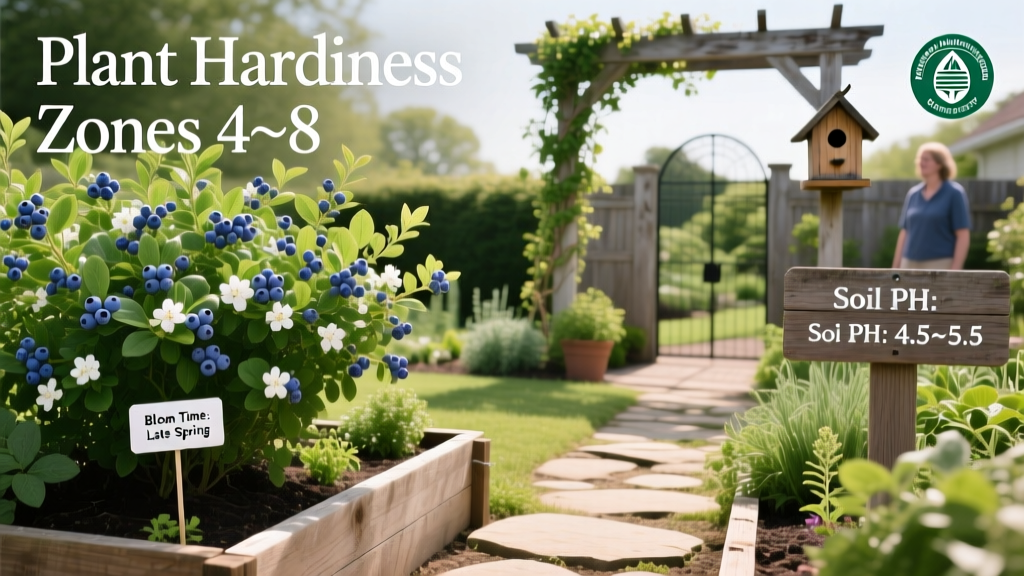
How To Grow Blueberries In Your Backyard
Getting Started with Backyard Blueberries
Blueberries are one of the most satisfying fruits to grow at home. They’re tasty, yes—but they also look great year-round: white bell-shaped flowers in spring, thick green leaves all summer, and bright red-orange foliage in fall. With decent soil and sun, a blueberry planting can keep producing for 20 to 30 years without much fuss.
Before you buy a plant, check two things: sunlight and soil acidity. Blueberries need 6 to 8 hours of direct sun each day, and soil pH between 4.5 and 5.5. Most backyard soils are closer to neutral (pH 6.5–7.0), so you’ll likely need to acidify the soil. Skipping that step is why many new plantings don’t make it past year two.
Choosing the Right Variety for Your Climate
Blueberries aren’t just one plant—they’re a group of related species, each adapted to different parts of the country. Your USDA Plant Hardiness Zone matters more than anything else when picking a variety. The USDA zone map, updated in 2023, splits North America into 13 zones based on winter lows—and breeders have developed blueberry varieties for nearly all of them.
Highbush Blueberries (Zones 4–7)
Northern highbush (Vaccinium corymbosum) is what you’ll find most often at nurseries. It grows 4 to 6 feet tall and needs 800 to 1,000 chill hours—hours below 45°F—to bloom and set fruit reliably. Common picks include 'Bluecrop', 'Duke', and 'Patriot'. Southern highbush varieties, bred at the University of Florida’s Gulf Coast Research and Education Center, need only 150 to 500 chill hours, so they work better in Zones 7 through 10.
Lowbush and Half-High Varieties (Zones 3–6)
Lowbush blueberries (Vaccinium angustifolium) are native to the Northeast and handle cold winters better than highbush types. They stay low—1 to 2 feet tall—and spread slowly underground, making them handy for slopes or natural-looking gardens. Half-high hybrids like 'Northblue' and 'Polaris' mix lowbush hardiness with bigger berries, and do well in Zones 3 to 5.
Rabbiteye Blueberries (Zones 7–9)
Rabbiteye blueberries (Vaccinium virgatum, formerly V. ashei) come from the Southeast and handle heat, drought, and slightly higher pH better than highbush. Left alone, they can reach 10 to 15 feet, but most gardeners keep them pruned to 6 to 8 feet. They rarely set fruit on their own, so you’ll need at least two different rabbiteye varieties within 50 feet of each other.
Soil Preparation and pH Management
Soil prep is where the heavy lifting happens—and it’s best started 6 to 12 months before planting. The American Horticultural Society (2021) suggests testing your soil pH first, either through a lab or a solid home test kit. A test from your local cooperative extension service usually costs $15 to $30 and gives you pH plus a full nutrient report.
Elemental sulfur is the go-to fix for lowering pH. Soil bacteria turn it into sulfuric acid over time, which is why it’s worth applying early. As a rough guide, 1 to 2 pounds of elemental sulfur per 100 square feet drops pH by about one unit in sandy loam; clay soils need about twice that. Wait 3 to 4 months, retest, and adjust if needed.
Peat moss helps too—it lowers pH while improving drainage and adding organic matter. Mix in a 4-inch layer across the top 12 inches of soil at planting time. That gives blueberry roots the loose, airy space they like. The Royal Horticultural Society (2022) points out that blueberries hate soggy soil, so raised beds or mounded rows are smart moves in heavy clay.
| Blueberry Type | USDA Zones | Chill Hours Required | Mature Height | Ideal Soil pH |
|---|---|---|---|---|
| Northern Highbush | 4–7 | 800–1,000 | 4–6 ft | 4.5–5.0 |
| Southern Highbush | 7–10 | 150–500 | 3–6 ft | 4.5–5.5 |
| Lowbush | 3–6 | 1,000+ | 1–2 ft | 4.0–5.0 |
| Half-High Hybrid | 3–5 | 800–1,000 | 2–4 ft | 4.5–5.0 |
| Rabbiteye | 7–9 | 300–500 | 6–15 ft | 4.5–5.5 |
Planting, Spacing, and Garden Design
Blueberries do best—and look best—in groups. Most types need at least two different cultivars for good pollination, and three or more with staggered ripening dates can stretch your harvest from early summer into late August. In the landscape, a row of highbush blueberries works as a relaxed hedge, a screen along a fence, or a backdrop for shorter plants.
Space highbush varieties 4 to 6 feet apart in rows, with rows 8 to 10 feet apart if you’re planting more than one. Rabbiteye types need more elbow room—6 to 8 feet between plants. Lowbush varieties can go in 2 feet apart and will fill in over time. Dig holes twice as wide as the root ball but no deeper—the roots stay shallow, usually within the top 18 inches.
At Longwood Gardens in Kennett Square, Pennsylvania, blueberries grow alongside native azaleas and fothergilla in mixed shrub borders. It works because all three like acidic, well-drained soil—and each brings something different to the garden across the seasons.
Mulching for Moisture and Weed Control
Put down 3 to 4 inches of acidic mulch right after planting. Pine bark, pine needles, or hardwood chips (like oak) all work. Mulch holds moisture, keeps soil temperatures steady, cuts down on weeds, and slowly adds acidity as it breaks down. Keep it pulled back 2 to 3 inches from the base of each plant to avoid crown rot. Top it up each spring as it thins out.
Watering, Fertilizing, and Bloom Times
Blueberries have shallow, fibrous roots and no root hairs, so they’re pickier about moisture than many shrubs. They need about 1 to 2 inches of water per week during the growing season—either from rain or irrigation. Drip lines beat overhead watering: they keep the leaves dry and cut down on fungal problems like mummy berry (Monilinia vaccinii-corymbosi).
Fertilize with an acid-forming product meant for blueberries, azaleas, or rhododendrons. Ammonium sulfate is a common choice—it feeds the plant and helps hold pH down. Use 1 ounce per plant in early spring when buds start to swell, then another ounce 4 to 6 weeks later. Stop fertilizing after July—late nitrogen encourages soft new growth that frost can damage.
Bloom time depends on variety and where you live. In Zone 6, northern highbush types usually flower from late April through mid-May. Southern highbush in Zone 8 might bloom as early as February. According to Brooklyn Botanic Garden’s records, 'Duke' starts flowering about 10 days before 'Bluecrop' in the same spot—a helpful detail when planning for cross-pollination.
"Blueberries are one of the few fruits that are truly native to North America, and growing them connects the home gardener to a plant that has fed people and wildlife on this continent for thousands of years. Getting the soil chemistry right is 80 percent of the battle."
— Dr. James Hancock, Professor Emeritus of Horticulture, Michigan State University, speaking at the North American Blueberry Research and Extension Workers Conference, 2019
Pruning for Long-Term Productivity
Don’t let young blueberry plants carry much fruit in their first two years. Rub off the flower buds by hand—or prune lightly—in years one and two. That pushes energy into roots and canes instead of berries. Plants given this head start usually outproduce those forced to fruit too soon.
Mature highbush blueberries benefit from pruning each late winter, before buds swell. Aim to keep 6 to 8 strong, upright canes of different ages. Cut out any cane older than 6 years (they slow down), anything thinner than a pencil, and branches that cross or grow downward. Since blueberries fruit on last year’s wood, the goal is to keep fresh, vigorous shoots coming every year.
- Remove all canes older than 6 years at ground level each winter
- Cut out any canes thinner than ¼ inch in diameter
- Eliminate crossing branches that create congestion in the center of the plant
- Shorten excessively long lateral branches by one-third to encourage branching
- Leave the 6 to 8 healthiest, most upright canes as the permanent framework
Pest and Disease Management
Birds are the biggest headache for most backyard growers. A small flock of cedar waxwings can clean off a mature bush in under an hour. Bird netting—¾ inch mesh or smaller—is the most reliable fix. Drape it over a simple frame of PVC pipe or wooden stakes before the berries start to color. Take it down after harvest so birds can help control insects later in the season.
Spotted wing drosophila (Drosophila suzukii), an invasive fruit fly first found in California in 2008, now shows up across most blueberry-growing areas. Unlike native fruit flies, it lays eggs in firm, ripening berries—not just overripe or damaged ones. Start monitoring with apple cider vinegar traps in early summer, and pick fruit promptly when it’s ripe to keep infestations low.
- Mummy berry: A fungus that makes berries shrivel and drop. Rake up fallen berries and leaves each fall. If you’ve had it before, consider a preventive fungicide at bud break.
- Stem canker: Caused by Botryosphaeria corticis, it shows up as reddish-brown spots on canes. Prune infected wood well below the visible damage, and disinfect your tools between cuts with a 10% bleach solution.
- Root rot: Phytophthora cinnamomi thrives in soggy soil. Fix drainage before planting, and don’t overwater. Once infected, there’s no chemical cure.
- Blueberry maggot: The larva of Rhagoletis mendax, a native fly. Yellow sticky traps baited with ammonium acetate help track adults; kaolin clay sprayed on developing fruit forms a physical barrier.
Integrated pest management—what Cornell University’s College of Agriculture and Life Sciences extension programs recommend—starts with watching your plants and using cultural fixes before turning to sprays. Most home plantings get by fine without pesticides, except maybe dormant-season horticultural oil to keep scale and mites in check.
Harvesting and Extending the Season
Blueberries ripen unevenly. On a single bush, you’ll see green, pink, blue, and fully ripe berries all at once. One cultivar’s full harvest window usually lasts 2 to 4 weeks. Berries are ready when they’re fully blue, feel slightly soft to gentle pressure, and roll off the cluster with a light thumb motion. If they resist, they’re not quite there—even if they look blue.
To stretch your harvest over 8 to 10 weeks, mix early, mid-, and late-season varieties. In Zone 6, 'Duke' (early, late June), 'Bluecrop' (mid, mid-July), and 'Elliott' (late, August) give you berries from late June through August. Fresh berries last 1 to 2 weeks in the fridge. For longer storage, freeze them unwashed in a single layer on a baking sheet, then pack into airtight containers—good for up to 12 months.
A planting of six to eight mature highbush bushes can yield 8 to 10 pounds per plant each year—50 to 80 pounds total. That kind of output, plus the four-season looks, makes blueberries one of the best-performing shrubs you can put in a permanent spot.
