Tree Care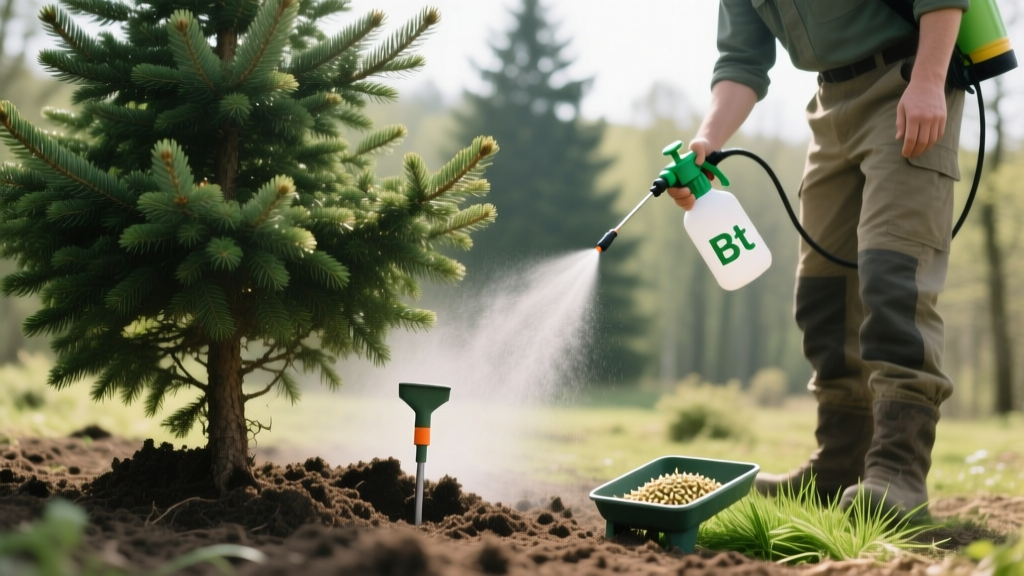
2026 Bagworm Bt Spray Timing & Evergreen Root Aeration
Anna KowalskiPublished
The Evolving Bagworm Threat in 2026
Evergreen trees, particularly arborvitae, junipers, and Leyland cypress, are the backbone of many residential landscapes. However, they face a relentless adversary: the bagworm (Thyridopteryx ephemeraeformis). In 2026, shifting spring temperatures and erratic rainfall have slightly altered the traditional hatching windows for these destructive caterpillars. While most tree care guides focus exclusively on foliar sprays, a truly holistic approach requires looking below the surface. By integrating precise Bacillus thuringiensis (Bt) spray timing with strategic lawn aeration and overseeding, you can build an evergreen's natural vigor, making it far more resilient to pest pressure. This comprehensive guide explores the intersection of targeted pest management and advanced soil care for the 2026 season.
Understanding the 2026 Bagworm Life Cycle
Bagworms overwinter as eggs sealed inside the protective silk-and-needle bags constructed by their mothers. As spring soil temperatures consistently reach the mid-60s Fahrenheit, the tiny larvae emerge and begin spinning their own protective cases. In 2026, due to earlier spring warming in many USDA zones, hatching is occurring as early as late May in the Mid-Atlantic and early June in the Northeast.
According to the Penn State Extension Bagworm Management Guide, the most critical vulnerability window is during the early instar stages. Once the larvae mature by late July, their bags become thick and impenetrable, rendering most biological and chemical sprays useless. Therefore, timing your interventions perfectly is the difference between a lush, healthy evergreen and a brown, defoliated skeleton.
Identifying Bagworm Damage vs. Winter Burn
In early spring, many homeowners mistake winter desiccation for bagworm damage. Winter burn typically appears as uniform browning on the windward side of the tree or at the tips of the branches. Bagworm damage, conversely, presents as localized, patchy defoliation. If you look closely at the brown patches, you will see the tiny, silk-wrapped bags camouflaged against the twigs. Identifying the correct issue early prevents unnecessary chemical applications and allows you to focus your aeration efforts on trees that truly need stress relief.
Precision Bt Spray Timing and Application
Bacillus thuringiensis var. kurstaki (Btk) remains the gold standard for environmentally responsible bagworm control. Bt is a naturally occurring soil bacterium that produces crystalline proteins. When young bagworm caterpillars ingest treated foliage, these proteins crystallize in their alkaline gut, causing them to stop feeding immediately and die within 48 to 72 hours.
For 2026, top-rated formulations like Bonide Thuricide and Southern Ag Natural Bt offer improved UV-stability, ensuring the bacteria remain active on the foliage longer.
Application Tips:
- Mix Rate: Typically 1.5 to 2 fluid ounces of liquid Bt concentrate per gallon of water. Always read the 2026 product label.
- Coverage: Evergreens have dense canopies. Use a pump sprayer with a fine mist nozzle to ensure the spray penetrates the inner foliage where bagworms prefer to hide.
- Reapplication: Bt degrades in sunlight and washes off in heavy rain. Reapply every 7 to 10 days during the peak hatching window (June through early July).
The University of Kentucky Entomology Fact Sheet emphasizes that Bt is entirely safe for beneficial insects, birds, and mammals, making it ideal for integrated pest management in residential lawns.
The Missing Link: Root-Zone Aeration and Seeding
Why pair aeration and seeding with bagworm control? Trees planted in turf environments suffer from severe soil compaction and resource competition. Standard lawn maintenance—frequent mowing, heavy foot traffic, and shallow turfgrass roots—suffocates the fine feeder roots of evergreens. A stressed, drought-stricken tree lacks the energy to push new growth or recover from defoliation, making it highly susceptible to fatal bagworm damage.
By addressing soil compaction through specialized aeration and introducing deep-rooted, shade-tolerant grass seeds, you create a symbiotic landscape.
Aeration Techniques for Evergreens
Never use standard mechanical core aerators near the tree trunk, as they will sever vital structural roots. Instead, utilize radial trenching or an AirSpade (pneumatic excavation) to gently decompact the soil out to the tree's drip line. In 2026, many professional arborists are incorporating biochar and mycorrhizal inoculants into these aeration trenches to dramatically improve moisture retention and nutrient uptake.
Strategic Seeding
After aerating the surrounding lawn, overseed with modern, endophyte-enhanced Tall Fescue blends (such as Jonathan Green Black Beauty Ultra). These 2026 seed varieties feature deep root systems that do not compete aggressively with the tree's shallow feeders. Furthermore, they require less frequent watering and fertilization, reducing the surface-level moisture that promotes fungal diseases on the evergreen's lower branches.
Cost Analysis: DIY vs. Professional Treatment in 2026
Managing bagworms and soil compaction can be done on a budget or outsourced to professionals.
- DIY Bt Spray: A 32-ounce bottle of concentrate costs around $25 to $35 in 2026 and can treat multiple mature trees.
- DIY Aeration: Renting a manual broadfork or using a digging bar for radial trenching costs roughly $40 for a weekend rental, plus $60 for high-quality shade-tolerant seed.
- Professional Services: Hiring an ISA-certified arborist for AirSpade aeration and targeted canopy sprays typically ranges from $300 to $600 per tree, depending on canopy size and regional labor rates.
Integrated 2026 Care Schedule
To maximize your evergreen's health and minimize bagworm damage, follow this integrated soil and canopy management schedule.
| Month | Bagworm Stage | Bt Action | Aeration & Seeding Action |
|---|---|---|---|
| April - May | Overwintering Eggs | Manual removal of old bags | Soil testing and planning radial trenches |
| Late May - June | Early Instar Larvae (Hatching) | First Bt application; reapply every 7-10 days | Aerate drip-line; apply mycorrhizal inoculant |
| July | Maturing Larvae | Final Bt spray if hatching is staggered | Overseed periphery with shade-tolerant fescue |
| August - Sept | Adult/Mating Stage | No spray effective; monitor tree stress | Deep root watering; avoid high-nitrogen lawn fertilizers |
Final Thoughts on Holistic Tree Care
Defeating bagworms requires more than just a reactionary spray; it demands a proactive, whole-system approach. By mastering the 2026 Bt spray timing and pairing it with thoughtful lawn aeration and seeding practices, you ensure your evergreens remain vibrant, deeply rooted, and naturally resilient against pests. A healthy soil ecosystem cultivates a healthy tree, and a healthy tree is your best defense against the relentless bagworm.