Tree Care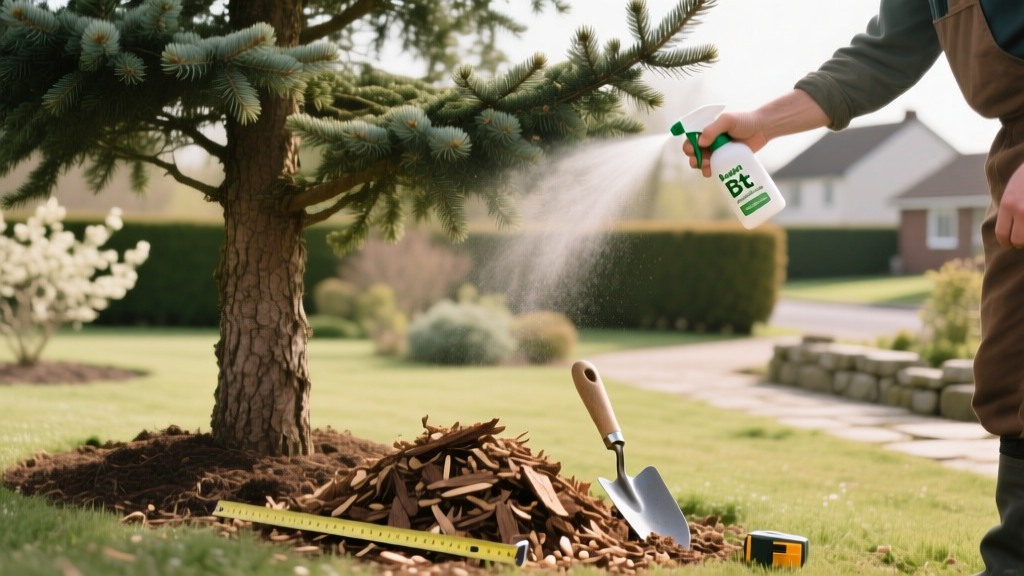
2026 Bagworm Removal Timing, Bt Spray & Mulch Guide
Mike RodriguezPublished
The Intersection of Mulch, Tree Stress, and Bagworms
Evergreen trees, particularly arborvitae, junipers, and pines, are prime targets for bagworms (Thyridopteryx ephemeraeformis). While these destructive pests are a well-known threat, many homeowners overlook the critical relationship between soil health, mulching methods, and pest susceptibility. In 2026, with shifting climate patterns leading to more frequent late-summer droughts in many regions, evergreen trees are experiencing heightened environmental stress. Drought-stressed trees emit specific volatile organic compounds (VOCs) that act as a beacon for insect pests, including bagworms.
Proper mulching is your first line of defense. By maintaining optimal soil moisture and regulating root zone temperatures, high-quality organic mulch prevents the drought stress that makes evergreens vulnerable to severe defoliation. However, if mulching is done incorrectly—or if infested debris is left to overwinter in the mulch bed—you may inadvertently create a safe harbor for bagworm pupae. This comprehensive guide covers the precise timing for manual bagworm removal, the strategic application of Bacillus thuringiensis (Bt) sprays, and the best mulching materials and methods to keep your evergreens thriving in 2026.
Bagworm Removal Timing: Manual Extraction
The most effective, non-chemical method for controlling bagworm populations is manual removal. Because each female bag can contain anywhere from 500 to 1,000 eggs, removing a single bag during the dormant season is equivalent to killing hundreds of future larvae. According to Penn State Extension, the ideal timing for manual removal is from late fall through early spring (November through March), before the eggs hatch.
During the winter months, the bags are firmly attached to the evergreen branches with a tough silk band. To remove them without damaging the tree, use pruning shears to snip the silk band rather than pulling the bag off by hand, which can strip the evergreen needles and bark. Once collected, do not simply toss the bags into your home compost bin or leave them on the ground near the tree's mulch ring. The eggs can easily survive typical composting temperatures and will hatch right back into your landscape. Instead, seal the collected bags in a heavy-duty plastic trash bag and dispose of them in your municipal waste, or submerge them in a bucket of soapy water for 48 hours before disposal.
Bt Spray for Evergreens: The 2026 Application Schedule
When manual removal is not enough, or if you are dealing with a severe infestation on tall, mature evergreens, biological insecticides are the gold standard. Bacillus thuringiensis var. kurstaki (Bt) is a naturally occurring soil bacterium that specifically targets the digestive systems of caterpillars. It is highly effective against bagworms, safe for beneficial insects like bees and ladybugs, and poses no threat to humans or pets.
The success of a Bt spray application relies entirely on timing. Bt must be ingested by the larvae to be effective, and it only works on early-instar (young) caterpillars. Once the bagworms grow larger than 1/2 inch and begin constructing their heavy, protective bags out of mature foliage and silk, Bt becomes largely ineffective. According to Ohio State University Extension, the optimal window for Bt application is typically late May through mid-June in most temperate zones, coinciding with the emergence of young larvae.
In 2026, many professional arborists recommend using degree-day tracking rather than relying solely on calendar dates to determine the exact spray window. When your local area reaches approximately 600 to 900 growing degree days (base 50°F), bagworm eggs are actively hatching. When applying Bt (available under brand names like Thuricide or Dipel), ensure thorough canopy coverage. The spray must reach the inner foliage where young bagworms prefer to feed. Plan for two applications spaced 10 to 14 days apart to ensure you catch any late-emerging larvae.
Mulching Methods to Support Evergreen Recovery and Prevention
After addressing the immediate pest threat, your focus must shift to restoring the tree's vigor through proper mulching methods. A stressed, defoliated evergreen needs excellent soil conditions to push out new growth. However, the mulch ring itself must be managed carefully to prevent it from becoming a pest reservoir.
Step 1: Clearing the Base and Debris Removal
Before applying fresh mulch, rake out the old, matted mulch and fallen debris from the base of the evergreen. Dropped bagworm cases, dead foliage, and decaying matter can harbor overwintering pests and fungal pathogens. Clear the area down to the soil level, extending out to the tree's drip line if possible.
Step 2: The "Donut" Mulching Method
Never pile mulch against the trunk of an evergreen—a practice known as "volcano mulching." This traps moisture against the bark, leading to root rot, girdling roots, and severe tree stress. Instead, use the "donut" method. Keep the mulch at least 3 to 5 inches away from the trunk flare, creating a bare-soil ring around the base. Spread the mulch evenly to a depth of 2 to 4 inches. This depth is sufficient to retain soil moisture and suppress weeds without blocking oxygen exchange to the shallow feeder roots.
Best Mulching Materials for Evergreen Health in 2026
Choosing the right mulch material is vital for evergreens, which generally prefer slightly acidic soil conditions. Here are the top mulching materials recommended for 2026:
- Shredded Pine Bark: This is the premier choice for evergreens. It breaks down slowly, adds beneficial organic matter to the soil, and naturally lowers soil pH over time. In 2026, expect to pay around $40 to $55 per cubic yard for high-quality shredded pine bark.
- Pine Bark Nuggets: Excellent for slopes or areas with heavy water runoff, as they interlock and resist washing away. They decompose very slowly, meaning they won't tie up soil nitrogen as rapidly as wood-based mulches.
- Shredded Hardwood: A widely available and cost-effective option. While it doesn't offer the same acidifying benefits as pine bark, it composts well and improves soil structure. Ensure it is fully composted before application to prevent nitrogen robbery.
- Materials to Avoid: Avoid using cypress mulch, as its harvesting contributes to wetland depletion, and it breaks down too slowly to benefit soil biology. Also, avoid dyed mulches or rubber mulch, which offer no nutritional value and can leach unwanted chemicals into the root zone of sensitive evergreens.
2026 Evergreen Care Calendar: Bagworms and Mulch
| Season | Bagworm Management Action | Mulching & Tree Care Action |
|---|---|---|
| Late Winter (Feb - Mar) | Final manual removal of overwintering bags before hatch. | Inspect mulch depth; clear away matted, pest-harboring debris. |
| Spring (Apr - May) | Monitor for early hatch; prepare Bt spray equipment. | Apply fresh 2-4" layer of pine bark mulch using the donut method. |
| Early Summer (Jun) | Apply Bt spray (2 applications, 14 days apart) targeting young larvae. | Ensure mulch ring retains moisture during early summer heat spikes. |
| Mid-Summer (Jul - Aug) | Chemical control is ineffective; monitor tree stress levels. | Deep water the root zone; do not add more mulch if depth is adequate. |
| Fall (Sep - Nov) | Bags are mature; begin manual removal as trees enter dormancy. | Rake fallen evergreen debris from the mulch bed to prevent fungal issues. |
Frequently Asked Questions
Can bagworms survive in my mulch over the winter?
Yes. While bagworms primarily attach their overwintering cases to the branches of host trees, heavy winds and bird activity can dislodge bags, causing them to fall into the mulch bed below. If the female bags are left in the mulch, they will hatch in the spring, and the tiny larvae will crawl back up the trunk. This is why clearing debris from the mulch ring during late winter is a critical step in your integrated pest management strategy.
Will Bt spray harm the beneficial microbes in my mulch?
No. Bacillus thuringiensis var. kurstaki is highly specific to the alkaline digestive tracts of certain caterpillars. It does not harm earthworms, beneficial soil nematodes, or the mycorrhizal fungi living in your mulch and soil. In fact, maintaining a healthy, biologically active mulch layer helps trees process nutrients more efficiently, aiding in their recovery from any minor pest damage.
How do I know if my evergreen is too stressed to recover from bagworm damage?
Deciduous trees can often survive complete defoliation, but evergreens rely on their needles for year-round photosynthesis. If an evergreen branch has been completely stripped of needles and shows no green tissue when you lightly scratch the bark, that specific branch is likely dead. However, if the trunk and major lateral branches still show green cambium, aggressive watering, proper donut mulching, and a light application of balanced fertilizer in the spring can help the tree push out new buds. For more detailed guidance on assessing tree viability, consult resources from University of Kentucky Entomology.
By combining precise bagworm removal timing, strategic Bt applications, and scientifically sound mulching methods, you can protect your evergreens and ensure they remain the lush, vibrant anchors of your landscape throughout 2026 and beyond.