Tree Care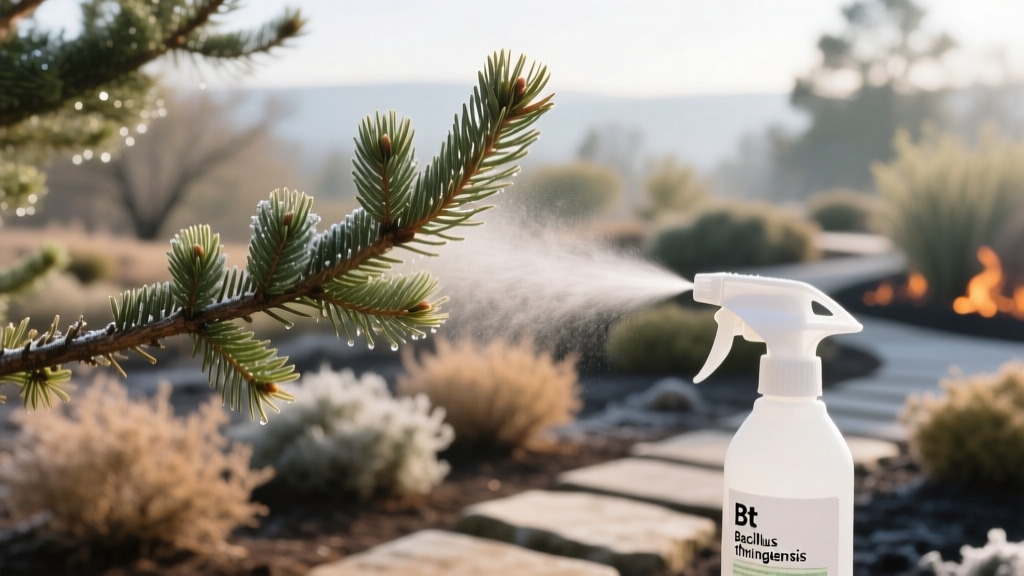
Fire-Safe Evergreens: 2026 Bagworm Removal & Bt Spray
Anna KowalskiPublished
The Intersection of Pest Management and Fire-Resistant Landscaping
When designing a fire-resistant landscape in 2026, homeowners and property managers often focus heavily on hardscaping, irrigation systems, and the selection of low-ignition plants. However, the ongoing health and maintenance of your existing evergreen trees are just as critical to your property's overall defense. Evergreens such as arborvitae, junipers, cedars, and spruce are frequently utilized in privacy screens and windbreaks. When kept healthy, well-watered, and properly pruned, their high moisture content can actually serve as a moderate buffer in a defensible space. Conversely, when these trees are stressed, diseased, or defoliated by pests, they transform from living firebreaks into dangerous, resin-filled tinderboxes.
One of the most destructive pests threatening these vital landscape assets is the bagworm (Thyridopteryx ephemeraeformis). According to Penn State Extension, bagworms can completely defoliate an evergreen tree in a single season if left unchecked. In the context of fire-safe landscaping, a dead, brown arborvitae covered in bagworm casings is essentially a vertical pillar of kindling. To maintain a true fire-resistant landscape in 2026, mastering bagworm removal timing and utilizing targeted biological controls like Bacillus thuringiensis (Bt) spray is absolutely essential.
The Hidden Fire Hazard: Bagworm-Defoliated Trees
Defensible space guidelines, such as those outlined by CAL FIRE, divide the area around your home into specific zones. Zone 1 (0 to 30 feet from structures) requires the most aggressive vegetation management, while Zone 2 (30 to 100 feet) focuses on spacing and reducing fuel loads. Evergreens are often planted in Zone 2 for privacy. When bagworms infest these trees, they consume the photosynthetic needles, leaving behind dead, dry foliage and the silk-spun bags themselves.
This dead material drastically lowers the ignition point of the tree. Furthermore, the silk threads used by bagworms to construct their protective cases and travel between branches are highly flammable and can act as a wick, carrying embers directly into the heart of the tree's canopy. By eliminating bagworms before they cause severe defoliation, you preserve the tree's natural moisture barrier and prevent the accumulation of 'ladder fuels' that can carry a ground fire into the tree canopy and eventually to your roof.
Understanding the Bagworm Lifecycle in 2026
To effectively time your interventions, you must understand the bagworm lifecycle, which is heavily influenced by local spring temperatures. As climate patterns shift, the exact hatching window can vary slightly by region, but the biological sequence remains the same:
- Overwintering (Fall to Early Spring): Bagworms survive the winter as eggs safely tucked inside the protective silk-and-needle bags of deceased females, which remain attached to the evergreen branches.
- Hatching (Late May to Mid-June): As temperatures consistently warm, the microscopic larvae hatch and immediately begin spinning their own tiny, silken cases.
- Early Instar Feeding (June to Early July): The young larvae feed voraciously on the tender new evergreen growth. At this stage, their bags are less than 1/4 inch long, making them incredibly difficult to spot without a magnifying glass.
- Late Instar and Pupation (Late Summer to Fall): The larvae grow up to 1.5 inches long, incorporating dead needles into their bags. By late summer, they stop feeding, anchor their bags to a branch, and pupate into adult moths.
Precise Bagworm Removal Timing
The timing of your bagworm control measures will dictate your success rate and the method you must employ. In 2026, integrated pest management (IPM) strategies prioritize ecological balance, which is especially important in fire-prone areas where broad-spectrum chemical use can harm beneficial insects and disrupt local ecosystems.
1. Dormant Season Manual Removal (November through March)
The most effective, chemical-free method of bagworm control is manual removal during the dormant season. Before the eggs hatch in late spring, inspect your evergreens closely. Hand-pick the brown, 1.5-to-2-inch bags from the branches and drop them into a bucket of soapy water or seal them in a plastic bag for the trash. Removing a single female bag can eliminate up to 1,000 future larvae. This is a crucial first step in reducing the overall pest pressure before the fire season begins.
2. The Bt Spray Window (Late May through June)
If you missed the manual removal window, or if the infestation is too high in the canopy to reach by hand, biological sprays are your next line of defense. The window for applying Bacillus thuringiensis var. kurstaki (Btk) is extremely narrow. You must spray when the larvae are in their early instar stages (less than 1/2 inch long) and actively feeding. In most temperate zones, this falls between late May and late June. Once the bags exceed 3/4 inch in length, Bt becomes largely ineffective because the larvae stop feeding as heavily and their silk barriers protect them from ingestion.
The Science and Strategy of Bt (Bacillus thuringiensis) Spray
Bacillus thuringiensis is a naturally occurring soil bacterium that produces proteins toxic to specific insect larvae, primarily caterpillars. According to the National Pesticide Information Center (NPIC), Bt is highly targeted and poses minimal risk to humans, pets, birds, and beneficial pollinators like bees. This makes it the premier choice for fire-resistant landscapes situated near wildland interfaces, where protecting local wildlife and watershed health is a priority.
When a young bagworm ingests Bt-treated foliage, the alkaline environment of its gut activates the Bt toxins, which paralyze the insect's digestive system. The larva stops feeding almost immediately, though it may take a few days to die and drop from the tree. Because Bt breaks down rapidly in sunlight (often within 3 to 7 days), reapplication is usually necessary if the hatching period is prolonged or if heavy rains wash the spray off the needles.
Recommended 2026 Bt Products and Costs
For residential evergreen care, liquid concentrates offer the best coverage and value. In 2026, a standard 16-ounce bottle of Btk concentrate (such as Monterey B.t. or Bonide Thuricide) typically costs between $18 and $25. This is enough to treat dozens of medium-sized trees when properly diluted.
Step-by-Step Bt Application for Evergreens
Proper application technique ensures the Bt reaches the feeding larvae while minimizing waste and runoff.
- Monitor for Hatch: Starting in mid-May, place a few bagworm-infested branches in a sealed plastic bag with some moist soil. Keep it in a shaded outdoor area. When you see tiny, black, caterpillar-like larvae crawling inside the bag, the natural hatch has begun, and it is time to spray your trees.
- Mix the Solution: Follow the 2026 manufacturer label precisely. A standard mixing ratio is 1 to 1.5 fluid ounces of Btk concentrate per 1 gallon of water. Add a non-ionic surfactant or a few drops of mild liquid dish soap to help the solution stick to the waxy evergreen needles.
- Choose the Right Equipment: For trees under 10 feet tall, a standard 2-gallon pump sprayer provides excellent pressure and coverage. For taller trees, use a hose-end sprayer designed for concentrates, ensuring it can reach the upper canopy where bagworms often initiate feeding.
- Apply Thoroughly: Spray the evergreen tree until the foliage is completely wet and just beginning to drip. Pay special attention to the upper branches and the windward side of the tree, as young larvae often 'balloon' on the wind and land on these exposed areas first.
- Reapply as Needed: Because Bt degrades in UV light, apply a second coat 7 to 10 days after the first application to catch any late-hatching larvae.
Comparison Chart: Bagworm Control Methods for Fire-Safe Zones
| Control Method | Best Timing | Fire-Safe Zone Suitability | Environmental Impact | Estimated 2026 Cost |
|---|---|---|---|---|
| Manual Removal | Nov - March (Dormant) | Excellent (No chemicals, removes physical fuel) | Zero negative impact | $0 (Labor only) |
| Bt Spray (Btk) | June (Early Instar) | Excellent (Safe for WUI and watersheds) | Very Low (Targeted to caterpillars) | $18 - $25 per 16oz |
| Spinosad | June - July | Good (Organic, but slightly broader spectrum) | Low (Toxic to bees if sprayed directly) | $20 - $30 per 16oz |
| Synthetic Pyrethroids | July - August (Late Instar) | Poor (Harms beneficial predators, ecological disruption) | High (Toxic to aquatic life and pollinators) | $15 - $40 per bottle |
Holistic Tree Care for Defensible Space
Eradicating bagworms is only one piece of the fire-resistant landscaping puzzle. To ensure your evergreens remain healthy, moisture-rich, and resilient against both pests and wildfires throughout 2026 and beyond, integrate the following maintenance practices:
- Deep, Infrequent Watering: Drought-stressed evergreens emit volatile organic compounds that attract pests and increase flammability. Water deeply at the drip line using a soaker hose, providing 1 to 1.5 inches of water per week during dry summer spells.
- Proper Mulching Techniques: While mulch retains vital soil moisture, it is highly combustible. Never pile mulch against the trunk (creating a 'mulch volcano'). In Zone 0 (the first 5 feet around your home), use only non-combustible materials like gravel or river rock. In Zones 1 and 2, keep organic mulch layers no deeper than 2 to 3 inches and ensure they are kept moist.
- Canopy Pruning: Remove dead, diseased, or heavily bagworm-damaged branches promptly. Prune the lower limbs of evergreens up to 6 to 10 feet from the ground (or one-third of the tree's height) to eliminate ladder fuels that allow surface fires to climb into the canopy.
Pro Tip for 2026: Keep a detailed digital or physical landscape journal. Note the exact date you observe the first bagworm hatch in your specific microclimate. Because local weather patterns dictate insect behavior, your personal observations will provide the most accurate timing for Bt applications in subsequent years, ensuring your fire-resistant landscape remains pristine and protected.
By combining vigilant dormant-season removal with precisely timed Bt sprays, you protect the structural integrity and moisture content of your evergreens. This proactive approach ensures your trees remain a beautiful, living component of your fire-resistant landscape rather than a hidden liability during the peak of fire season.
