Tree Care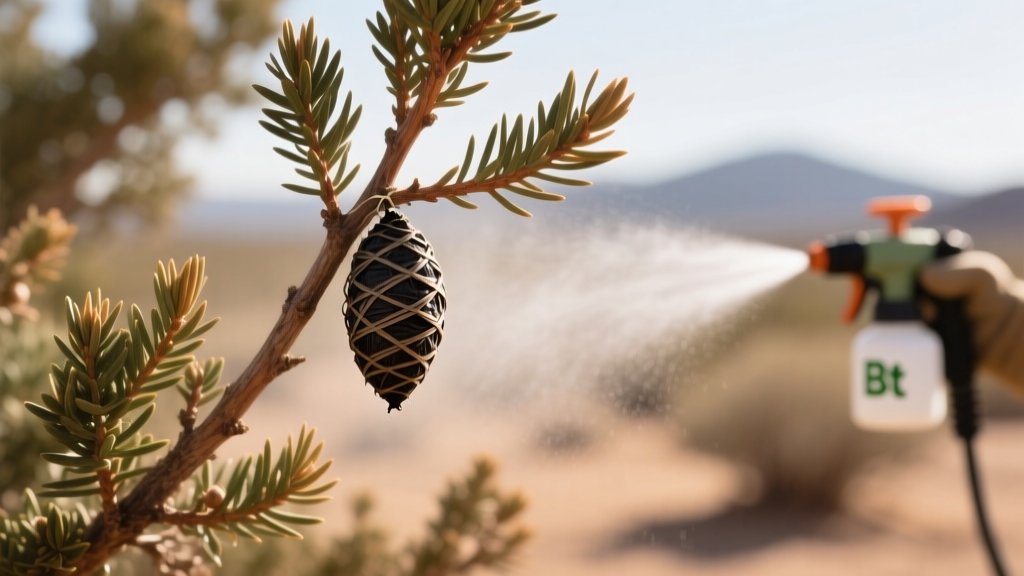
2026 Bagworm Removal & Bt Spray Guide for Xeric Evergreens
Anna KowalskiPublished
The Intersection of Xeriscaping and Evergreen Pest Vulnerability
As we navigate the landscaping trends of 2026, xeriscaping and low-water landscaping have become essential practices for homeowners facing water restrictions and prolonged drought conditions. By utilizing drought-tolerant evergreens such as Juniperus species, Thuja occidentalis (Arborvitae), and Leyland Cypress, gardeners can maintain lush, year-round privacy screens without exhausting municipal water supplies. However, a hidden threat lurks in these water-conserving landscapes: the bagworm (Thyridopteryx ephemeraeformis). While xeriscaping reduces water waste, the inherent drought stress placed on these evergreens can inadvertently compromise their natural defense mechanisms. When an evergreen is water-stressed, it cannot produce the same volume of defensive terpenes and resins that normally help repel or trap early-instar caterpillars. This biological reality makes xeriscaped trees disproportionately vulnerable to severe bagworm infestations, which can defoliate and kill a mature specimen in a single season. Replacing a mature evergreen in a xeriscape is not only costly but also defeats the water-conservation purpose of the landscape, as new transplants require significant irrigation to establish. Therefore, mastering bagworm removal timing and utilizing targeted biological controls like Bt spray is critical for the modern, eco-conscious landscaper.
Identifying Bagworms in Low-Water Landscapes
Before you can treat an infestation, you must accurately identify the pest. Bagworms are notorious for their camouflage. The larvae construct protective, spindle-shaped bags made of silk and bits of the host plant's foliage, making them look like small, oddly shaped pinecones or clusters of dead leaves clinging to the branches. According to Penn State Extension, these bags can grow up to 2 inches in length by the end of the summer. In a xeriscape, where plant textures are often fine and needle-like (such as on junipers), these bags can be incredibly difficult to spot until the tree begins to show significant browning and dieback. The life cycle of the bagworm is closely tied to seasonal temperature shifts. In 2026, with shifting microclimates and earlier spring warm-ups in many regions, the eggs overwintering inside the female's bag can hatch as early as late May or early June. The newly hatched larvae, known as crawlers, are tiny and immediately begin feeding and spinning their first, minuscule silk bags. It is during this brief, early-instar window that treatment is most effective.
The Crucial Timing for Bagworm Removal and Bt Spray
Timing is everything when managing bagworms in a low-water landscape. Because xeriscapes rely on minimal chemical runoff and prioritize ecological balance, broad-spectrum insecticides are generally avoided. Instead, we rely on a combination of mechanical removal and highly targeted biological sprays. The most effective biological agent available to homeowners and professionals is Bacillus thuringiensis var. kurstaki, commonly known as Bt. Bt is a naturally occurring soil bacterium that produces proteins toxic only to the larvae of specific insects, primarily caterpillars. When a young bagworm ingests foliage treated with Bt, the toxin paralyzes its digestive system, leading to starvation within a few days. However, Bt is entirely ineffective against older larvae that have built thick, protective bags, as they stop feeding and the spray cannot penetrate the silk and foliage armor. Therefore, the application window is remarkably narrow.
The 2026 Bagworm Treatment Calendar for Xeriscapes
| Season / Month | Target Stage | Action Required | Xeriscape Consideration |
|---|---|---|---|
| Winter (Dec - Feb) | Overwintering Eggs | Mechanical Removal (Hand-picking) | Preserves soil moisture; no chemical disruption to dormant xeric plants. |
| Early Spring (Mar - Apr) | Late-stage Eggs | Inspect and destroy remaining bags | Do not compost bags; eggs can survive and hatch in dry mulch piles. |
| Late Spring (Late May) | Egg Hatch / Crawlers | Monitor for tiny silk strands and new feeding damage | Ensure drip irrigation is functioning to reduce tree stress before hatch. |
| Early Summer (June) | Early-Instar Larvae | Apply Bt Spray (First Application) | Spray in the early morning to prevent rapid UV degradation in arid climates. |
| Mid-Summer (Late June) | Early-Instar Larvae | Apply Bt Spray (Second Application) | Reapply 7-10 days later to catch late-hatching crawlers. |
| Late Summer (Aug - Sep) | Late-Instar / Pupae | Chemical pesticides (Spinosad) if Bt window is missed | Last resort; may harm beneficial pollinators active in late-summer xeric blooms. |
Selecting and Applying Bt Spray in 2026
For the 2026 season, several high-quality Bt formulations are available that cater specifically to the needs of eco-friendly and low-water landscapes. Products such as Monterey B.t. and Bonide Thuricide remain industry standards due to their reliable suspension rates and organic certifications. A standard 16-ounce bottle of concentrated liquid Bt typically costs around $25 in 2026, making it a highly cost-effective preventative measure compared to the hundreds of dollars required to remove and replace a dead, mature Arborvitae.
Mixing and Application Rates
To effectively treat evergreens in a xeriscape, proper mixing and thorough canopy coverage are mandatory. The general recommendation is to mix 1.5 to 2.0 fluid ounces of Bt concentrate per gallon of water. Because evergreens have dense, overlapping foliage, you must use a pump sprayer equipped with an adjustable nozzle set to a fine mist. The goal is to coat the needles completely, including the inner canopy where bagworms often initiate feeding. The University of Maryland Extension emphasizes that Bt degrades rapidly under ultraviolet light. In xeriscapes, which are often situated in full, unfiltered sun to maximize solar exposure for companion succulents and ornamental grasses, this UV degradation is accelerated. To counteract this, always apply Bt spray late in the evening or on an overcast day. This allows the spray to dry on the foliage and gives the caterpillars time to ingest the treated needles before the sun breaks down the active bacterial spores.
Why Bt Aligns with Xeriscaping Principles
Xeriscaping is not just about saving water; it is about creating a sustainable, localized ecosystem. The United States Environmental Protection Agency notes that Bt is highly specific and does not harm beneficial insects, earthworms, or soil microbiology. In a low-water landscape, maintaining a healthy soil food web is critical for breaking down organic matter and retaining what little moisture is available. Broad-spectrum pyrethroids can devastate these beneficial soil organisms and contaminate the scarce water resources. Bt leaves no toxic residue in the soil, ensuring that your carefully designed xeric ecosystem remains intact and thriving.
Cultural Practices to Support Evergreens in Xeriscapes
Even with perfect Bt timing, a severely drought-stressed tree may not recover from minor bagworm feeding damage. Supporting the overall vigor of your evergreens is the first line of defense. In a xeriscape, this means utilizing deep, infrequent watering strategies rather than shallow, frequent sprinkling. Install a drip irrigation system with emitters placed at the tree's drip line. This delivers water directly to the root zone while keeping the foliage completely dry, which also helps prevent secondary fungal infections that can plague stressed evergreens. Furthermore, apply a 2-to-3-inch layer of organic mulch or a specialized xeriscape gravel mulch around the base of the tree, keeping it a few inches away from the trunk to prevent rot. Mulch regulates soil temperature and drastically reduces evaporation, ensuring the evergreen has the internal turgor pressure necessary to push out defensive resins against early-stage pests. By combining precise bagworm removal timing, strategic Bt applications, and intelligent xeriscape cultural practices, you can protect your drought-tolerant evergreens and maintain a stunning, resilient landscape throughout 2026 and beyond.
