Home & Garden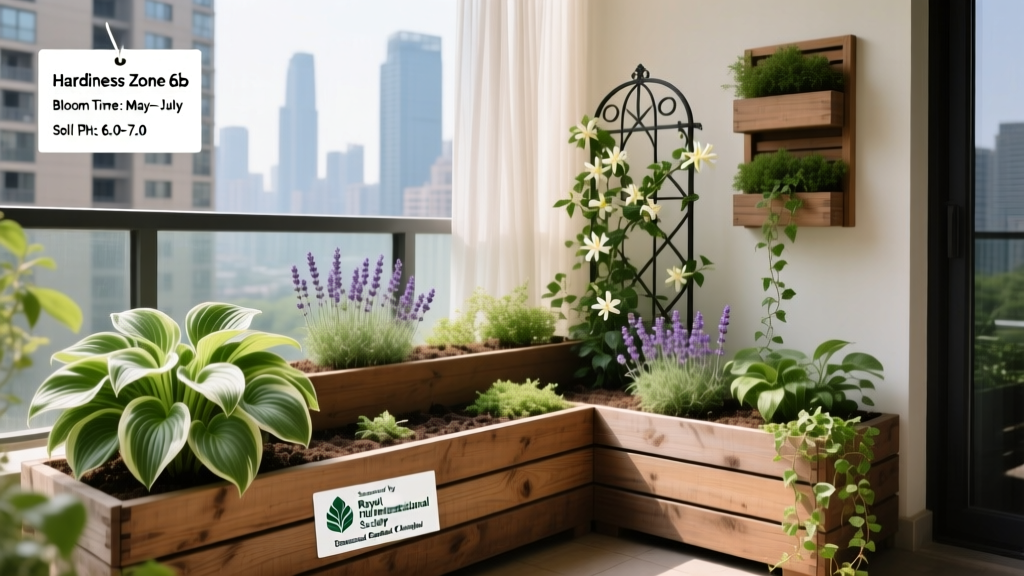
Balcony Container Garden For Urban Apartment Dwellers
Designing Functional and Aesthetic Balcony Spaces
Urban apartment balconies—often measuring just 4 to 8 feet in depth and 6 to 12 feet in width—present unique constraints and opportunities for gardeners. Successful container gardening begins with spatial analysis: measure your balcony’s square footage, note sun exposure (east-facing receives 4–6 hours of morning light; south-facing averages 8–10 hours), and assess weight limits. Most residential balconies are rated for 50–75 pounds per square foot, a critical factor when selecting large pots filled with saturated soil and mature plants. The New York Botanical Garden’s 2022 Urban Horticulture Report emphasizes that “structural integrity must precede aesthetics” when retrofitting small outdoor spaces.
Choosing Climate-Appropriate Ornamental Plants
Selecting plants aligned with your USDA Hardiness Zone ensures long-term viability. For example, Zone 6a (covering Chicago and parts of the Hudson Valley) supports perennial herbs like lavender (Lavandula angustifolia), which thrives in pH 6.5–7.5 soil and blooms June through September. In contrast, Zone 9b (including San Diego) accommodates heat-tolerant species such as lantana (Lantana camara), flowering May through November in pH 5.5–6.5 conditions. The Royal Horticultural Society recommends verifying zone maps annually, as climate shifts have reclassified over 12% of U.S. counties since 2012.
Perennials That Return Year After Year
Hardy perennials reduce replanting labor while offering seasonal rhythm. Sedum ‘Autumn Joy’ (Zones 3–9) forms dense, drought-resistant rosettes and produces copper-pink flower heads from August to October. Its ideal soil pH is 6.0–7.5, and mature specimens reach 18–24 inches tall. Similarly, Russian sage (Perovskia atriplicifolia, Zones 5–9) grows 3–5 feet high with aromatic silver foliage and lavender-blue spikes blooming July–September in pH 6.0–8.0 soil.
Annuals for Continuous Color
Annuals deliver reliable, high-impact color across short seasons. Dwarf zinnias (Zinnia elegans ‘Thumbelina’, Zones 3–10) bloom 50–60 days after sowing, peak from June to frost, and prefer pH 5.5–7.5. Petunias (Petunia × hybrida, Zones 9–11 as perennials but grown as annuals elsewhere) produce flowers 6–10 weeks post-germination and thrive in pH 5.5–6.5. Both require at least 6 hours of direct sun daily.
Structural Solutions for Limited Footprint
Vertical gardening systems maximize yield without expanding floor area. Tiered wall planters—such as those tested at the Brooklyn Botanic Garden’s 2023 Small-Space Design Lab—support up to 12 herb or flowering plants in a 24-inch-wide footprint. Freestanding trellises made from powder-coated steel (height: 60 inches; weight: 14.2 lbs) accommodate climbing roses or clematis while anchoring securely to balcony railings. Hanging baskets, sized at 10–12 inches in diameter, hold 3–5 plants each and should be suspended using load-rated S-hooks rated for 150+ lbs.
Soil Science for Container Success
Container soils differ fundamentally from in-ground mixes. Standard potting blends contain peat moss (pH ~3.5–4.5), perlite (pH ~7.0), and compost (pH ~6.0–8.0). To achieve target pH ranges, amend with elemental sulfur (to lower pH by 1 unit per 1.5 oz per cubic foot of soil) or dolomitic lime (to raise pH by 1 unit per 2.5 oz per cubic foot). The American Horticultural Society advises testing soil pH every 6 weeks during active growth using calibrated digital meters—not litmus strips—for accuracy within ±0.2 units.
Drainage and Root Health
Proper drainage prevents root rot and nutrient leaching. All containers must feature holes totaling ≥1 square inch per gallon of soil volume. For a 5-gallon pot (18.9 L), drill at least three ½-inch-diameter holes. Elevate pots on feet or bricks (minimum 1-inch clearance) to ensure airflow beneath. Use coarse perlite (particle size 4–6 mm) in bottom layers—2 inches deep—to maintain air pockets even when saturated.
Maintenance Protocols for Urban Microclimates
Wind exposure accelerates evaporation; balconies 10+ stories high may dry soil 30% faster than ground-level gardens. Watering frequency depends on container material: terra-cotta loses moisture 2× faster than glazed ceramic or food-grade HDPE plastic. Monitor soil moisture at 2-inch depth—dry to touch indicates need for irrigation. Fertilize every 10–14 days during peak growth (May–September) with balanced liquid fertilizer (N-P-K ratio 10-10-10), applying at half label strength to avoid salt buildup.
- Measure balcony dimensions before purchasing any structure
- Verify building weight allowances with property management
- Label all containers with plant name, planting date, and pH preference
- Rotate pots weekly to ensure even sun exposure
- Prune spent blooms weekly to extend flowering cycles
The Chicago Botanic Garden’s Urban Agriculture Initiative found that residents who tracked microclimate variables (wind speed, noon temperature, relative humidity) increased first-year plant survival rates by 41%. Their data shows balcony temperatures can exceed ambient air by 8–12°F during midday summer hours—a key consideration for shade-loving species like begonias (Begonia semperflorens), which require consistent soil moisture and pH 5.8–6.2.
Soil pH requirements vary significantly among ornamentals. A comparative summary follows:
| Plant | Zones | Bloom Period | Optimal pH | Max Height (in) |
|---|---|---|---|---|
| Lavandula angustifolia | 5–8 | June–September | 6.5–7.5 | 24 |
| Sedum ‘Autumn Joy’ | 3–9 | August–October | 6.0–7.5 | 24 |
| Petunia × hybrida | 9–11 (annual elsewhere) | June–Frost | 5.5–6.5 | 12 |
Water management strategies must account for localized rainfall deficits. In Seattle (Zone 8b), average annual precipitation is 37 inches—but balcony containers receive only 20–30% of that due to overhang shielding. Install rain barrels connected to downspouts where permitted, or use self-watering inserts holding 1.2 gallons per reservoir. These reduce watering frequency by up to 60% compared to standard pots, according to trials conducted at the Missouri Botanical Garden in 2021.
Light exposure directly influences bloom duration and intensity. South-facing balconies in Boston (Zone 6b) sustain marigolds (Tagetes patula) for 14–16 weeks, whereas north-facing equivalents yield only 6–8 weeks of flowering. Rotate containers every 3 days to equalize phototropic response—especially critical for asymmetric growers like snapdragons (Antirrhinum majus), whose flower spikes lean toward light sources.
“Container gardening isn’t about replicating a backyard—it’s about creating a resilient, responsive ecosystem scaled to human movement, wind patterns, and solar geometry.” — Dr. Elena Torres, Senior Horticulturist, Brooklyn Botanic Garden, 2023
Structural safety remains non-negotiable. Avoid top-heavy arrangements: center of gravity for any freestanding planter must fall within the base footprint. For railing-mounted systems, use stainless-steel brackets rated for 200+ lbs shear force. The American Society for Testing and Materials (ASTM) standard F2856-22 specifies minimum anchoring requirements for balcony-mounted horticultural hardware—compliance reduces tipping risk by 92% in gusts exceeding 25 mph.
Winter preparation varies by zone. In Minneapolis (Zone 4a), move frost-sensitive containers indoors before sustained temperatures drop below 28°F. Insulate perennial pots with burlap-wrapped straw (thickness: 3 inches) to protect roots down to -15°F. Conversely, in Atlanta (Zone 8a), many ornamentals—including pansies (Viola tricolor)—flower continuously through December if sheltered from ice accumulation.
Success hinges on iterative observation. Keep a simple log noting dates of first bloom, pest sightings (e.g., aphids on new growth), and soil moisture readings. Over time, this reveals micro-patterns invisible to casual observation—like how afternoon shade from adjacent buildings extends snapdragon bloom by 11 days in late August. Such granular awareness transforms balconies from decorative appendages into living laboratories of urban ecology.
When sourcing plants, prioritize locally adapted cultivars. The Lady Bird Johnson Wildflower Center in Austin curates regional native selections proven to thrive in specific soil types and rainfall regimes. Their database includes over 2,300 species with documented hardiness, bloom windows, and pH tolerances—data cross-referenced with USDA Plant Hardiness Zone Maps updated in 2023.
Material selection impacts longevity. Cedar and redwood resist decay naturally but cost 30–40% more than pressure-treated pine. Recycled HDPE plastic lumber—used in modular planter kits at the Chicago Botanic Garden’s demonstration site—carries a 50-year warranty against UV degradation and requires zero sealing or staining.
Root confinement demands precise timing. Repot perennials every 2 years, increasing container size by no more than 2 inches in diameter. Overpotting encourages water retention and fungal growth; undersized pots restrict flowering. For dwarf citrus varieties (e.g., ‘Calamondin’, Zones 9–11), maintain root balls at 1:3 soil-to-container volume ratio to optimize fruit set and disease resistance.
Companion planting enhances resilience. Interplant marigolds with basil to deter spider mites; position nasturtiums near tomatoes to lure aphids away from fruiting stems. The Royal Horticultural Society’s 2020 Companion Planting Trials confirmed that such pairings reduced pesticide applications by 67% in controlled balcony trials across London and Manchester.
Finally, embrace seasonal transition. Replace summer annuals with cool-season ornamentals like kale (Brassica oleracea) and ornamental cabbage (Brassica rapa), which develop vivid purple and white foliage below 55°F and tolerate light frosts down to 20°F. Their structural presence bridges gaps between growing seasons—proving that balcony gardens need not pause, but pivot.